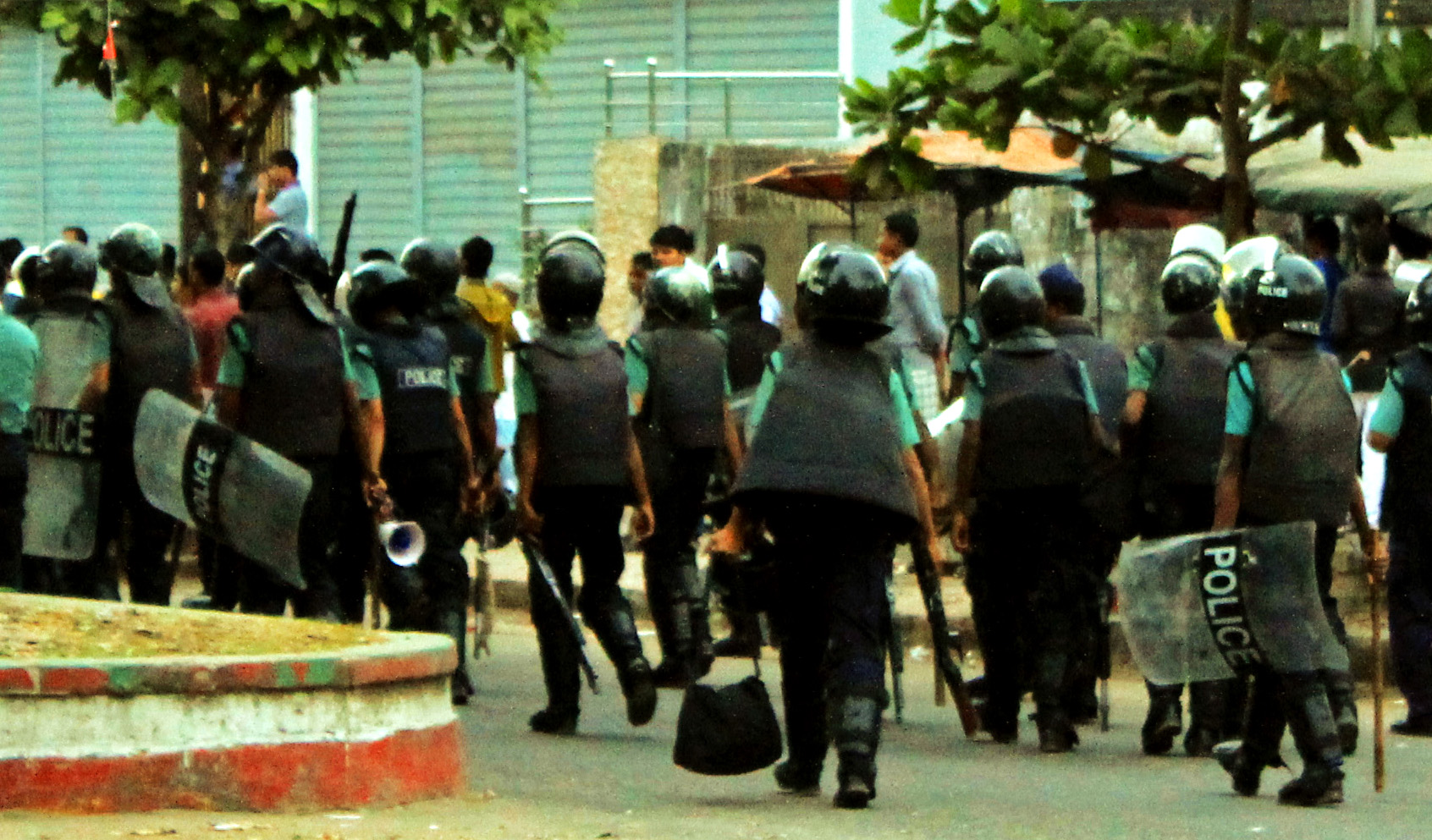
They arrived one after the other. As regular and as frequent as the cha served in the roadside tea stands that line the road. Ambulance after ambulance pulled up to the airport entrance, and for the uninformed you could easily be mistaken into assuming that a major crisis was unfolding before your eyes. In some respects you would be correct, but not at the airport, which was in actual fact a haven of calm and general inactivity. Other areas of Chittagong were not so lucky.
In the past few weeks Bangladesh has revealed a side I have not observed before in my two years so far at least. Nationwide protests and blockades have become the norm, travelling across certain areas of the city has become an event of some caution, political manoeuvrings affect the core of daily life, and if some rumours are to be believed, the military are waiting in the wings to take over, even if just for an interim period whilst a semblance of calm is sought.
Matters reached a head at 10.01pm on Thursday, 12th December as Abdul Kader Mullah, a senior political figure from the Jamaat-e-Islami party, charged and sentenced to death for war crimes dating from Bangladesh’s struggle for independence (or Liberation War) from 1971, was executed . For many Bangladeshis who had waited patiently and hopefully for 42 years, this was a moment of triumph, relief and crucially, justice. For ardent supporters of Jamaat-e-Islami, it was a significant attack on their identity. They have since promised to seek revenge for his death. The streets of Chittagong were eerily quiet that night. The roads were vacant of the usual mass of vehicles and people, and as I walked past the tea shop I was advised to go straight home.
Often referred to as the ‘Butcher of Mirpur’, Mullah is held directly responsible for a large number of killings during the three month Liberation War. His execution was controversial in the international arena, as his trial was accused of not adhering to UN codes of human rights. I’m not here to comment on that as I don’t have the background knowledge. I will however attempt to provide a very, very brief and basic description of what happened in 1971 and how this is shaping events today from what I have learned during my time in Bangladesh.
Upon gaining independence in 1947, India was split in two, well three really – the predominantly Hindu state of India and the majority Islamic states of West Pakistan and East Pakistan (now Bangladesh). However, tensions between East and West Pakistan were a constant as the majority of power and wealth lay in the West and governance was concentrated here. Language also played a prominent role as the mainly West Pakistani language of Urdu was imposed across both states. In the eyes of the East Bengalis this was just one further example of significant and imposing restrictions upon their liberty and individual identity and as such they fought hard to preserve their use of Bangla. Having only just gained their long awaited independence from British colonialism, the people of East Pakistan were once again left to fight and struggle for some of the most basic human rights.
As movements for independence came to a prominent level in 1971, West Pakistan initiated a severe and violent crackdown with journalists, scholars, and students targeted and executed in high numbers. Over the course of the East Bengal liberation movement it is claimed that as many as three million people were killed and the word genocide has been attached to the actions of West Pakistan military and their supporters in East Bengal at the time, who tried in vain to crush the popular uprising. Abdul Kader Mullah was accused of collaborating with these forces, and as such, forty-two years on he faced trial, was found guilty, and sentenced to be hanged – rightly or wrongly depending on who you speak to in Bangladesh.
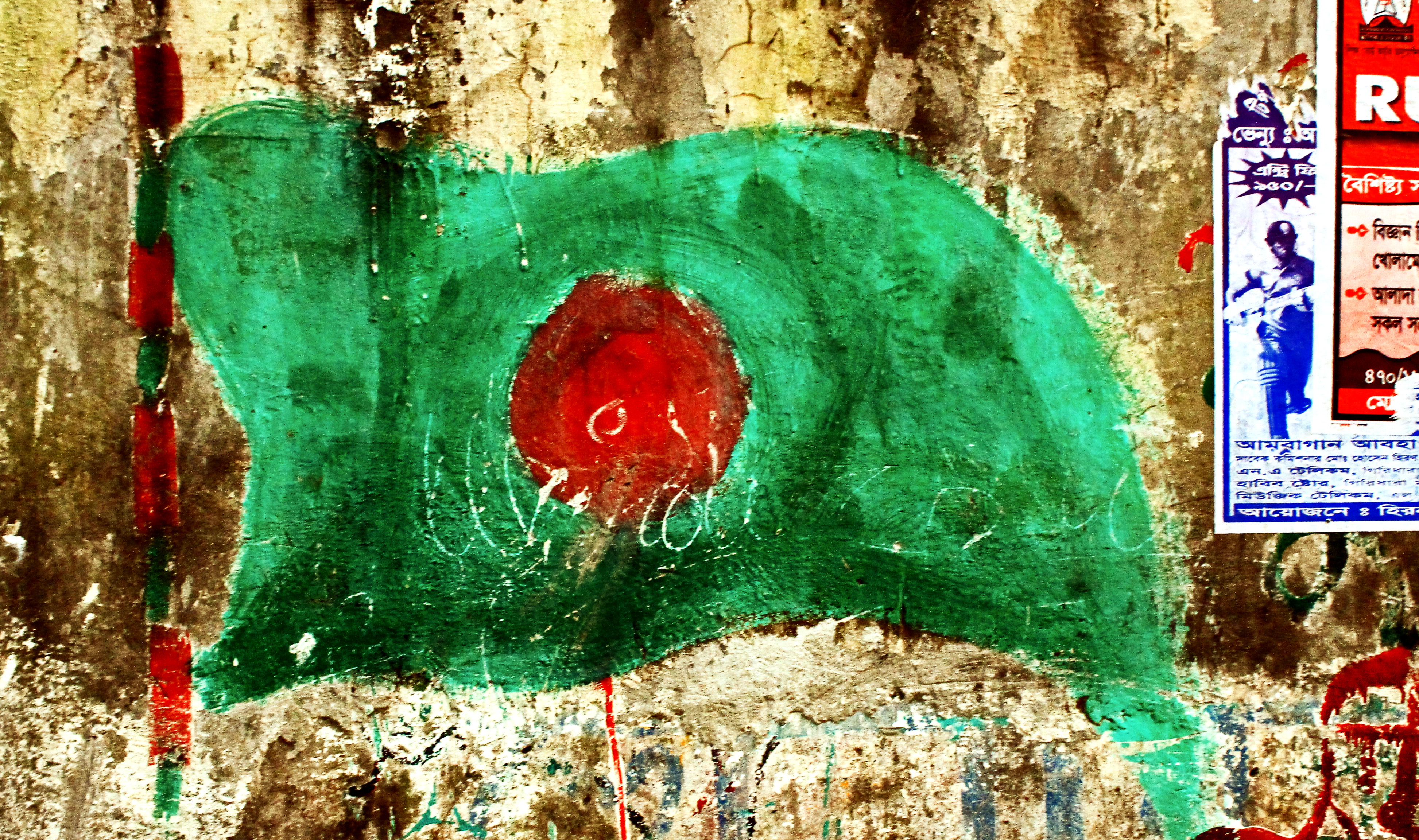
East Pakistan eventually gained its official independence by the end of 1971, and a new state was born. Bangladesh – a nation proud of its identity, proud of its language, proud of its people, and proud of its hard fought independence. December 16th is Victory Day in the country, the annual day dedicated to marking the sacrifice and honour of those who gave their lives during 1971 – the freedom fighters as they are widely known.
On January 5th 2014, parliamentary elections are due to take place, and in the run up to these old wounds have been reopened to some extent. It seems that whilst forty-two years is a significant period of time, the events of ’71 remain very firmly in the minds of the people, and this is understandable. For many Bangladeshis the murder and rape of loved ones, the injustice, and the horrors of war are memories that sit fresh in the mind. The Awami League are the current ruling party and they have pushed through the war crime trials during their recent term in office. The Bangladesh National Party (BNP) is the main opposition and has some connections with Jamaat-e-Islami. They claim the war crime trials are politically motivated and the division is both fraught and debilitating and still influenced by the events of 1971.
As such, the country is in a state of transition, and from speaking to Bangladeshi friends, colleagues, and tea house clientele, there is a degree of uncertainty about how the next few weeks/months may play out. The opposition party led strikes and blockades continue on a weekly basis and serve only to cripple the country’s economy from what I can tell.
It also appears that as in many situations of a similar nature, it is the ordinary people on the street who suffer most. People trying to go about their daily lives and earn enough money to feed their families who are forced to risk their safety just to open their fruit stand or shop. The rickshaw, CNG, and bus drivers take to the roads each day not knowing if their vehicle will be struck by a Molotov cocktail hurled by a protesting mob. There have already been deaths and there is a high chance of more as the election approaches.
Hence the ambulances I mentioned at the beginning of this post. You see, if you need to get somewhere and you have enough money, hiring a private ambulance is the best plan. I, like the many others who arrived at the airport that day, took this option, and I’m lucky to have this choice. Yet, despite this turmoil there is great hope pinned upon the nation’s youth. They have already organised themselves in large numbers to unite in peaceful solutions.
I am currently on winter vacation and outside of Bangladesh. However, the situation often crosses my mind. I am lucky to have had the opportunity to travel at this point, but the safety of Bangladeshi friends, colleagues, and of course the students are a concern. The question of what I will find when I land back in Chittagong on January 15th is also one that occupies my thoughts and how the election result will be received by the people is a cause of great intrigue and apprehension.
So, as I post this on the final day of 2013, my hope for 2014 is that Bangladesh can find a peaceful solution and a political compromise driven by understanding, cooperation and humility. The past year was a testing one for this country with the Rana Plaza building collapse disaster, the garment factory fires and workers protests, and of course the ongoing political disturbances and violence. However, I have faith that once again the people of Bangladesh will come through this and demonstrate the resilience and strength demonstrated by the people on the streets each and every day.
So, from a cafe in Ho Chi Minh city, Vietnam, let me take this opportunity to wish you a Happy New Year and all the very best for 2014. I’ve enjoyed keeping this blog updated during 2013 and I will endeavour to do the same in the coming twelve months.
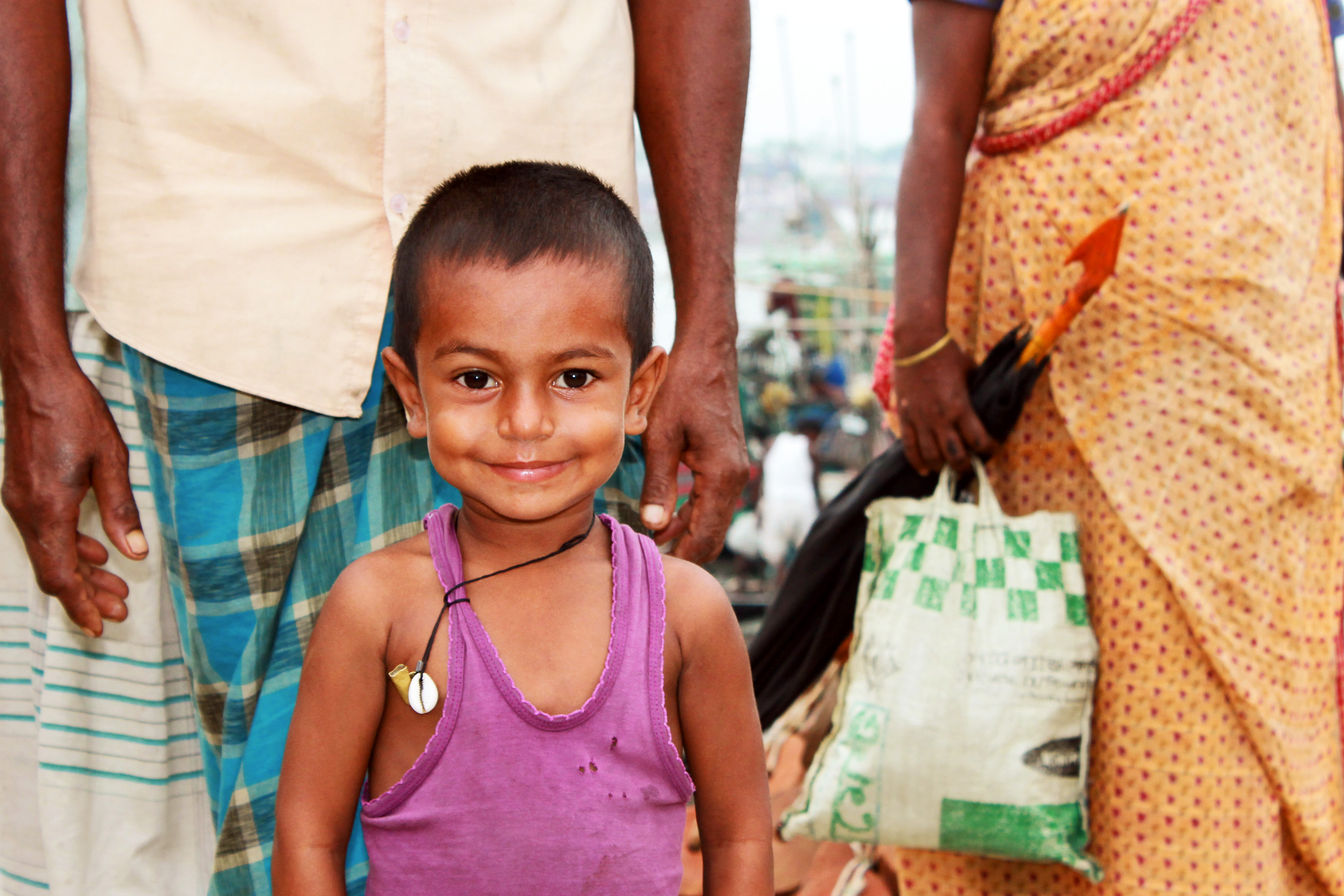
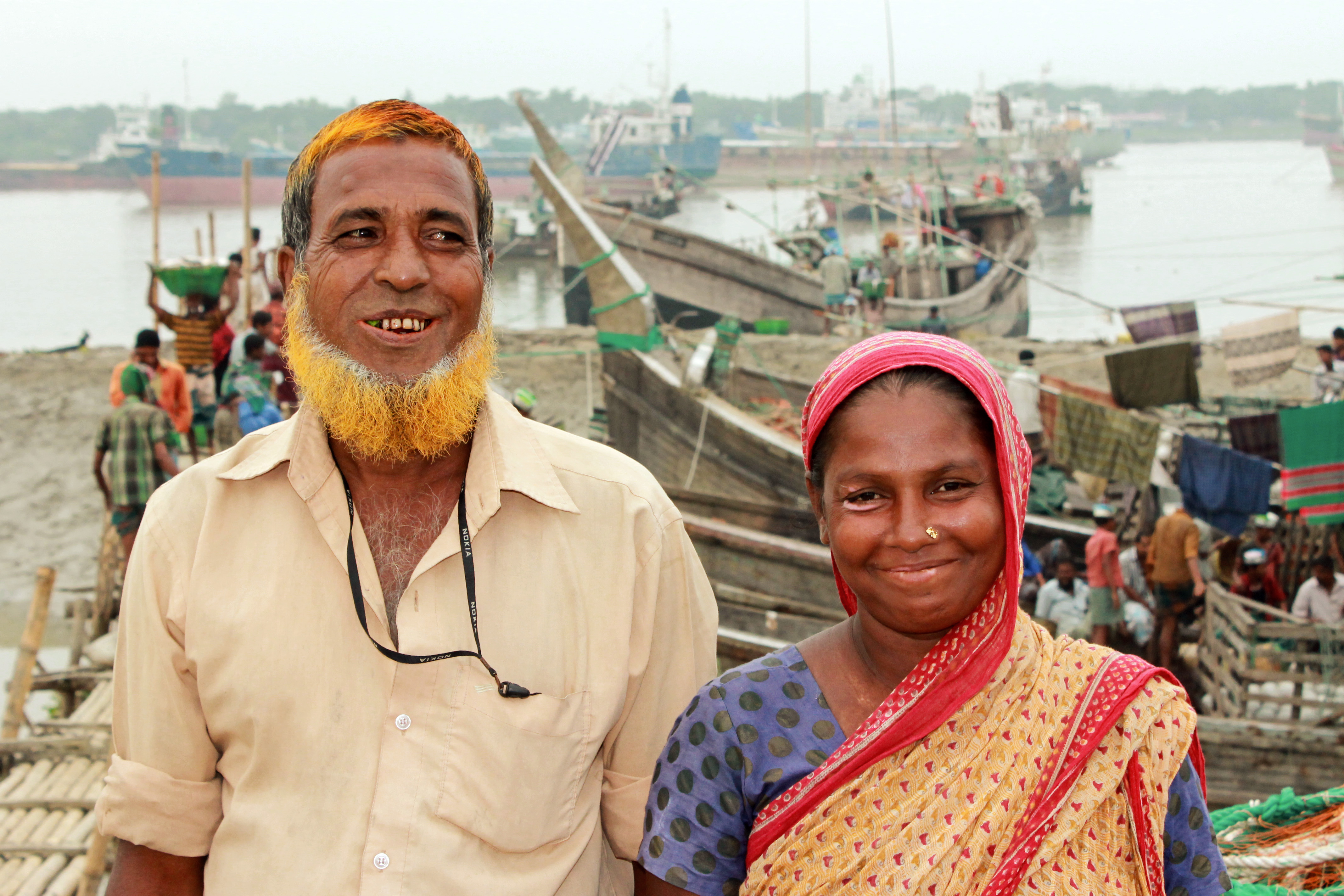
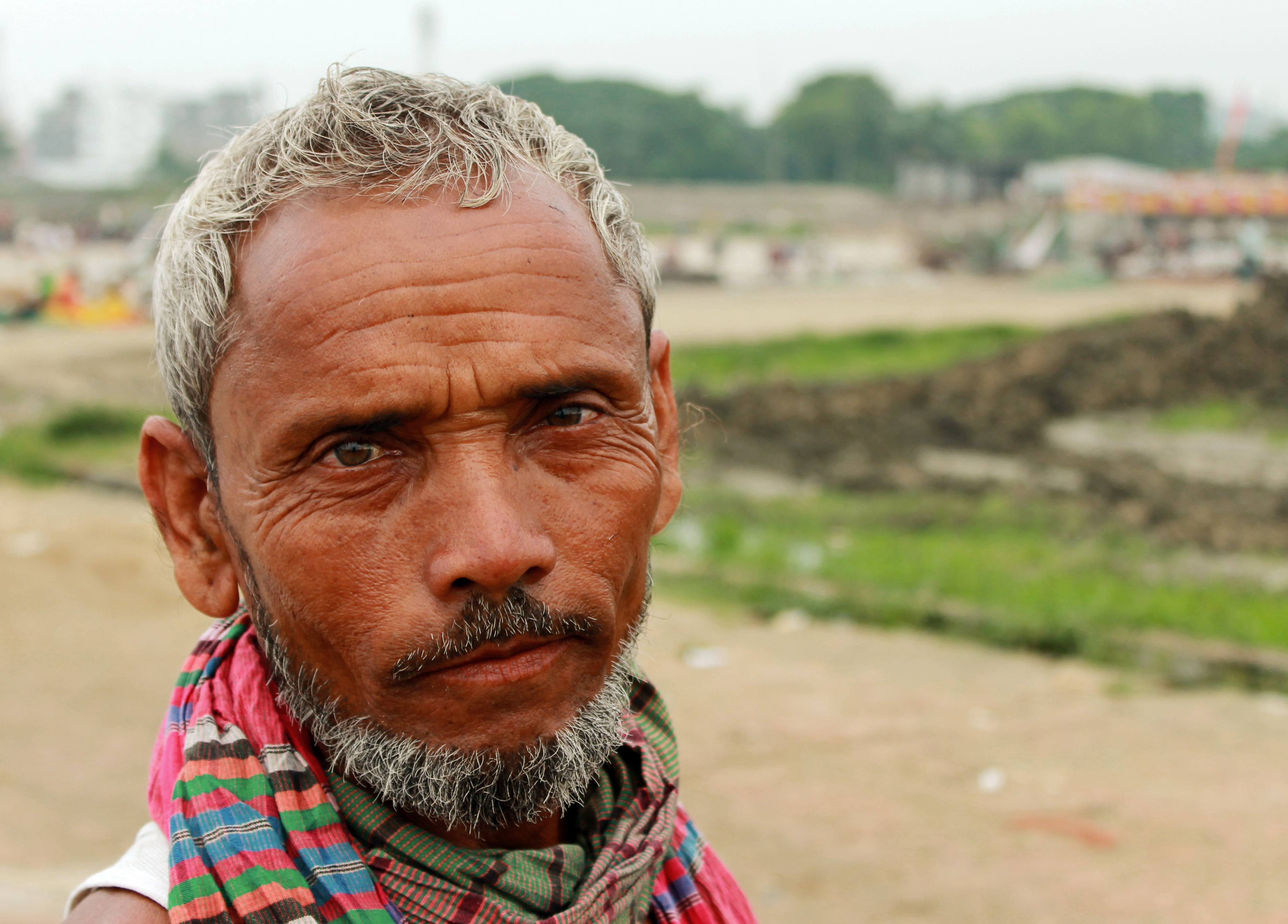
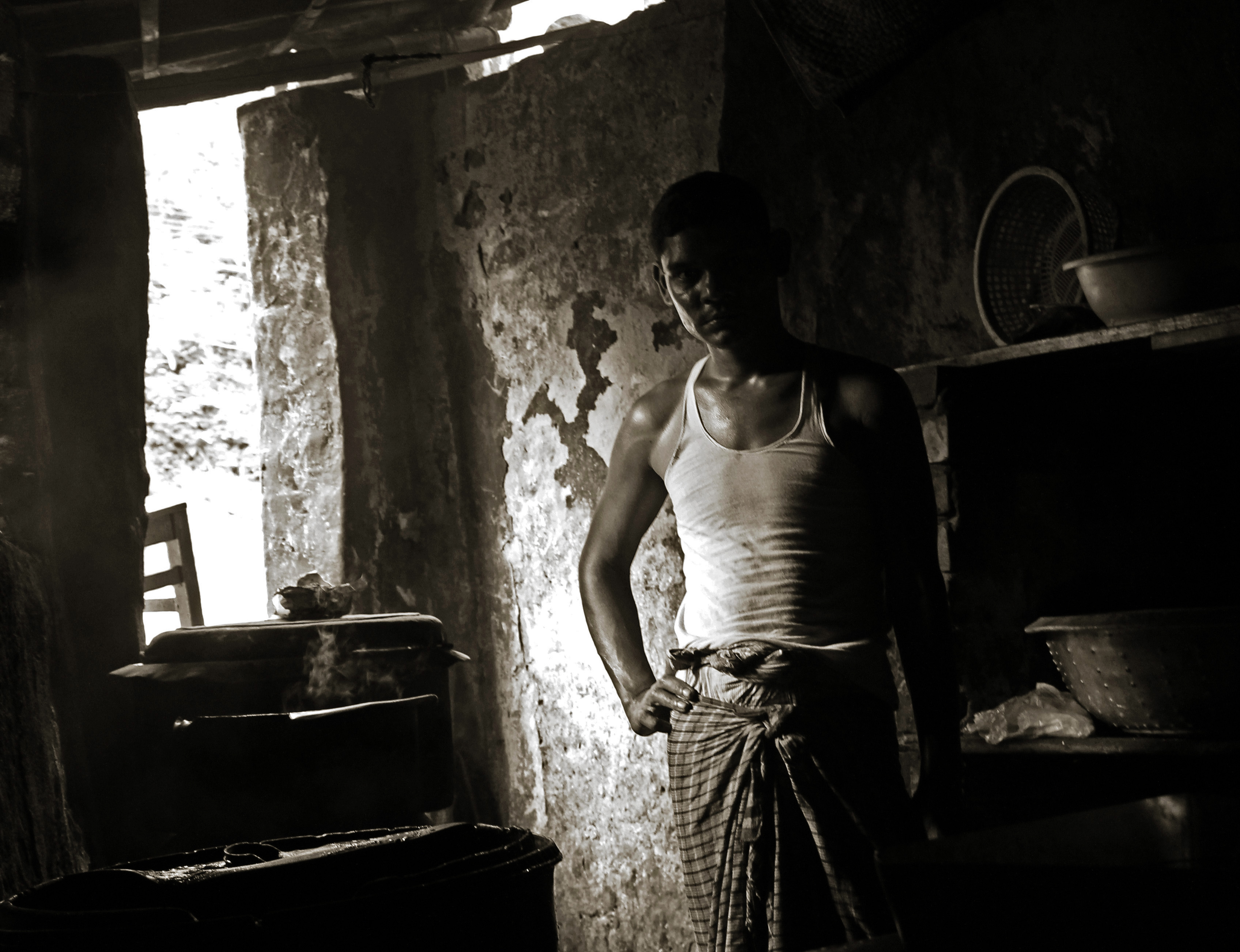
…poor people? This was a question posed to me by a student a few days ago. It stopped me in my tracks a little, and I wasn’t quite sure how to respond. In actual fact, her exact question was why do foreigners always take photos of poor people? I presumed however, given the nature of some of my recent photos, that I most probably fell firmly into this bracket and was the inspiration for her pressing question.
I thought for a second or two and my response was simple. “I don’t take photos of poor people, I take photos of people.” That’s all I could think to say when put on the spot like that. However, after contemplating it a little further, I realised that my initial response had been fairly accurate. I never actively or purposefully set out to capture images of so-called ‘poor people’ but maybe I am naively guilty of it appearing this way.
The whole question though makes me uncomfortable. One of my favourite weekend activities here in Chittagong is to wander somewhat aimlessly with my camera capturing anything that makes for an interesting shot. This pastime has earned a pronounced regularity since I returned to Bangladesh, but a simple question posed by one student has made me question every aspect of it.
My photography subject of choice here is predominantly people, so I am certainly in the right place. I cannot deny though that this does weigh heavy on my conscience at times. For example, a couple of weeks ago I visited one of the railroad communities, and as I peered down from the bridge above, I felt a certain amount of embarrassment. Why is this interesting to me? Why do I presume it’ll be interesting to the people I eventually share the photos with? All I can say is that it is different. That is all. Different in so many ways.
I really appreciate this quote from Dorothea Lange,
“The camera is an instrument that teaches people how to see without a camera.”
Living in Bangladesh, I want my photos to represent life in all its forms here. So when I share them, my hope is that viewers will see beyond just the single image. I want people to be able to contemplate this country and the people of this country in a much deeper capacity.
The residents of the railroad communities, I would hazard to guess, are poor in the most simple and raw form of the word and in the sense that their single image suggests. However, who am I, or we to judge if they are poor? And how do we define poor? That is not something for me to do, and it is not something I want to do. All I want to do is take photos of people, not poor people…people.
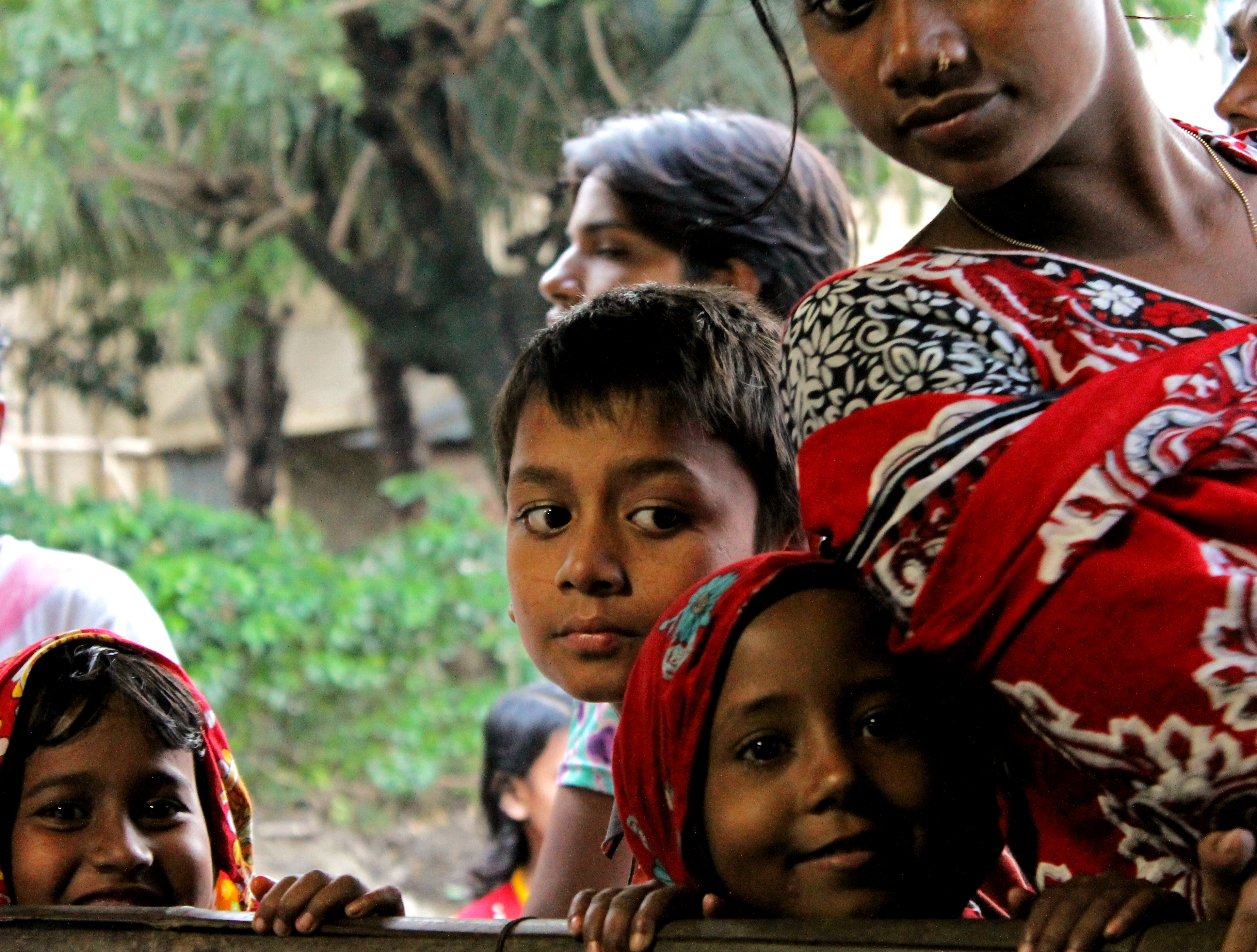
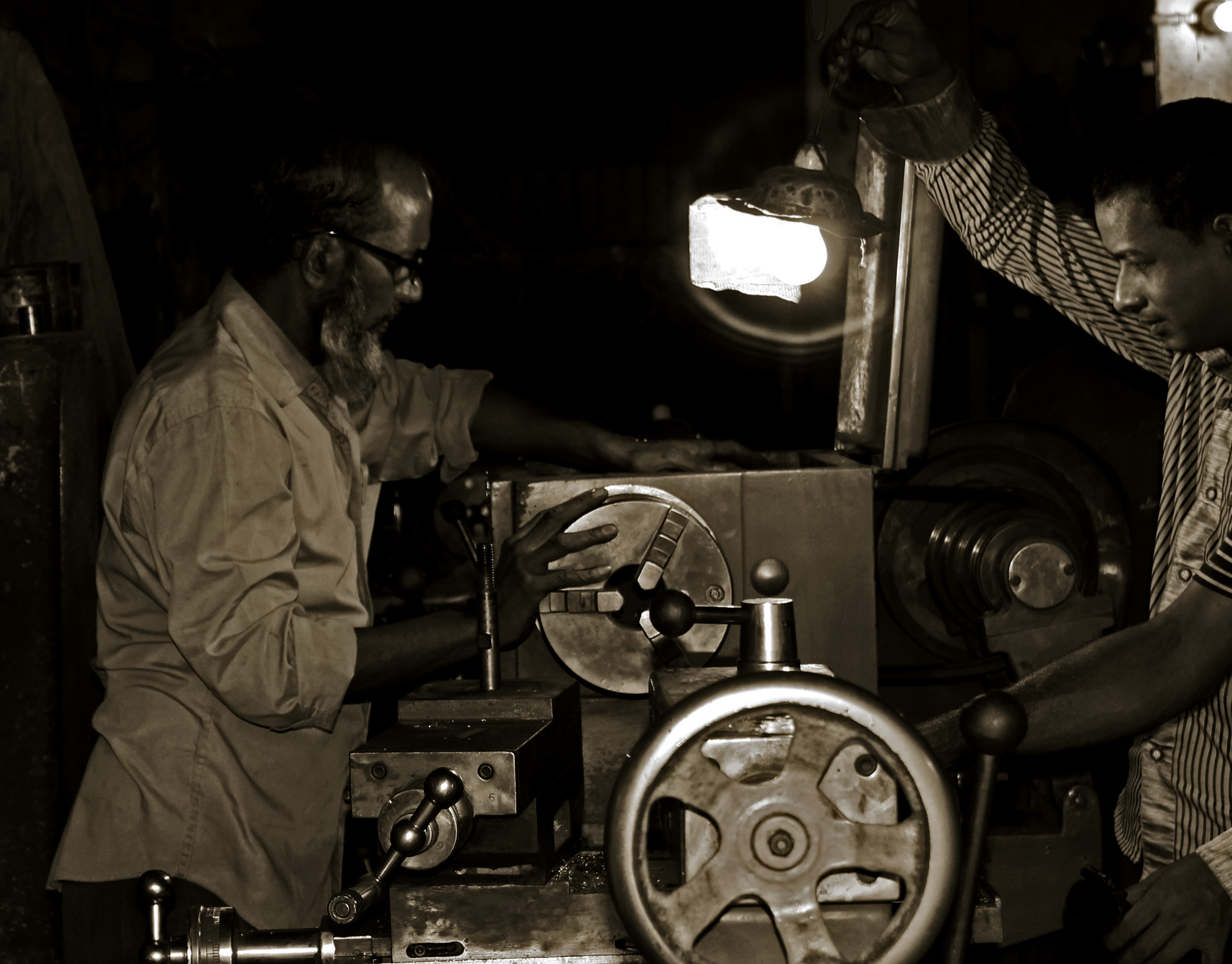
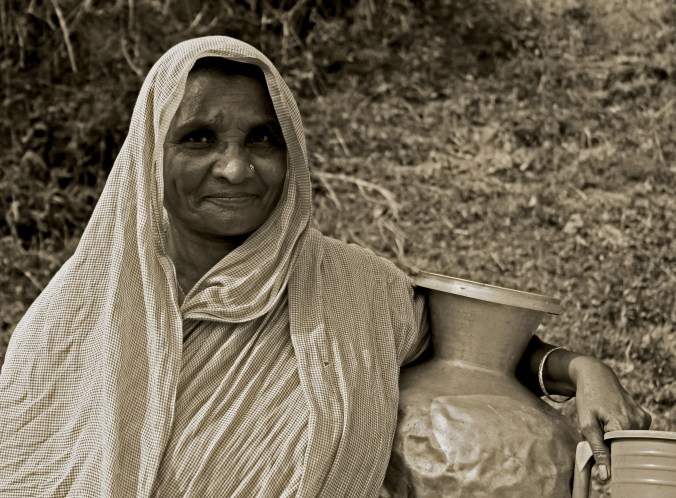
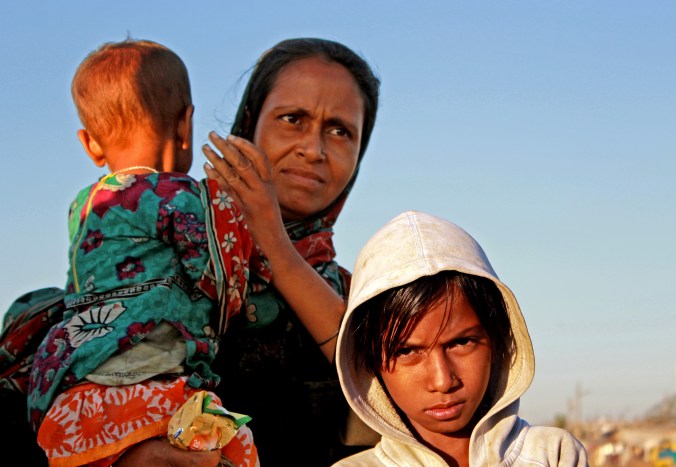
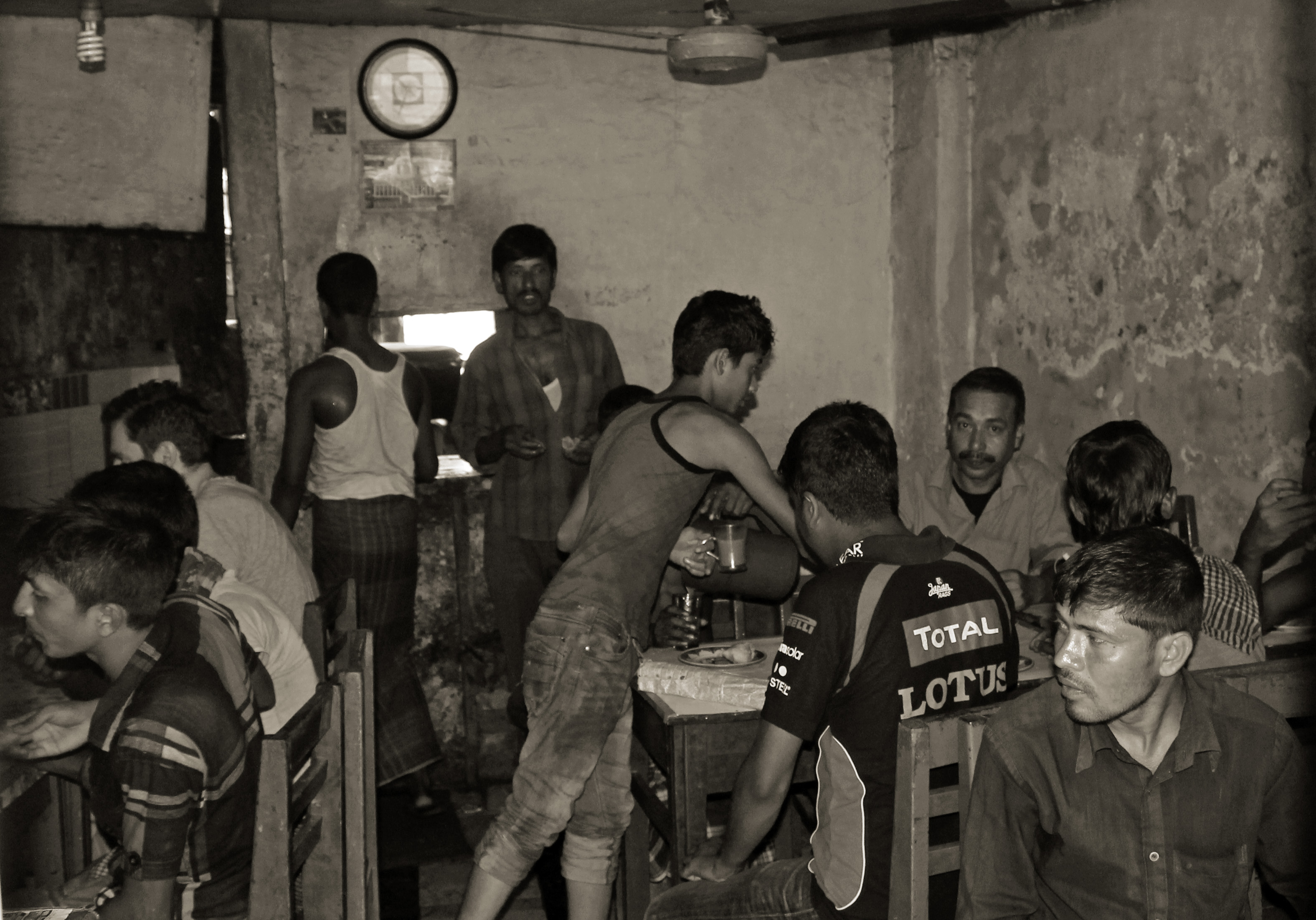
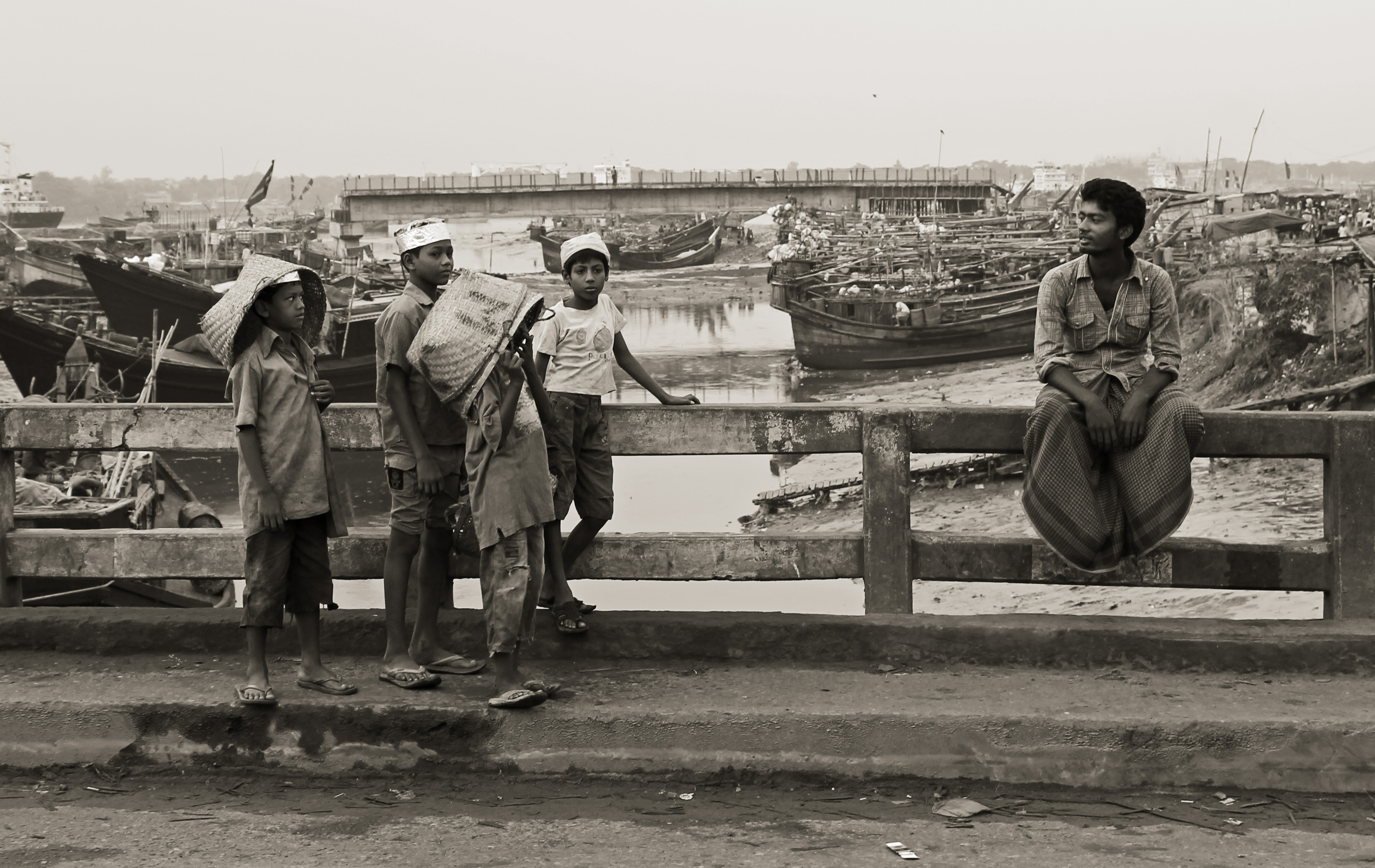
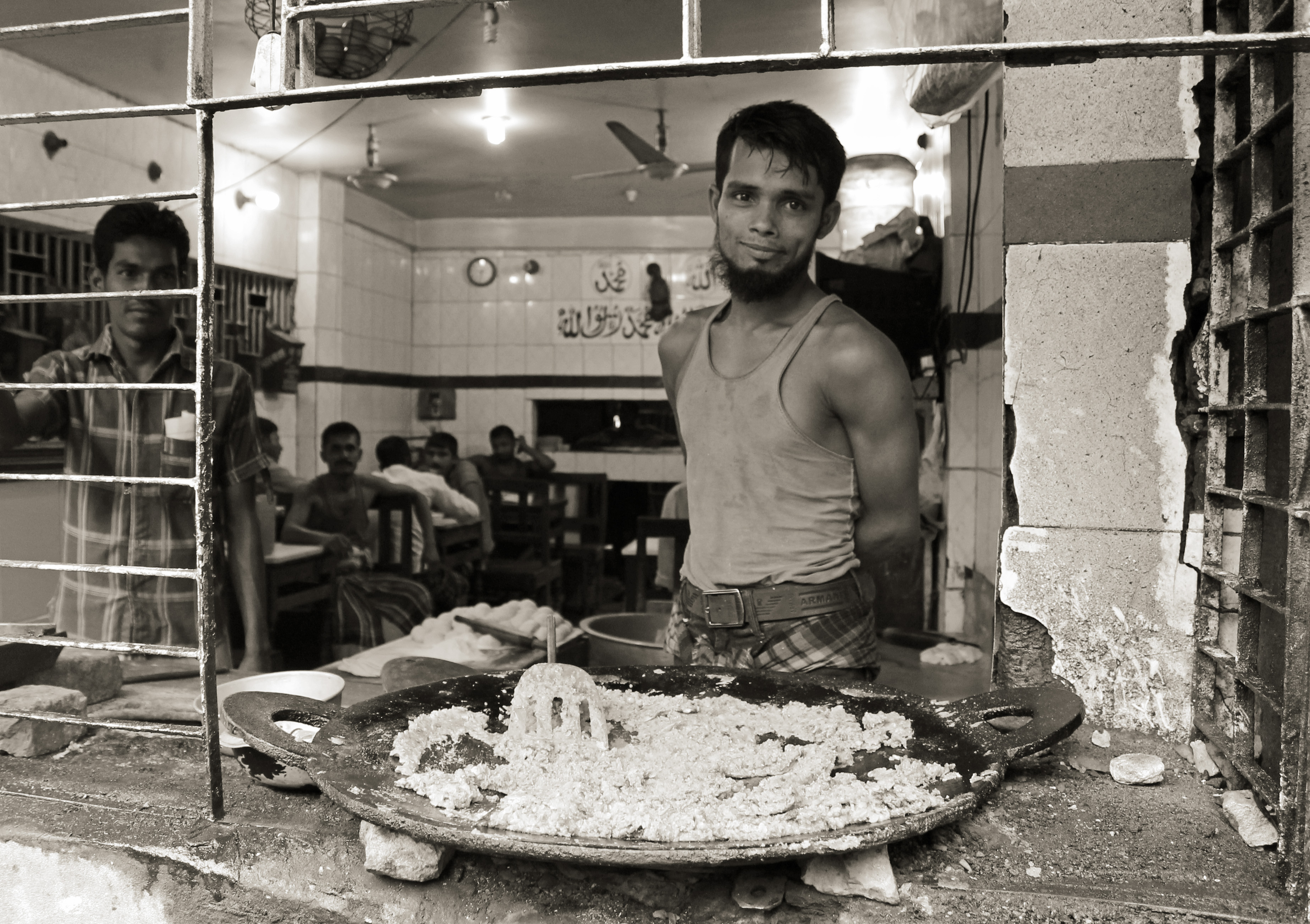
Therefore, here is a collection of images representing just a tiny corner of Chittagong, Bangladesh taken quite recently in the past few weeks. And here is one more quote;
“A portrait is not a likeness. The moment an emotion or fact is transformed into a photograph it is no longer a fact but an opinion. There is no such thing as inaccuracy in a photograph. All photographs are accurate. None of them is the truth. ” – Richard Avedon
Spreading the gospel. That’s how my Dad has always described my jaunts to far flung lands. He’s not talking about religion however. No, he always ensures I pack my large green and white flag, my shirt, and an up to date fixture list.
Saturday, September 21st 1991. Two months shy of my eighth birthday I received my first taste of watching Plymouth Argyle Football Club. In 1959 my Dad had made the same journey with his Dad, and thirty two years on it was my turn. I recall very little of the day, and it wasn’t until I’d been to a few more games that I became enraptured by the sights, sounds, and smells of watching live football, and specifically Argyle. However, that first experience was enough to initiate a relationship that has lasted twenty two years and counting. Incidentally the game ended Plymouth Argyle 1-1 Middlesbrough. I’m sure it wasn’t too long before I witnessed my first defeat.
In the past few years I’ve lived in the Czech Republic, Rwanda, Guyana and Bangladesh – my current home. My flag has been to all. However, I think it has at long last found its final resting place.
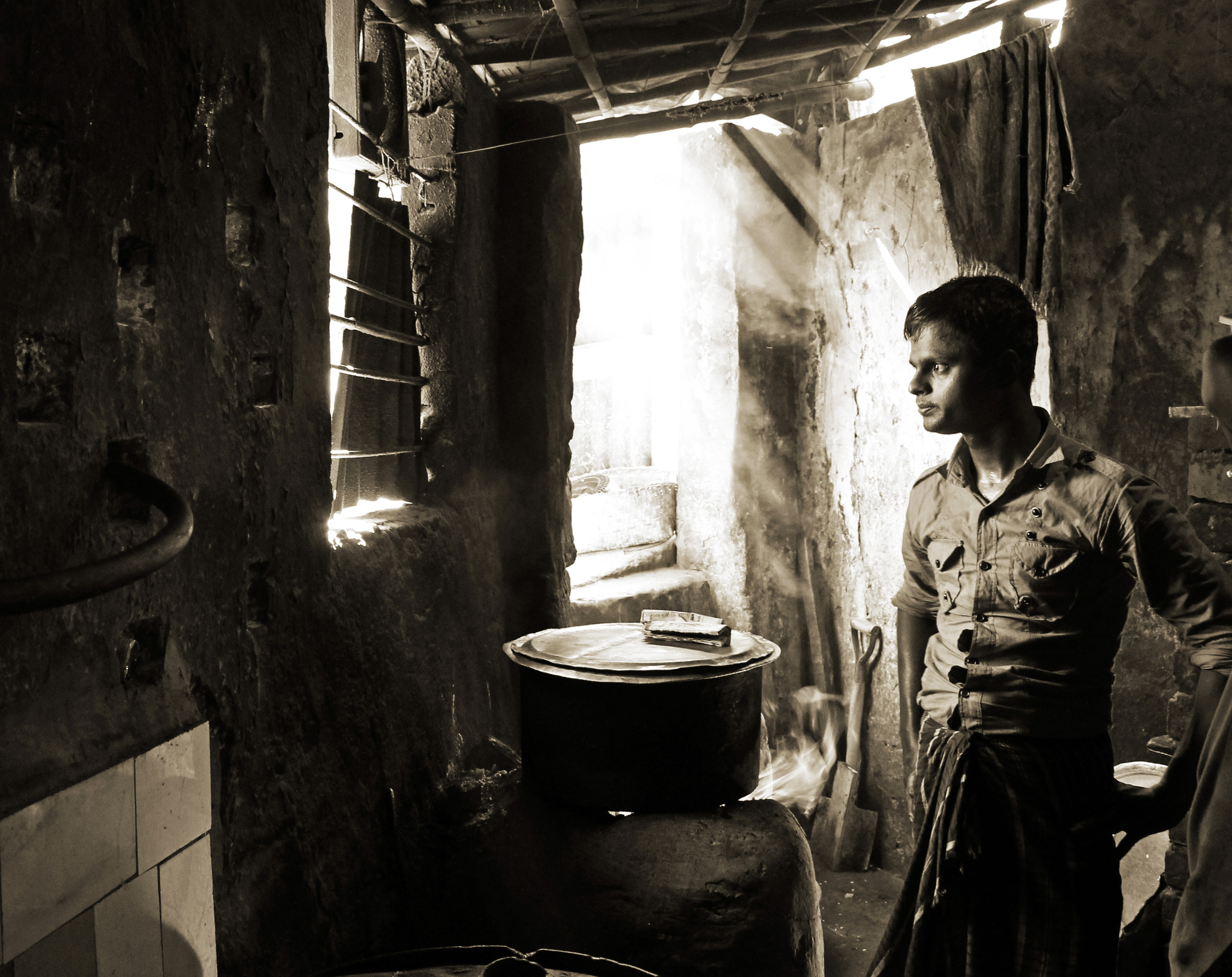
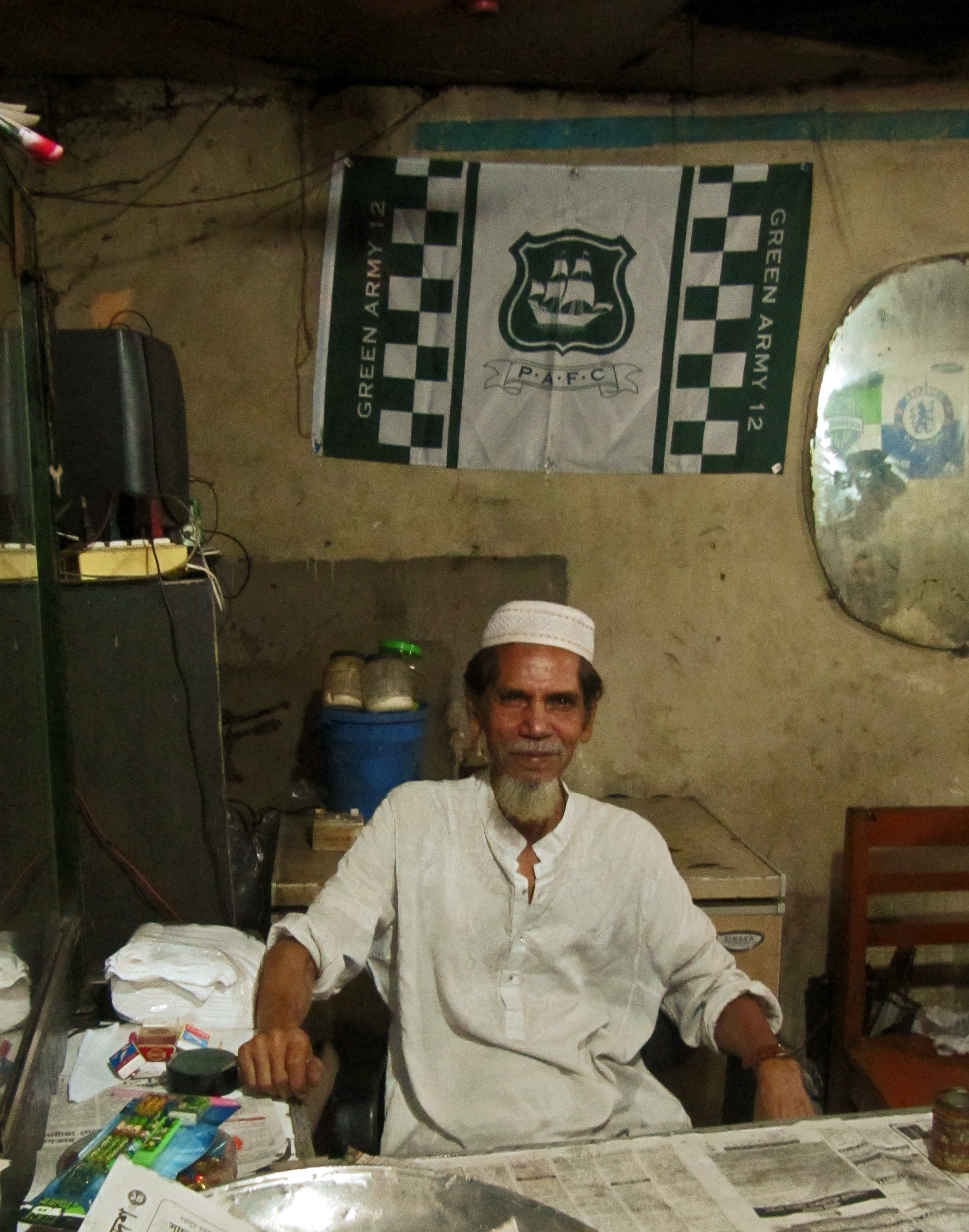
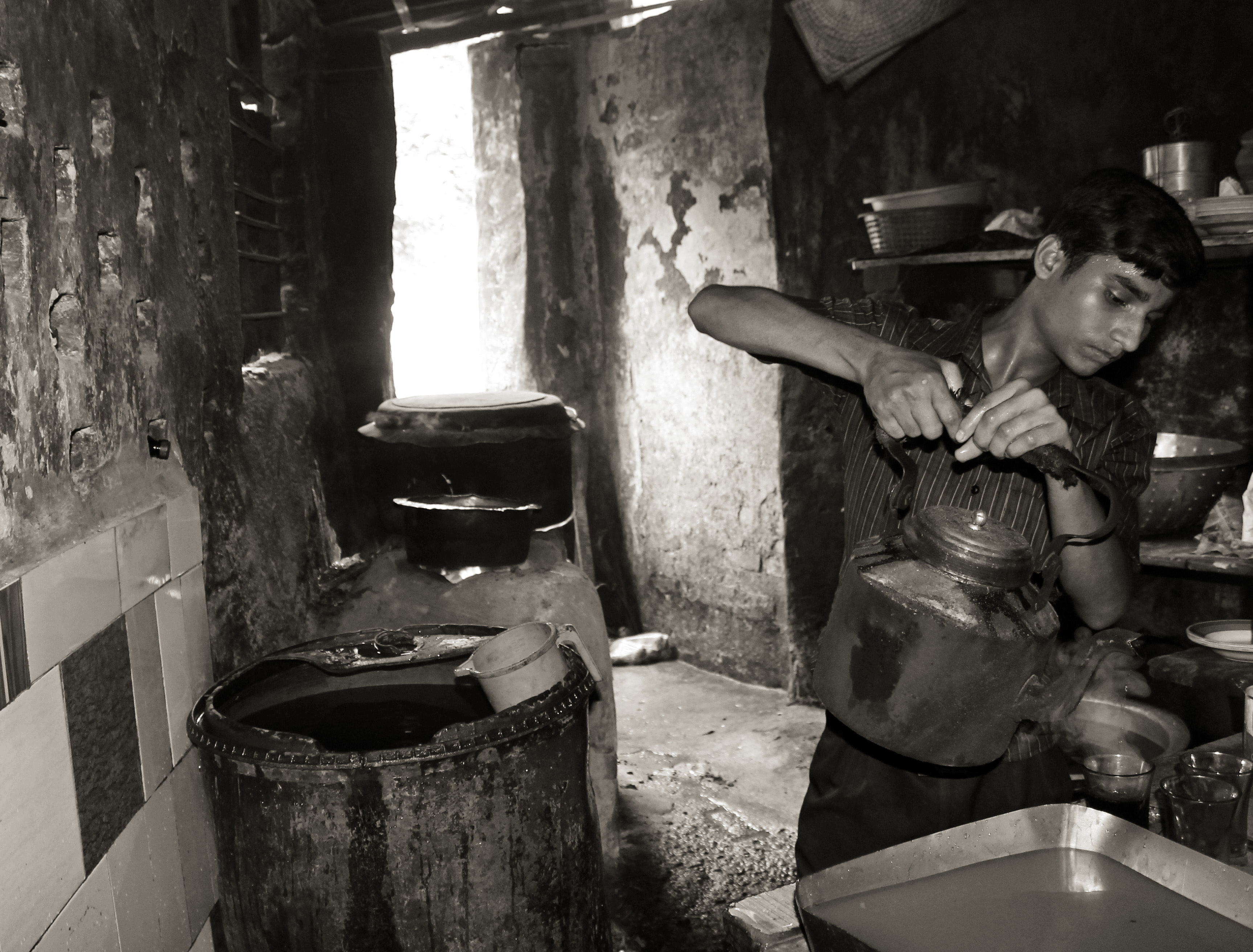
At the end of my street there is a modest tea shop that serves the labourers, the rickshaw drivers and other locals from the area. It is an unassuming, simple place. Every day smoke billows from the cave-like kitchen at the rear, and men come and go, never stopping for any great length of time, there are things to do. I found out recently, it is also a place full of great warmth and hospitality.
My flatmate John and I decided to stop by there one morning. We drank tea, ate snacks and conversed with the other tea drinkers using our very limited Banlga skills, and then we came to pay. “No pay. My guests. No pay” was the response from the owner, Mr Golam, who sat at a small desk by the entrance. We smiled and thanked him, and then politely offered our money once again. His response was the same. We left feeling grateful, humbled, and yet a little embarrassed.
Later that week we stopped by again, and when it came to pay his response was as before. “No pay, my guests, you come every day, no pay.” We remonstrated politely again, but were left equally embarrassed and a little frustrated. Two further visits followed, and still no Taka left our wallets. It seemed all attempts to pay were futile, so alternative methods would have to be employed to show our appreciation.
We decided gifts would be our new means of payment, and it didn’t take long to decide on our first offering. The wall of our living room was decorated with two flags. One displaying the green and blue of John’s team, Seattle Sounders FC, and the other the green and white of Plymouth Argyle. We took them down to the tea shop and handed them over to our new friend. His walls were bare, so we hoped he would appreciate the flags. He took them, thanked us, folded and then placed them on the desk in the corner. We left (after not paying once again) wondering if our flags would make it up onto the wall.
A couple of days later we walked past and had a quick glance in. There they were, in all their glory, pinned proudly to the wall of the tiny tea shop. My Argyle flag looked more majestic than it ever had before. It was decided that the pinning of our flags to the wall was an occasion deserving of more tea, so we sat and explained the importance of the new wall decorations to an array of other tea shop proprietors. Spreading the gospel, one step at a time.
The tea shop has now become our ‘regular’, and once or twice a week we stop by and sit for a while. AUW is a wonderful environment to work in, but it can become claustrophobic. We are shuttled from our apartments to the campus early in the morning, and once work is done for the day we are shuttled back home. It often takes a conscious effort to search for interactions outside of this bubble. For us the tea shop is our life outside of AUW and our connection to the real Chittagong.
The Chittagong we have encountered in the tea shop is quite fascinating. The diversity of the clientele has been a source of intrigue as we’ve met local students, rickshawalahs, security guards, and even a former UN peacekeeper in the Congo. The reaction from one and all though has been consistent. We are always welcomed, always looked after, and always thoroughly humbled by the generosity and warmth of our hosts.
Personally I feel significantly more connected and a part of this corner of Chittagong than I ever have before. Faces are familiar, I recognize and exchange greetings with people as I walk the streets, and I have a place to go if I need a reminder of just why I was drawn back to this place . Describing the shop and its owner, one of the students sipping tea told me yesterday, “This isn’t just a tea shop. This man is like a father to us. If we need help, he helps us.” Observing the comings and goings for a while it seemed this applied to many others. Mr Golam is generally a man of few words, but when he speaks you listen, and when he smiles you know the warmth is genuine.
We asked him recently how long the shop has been serving tea to the locals and he replied, “forty years, before me my father.” It is quite difficult to even comprehend this fact, but it also makes sense. In a society where community is often so important, this tea shop plays a pivotal role.
I wonder if my green Argyle flag will adorn the walls of this shop for the next forty years.
Armed with a new camera, I have been exploring Chittagong a little more by foot in the past couple of weeks. Last weekend it took me to the fisheries market. Arriving at 4.45am, we waited for the sun to rise and for the energy of a new day to dawn.
By this time however men were already rushing by, scooping the night’s catch out of nets and piling it upon waiting baskets and wagons. The tea shacks were already serving hot, sweet tea to the various workers, and it was difficult to sense quite when night ended and the new day began.
The photos I was able to capture that morning reminded me of a simple, yet profound lyric from one of my favourite songs by one of my favourite bands – ‘Alone Again Or’ by Love. I hope the images speak for themselves.
“Abar ashben” roughly translates as “come again” in Bangla. In the days leading up to my departure from Bangladesh back in June 2012, these words were delivered insistently at times, and on other occasions in polite passing. At that point I gave a standard response of “Heh, heh…inshallah.” Or, “Yes, yes…god willing.” And then I left.
I wasn’t sure quite what was willing me to come again (so soon at least), but I did, and here I am, back in Bangladesh, back in Chittagong, back again. I’ve never returned to a place before. Rather, I’ve never returned to a distant land before where I have previously spent a prolonged period. However, the chance to continue working for WorldTeach and back at AUW was compelling motivation to make this a first. Two organisations close to my heart, both of which have provided me with unique experiences in the past few years, and both working in partnership here in Bangladesh. I’m proud to work for both, because not only do I get to lead another group of conscientious and dedicated WorldTeach volunteers, I also get to teach another set of inspiring AUW students, hungry for education. It’s difficult not to be motivated.
Never go back. These three words floated around in my head for a long while as I contemplated my next move. As a big football lover, I can think of various occasions when a player or manager has returned to a club only to experience a torrid second spell. For any fellow, hardy Plymouth Argyle fans out there….Paul Sturrock. Yet, I was willing to risk this for the reasons given above, and after one month back in Bangladesh I so far feel satisfied with my decision
In the coming months I hope to once again utilize my blog to express my experiences, though more importantly I would like to use it as a platform for other stories, for other images, and for other perspectives. For anyone still reading I say thanks, and I will try to ensure I keep you interested so that you too ‘come again’ to my blog.
Abar Ashben!
Here are some photos taken since my return. The second photo shows the WorldTeach Bangladesh group and Dr. Fahima Aziz, AUW Vice Chancellor (third from right).
Sunday, May 5th 2013 was a notable date here in Guyana. It marked the anniversary of an event which played a huge part in shaping the face of the Guyana you find today. Exactly 175 years ago to the day, on May 5th 1838, the very first indentured Indian labourers arrived to work in the sugar plantations of the then British colony of Guyana. They weren’t ‘slaves’ as such, however their workers’ rights were neglected and conditions were often poor. They did however have the right to repatriation in India after five years. Some took up this offer, others decided to make Guyana their permanent home.
Over 200,000 workers in total made the journey from Asia to South America in the 19th century, and possibly the most telling statistic of all is descendants of those immigrant workers now account for 44% of the total population in 2013. The Indo-Guyanese are therefore officially the largest ethnic group in Guyana.
One aspect of this country that has intrigued me most during my time here has been the incredible diversity. For a nation modest in geographical area and with a total population comparable to the city of Leeds (UK), or Austin (Texas), Guyana is a melting pot for such a diverse range of cultures, peoples, languages, and traditions. In addition to the Indo-Guyanese; Afro-Guyanese account for 30% of the population, whilst mixed heritage Guyanese make up 16%. The Amerindian (indigenous) community accounts for the remaining 10%, aside from small Brazilian/Portuguese and Chinese communities.
This diversity manifests itself in so many aspects of Guyanese society. As I touched upon in a previous blog post, language is certainly a strong reflection, with the presence of English, Creole, Portuguese, Spanish, Chinese, and nine Amerindian dialects. Cuisine is another. The popular ‘cookup’ is a Caribbean style dish made of rice, beans, meat, coconut and various vegetables all cooked together in one pot. Curry and roti dishes are readily available and popular, as are Chinese options, including the Guyanese style chow mein. Meat eaters get their fix at various Brazilian barbeques, and Amerindian cuisine is known for the spicy beef or pork stew, Pepperpot – customarily eaten during the Christmas period.
Music and dance is another diverse characteristic of Guyana. Traditional south Asian beats, tablas and sitars, and popular Bollywood songs frequently fill the air. Calypso, Soca, and Reggae are equally prevalent, and a reminder that despite being part of mainland South America, Guyana is very much influenced by its Caribbean connection. Brazilian and traditional South American music is also a common sound.
However, I feel I’ve been struck most by the religious diversity of this country, which is quite evident in Georgetown. Perhaps it’s because my eighteen months prior to Guyana were spent in the predominantly Islamic state of Bangladesh, where 90% of the population identify themselves as Muslim. My religious experiences were therefore defined by the distinct daily call to prayer, the abundance of traditional Islamic dress, and the Mosques of varying shapes and sizes. There is of course a sizeable Hindu community in Bangladesh as well as a modest number of Buddhists. Yet, overall society is defined by the teachings and values of the Qu’ran.
Prashad Nagar Masjid, Georgetown
Christianity is the most widespread faith in Guyana, but given the history I touched upon earlier in this post, Hinduism is also very visible. Islam has a noticeable presence, despite being less represented in terms of actual followers.
From my front porch if you look to your left you will see a large Seventh Day Adventist Church, and if you look to your right you will see the towering structure of Guyana’s newest and biggest Mosque (currently under construction).
In the foreground a church and behind this Guyana’s newest mosque.
I decided a few weeks back to take a series of photos that would demonstrate Georgetown’s religious diversity, and I’d like to present these in this blog post.
(The images are best viewed in full screen mode!)
Christianity
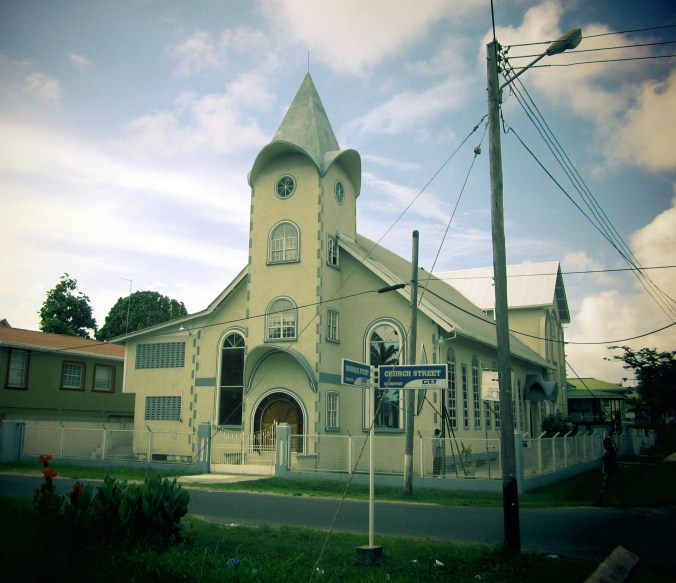
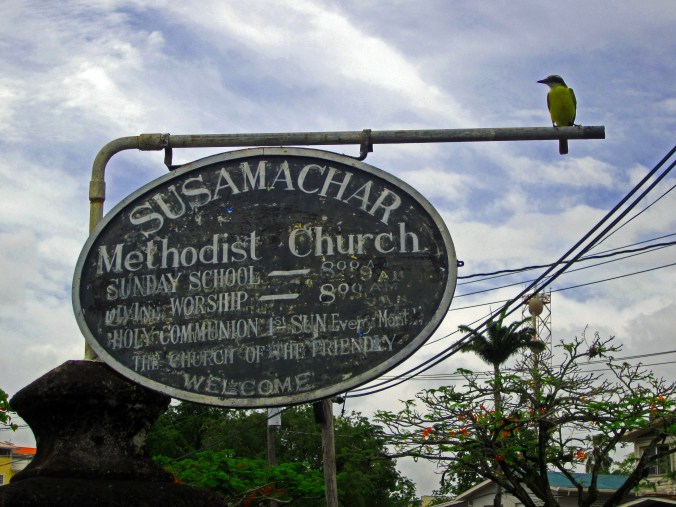
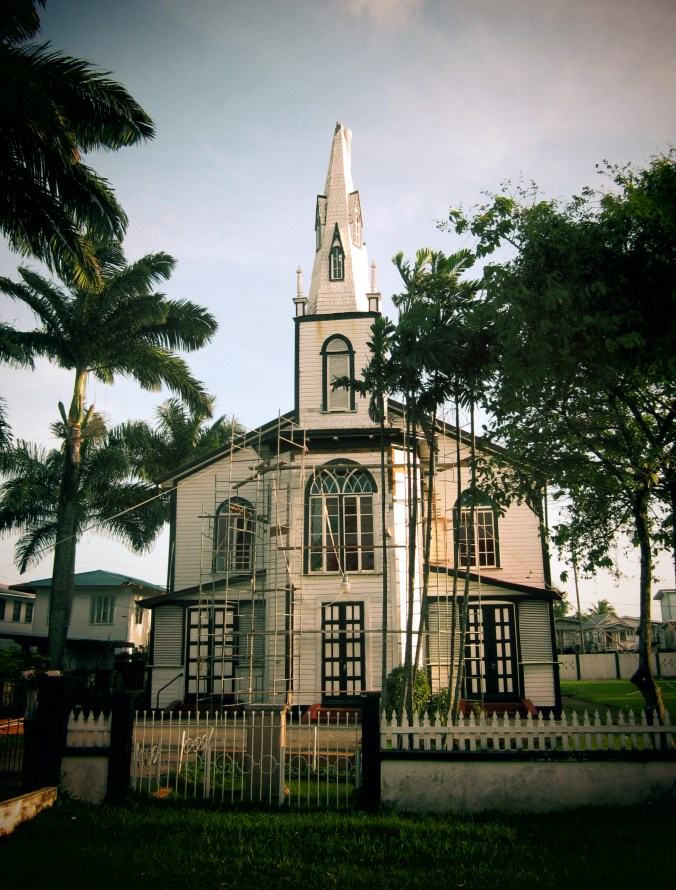
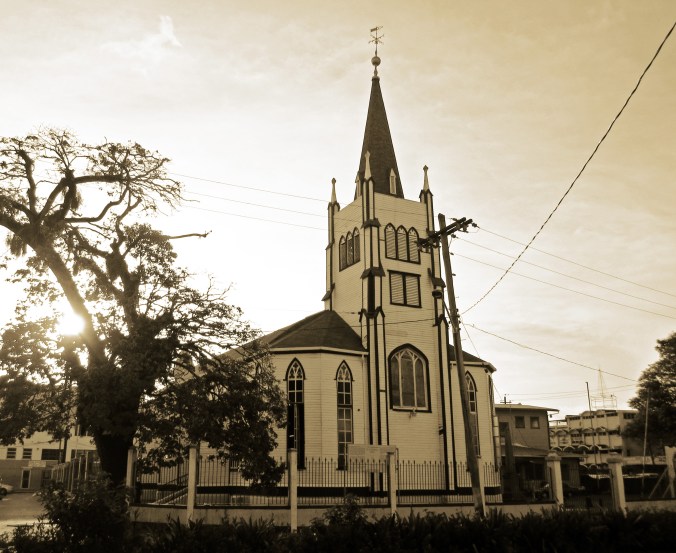
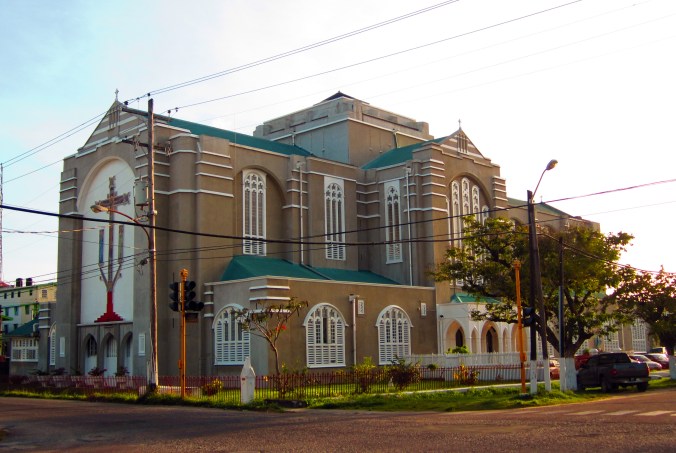
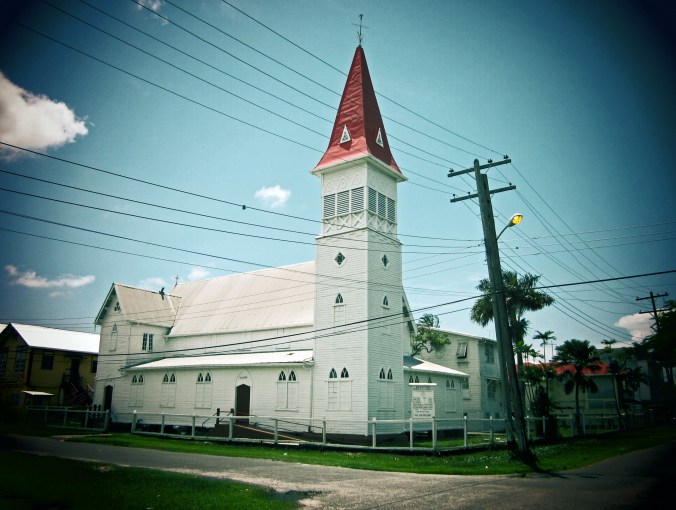
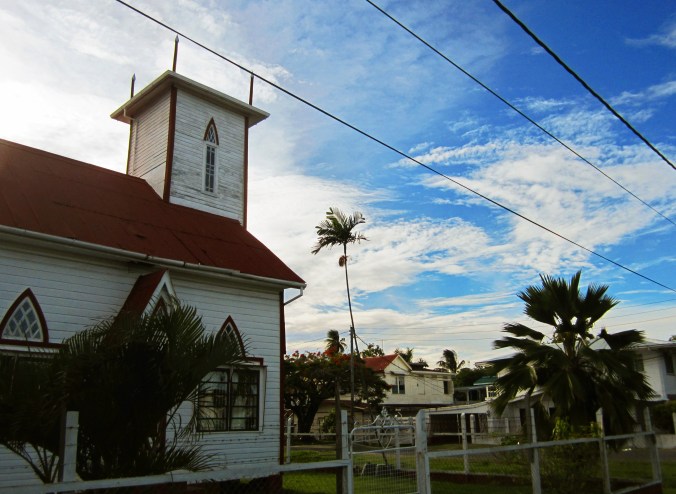
I’ll begin with the most followed faith in Guyana. It is estimated that 57% of the population are Christian, of which various denominations are present. Below is a selection of images showing the churches of varying shapes and sizes across Georgetown, most of which were built during colonial administration and therefore possess a significant degree of historical and architectural charm.
Susamachar Methodist Church, Georgetown
St George’s Anglican Cathedral, Georgetown
Smith Memorial Church – built in 1844
St Andrew’s Kirk, Presbyterian Church – The oldest building in Guyana, built in 1818.
Brickdam Cathedral (Cathedral of the Immaculate Conception) – built 1920s
Burn’s Memorial Presbyterian Church, Georgetown
Hinduism
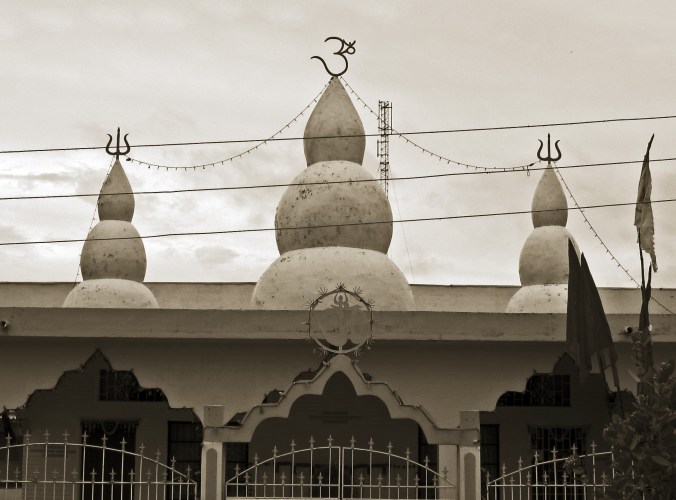
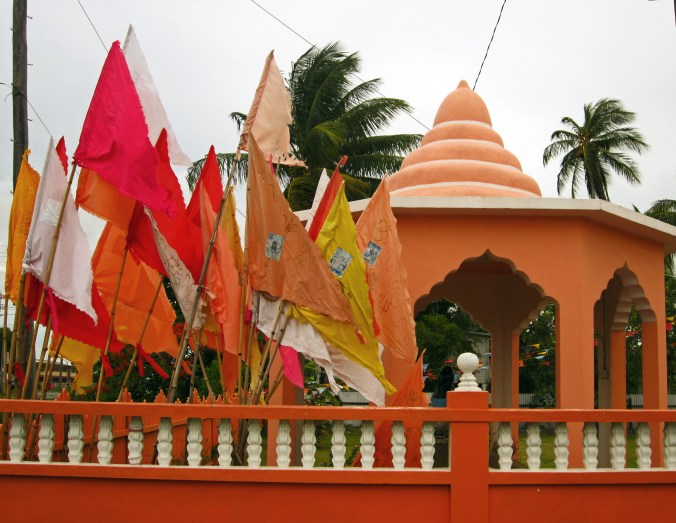
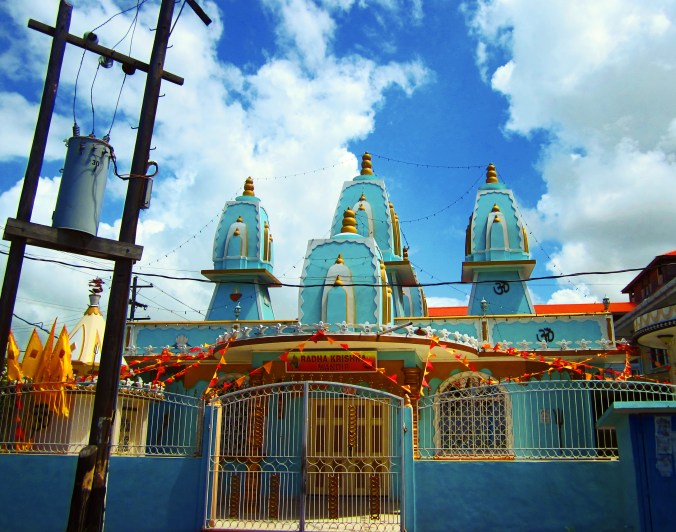
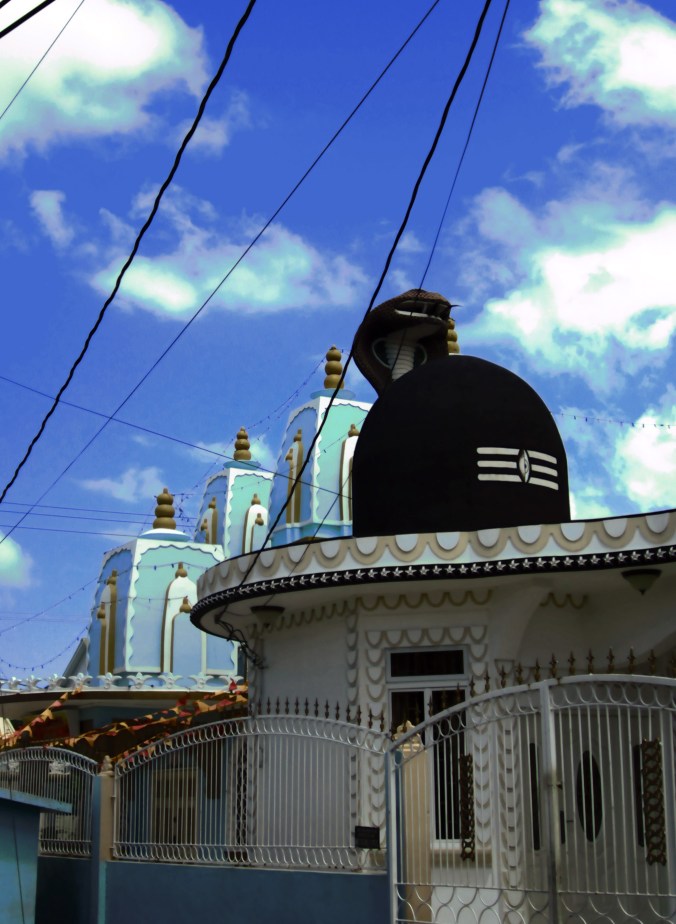
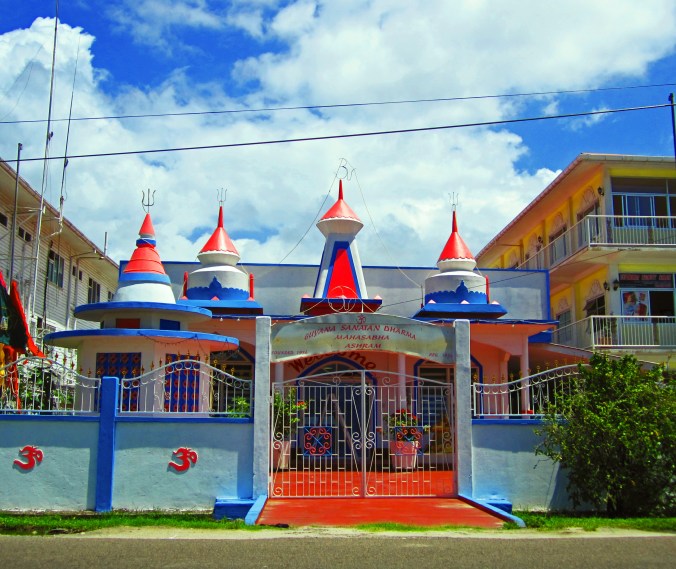
Hindus account for 28% of the population, with the presence of Hinduism a result of the vast numbers of Indian immigrants brought to Guyana in the colonial era. Below are photos taken at temples across Georgetown.
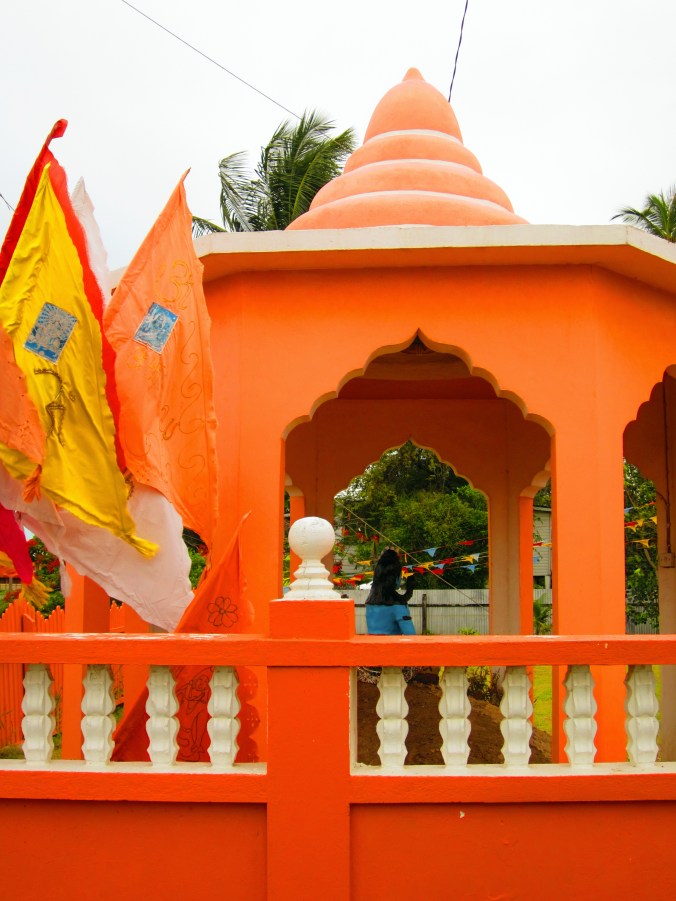
Cummings Lodge/Industry Mandir, Georgetown
Central Vaidik Mandir, Georgetown
Radha Krishna Mandir, Georgetown
Guyana Sanatan Dharma Mahasabha Ashram, founded 1934.
Islam
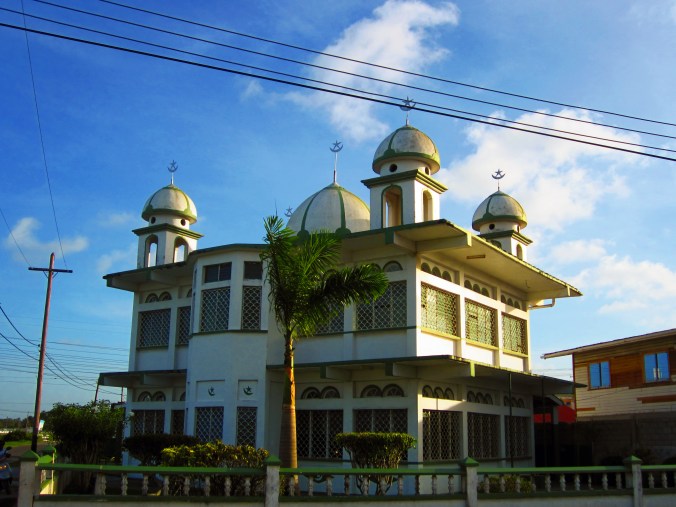
The exact root of Islam in Guyana is debated. It’s quite possible that it first arrived with a number of the West African slaves. It’s also widely accepted of course that like Hinduism, the presence of Islam is a direct result of 19th century immigration from India.
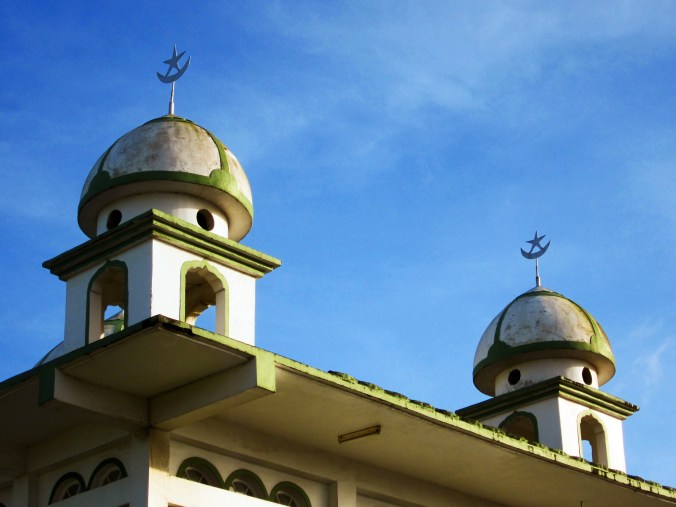
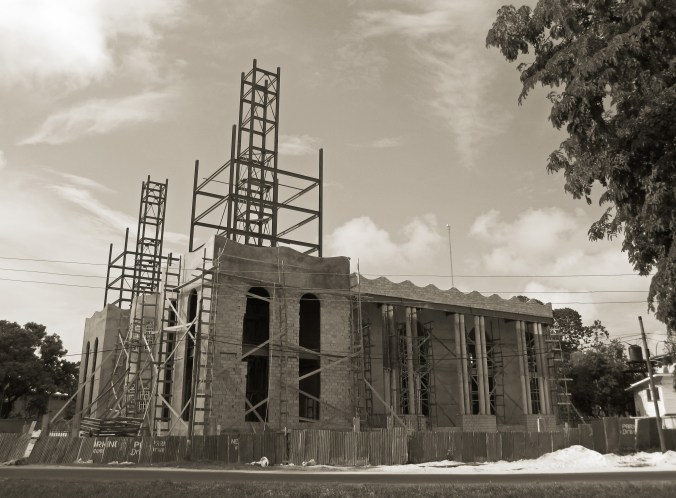
The first three images below show the new Queenstown Jama Masjid. The original was built in 1895, but succumbed to old age in 2007 and was dismantled. Upon completion it will once again sit proudly as the biggest mosque in Guyana and will be a place of prayer for much of the city’s Muslim population. It sits literally right behind my house, and I have watched its growth with great interest. When I first arrived it was merely a shell, but 10 months on it’s nearing completion and will certainly be a grand structure when finished.
Below this are images taken at other mosques across Georgetown. I’m always more intrigued by the role of Islam in society here, and I think this stems from my time in Bangladesh.
Prashad Nagar Masjid, Georgetown
Prashad Nagar Masjid, Georgetown
Queenstown Jama Masjid
Prashad Nagar Masjid, Georgetown
Queenstown Jama Masjid
Queenstown Jama Masjid
Prashad Nagar Masjid, Georgetown
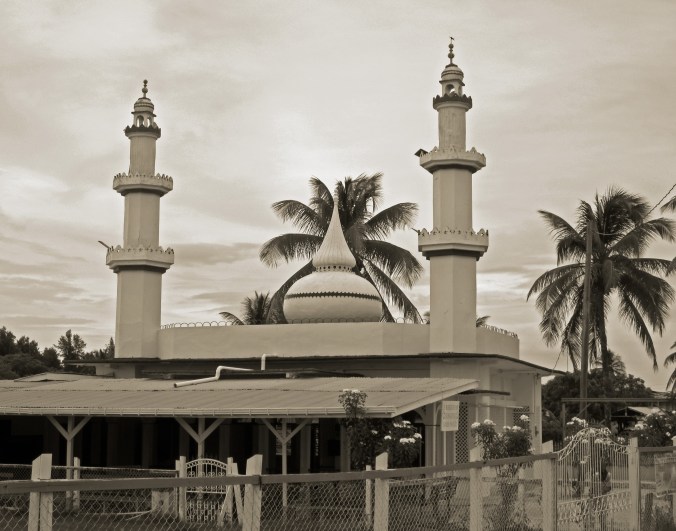
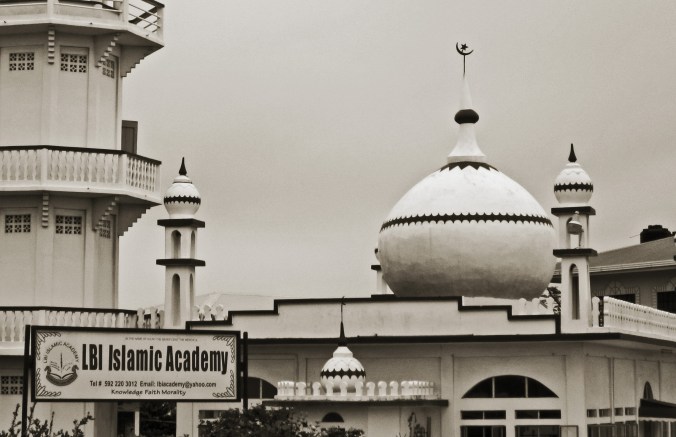
LBI (La Bonne Intention) Masjid
So there you have it, a selection of places of worship, which are dotted across Georgetown, some of which bear a connection to a bygone era when the foundations of religious faith were being laid in Guyana. My impression has been that generally speaking this is a spiritual society, signified by the vast array of ‘houses of god’, which vary in shape and size. Within one square mile of my house I believe there are at least ten different places I could visit to connect with god, if I were so inclined. I would therefore hazard a guess that there are at least fifty across the whole of Georgetown.
I could of course have delved much deeper into this subject area, but I was more interested in capturing and presenting the distinctive religious architecture that is displayed right across Georgetown. I am also pretty impressed by the manner in which religious respect seems to maintain a sound level here. Considering you have three significant world religions coexisting very openly side by side in such a concentrated area, maybe other places across the world could learn a few lessons on religious tolerance from Guyana.
It has certainly been two years packed full of discovery and adventure, and I hope my posts have given you a decent insight into some of this.
However, rather than sum up the past two years in words, I decided to choose my ten favorite photographs captured during this period, as images often have the ability to say a great deal more than words. So here goes, organized loosely in date order;
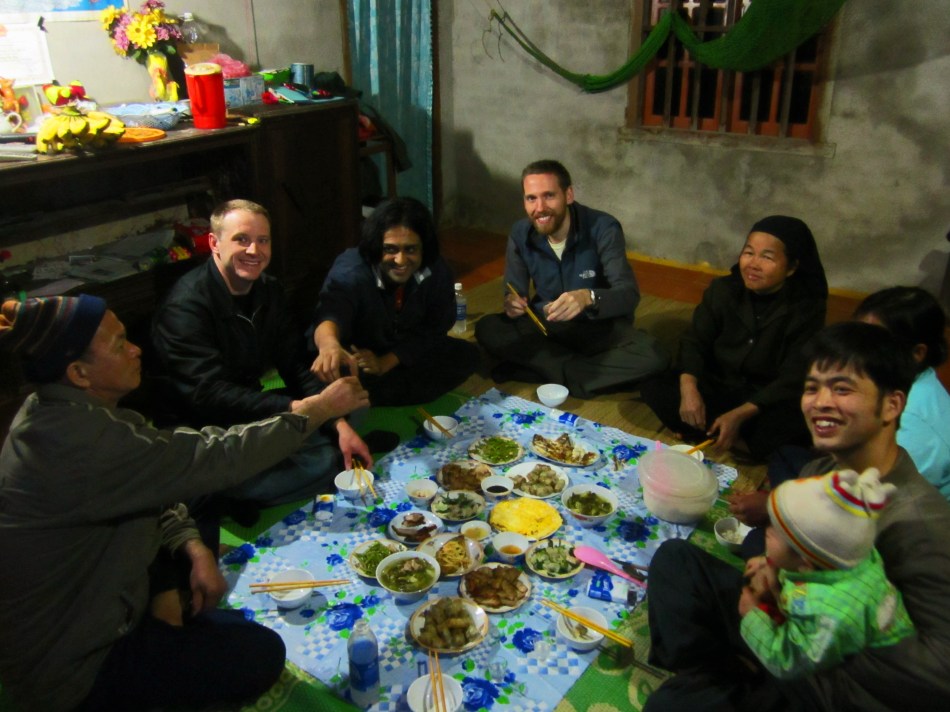
1. BaBe District, Vietnam
I chose this photo as it sums up the joy of traveling in so many ways. The new experiences, the unfamiliarity, the necessity of embracing a culture, the laughs, the friendships (old and new), the wonderful food, and often most important of all, the warmth and hospitality of the the people you encounter.
2. Hanoi, Vietnam
I love this place. I met some great people, ate some delicious food, and weaved my way precariously through the intense army of bikes and scooters that fill the roads. This photo was taken whilst I sat at a coffee shop one day. The city just felt so vibrant and full of energy.
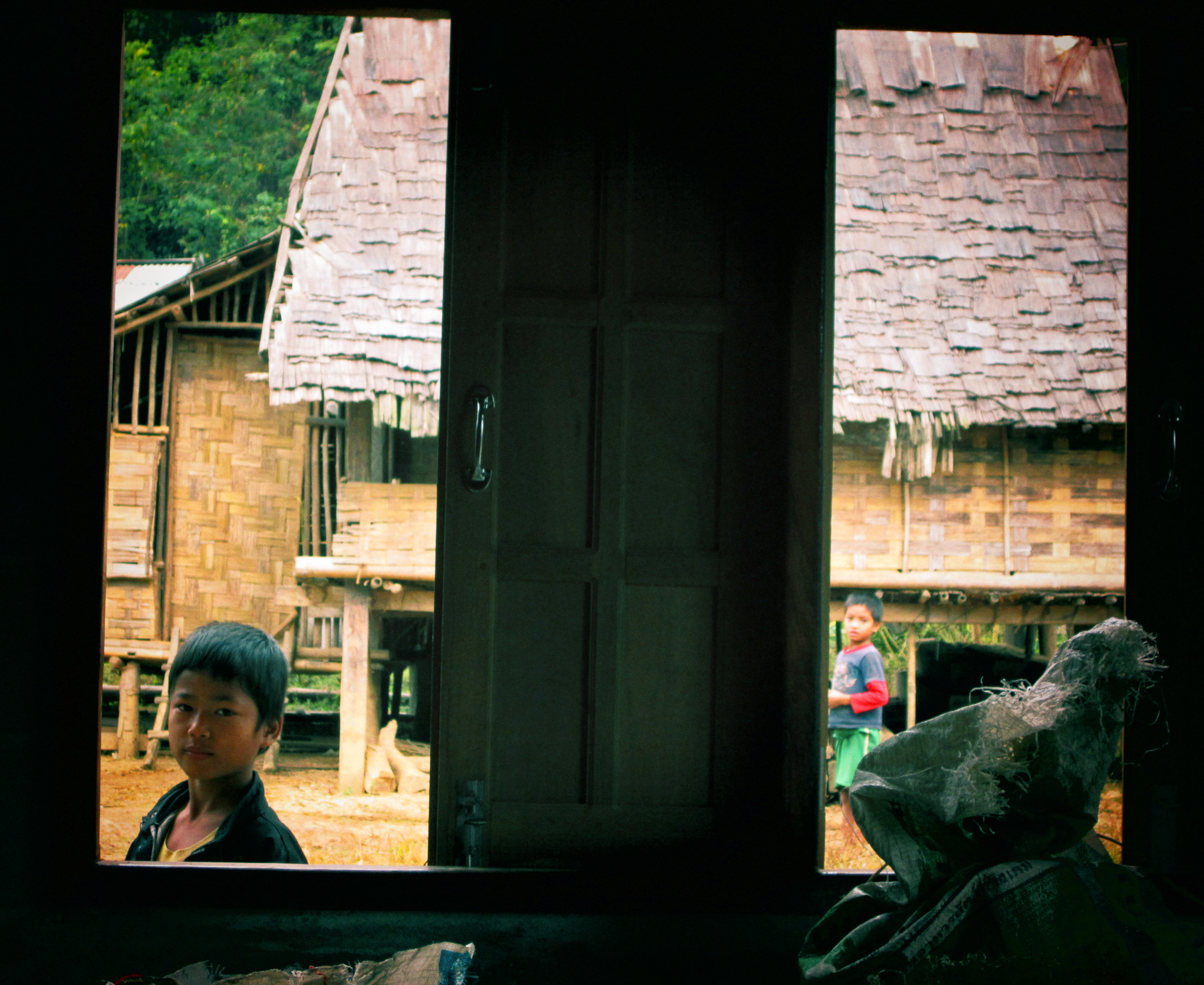
3. Xayabouri, Laos
Taken during a homestay in Laos, many of the kids in the village had peeped timidly through the window to catch a glimpse of the strange foreigners inside the house. Fortunately this boy was braver than the rest and hung about long enough for me to capture this image.
4. Chittagong, Bangladesh
One of my favorite photos from the city that became my home in Bangladesh. There is so much joy and expression in these faces, and what I appreciate most about the photo is the fact that each person is looking in a different direction, with the boy in the middle looking straight at the camera.
5. Kolkata, India
One of the first photos I took on a lone trip to India. It’s a favorite of mine due to the contrasts. Kolkata is a city full of history and tradition, yet that little ‘m’ to the bottom right speaks volumes.
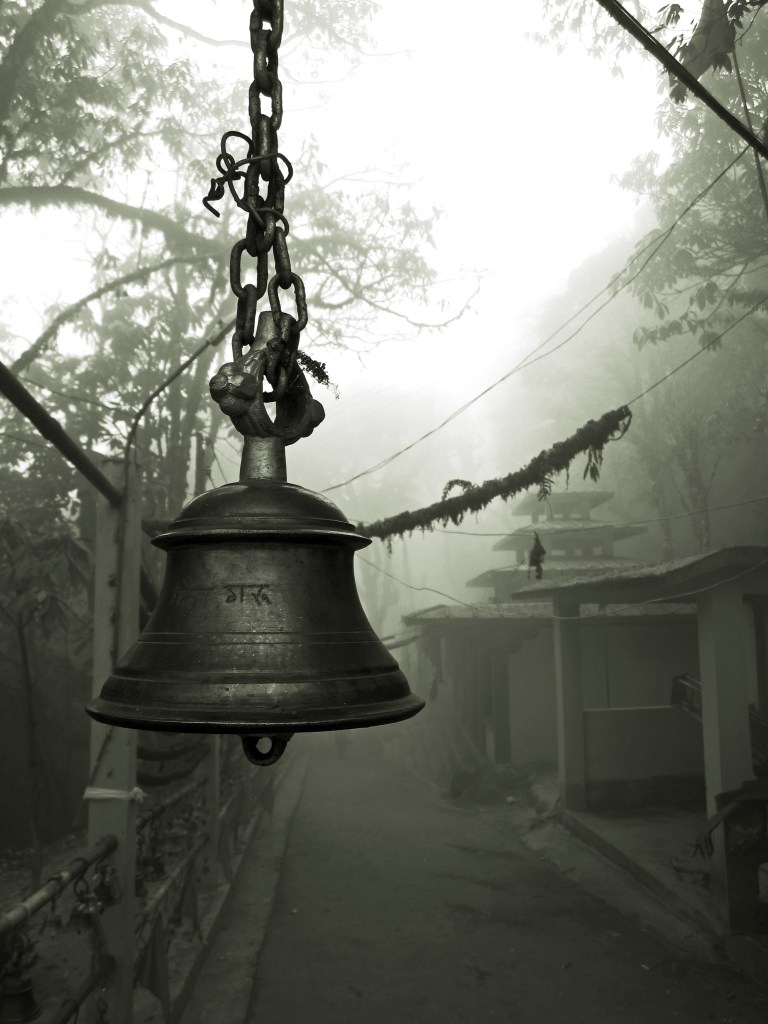
6. Darjeeling, India
Taken high up in the hills of Darjeeling, northern India, I remember being captivated by the peace and serenity of this place. Having hiked with my guide for most of the day we came across a small Hindu temple. The mist engulfed us and the area seemed deserted. It gave the impression of being so very far away from everything else in the world.
7. Banskhali, Chittagong District, Bangladesh
This was quite a day out, and I was lucky enough to capture this photo towards the end of the day which made the whole trip even more worth it. This man was the Hindu devotee at a local Charak Puja religious festival.
8. Rajshahi, Bangladesh
The waterways of Bangladesh provide a great deal to so many Bangladeshis. They are often a hive of activity, but one early evening here in Rajshahi I was taken by the tranquility of the riverside.
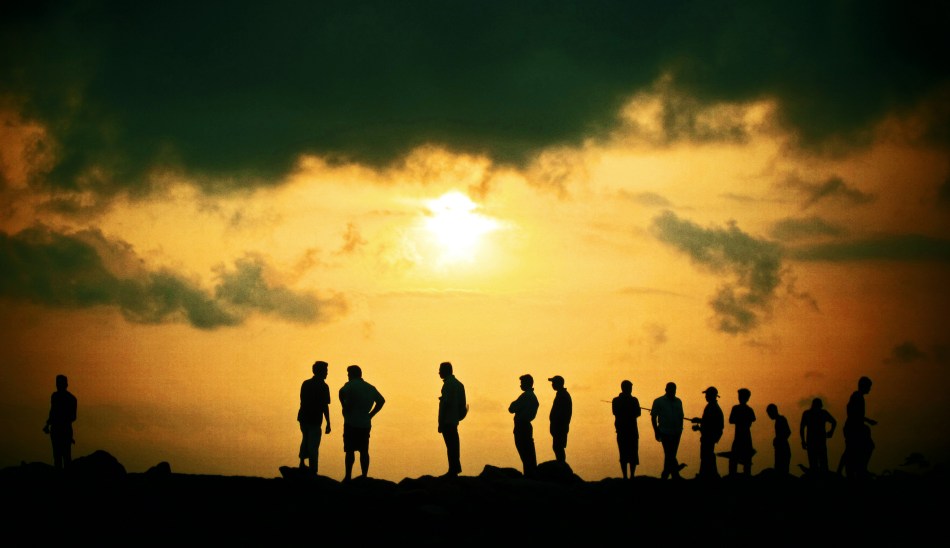
9. Colombo, Sri Lanka
Sunset on the beachfront in Colombo was pretty spectacular. I spent a long time watching the sun descend over the ocean and also this group of men fishing and chatting vociferously.
10. Cox’s Bazar, Bangladesh
One of my favorite locations in Bangladesh, Cox’s Bazar has provided many great moments and images. However, the afternoon spent watching the fishermen was a highlight, and this particular photo a favoorite of mine. A father and his young son working as a team to provide for the family, dipping in and out of the waves, they seemed happy to let me follow them for 10-15 minutes.
So there you have it. Ten images that stood out for me and sum up two years of travel and new experience. I have no idea what the next two will bring, but I know I will be armed with my camera at all times!
Okay, I’m going to cheat a little here, but I couldn’t end this blog without choosing a favorite photo from Guyana. It was hard to choose, but I think this one edges it. Taken from the window of a small plane on the way to visit some of my volunteers in Port Kaituma (a small town in the north of the country), it really did provide me with a first view of just how uninhabited and wild parts of this country are!
I’d like to take you back one year if I may. In February 2012 I took on the task of putting into writing the fascinating experiences of Retired Major Ezaz Afzal’s time as a Bangladeshi UN Peacekeeper in Rwanda, a country that at the time (1994) was practically staring into the abyss. Here is that blog for anyone who missed it the first time around.
Having spent a year in Rwanda myself, speaking to Major Ezaz was all the more significant, and a few weeks after our first meeting he very kindly allowed me to take up some more of his time to discuss his second UN mission. He swapped a tiny, war-torn country in East Africa for a bitterly divided corner of Eastern Europe, and as our discussion commenced his first words were telling;
“To tell you the truth I felt like I was taken from a hot frying pan and placed directly into the fire.”
Retd. Maj. Ezaz Afzal
He now found himself in Bosnia and part of yet another controversial UN peacekeeping mission. The recording of our meeting has been sat idly on my laptop for almost a year now, so I thought it would be fitting, twelve months on from my first blog about Major Ezaz, to produce the long overdue second installment.
It’s a trickier task this time as my knowledge of the war in the former Yugoslavia is not nearly as in depth as my knowledge of the Rwandan genocide. However, my willing interviewee once again offered a fascinating insight into his experiences, and that’s what I’d like to present.
Major Ezaz was deployed to Bosnia in July 1994, merely two months after returning to Bangladesh from Rwanda (via Kenya). I was somewhat shocked to discover he experienced such a swift transition between missions, particularly given the nature of the conflict he not only left behind in Africa, but the one he was about to enter.
He didn’t head to Bosnia directly, or alone though. The regiment was composed of fellow Bangladeshi soldiers, many of whom had served together in Rwanda and who now became members of UNPROFOR (The UN Protection Force) in the Balkans. Their voyage from South East Asia took a slight detour due to a month of cold weather training and acclimatization in Germany and Slovakia, which would prove crucial.
This was followed by an overland journey all the way from Hungary to Zagreb (Croatia) and finally into Bosnia. According to Major Ezaz this was a wonderful experience as they witnessed some beautiful European sights en route. I imagine that is one of the positive aspects of being a peacekeeper, the opportunity to visit and pass through places you may not normally find yourself.
The final destination for the Major and his men was Bihać, a small city in the very north west of Bosnia, which sits almost right on the border with Croatia. Crucially the city itself had been designated a ‘UN Safe Area’ and thus a humanitarian corridor. In effect it should therefore have been a demilitarized zone, protected from outside attacks.
However, if I tell you that Srebrenica was also one of the six UN ‘safe areas’ during the conflict, this will no doubt provide you with some indication of their success. In July 1995 over 8,000 Bosnian Muslim men and boys were massacred in Srebrenica by Serbian soldiers and paramilitary groups, led of course by Ratko Mladić. Dutch UN peacekeepers were present in the town at the time. It was essentially genocide. Far from ‘safe’.
By the time the Bangladeshi regiment had arrived in Bihać in the middle of 1994, the city and its residents (mainly Bosnian Muslims) had already been under siege for two years, completely surrounded by a joint force of Croatian Serbs and Bosnian Serbs. I asked Major Ezaz what he expected from the mission as he arrived in Bosnia. His response was suitably to the point; “In the army we don’t expect, we just hear the orders. The worst expectation is death.”
The mandate for the UN mission was frustratingly similar to the one encountered in Rwanda. In most cases there was no authorization for direct engagement, aside from a fire when fired upon policy. Yet, in the Major’s eyes this became frustratingly vague and once again, as had been the case in Rwanda, it often left UN troops feeling powerless and forlorn.
He exclaimed, “We were not weak, however the problem was we began to feel weak once we could not save lives.” He continued by stating that at times he and his troops were left a little bewildered by the whole sorry situation.
“For three months I was asking myself, what is this? Why is this happening? Why is no one helping? Who are the criminals? Who are the good guys? Who are we?”
Retd. Maj. Ezaz Afzal
It’s a candid and frank revelation, which demonstrates the issues peacekeepers must often grapple with when stepping into a mission. Of course the Balkans is steeped in great history, and is a melting pot for a wide range of cultures. Therefore the exact dynamic of the conflict that engulfed the region is intricate and far from straightforward.
The confusion and blurred definition of identity encountered by Major Ezaz and his comrades was intensified by the often unpredictable nature of threats. As it had been in Rwanda, a very real danger came from the disorganized nature of the fighting. He explained;
“In both Rwanda and Bosnia many ‘fighters’ were not trained soldiers, so there was always the fear of unpredictability, which comes from maniacs and mad people having arms. The paramilitaries are one of the biggest problems – young boys with little maturity, who don’t care who they hit, and where a sense of responsibility is completely missing. Once they have a weapon in their hand they feel they have to fire at something, they are not answerable to anyone.”
Retd. Maj. Ezaz Afzal
Whilst explaining that the unpredictability of the violence was similar to Rwanda, the threat posed was intensified in Bosnia due to the weapons and armory at the disposal of the forces they faced. I got the impression the ferocity of the fighting was unlike anything Major Ezaz had faced before.
“In Rwanda it was mainly small arms, where I could duck down and save myself, but in Bosnia it was big shells, and it was too difficult to know where they were coming from. You just hear a whistling sound, but you have no idea where it is coming from. After 4 or 5 days we all came to understand that if you are hearing the shell you are safe…if you don’t hear the sound it means the shell is on you.”
It also became apparent from our conversation that peacekeepers were viewed rather differently in Bosnia than in Rwanda. For the most part in Rwanda peacekeepers were not widely targeted by the opposition forces. Of course it’s important to remember that 10 Belgians were brutally killed by Rwandan Hutu fighters in the initial days of the conflict (as I mentioned in my Rwanda blog), but after this very few peacekeepers were directly targeted.
Yet, in Bosnia the picture was somewhat different according to the Major. “In Rwanda people weren’t generally aiming or firing on peacekeepers, but in Bosnia this was more common.” He told me about the men from the Yugoslav Olympic shooting team who became snipers.
“Killing a man was a game for them. Peacekeepers were well protected with armor, so it was much more difficult to kill them.”
He pointed to his neck to show where snipers aimed their shots. He also heard there was gambling and bets placed on the sniping and killing of UN soldiers. “If someone was successful he might get a case of beer. The peacekeepers were fun for all of them, and they were quite sure nothing would happen.”
This caused me some confusion. The question that immediately entered my head and which I directly posed being; if it was obvious the UN troops were deliberately targeted, why did they not respond in kind, as the mandate permitted? Major Ezaz explained that in his view the UN were too fearful of the risks and implications direct retaliation would bring.
“If WE start engaging THEM it instantly creates an even bigger conflict. However, now it’s just an ‘isolated incident’ and the UN were not ready to fight Yugoslavia, so it was safer not to retaliate to these incidents.”
Clearly this must have been incredibly frustrating for peacekeepers. Major Ezaz recalled one occasion when he and his troops were driven to demanding action.
“One of our own Bangladeshi APCs (Armored Personal Carrier) was hit by a missile. There was no way this was a mistake as it had clearly been a guided missile. One soldier was killed and seven were injured. We were so angry and frustrated that we threatened to defy orders and retaliate. Eventually NATO responded with airstrikes.”
All of the anecdotes provided emphasized what an intricate process it must be for the UN in carrying out a peacekeeping mission. A diplomatic minefield played out in extremely hostile conditions, where split second judgments have the potential to significantly change the fragile state of affairs.
“Into the fire” – that’s how my interviewee alluded to the metaphoric heat of the conflict at the beginning of our discussion, but he was quick to emphasize that one of the toughest parts of the mission was the freezing temperatures his regiment faced in the icy winter months. One of the greatest problems came from trying to administer the successful transit of supplies into Bihać. Being surrounded by Serb forces often meant that all avenues were shut, even to the UN.
“The siege of Bihać left us without supplies for 100 days, and we didn’t have basic food for 42 of those. We lived on MREs (Meals Ready to Eat) during that time. There was a fuel shortage for 3 months and we had to burn everything, including the furniture, and all soldiers huddled in one room to keep warm. We were completely unaccustomed to the freezing -14 degree temperatures, and it really was a very tough time.”
I couldn’t help but wonder, if the regiment had been for example, British, or American, or French, and not Bangladeshi, whether troops would’ve been left so isolated and under-supplied with essential provisions?
I asked the now retired Major to provide the worst memory from his time in Bosnia, and he recalled two, both of which have stuck in his mind ever since. The first was a precarious situation that arose during the transit of supplies at a Croatian Serb checkpoint.
On this particular day the Croats were in an uncooperative mood. In allowing the peacekeepers safe passage, they demanded two guns in return. This was of course out of the question, but in no time at all the situation deteriorated and before anyone could react, the Bangladeshi Commander in charge had been grabbed by the collar, thrown to the ground, and a gun pointed at his head. Major Ezaz described what happened next.
“We had no idea how to react. They were pointing a gun at my colleague’s head and all I could think was what can we do? So I got close to the soldiers and I offered whatever they wanted and pleaded with them not to hurt my colleague. I was practically begging them. In the end we negotiated and offered other items, anything they wanted, anything but guns. After almost two hours of negotiations we gave them a huge amount of cigarettes, special food, and beers.”
It’s remarkable how the power of negotiation can be such a crucial survival tool. I recall Major Ezaz citing its necessity in Rwanda also. I asked how important it is for a peacekeeper and he laughed, exclaiming, “I’m very good at it! I need to get my job done. If I need to beg, I’m ready to beg. If I need to be harsh I’ll be harsh, but my one aim is to get my job done.” Upon meeting Major Ezaz it’s easy to see why he’s a successful negotiator.
The second memory was one I found particularly poignant, tragic, and reflective of how war inevitably claims innocent victims. He was watching a horse one afternoon. It was stood alone in a nearby field, and as he told the story it is clear the image and memory remains extremely vivid in his mind. The scene he described seemed so peaceful, and the tone of his voice dropped and was melancholy as he described what happened next.
“I was just watching the horse, admiring it. It was so beautiful and such a strong animal, full of energy. Suddenly I heard the whistle of an incoming shell and I ducked. After the explosion I stood up and I found there was no horse…it vanished. I walked towards the site and after about fifty yards I found only small pieces of the animal.”
The sadness in his eyes was obvious and symbolic of a conflict that claimed thousands of innocent lives and how peace can be destroyed so abruptly. He summed this up calmly a few moments later when he remarked, “Bosnia is a place of beautiful people…but many beautiful people died.” This story and the manner in which Major Ezaz delivered it was probably the most striking moment of our conversation.
There were some incidents of redemption however, amidst the chaos and heartache of the conflict. Major Ezaz and his colleagues often experienced very positive relations with local civilians. He and his colleagues would buy chocolates from Zagreb and bring them back to Bihać to give to local children. He showed me a video of a group of kids gathered around the entrance to the UN camp and a number of soldiers dishing out the treats.
Sometimes people would bring food for the peacekeepers. He recalled one such moment when a small girl came to the fence around their base and presented him with a piece of bread. She had been sent by her mother who knew the soldiers had been struggling due to the severe shortage of supplies. As Ezaz told this story his face gleamed with a real fondness. He also spoke of the times he was invited for meals in local homes.
From our two conversations I have sensed a sincere feeling of responsibility he clearly felt towards the people he had been sent to help. In both Rwanda and Bosnia it became apparent that he made a real effort to get to know the local people as much as possible and to understand their struggles and their innocence in the war zones he entered.
Through the medium of Facebook he has even been able to reconnect with Bosnian friends he made during his time there. However, one of the most heartbreaking consequences of the conflicts, which became visible to him, was the breakdown of relationships.
“It was so sad – friends became enemies, families were torn apart, people were divorcing because of simple differences. I couldn’t understand why.”
I concluded by asking Major Ezaz what he considered to be the chief similarity between the situations he encountered in Rwanda and Bosnia. He replied without any hesitation;
“Ignorance. The leaders misled the masses and tricked them into believing they could wipe out a people. They tried to convince the masses they could remove and erase a whole people from society by killing. This is absolutely impossible – you cannot kill every member of one group. There will always be one voice left to stop it.”
It is of course debatable whether the UN is that voice. On too many occasions their silence as an organisation has spoken volumes. However, I have come to learn from my conversations with Major Ezaz that despite what I may think of the UN as a collective decision-making entity, there is no doubt that it is often represented on the ground by a fearless and committed group of individuals of all nationalities, and it was a privilege to meet and speak with one of these individuals in Chittagong, Bangladesh.
I thanked the peacekeeper turned Director of Security for his time once again and for another fascinating insight into the experiences that come from wearing the famous blue beret of the UN.
Major Ezaz finally left Bosnia in November 1995, after one year and four months. He admitted to feeling a little let down by the mission and has since questioned its motives. In his mind the Bosnian Muslims had been left to fight and save themselves, in what was often an unequal contest. He exclaimed quite frankly,
“The people of Bosnia eventually accepted that Europe was not going to help them.”
In the end Bihać was effectively liberated by the joint effort of Croat and Bosnian Muslim forces in the summer of 1995. Today it is a growing tourist destination due to its location on the River Una, and peace has gradually been restored.
Once again I’d like to express my since thanks and gratitude to Retired Major Ezaz Afzal for taking the time to speak to me and also allowing me to use some of his personal photos. I hope I have done your story justice and represented it accurately.
I was very recently asked by WorldTeach to write a blog about how I would define a “successful volunteer.” This is my response based on personal experiences and observations.
I slumped down on my bed, placed my head in my hands, took a deep breath, and this is how I remained for the next few minutes. Paralyzed by feelings of bewilderment and disorientation, for several moments the emotions were quite overwhelming.
Five minutes prior to this I had been sat down to breakfast at a table with four Rwandan catholic nuns, whom I had met for the first time the previous evening. The bulk of the conversation was carried out in French, and thus I spent the majority of the meal straining my ears and anxiously hoping that in the depths of my mind there remained some knowledge of the language that I had ceased studying eight years earlier.
Once breakfast was over I made the short walk back to my house to encounter what was undoubtedly a defining moment. I found all I could do was sit there, still. The silence was intense, suffocating almost. Where was I? Who were these people? Why am I here? What do I do next? Why is there no water coming out of the taps?
The answers to these and many other questions revealed themselves at regular points throughout the proceeding weeks and months, and as they did so they provided me with a reassuring clarity and logic. I was a volunteer teacher at St Bernadette de Save, a secondary school in the small, Rwandan village of Save, and I was there for a very important reason; this was what I had chosen to do.
In my opinion one of the crucial factors in being a “successful” volunteer is having a firm desire and a clear reason and purpose for wanting to do it. I say this because there are certainly times when you stop and question particular aspects of the experience, and there are times when you feel like you may crumble under the weight of the challenge.
However, in constantly reminding yourself of exactly why this path was taken, and the motivations that drove you to pursue it, you never lose sight of what an incredibly rewarding and significant phase in your life it is and always will be.
The main road through the village of Save, Rwanda
In my own case the WorldTeach Rwanda program was perfect. I had spent one whole summer crammed into a small wooden booth in my university library, reading countless books and writing a thesis on the role of gender in the 1994 genocide. It was here a fascination with the tiny country was born.
Three years later I landed in Kigali and during the first two weeks I and my fellow volunteers visited two significant genocide memorials. Personally this signaled the end of one journey and the beginning of another. The impact of the genocide became abundantly clear to me in a manner that books hadn’t been able to fully reflect, and as the year progressed I would experience several further moments of similar magnitude.
For example, on one occasion a student of mine revealed he had lost his father, three brothers, and two sisters during the country’s darkest hour. His story was not uncommon, but as I became exposed to the new, recovering Rwanda, I was overwhelmed by the strength and courage people showed, and subsequently inspired by their resolve and determination.
There is no rigid blueprint for producing a “successful volunteer”. Success varies for each person, and it is therefore almost impossible to form a conclusive definition of what exactly it means. Duck now if you want to avoid being struck by a gigantic cliché, but volunteering is a journey of self-discovery and an exploration of your personality, and for each person this will inevitably vary.
However, from my experiences in Rwanda, Bangladesh, and now Guyana, I believe there are core attributes one must possess if they are to live life as an international volunteer to its fullest. No one person or moment can dictate your experience, and it’s up to you to decide how it will define you in the present, and even more crucially, the future.
Adaptability is vital. Your routine and comfort zones will be thrown on their head, and there’s only one way to deal with this…embrace it! I have constantly been amazed at how far we can push ourselves and how strong the human mind and body is capable of coping with change. In Rwanda, the initial panic of discovering no water would ever trickle from the taps in my house was soon replaced with the exhilarating feeling that came from donning a head torch and collecting rainwater in a bucket at 11pm at night.
The shock felt when told by my Headmistress I was the new Entrepreneurship teacher at St. Bernadette de Save was forgotten almost instantly upon meeting my students. I realized there was so much I would learn from them. Being receptive to change and unpredictability is a must, and the results always bring great fulfillment.
A successful volunteer will be sure to pack an abundance of respect and open-mindedness in their suitcase. Although sounding obvious, it can be surprisingly easy to lose sight of these two closely connected and vital attributes when faced with situations and scenarios that place you far from your comfort zone.
In my role at the Asian University for Women in Chittagong, Bangladesh, I witnessed precisely how paramount respect and open-mindedness is. Hundreds of students brought together from 12 different countries across Asia. Many of whom have left their families for the very first time to study in a country and city in complete contrast to their homes.
Yet, the manner by which these students face and embrace this colossal change, demonstrates perfectly that by recognizing and positively accepting cultural contrasts and distinctions, we are far more able to build meaningful and positive relationships in the long term.
Finally, I will offer one piece of advice to any prospective volunteers out there. Prior to leaving home and embarking on the wonderful journey that awaits you; find a large box, cram all of your expectations inside, padlock it, and hide it away in a deep, dark wardrobe. You won’t need them where you’re going!
Expectations are inevitable, but they have the potential to lead only to disillusionment or frustration under the weight of a predefined pressure. The excitement that comes from the unknown is what makes international volunteerism so very special and significant. If you approach it with an open mind, a willingness to learn and to accept, and an attitude of determination and hope, you emerge at the end of it a wiser and healthier person.
The title of this blog is a quote by Lorna Wilson.
I was in a record store, browsing without purpose for some time, wandering around considering whether I should add to my rapidly expanding music library. It was 2003, and I was a student at the time. I’ve always derived great pleasure from random music searches, yet it’s been trickier these past few years due to my locations. On this particular day though, I had no idea the purchase I was about to make would have such a lasting and definitive influence on my tastes in music, or perhaps more significantly an enduring effect on the way I aspire to look at life events (not always successfully I must add, especially recently).
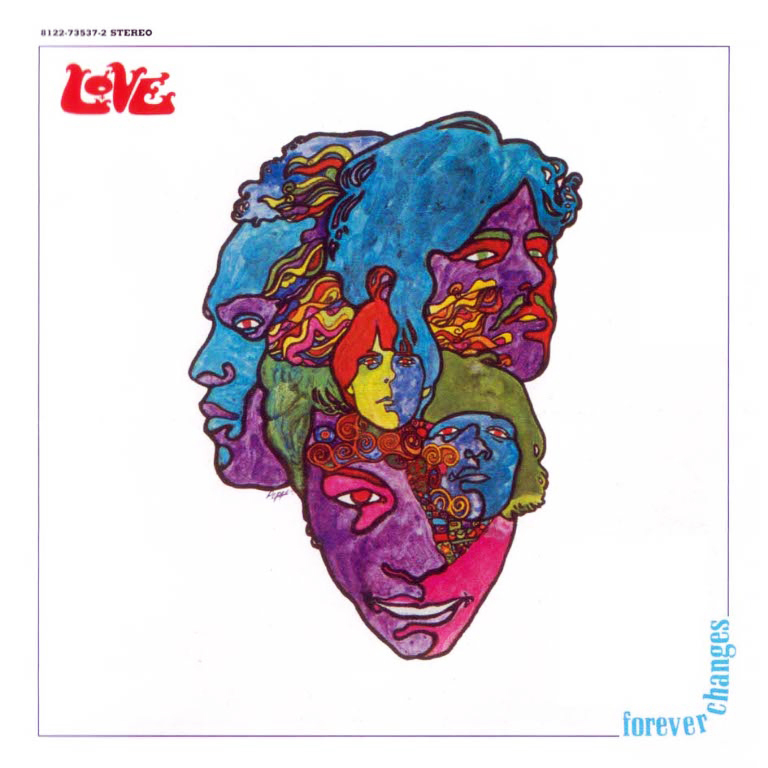
As my seemingly fruitless search for new music neared a conclusion, and I contemplated leaving empty handed, one record caught my eye. The strange album cover was compelling. A myriad of colours and faces all intertwined. It was unashamedly psychedelic, and seeing as I had at this point embarked upon a fairly dedicated journey toward 60s music discovery, I decided to at least give this item the acknowledgement I believed it deserved.
Upon inspection the song titles were suitably convincing that for some reason the record had to come home with me. ‘The Good Humor Man He Sees Everything Like This’, ‘Andmoreagain’, ‘Alone Again Or’, ‘Bummer in the Summer’, and ‘You Set The Scene’ to name a few. Everything about this record intrigued me. Even the name of the band, Love, seemed so cliché yet so perfect.
“For the time that I’ve been given’s such a little while, and the things that I must do consist of more than style…”
My reason for providing this anecdote is because I’d like to touch on the theme of change. As the record I bought that day testifies, forever does change, and this has been a fairly weighty feature of my life in the past few years. I’ve experienced some notable transitions, with the most recent being arguably the toughest challenge of all. I left Bangladesh (see previous blog) to pursue a slightly different career path. I’ve been lucky enough to get the opportunity to rejoin the WorldTeach team.
WorldTeach is an education non-profit organisation that links up with governments and organisations in developing countries and sends volunteer teachers to spend a year in their country of choice. I volunteered with WorldTeach in Rwanda in 2010. I’m now the Field Director in Guyana, which basically means that I oversee the program on the ground here and assist the current Guyana volunteers. It’s rewarding in that even though I’m not in the classroom directly teaching, I am still very much involved with international education.
“And for everyone who thinks that life is just a game, do you like the part you’re playing?”
So, I’ve changed jobs and I’ve transferred location. From the most densely populated country in the world I now find myself on the northern coast of South America in a country home to just 750,000 people….total. I once again face the guilt of being a Brit in a former colony, but this guilt is slightly negated by the fact I also live in the only English speaking nation on this continent…..which (embarrassingly of course) helps….me.
However, the most notable change of all has been the people in my life. The past three years have been a quite remarkable adventure. The places I’ve seen, the photos I’ve taken, the foods I’ve tasted, the journeys I’ve embarked on, the insects I’ve battled with, the inspirational folk I’ve met and stared in awe at, the stories I’ve heard and shared, the generosity and hospitality that has always been so welcome, the number of instances I’ve mused ‘Ben Fogle would probably do that if he were here now’, the smells that have at times purified my senses, the occasional challenges I’ve struggled through, the suffering I’ve witnessed that’s so often faced with sheer strength in adversity, and finally the quite incredible sunsets I have had the privilege to capture in both my mind and on camera.
“There’ll always be some people here to wonder why, and for every happy hello there will be goodbye….”
However, principally, the past three years have been defined by the people I’ve met and formed close relationships with. And with that comes the toughest part of travelling, because moving on inevitably means leaving behind those who have shared so much with you on that particular stretch of road in the crazy journey.
Saying goodbye becomes the toughest challenge of all, and it doesn’t get any easier with experience. Location in life is often irrelevant. If we’re surrounded by good people it doesn’t matter what exterior conditions we find ourselves in. I have come to realise this at a number of points throughout the past three years. Waist deep in water and suppressing fear in a dark, dark cave in Laos was one. Lost and a little bewildered at a Nuns’ dining table in Rwanda was another. Sandwiched between a huge man and a good friend on a minivan in northern Botswana also springs to mind. In the middle of the night lined up against a coach by South African police on the border with Zimbabwe I recall being particularly grateful for company. Sat on a sweltering bus for sixteen hours straight in Bangladesh, and in gridlocked traffic on the single lane highway between Chittagong and Dhaka was completely bearable because of one person.
These are examples of specific moments, but Prague, Rwanda, Bangladesh, and all travels in between have been distinguished by so many genuinely good people. People who I have learned so much from and who have made the journey that much more enjoyable and meaningful. All people who I have at some point in the recent past had to say goodbye to. However, goodbyes aren’t always forever.
“You Set The Scene”
The name of the record I bought that day back in 2003, long before I embarked on this journey, is ‘Forever Changes’…perhaps fittingly. Written and performed by 1960s LA band ‘Love’, they were led by singer and chief songwriter, Arthur Lee. Lee was an incredible lyricist. A poet many say. The collection of songs concludes with my all time favourite by any artist (‘You Set The Scene’), and I mean that. For me the composition is perfect. Perfect in terms of structure. Perfect in terms of the dreamlike instrumentals that weave into its dramatic crescendo. Perfect for the manner in which it is constructed and delivered, and perfect for its seemingly timeless message.
However, primarily it’s perfect for its lyrics. The song’s powerful and inspirational words have always made me wonder just how far we can push ourselves. Change is inevitable, but right now as I begin a new chapter I’m struggling to know quite how to deal with it, having at times been completely overwhelmed by its total disregard for stability. However ‘You Set The Scene’ has been a constant reminder of the wider picture.
“This is the time and life that I am living,
And I’ll face each day with a smile.
For the time that I’ve been given’s such a little while,
And the things that I must do consist of more than style.
There are places that I am going.”
“Everything I’ve seen needs rearranging,
And for anyone who thinks it’s strange.
Then you should be the first to want to make this change,
And for everyone who thinks that life is just a game –
Do you like the part you’re playing?”
The lyrics of the song in full can be interpreted in many ways. Written in 1967 Los Angeles, it clearly expresses the burning political frustrations of the day, namely Vietnam. “There’s a private in my boat and he wears fears instead of medals on his coat”, “There’s a man who can’t decide if he should fight for what his father thinks is right.”
Dramatic change was beginning to define a generation in the 1960s, and Arthur Lee reflected this perfectly in his songs. I discussed the words with my students at AUW a few months back, and they presented their own understanding of what Lee was conveying. These were both characteristically thoughtful and extremely well considered.
So, as I continue with my journey, I do so with the words of Arthur Lee ringing in my ears. They provide strength, and they crucially pose testing and provocative questions. This is not a usual post for me. However, my blog has never really followed a set structure, and the recent move has once again left me pondering how I can represent my new experiences through words. Right now my experience is defined by change, and I’m therefore grateful to have the opportunity to write about these moments.
To conclude, here are the full lyrics of You Set The Scene, and below is a live recording of it performed by Arthur Lee and his band in 2003. Bear in mind Lee is 58 in this video. He sadly passed away three years later, but for fans of Love his legacy lives on.
You Set The Scene – Love (Lyrics: Arthur Lee) 1967
— Part I —
Verse 1:
Where are you walking, I’ve seen you walking
Have you been there before?
Walk down your doorsteps, you’ll take some more steps
What did you take them for?
There’s a private in my boat and he wears
Fears instead of medals on his coat
There’s a chicken in my nest and she won’t
Lay until I’ve given her my best
At her request she asks for nothing
You get nothing in return
If you want she brings you water
If you don’t then you will burn
Verse 2:
You go through changes, it may seem strange
Is this what you’re put here for?
You think you’re happy and you are happy
That’s what you’re happy for
There’s a man who can’t decide if he should
Fight for what his father thinks is right
There are people wearing frowns who’ll screw you up
But they would rather screw you down
At my request I ask for nothing
You get nothing in return
If you’re nice she’ll bring me water
If you’re not then I will burn
— Part II —
Verse 1:
This is the time and life that I am living
And I’ll face each day with a smile
For the time that I’ve been given’s such a little while
And the things that I must do consist of more than style
There are places that I am going
Verse 2:
This is the only thing that I am sure of
And that’s all that lives is gonna die
And there’ll always be some people here to wonder why
And for every happy hello, there will be good-bye
There’ll be time for you to put yourself on
Verse 3:
Everything I’ve seen needs rearranging
And for anyone who thinks it’s strange
Then you should be the first to want to make this change
And for everyone who thinks that life is just a game
Do you like the part you’re playing?
I see your picture
It’s in the same old frame
We meet again
You look so lovely
You with the same old smile
Stay for a while
I need you so, oh, oh, oh, oh
And if you take it easy
I’m still teethin’
I wanna love you, but
Oh, oh, oh, oh, oh, oh, oh




































 UNDER ONE SUN