A Voice For The Voiceless

Animal Welfare in Bangladesh


IMG_0874

One of the most frustrating aspects of social media is the simple fact that stories about complete idiots are thrust directly in front of your face on an almost daily basis. Anyone who saw my Facebook page in the past week or so may have noticed one such story.

The news I’m referring to is surprisingly not about Donald Trump, Jeremy Hunt, or Sepp Blatter (although this trio are worthy contenders), but rather revolves around a group of people who epitomise the ignorance and disregard demonstrated so often by the human race to other creatures.

Endangered baby dolphin dies after swimmers pass it around for selfies

A dolphin plucked from the water and passed around like a trophy so that bronzed beachgoers of all ages could pose and take ‘selfies’ with it. Once the selfies were complete, the dolphin had inevitably died. Because you see, what these humans had so crucially forgotten, is that dolphins can’t survive for prolonged periods outside of water, and what those people now have on their cameras, or smart phones, or whatever they were using that day which caused them to lose all sense, is a selfie with a dolphin who died because of them.

It happened in Argentina, but this could be anywhere in the world, and the flagrant disregard for the life they passed around in their hands that day sums up the arrogance and sheer contempt we, humans, demonstrate on a daily basis.

It left me totally exasperated once again, as it seems there is not a week that passes without tales of sheer moronic stupidity claiming yet more animal lives. Whether it is a wealthy dentist shooting an innocent and treasured lion, Russian circuses forcing polar bears to dance, or puppies used for target practice, there is no limit to our cruelty and indifference.

However, despite all of this, there is hope, and I have witnessed a few examples here in Bangladesh.

Obhoyaronno is an animal welfare foundation formed in Dhaka in 2009 and has carried out some fantastic work mainly in the Bangladesh capital to rescue animals and educate the local population about animal welfare issues. The organisation has successfully campaigned to have dog culling in Dhaka cancelled, and they regularly carry out dog vaccination programs in the city. They have a large community now of like-minded people who will alert others about any cases of animal abuse or animals in trouble.

Dog Lovers of Bangladesh is an inspiring facebook page dedicated to, well…dogs of course. The members on that page never fail to amaze me with their dedication to the welfare of dogs here, and there are often emergency posts regarding an injured or distressed dog sighting. It is not uncommon for this to be followed by an immediate and robust response from other members of the group who mobilize and swiftly locate the dog, whilst doing all they can to source the care it needs. Other members often chip in with cash donations, and before you know it, a dog once destined to lie dying next to a busy road, has been scooped up and given the life-saving treatment it so gravely needed. The members of this group are caring, conscientious animal lovers who provide a reminder that all is not lost.

Finally, there is a group somewhat closer to home for which I have the utmost admiration; The Asian University for Women (AUW) Animal Welfare Club. Created just over two years ago, the club has grown steadily and in that time initiated a number of projects aimed at implementing clear strategies for improving the welfare of animals.

12186264_872730899483006_8818907623761306738_o

Photo credit: Dhrubo (Dhrubo Photography)


In truth due to the modest size of the club and its limited financial capacity, the focus has been on street dogs and cats. However, the lack of funds has been no deterrent to the club members, and driven by their passionate club president and founder, Mandy Mukhuti, they have already played a significant role in making tangible changes in the lives of many animals.

IMG_0831

Since its inception in 2013, the club has visited primary schools to educate young children on how to treat animals. They have also initiated a daily feeding program, which entails collecting leftover food and feeding street dogs in the vicinity of the campus. The success of this is highlighted by the fact these dogs now know and recognise the members of the club when they come calling with their plastic container full of food!

12764876_1717501185152893_4307952476895545914_o

Photo credit: Dhrubo (Dhrubo Photoography)


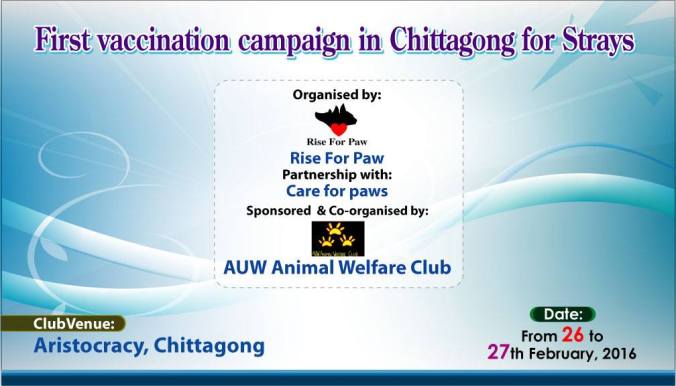
The club has also rescued several cats and dogs and successfully found homes for many of these animals. Finally, this past weekend they arguably reached the peak of their success thus far. Having spent a few months raising necessary funds, they teamed up with local veterinarians and students from other universities and set about successfully vaccinating two hundred dogs across the city in just a single weekend! It’s a remarkable achievement given the constraints they experience and a testament to their passion and commitment to such a worthwhile cause.

Dogs vaccinated under AUW campaign
12748027_1091101457608063_1427328264874613574_o

12771896_1717504605152551_8162312032378705035_o

Photo credit: Dhrubo (Dhrubo Photography)


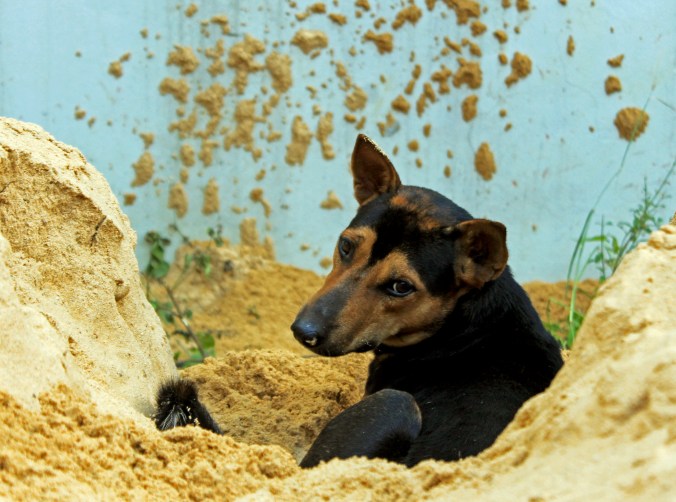
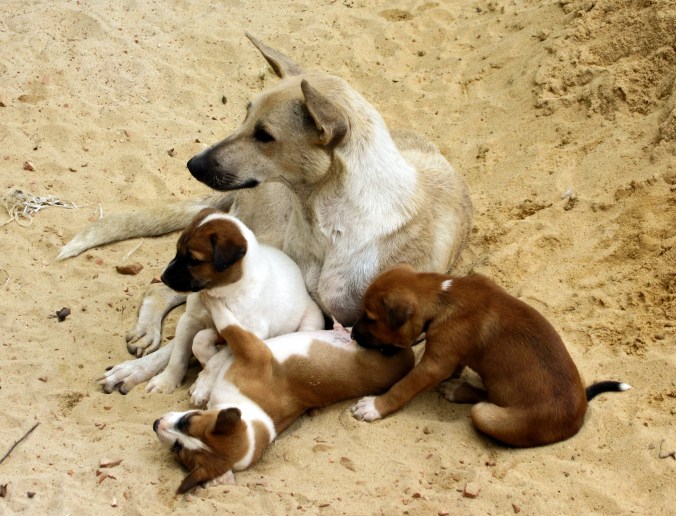
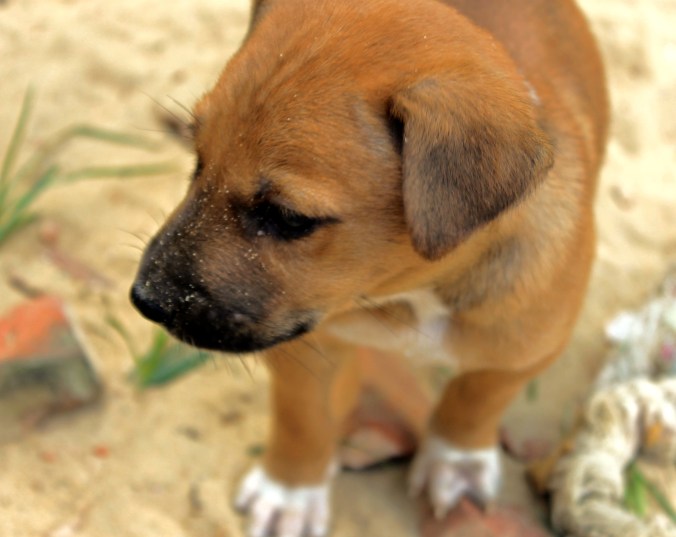
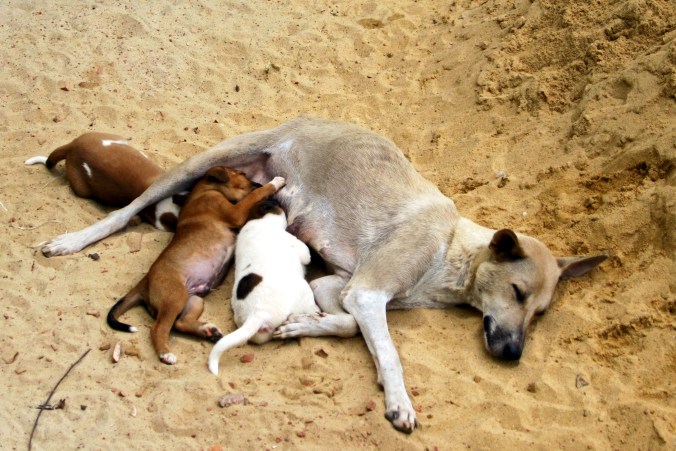
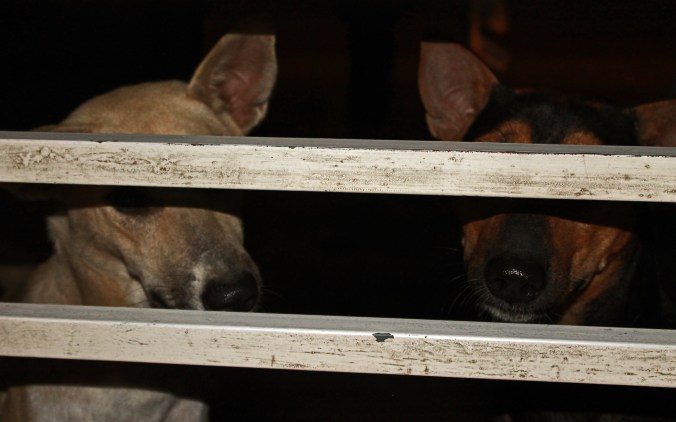
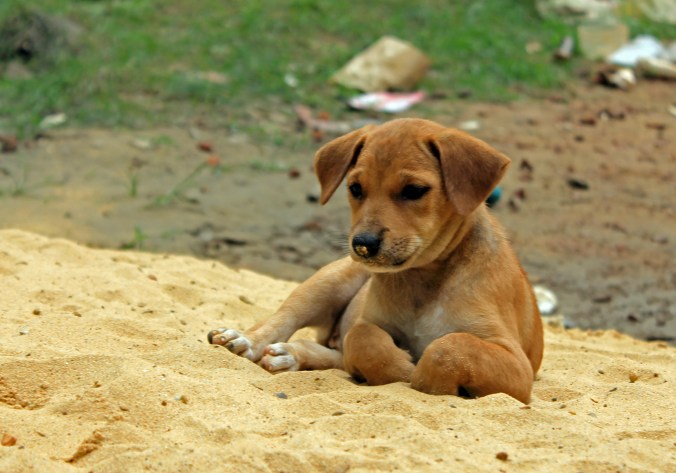
I’ll leave you with a collection of images taken during my time here in Bangladesh, which show a number of the animal friends I’ve made. This family lived behind our building and the puppies provided hours of fun, yet immense stress! We managed to find homes for most of them, but a couple sadly fell victim to the unforgiving main road that lay just far too close for temptation.

IMG_2494

Father & Son

IMG_0876

A patient mother

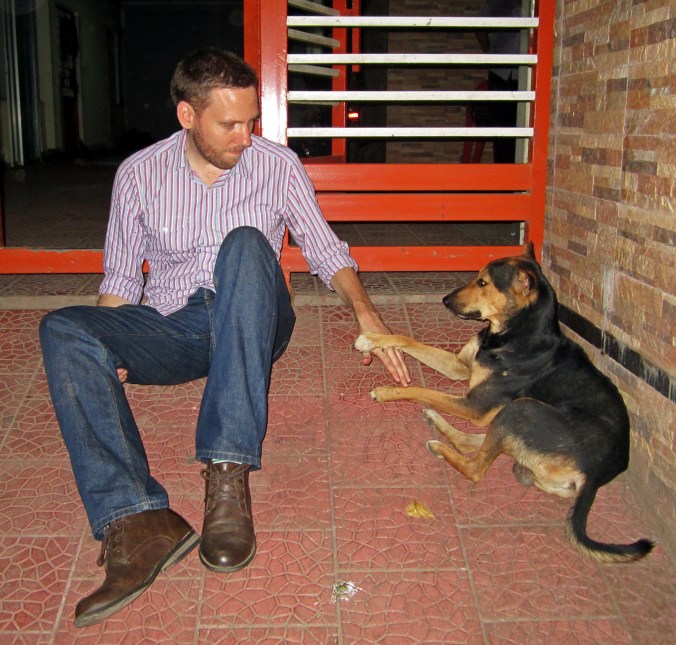
At present I also regularly feed Tommy and Rocky who live on our road, and whilst this is just a very tiny act, I believe that the bewildered, yet intrigued gazes I receive as I sit feeding the dogs do go some way to showing people that these dogs are not angry beasts who should be avoided at all costs, but actually friendly animals who just need a bit of love and a friendly face.

Step by step we can make a difference, no matter how small that may be.


IMG_7062IMG_2000IMG_2033IMG_0888IMG_1972IMG_0865IMG_2493IMG_0885IMG_2019IMG_2041IMG_2018IMG_2032IMG_0869IMG_1962IMG_0890IMG_0041IMG_0418IMG_0390IMG_2483


You Set The Scenes

A new project


IMG_7570

So I’d like to take the opportunity to use this somewhat older (hmmm, let’s say more ‘mature’) platform of communication to tell you about a new project I’ve started working on.

I say I, but it is in fact ‘we’ – my good friend Rich and I. We know each other from our days in Prague when we both completed the same TEFL course (Teaching English as a Foreign Language) and have remained good friends ever since.

Rich still lives and works in the Czech Republic in a town called Podebrady, and he came up with the idea of creating a Vlog (video log) in which we both contribute regular videos offering a little glimpse into our individual experiences in the Czech Republic and Bangladesh respectively.

OLYMPUS DIGITAL CAMERA

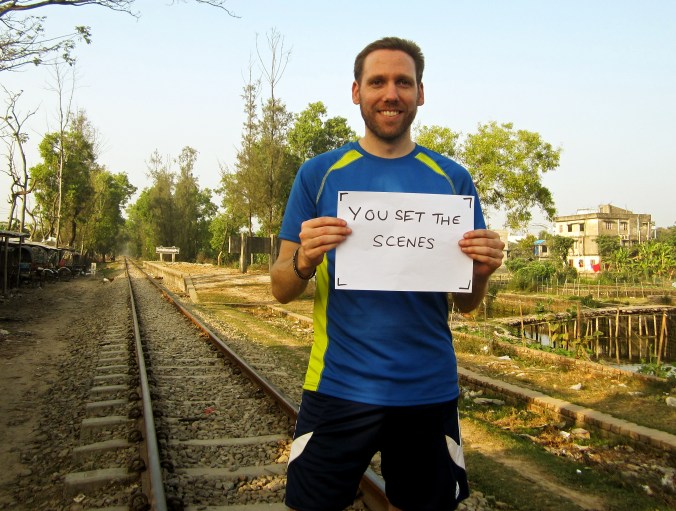
The slight twist is that in doing so, we will set each other various challenges. We will also seek input from our viewers (who will hopefully exist!) and ask for suggestions for challenges they would like to see us complete, hence the name of the vlog – You Set The Scenes. Also, crucially, whoever receives the most thumbs up on youtube for their video wins the challenge.

*The name of the vlog is also a little nod to one of my favourite songs by one of my favourite bands.*

The main aims of this new project are as follows:

  1. For Rich and I to keep in touch!
  2. To hopefully offer viewers a little glimpse into what our lives are like as expats.
  3. To offer a positive look into the culture and environment of both Bangladesh and the Czech Republic.
  4. To motivate Rich and I to explore our locations further and hopefully create a richer personal understanding of our surroundings.
  5. To do things we may not have previously considered, which will no doubt at some points make us appear awkward and uncomfortable…perhaps much to the amusement of our viewers (again, if we have any)!

So that’s it really. I’m sure it will be a challenge at times, but also worthwhile, rewarding and fun. We both love exploring and getting away from the ‘tourist track’ and hope that this new vlog will reflect that.

Check out the trailer…

Our first challenge was to learn and recite a tongue twister in the native language of our countries.  So I learned a tongue twister in Bangla, and Rich learned one in Czech. You can see how we got on below.

Rich’s Czech Tongue Twister

and

John’s Bangla Tongue Twister

Please like our facebook page and subscribe to our youtube channel. We are also on Twitter and you can follow us at @YouSetTheScenes.

We hope you enjoy our future videos, and please comment below with any suggestions you would like us to try!


Tashi Delek

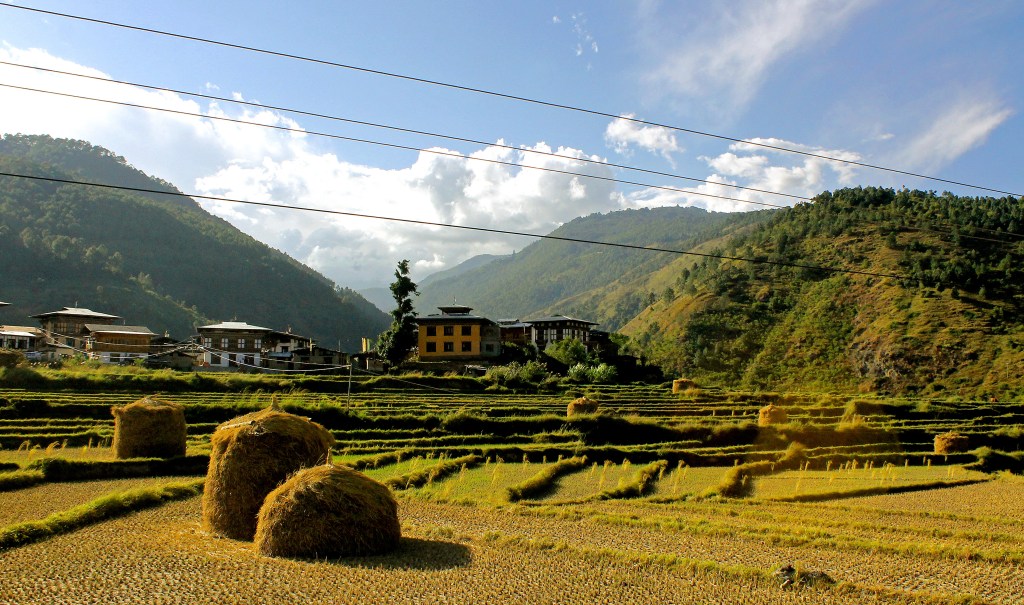
A week in the beautiful kingdom of Bhutan


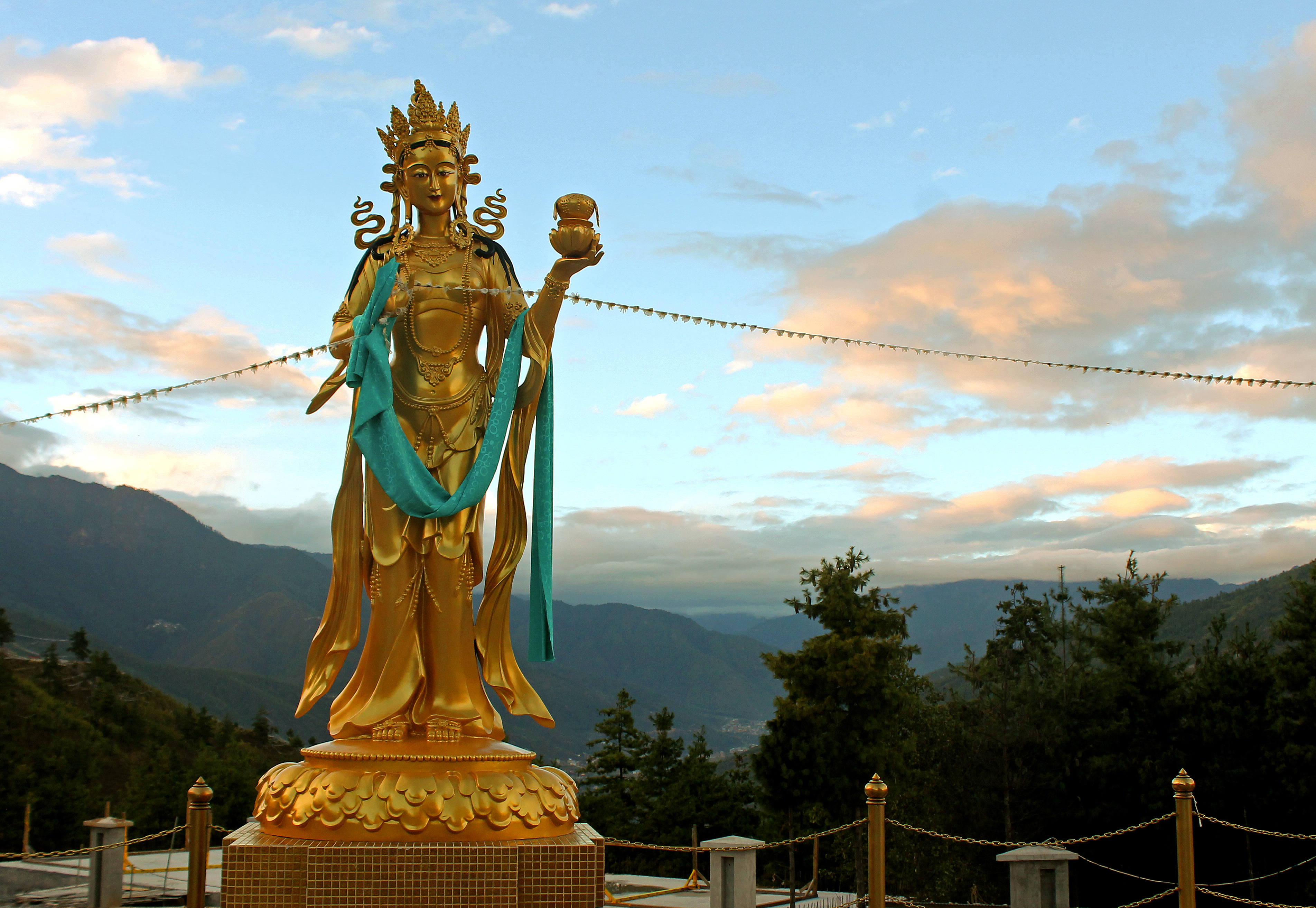
It’s shamefully embarrassing to admit this, but upon reflection I think I have reached the point where I’m travelling to countries that just a few years ago I knew little, or nothing about. My move to Bangladesh back in 2011 not only introduced me to this golden land, but given that my job is teaching students from 15 different countries, my eyes and ears have been exposed to each and every one of those countries in some way. I’m undoubtedly a lot richer for that.

A few weeks back I finally had the opportunity to visit one of those countries that had most intrigued me, and thanks to the assistance, amazing kindness and visa office doggedness of Dechen (a former student) I was on a plane to Paro and landing in Bhutan.

Bhutan is sandwiched in a somewhat intimidating position between India and China and is unique in its policy of measuring Gross National Happiness (GNH) rather than GDP. In effect, focus is placed more firmly upon the preservation of culture with a commitment to environmental conservation and sustainable development.

Thus, it’s not the easiest of places to enter as a tourist or to roam freely once you are there. However, don’t let the bureaucracy deter you because quite frankly, it is stunning and so very endearing in many ways.


In this account of my brief stay in Bhutan, I will try to explain just why, based of course on personal experience, this kingdom of just 800,000 people made such an impression.

Here is an album with a selection of photos – Bhutan


Natural beauty

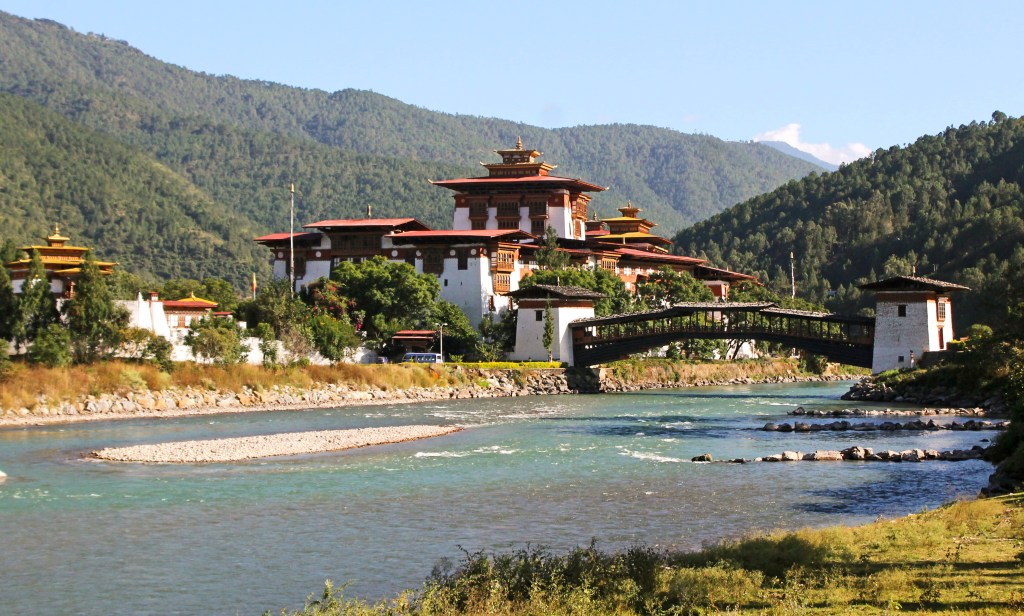
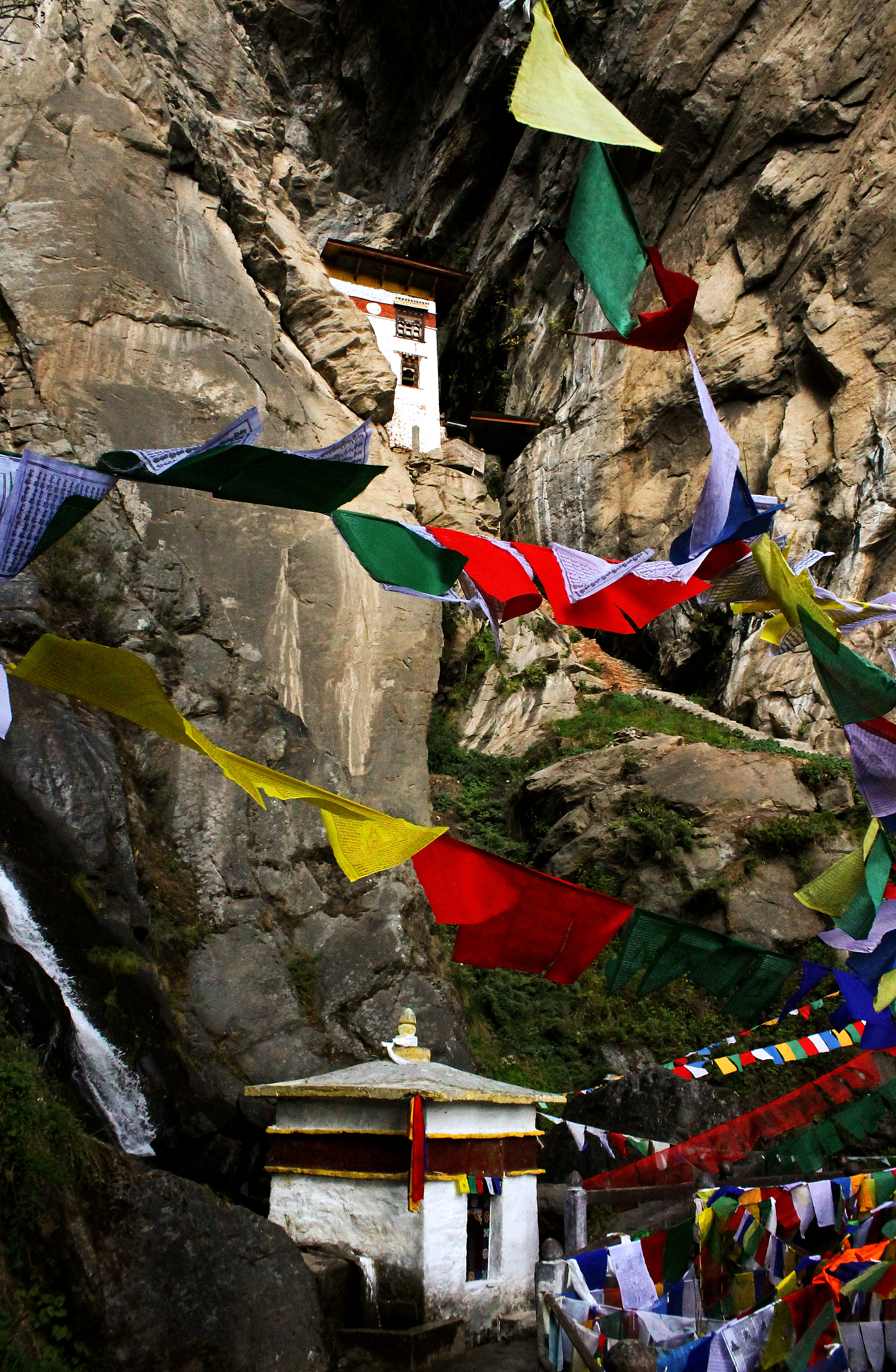
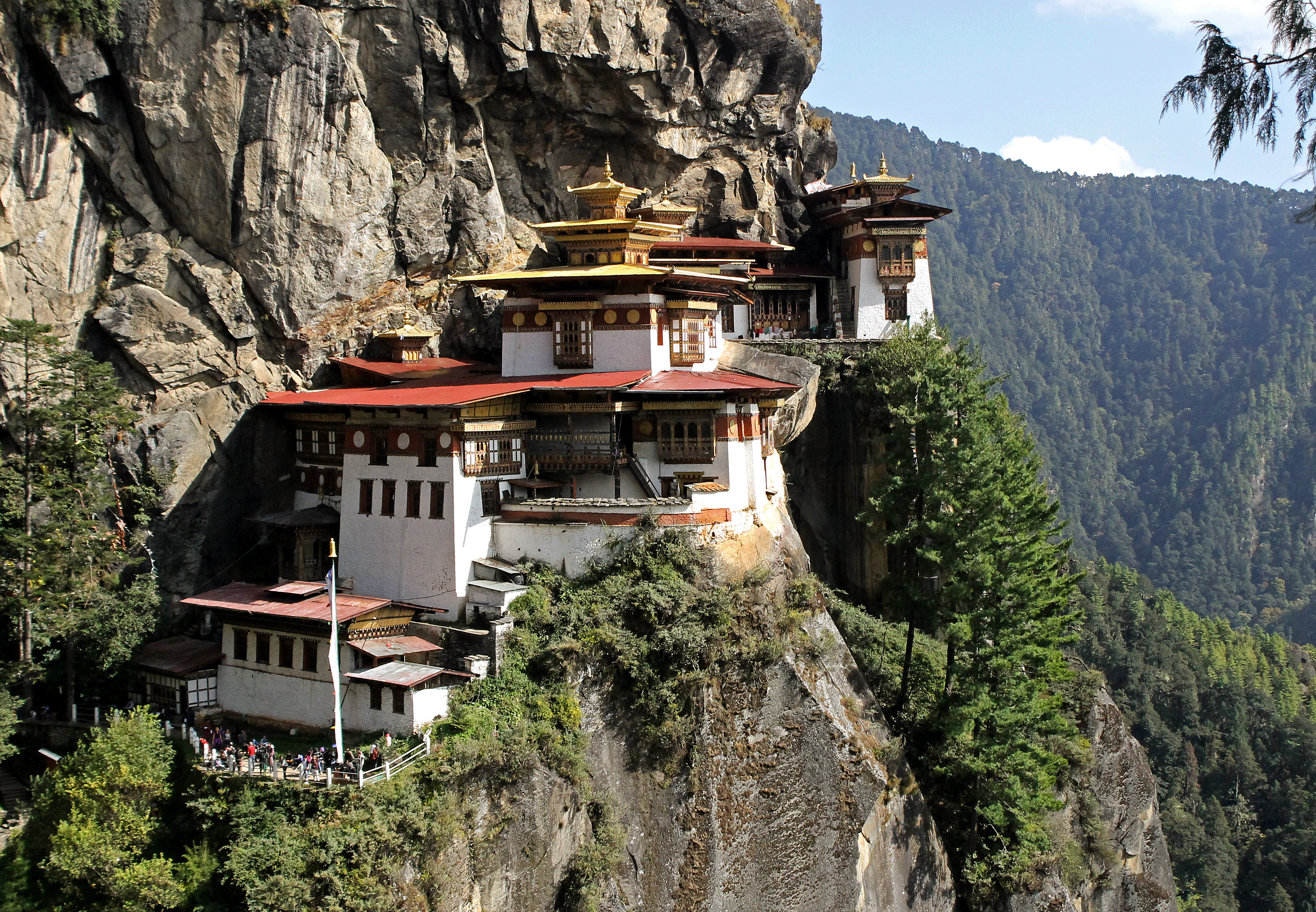
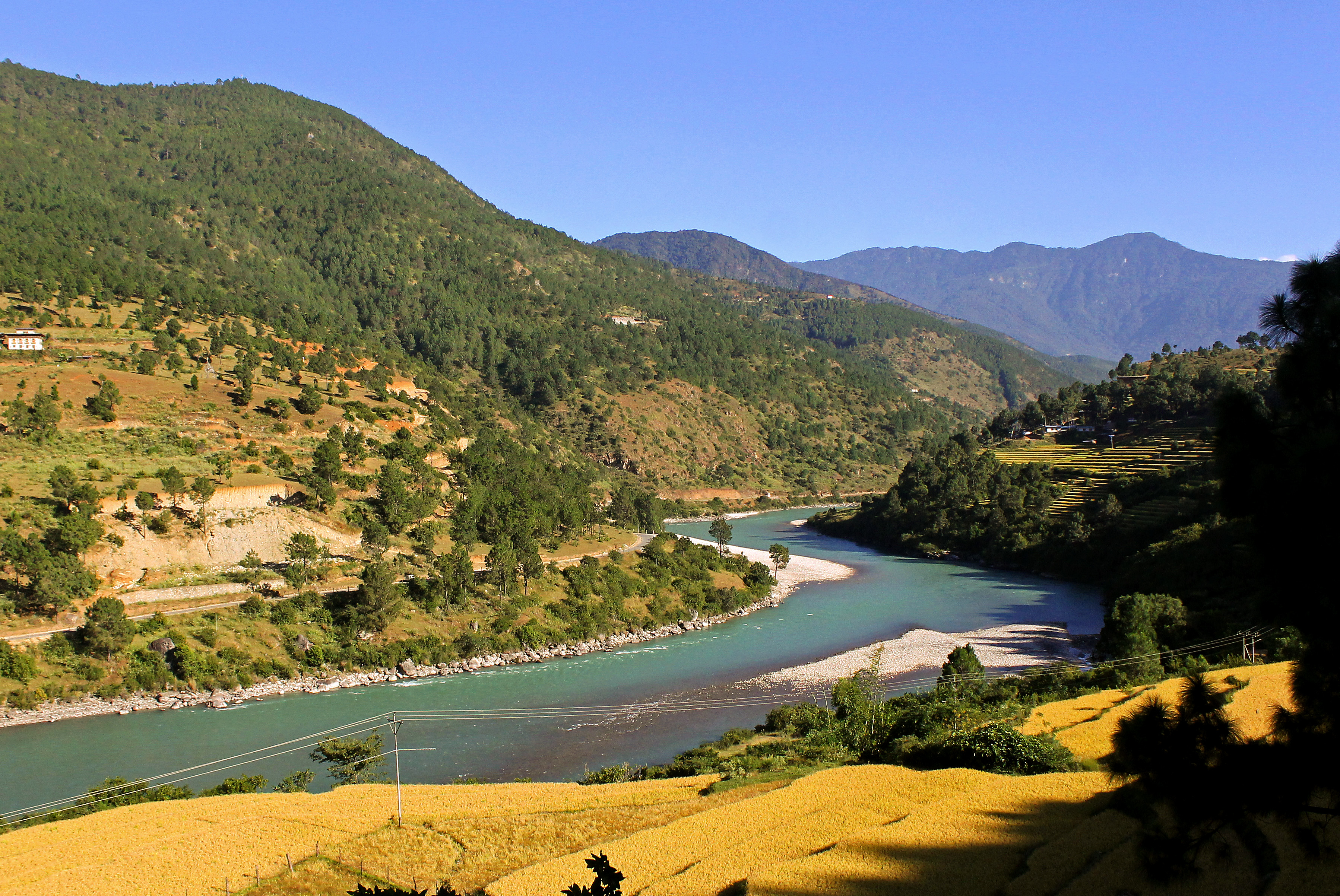
Eastern Himalayan mountains, deep and dramatic valleys, winding rivers, dense forests, fertile pastures, and wide open plains all contribute to the breathtaking scenery that surrounds you. As the plane lands in Paro, it weaves between mountainous peaks and according to this article, only eight pilots are currently certified to land aircrafts there!


Preservation of culture

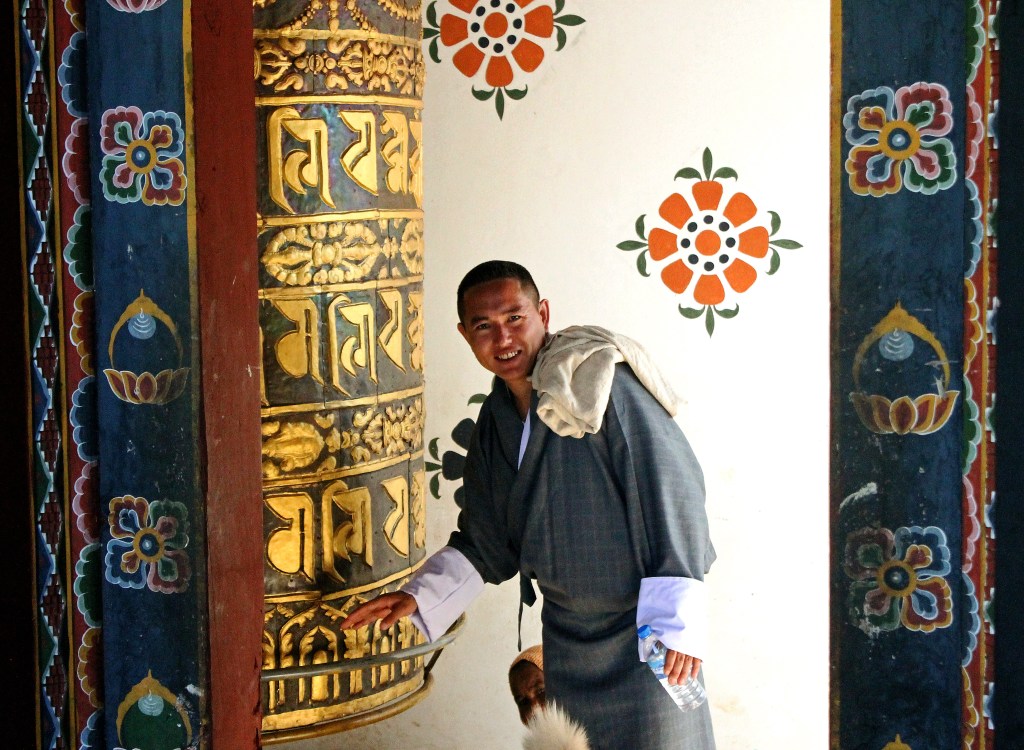
Bhutan is proud of its cultural heritage, and has taken strong measures to ensure not only its survival, but crucially its conservation and continued significance in everyday life. Television and internet is a surprisingly new feature of life in Bhutan having only been introduced (officially) in 1999.

Tourism is limited and controlled, and national dress is a must at various locations including most workplaces. There is a gritty commitment to rejecting and actively fighting those external influences that can commonly be accused of eroding traditional culture in certain other countries that have welcomed tourism with open arms.


Road safety signs

On the beautiful winding and meandering main highway between Paro and Thimphu, which I imagine is one of Bhutan’s busiest, there are regular road safety signs that predominantly focus on reducing speed. They get their message across though in a quirky and sometimes cheeky fashion. I wasn’t able to capture any photos, but I did make a note of two in particular that stuck in my head…

“If you are married, divorce speed!”

And…

“Be gentle on my curves”

On a more serious note though, it does appear that road safety is a huge priority in Bhutan with regular police checkpoints and from what I saw a diligent appreciation of the laws in place.


Dogs

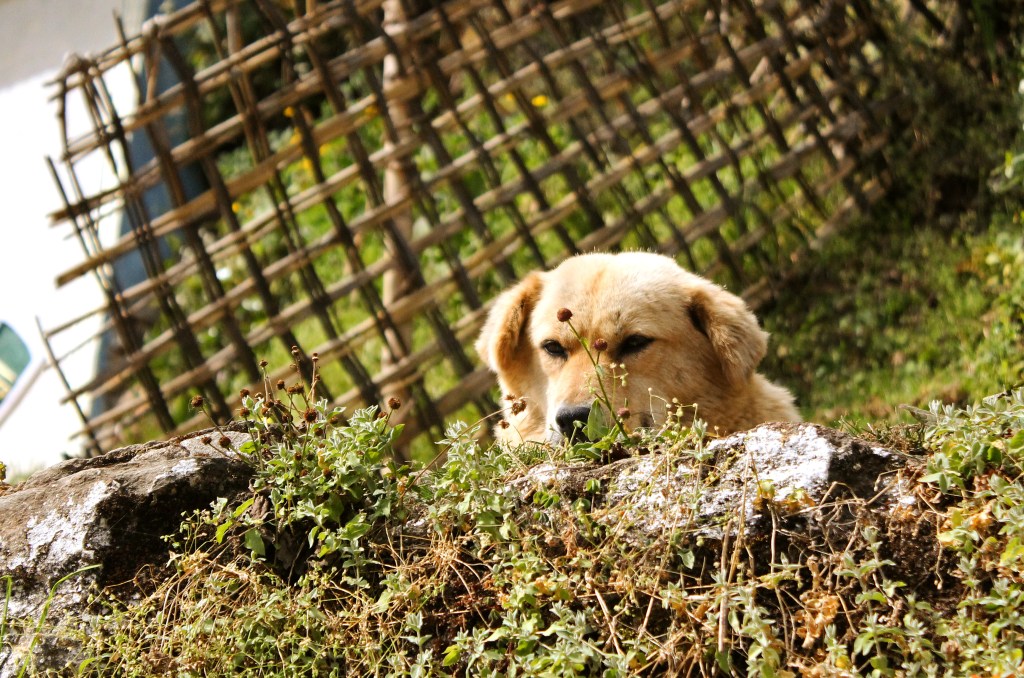
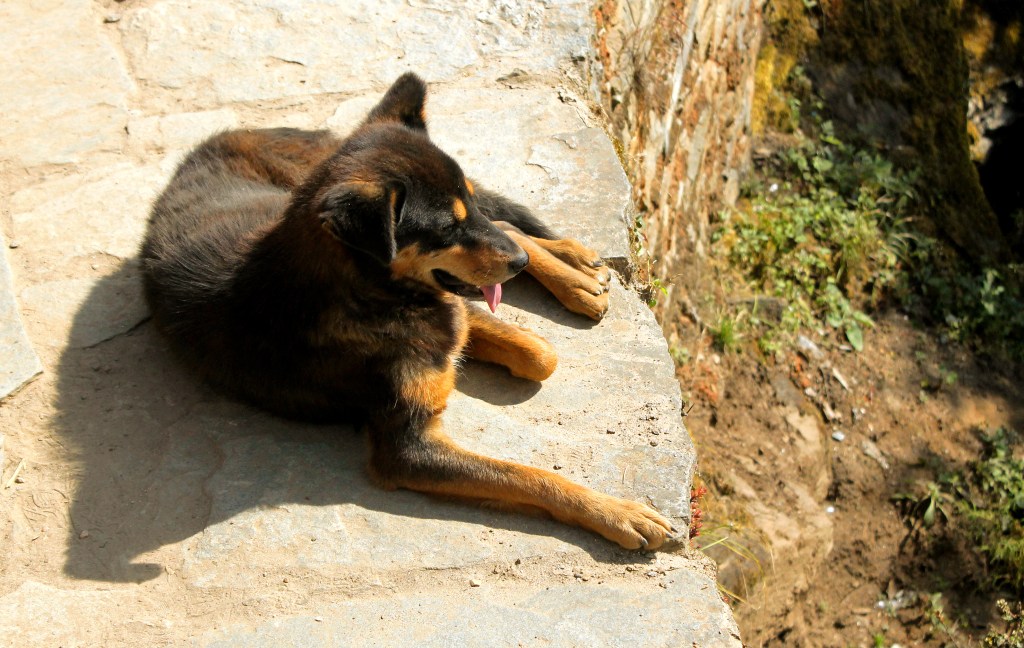
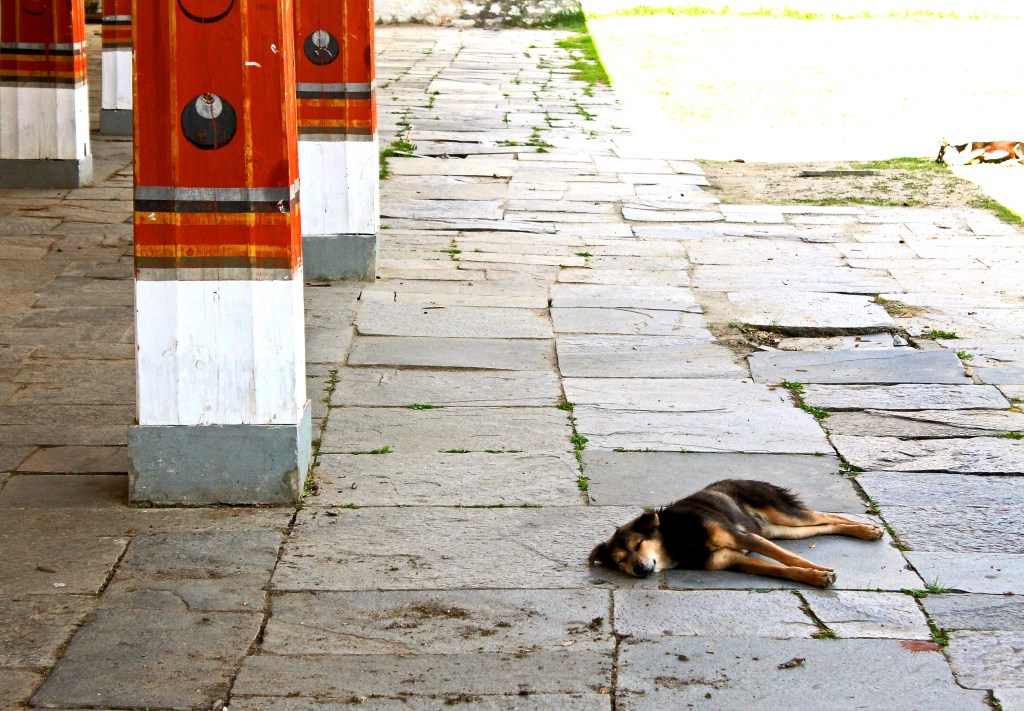
In Bhutan there are dogs….so many dogs. They are everywhere. On every street corner, under every bridge, asleep on every sidewalk and at night they serenade you until the early hours with huge canine choirs. They are also quite often big, furry things that generally add a level of happiness and warmth to an already happy and warm country.


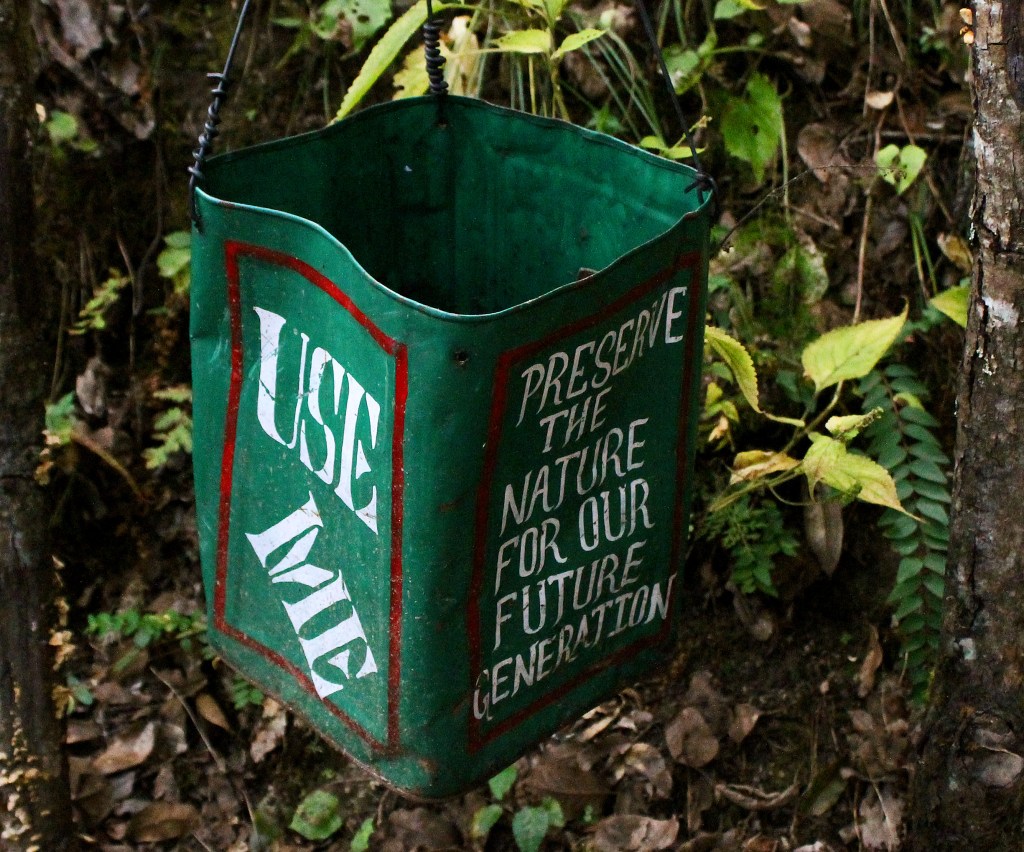
There are bins. People use them.

There seems to be a genuine commitment to, and pride in keeping the country clean. It may seem a little patronizing to point this out, but from travelling and from experiences back home in the UK, I feel that many places (and people) have abandoned their responsibility to this simple and basic condition. The bins are also covered in motivational and encouraging messages, just in case you feel the inclination not to utilize them.


Hospitality

This was not much of a surprise. Whenever I travel I encounter genuinely kind and hospitable people. Bhutan was no different, and I had not expected it to be. Before I’d even begun the visa application process, my Bhutanese students and their families had offered all kinds of help and support, and once I landed in Bhutan that help and support became even more ubiquitous.

From the man in the coffee shop who gave me a warm welcome each morning, to the friend of a friend who within thirty minutes of meeting me had paid for my dinner, it was a week full of unrelenting kindness. Special mentions must go to Dechen, Pema, Sonam, Yeshey, Kencho, and Namgay. These wonderful people made my stay in Bhutan even more perfect than it could have been.


Beautiful Buildings

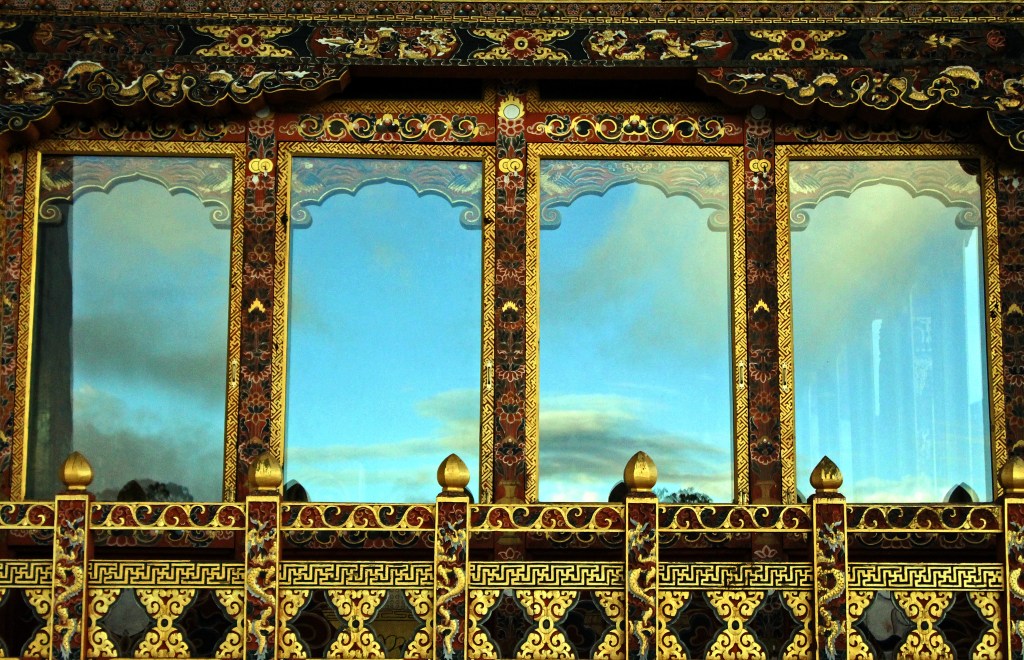
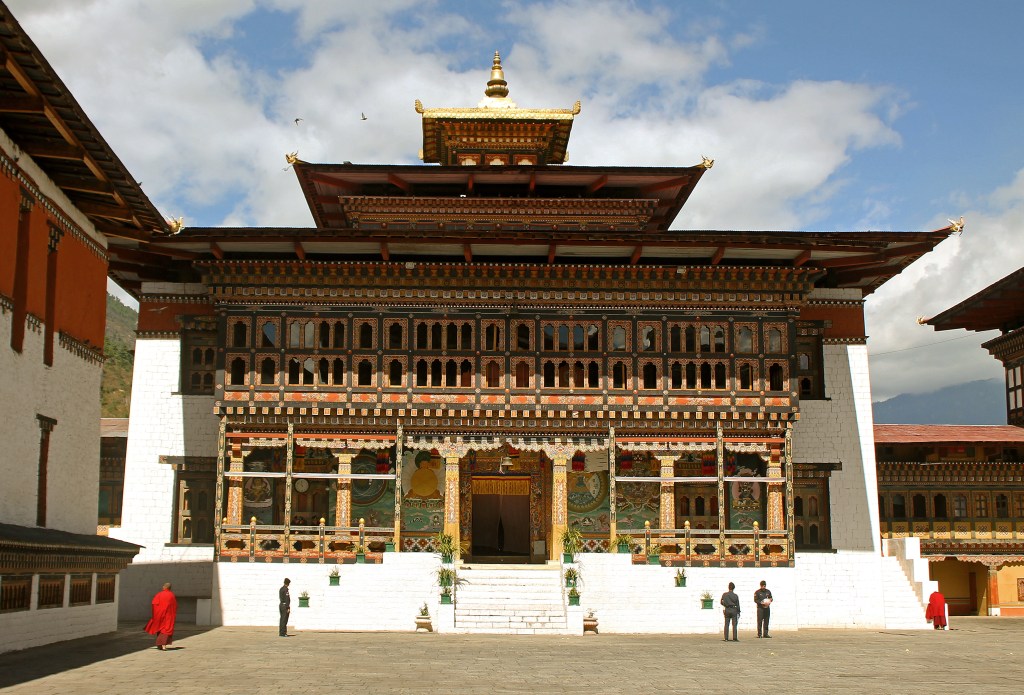
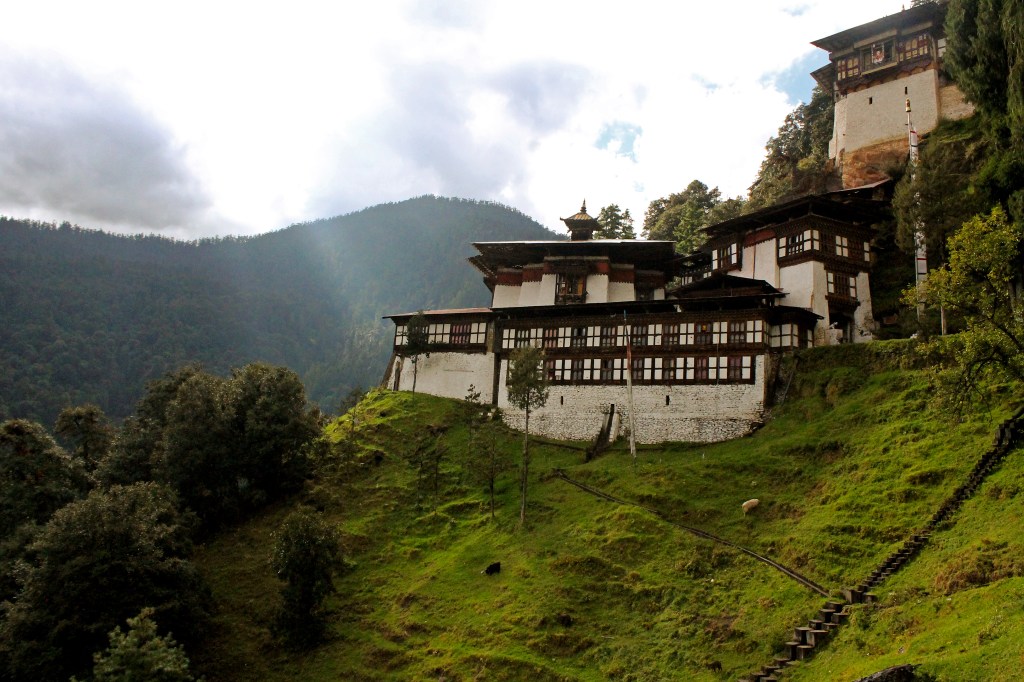
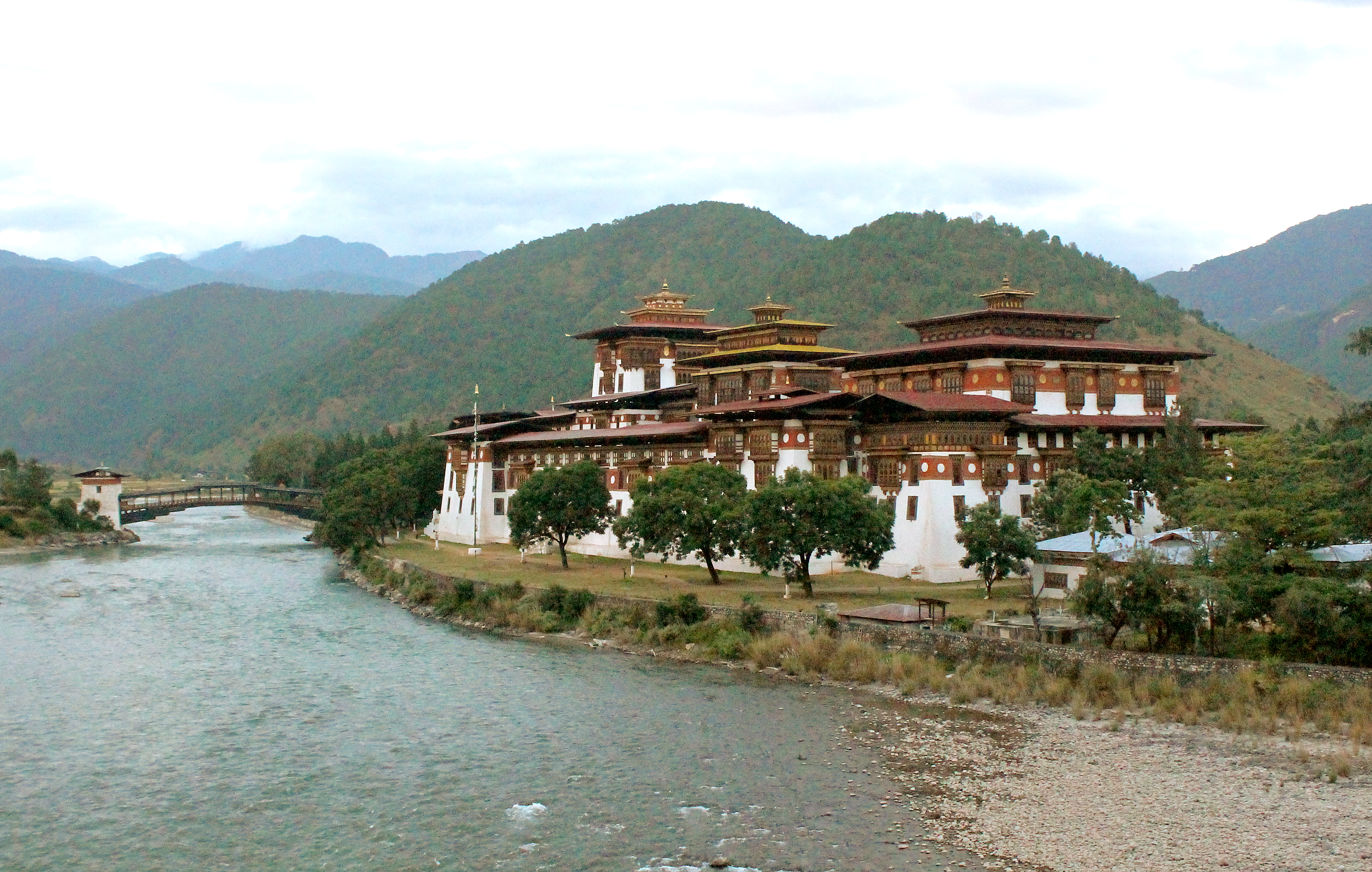
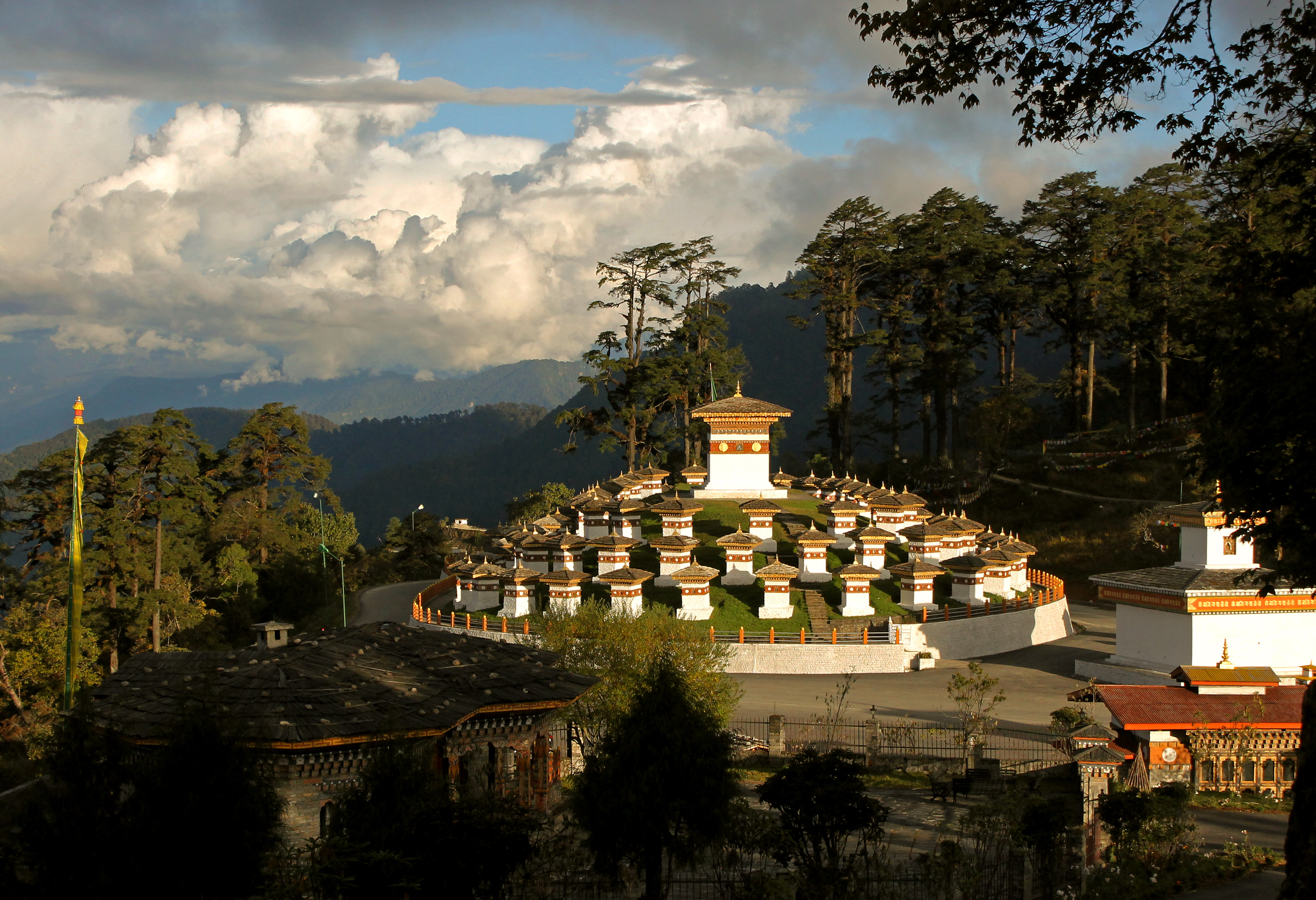
In Bhutan it seems there are beautiful old buildings everywhere. In Thimphu many of the newer buildings also display the traditional style, which goes a long way to once again preserving the history and cultural heritage.


So, those are just a few aspects of my trip to Bhutan that stood out and made we wish I’d had significantly more time to really explore further. As with many of the places I’ve visited, I plan to return one day. I’m not sure when that will be, but hopefully sooner rather than later.

Oh, and in case you’re wondering, Tashi Delek is difficult to translate directly, but it is often taken to mean “blessings and good luck” and is used in Bhutan, but also parts of Nepal and northern India.

Here is a gallery of some further photos from my trip…


The People You Meet


Travelling – it’s all about the journey. All about the spectacular places you see, the food you eat, the fear and excitement of the unknown and the cultures and customs you experience and are often invited into. You click frantically in a desperate attempt to capture as many memories as possible, and if you’re like me, you try to keep notes and write about the unique, random and sometimes bizarre moments that will no doubt occur at regular points throughout the journey.


However, during my most recent trip to Rwanda and the DRC (Democratic Republic of Congo) it dawned on me that one of the most important aspects of my travels and time abroad has been the people I’ve met, and crucially, the things I’ve learned from each and every one of these people. I have come to realize this cannot be underestimated or overlooked in regards to its value, relevance and impact.


International travelers inspire. Their sense of adventure and courage in the face of the unknown is at times baffling, but more often than not, totally energizing. They are often brave, curious, open, and unafraid to try new things, unburdened by logistics, and often equipped with a sharp and equally patient sense of humor. Those who travel live for the moment and instead of asking “Why?” the question is usually “Why not?”

Some may remark it is an irresponsible and risky existence, but I would say the outcomes of these risks are moments that will stay etched in the memory for a lifetime. From my personal experiences during my explorations I have encountered all manner of personalities, and this has undoubtedly been paramount to my own personal growth. It has inspired me to do things I had probably never before considered.

I have become more open and confident in meeting new people and more eager to strike up a conversation. My willingness to try new things has known far fewer bounds in recent years, and whilst I try my very best to be as careful and respectful as possible, I think the dive into the unknown is a truly formative experience.

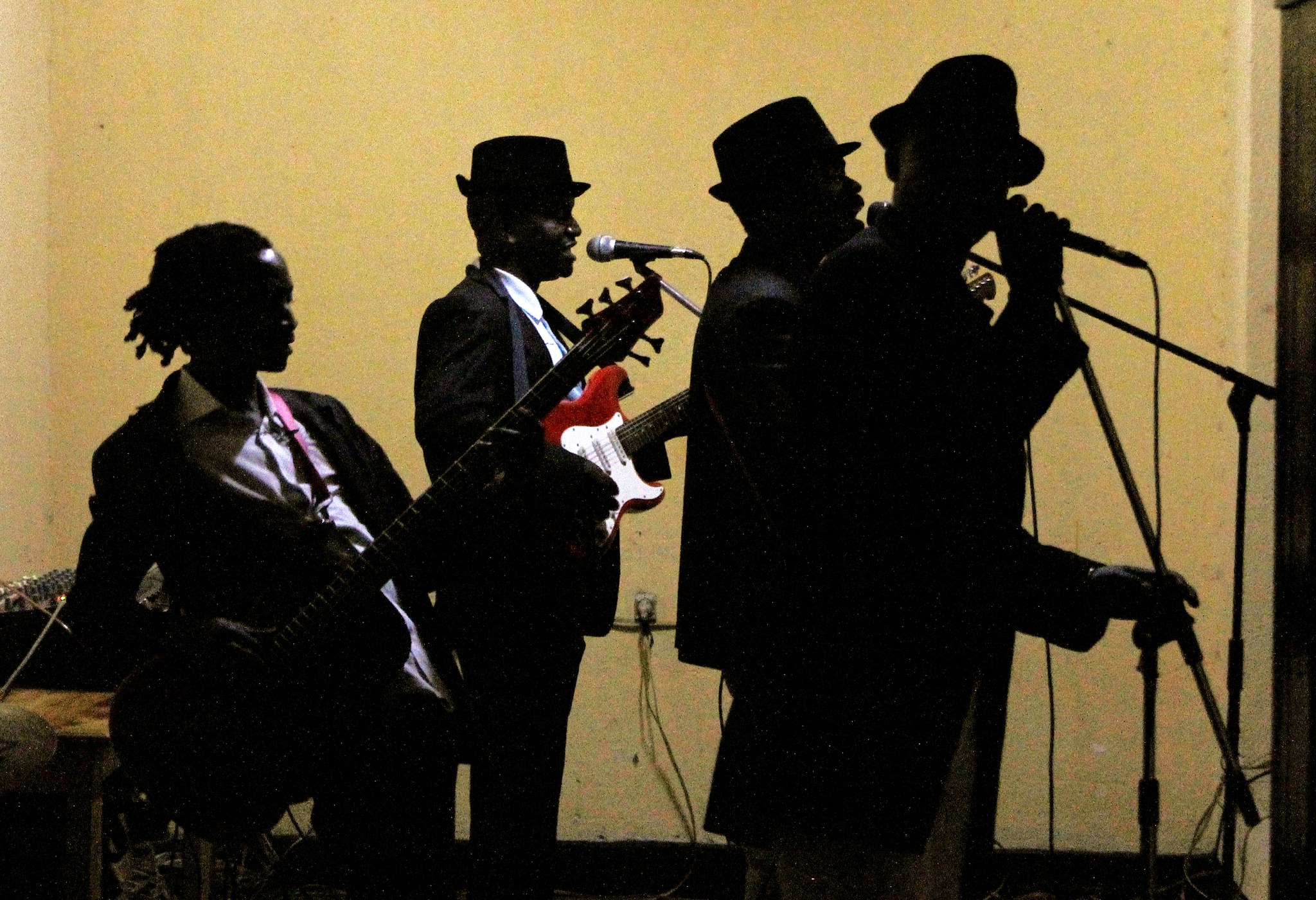
At various points on my recent trip, I interacted and spent time with a group of people who truly emphasized the diversity and collective adventurous spirit of the international worker and traveler.

Firstly I reunited with three good friends who have all carved out their own individually international paths in recent years. Inga (from Norway) volunteered with me in Rwanda in 2010 and since then has gone on to spend an extended period teaching at an international school in Kigali. She has also spent time teaching in refugee camps in Lebanon (predominantly home to Syrian refugees) and is now about to begin a PhD at Oxford University researching education in refugee camps, which will once again take her to camps in East Africa and the Middle East.

Kirsty (from Canada) is a web designer and online entrepreneur currently based in Rwanda and responsible for this great website www.livinginkigali.com. She also travels extensively and a major part of this is dedicated to her work with disaster relief projects. In the past few years she has been to Haiti, Bangladesh, Malawi and most recently, Nepal as a volunteer for an organisation which sends volunteers to assist with work after major disasters (www.hands.org).

Finally Kim (from the US) is also a former fellow volunteer in Rwanda. Since our work together in 2010 she has lived in Bogota, Colombia and Dar es Salam, Tanzania and traveled a great deal during this time. It is safe to say that Kim has experienced some of the very real challenges of life in major international capital cities and has been a constant and reliable source of knowledge and advice during the past few years.

So, as you can imagine, the stories and experiences shared when we all came together were humorous, intriguing, eye-opening, but most importantly they provided a very real insight into a wide variety of life experiences and challenges.


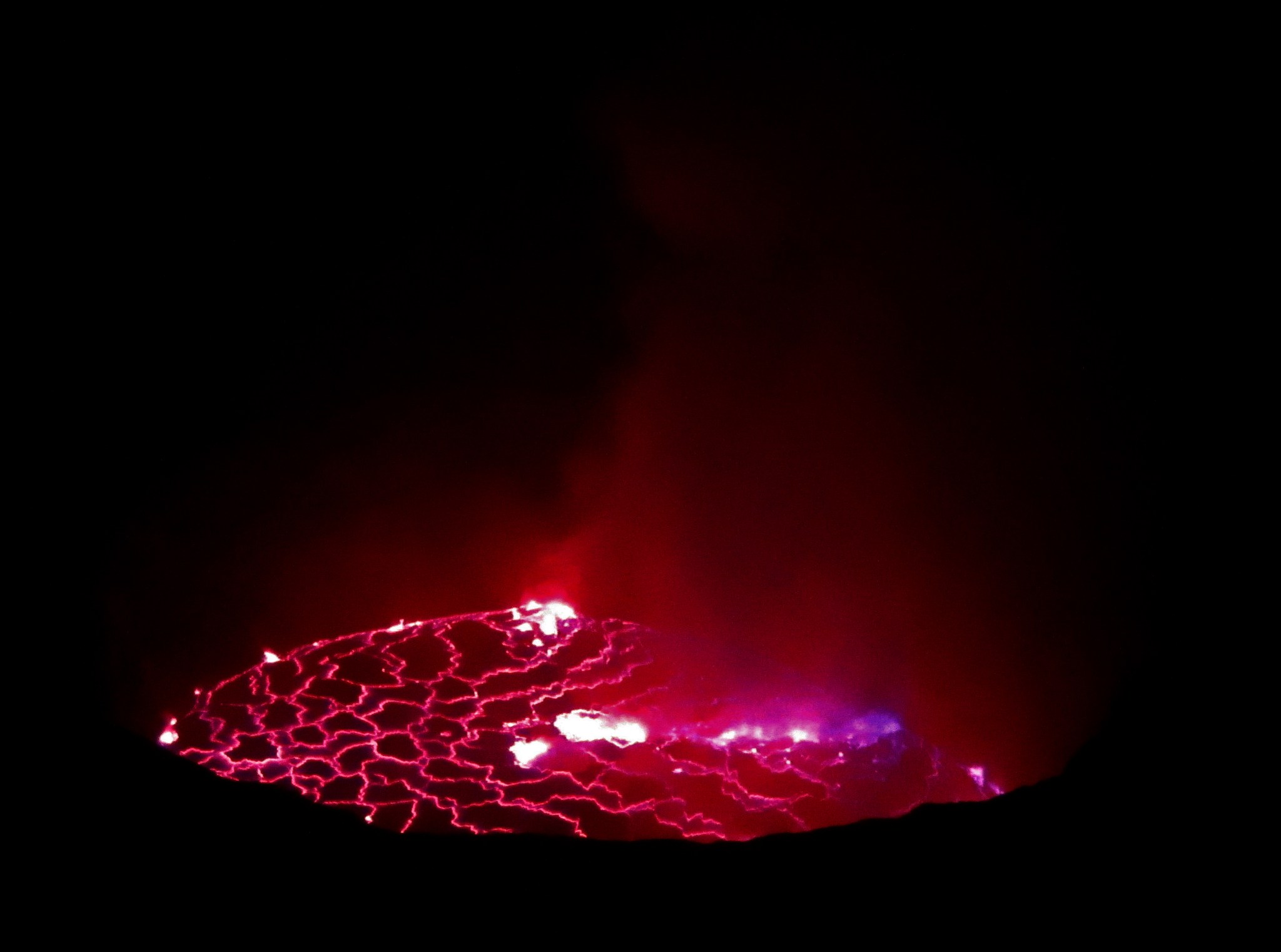
We all signed up to hike Mount Nyiragongo in DRC and personally I was a little reluctant when the volcano hike was in the planning stages due to cost and risk. Eastern DRC is an area rife with extremely dangerous rebel groups that reside in the dense forests and often unleash brutal and devastating attacks on surrounding towns and villages. It is the reason why there are large numbers of UN peacekeepers based in nearby Goma.

In addition to that Nyiragongo is an active volcano, which last erupted in 2002 leaving the town of Goma covered and destroyed by lava. The people are still rebuilding their homes and lives today. However, with a bit of peer pressure and that adventurous spirit, I was persuaded to sign up for the hike. Why not?!


Also in our group for the volcano climb was Johnny from Ireland. Now if you want to hear stories about international adventures, Johnny is your man. He is currently on an 8 year mission to visit every country in the world. At the time of meeting him he was up to about 145 countries.

How does he fund this you may ask? Well, a few years ago he was in a 9-5 office job which he disliked. So, he set up a travel blog/website and once this gained interest and popularity, it quickly attracted advertisers and he realized this was a liberating and exciting way to earn money.

He recently celebrated breaking the $1 million mark for income generated by his online work. This is one of his websites; http://onestep4ward.com/.


The hike was tough, but chatting with Johnny and hearing his many stories from almost any country you can think of helped pass the time and keep our minds off the sometimes grueling ascent and knee-jerking descent.

At our hotel in Goma before beginning the hike we met Finbarr O’Reilly, an international correspondent and photographer, who was based in Africa when Mount Nyiragongo erupted in January 2002 and arrived on the scene the very next day. He has been visiting and working in the DRC ever since.

He has also spent time working in Afghanistan, Darfur, Niger, Somalia, Libya and many other challenging locations, which have exposed to him to some of the most emotionally challenging scenes you can imagine. This is his photography website http://www.finbarr-oreilly.com/.

We also shared a ride with Finbarr back from Goma to Kigali and in the car with us that day was Paul. Paul’s job is to work in conjunction with the US State Department organizing hip hop workshops around the world. The overarching mission of the project is to promote diplomacy, reconciliation and trauma relief among young people who have been affected by various challenges often due to war and conflict.

It was fascinating hearing about such a program and how it has achieved such positive results in a diverse set of countries to date. Paul has facilitated these all over the world and it was really very cool to hear about such novel and unique methods of providing assistance and support to young people across the world.

So, in the space of just a few short days I was able to speak with, and more importantly, draw inspiration from a fascinating collection of people. Our volcano hike group was truly international and this is what I love.

Of course, this is not solely reflected in this one specific trip. It has been the case everywhere I’ve traveled/lived, and it is one of the reasons the travel bug gets you. You never know for sure who you are going to meet, where they will be from or what their background is.

The one thing you can almost guarantee though is that whoever you cross paths with at that particular time will have a new story to tell, a new place to recommend and an ability to open your eyes to a new perspective that you may not have considered previously. And that I have found is priceless.


Bhaiya, Cha Khaben?

Tea Shops of Chittagong


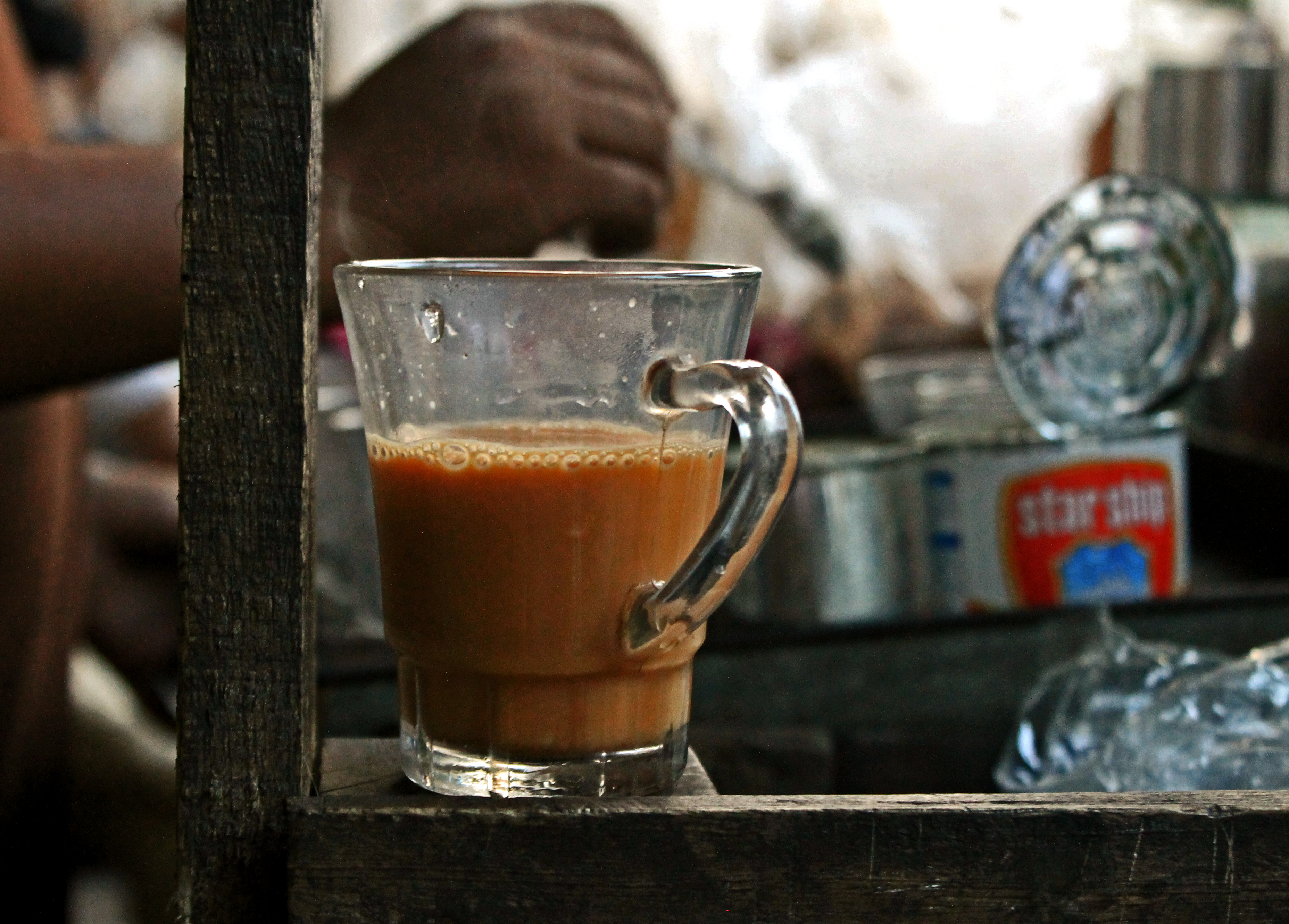
It’s probably no secret that one of my favourite activities in Chittagong is drinking tea. You may be thinking well, he’s British, so it kind of figures. Along with queuing and in depth discussions about the weather, we Brits love nothing more than a hot brew. Drinking tea; It’s what we do. When we’re upset, confused, nervous, celebrating, commiserating, pontificating, procrastinating, gossiping, etc, etc….we put the kettle on, and we go straight for the teabags.

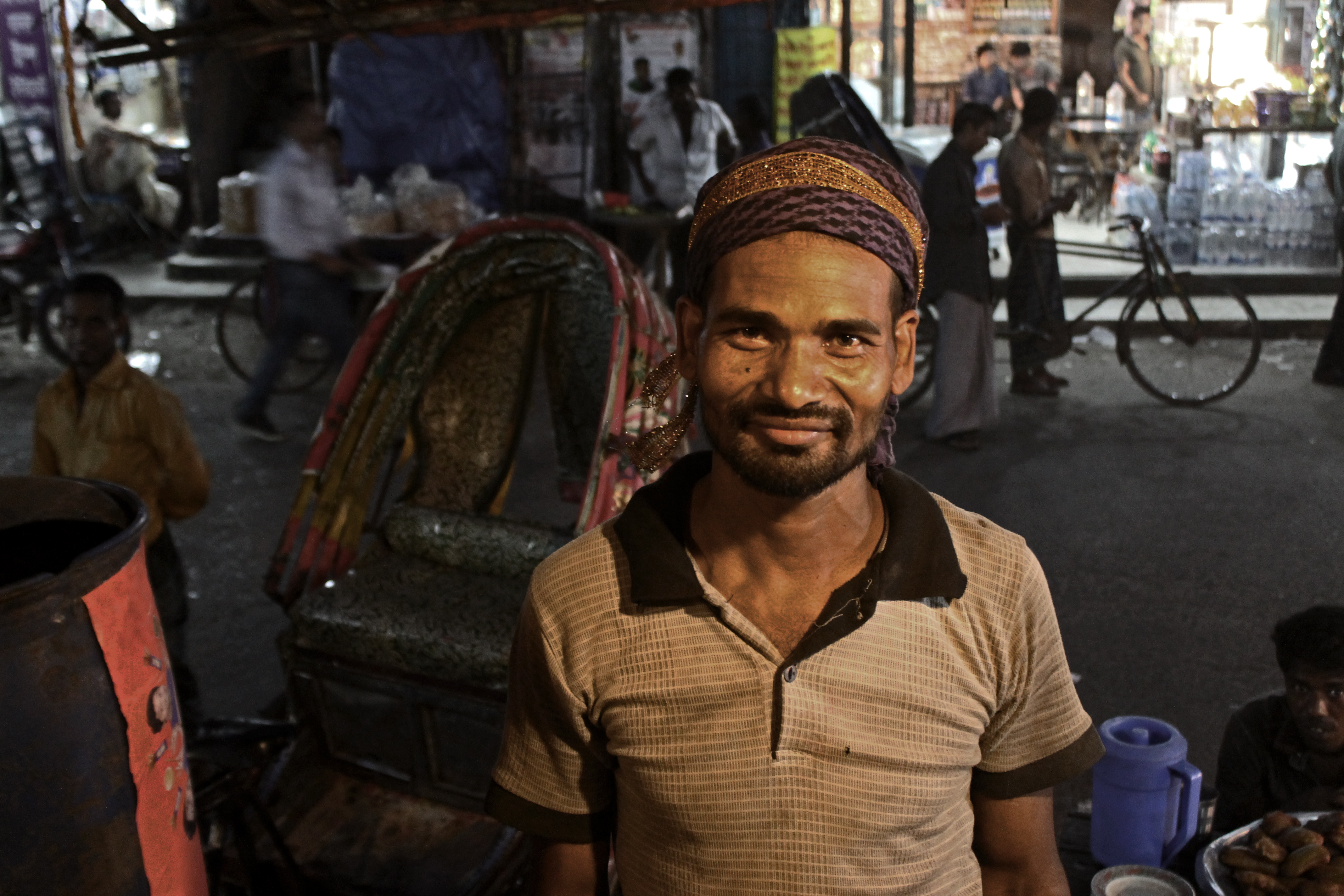
Well, here in Chittagong there seems to be a similar culture. One of the main differences being however, that tea drinking is a far more public event. Groups of men and women (but usually men) can be found far and wide across the city (and the country of course) sipping on hot, sweet tea, and I often end up becoming a member of one of these groups. In all honesty it’s not so much the tea that draws me in, but rather the experience that surrounds it.

I love the scene and the way life is played out over cups of tea. The comings and goings, the cross section of diverse characters, the energy, the humour, the mystery, and the undulating pace of each individual experience. The tea stalls/shops come in all sorts of shapes and sizes, and it’s incredible just how many exist here. I could go on and on trying to describe it in words, but recently I decided it would be far easier, and probably a much greater sensory experience to present Chittagong’s tea drinking through a series of images.

Thus, in the past two weeks I have wandered around the city visiting a vast array of Cha-er dokan (tea shops) and here are the photos I captured. It’s safe to say that in excess of twenty cups of tea were consumed in the process. I should also state that whilst in some photos the people do not look overly happy about the image being taken, I always make a point of checking with people (often 2-3 times) that they are ok for me to take the photo. From my experience it is very common for the people I’ve met to switch to their most serious expression when the photo is taken.


A common scene found across the city and country


‘Adda’ – informal conversations on a quiet day


A variety of snacks to accompany your tea


This shop is as wide and as deep as the photo suggests


IMG_0920

The roadside tea shop


IMG_0925

Bananas, bread and tea


IMG_0943


Beside the rail tracks, the tea shack – a community centre


Learning the trade early


One of the noisier tea shops – located by the side of a frequently congested main road


IMG_1014

TMT – a larger establishment with a reputation for fine tea


One of the many tea sellers who populate this city


IMG_1030

A bustling tea/food shop


The rickshawallah’s break


Discussing the day over early evening cha


The hub of a road or area


IMG_1052

A common snack here in Chittagong


Evening entertainment at the tea shop


No finer way to spend 10 minutes


The essentials


Watching the world go by


A small cup of tea and condensed milk greatness


Tea shop faces


IMG_1065

The mobile teawallah


And finally in an ode to tea drinking here is a song from one of my favourite bands, Kula Shaker, who have captured the magic of a nice cup of tea magically. Enjoy!

Drink Tea for the Love of God


All photos © John Stanlake

Green Grass of Home


The summer just passed brought about a number of reunions with good friends, familiar faces, and people who have defined recent phases of my life.

It began with a slight diversion to my usual route home from Bangladesh to the UK. A night spent sprawled out on a metal bench in an eerily quiet terminal building at Dubai Airport preceded a feeling of deja vu – boarding a Rwandair flight through to Kigali. The airport in Dubai felt disorientating as I contemplated a journey that began in Chittagong and would end in Kigali.

As I read ‘Inzozi’ the Rwandair inflight magazine, some very familiar emotions hit me. Upon landing and disembarking the plane, I would once again set foot on the continent of Afica and more specifically Rwanda, the country that taught me so much in such a short space of time.

Four years previously I landed in Kigali, and I had little idea if I’m honest of quite what the following ten months had in store for me. I needn’t have worried. Things have a way of working out and overall 2010 was a year that will undoubtedly stick in my mind for many positive reasons.

Before returning home to the UK for a few weeks this summer I spent 10 days back in Rwanda. Many people have since asked me how it felt to return to the country and quite frankly the only response I’ve been able to provide is, “Great…it was great.”

Not particularly inspring, or informative I’m well aware, yet that’s exactly how it felt. It was emotional too of course as I met with former students who are continuing to carve their own successful paths in life.

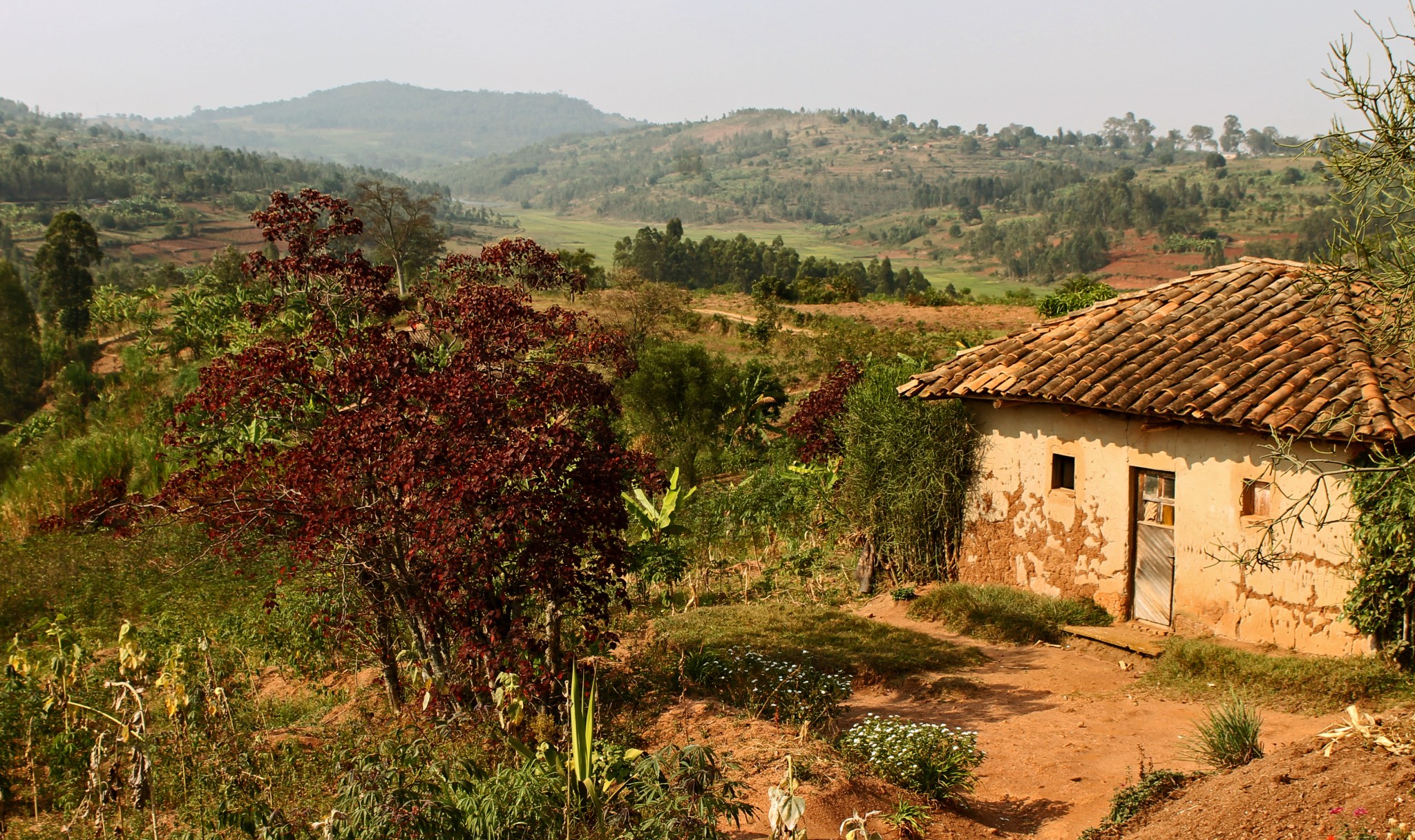
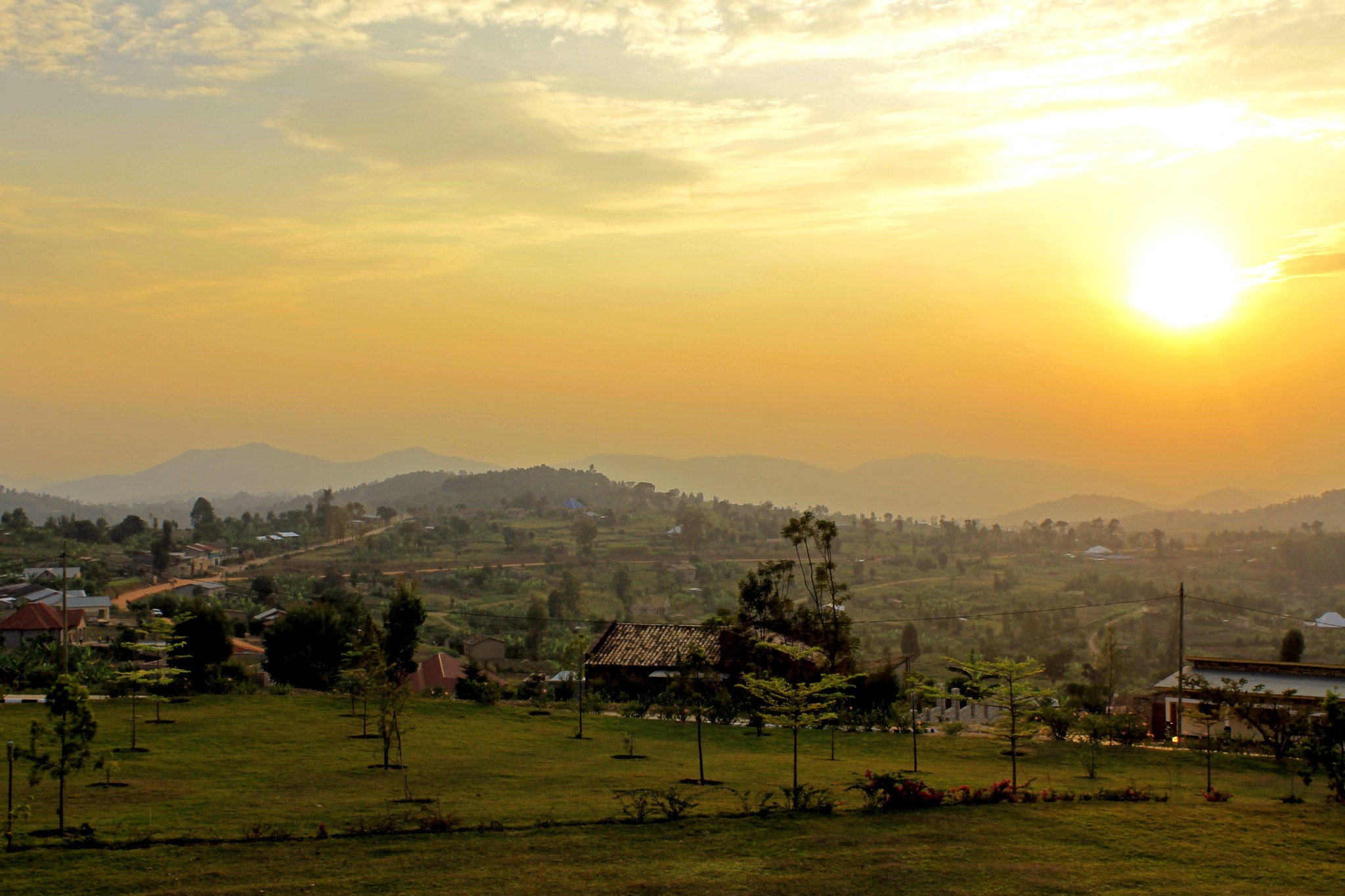
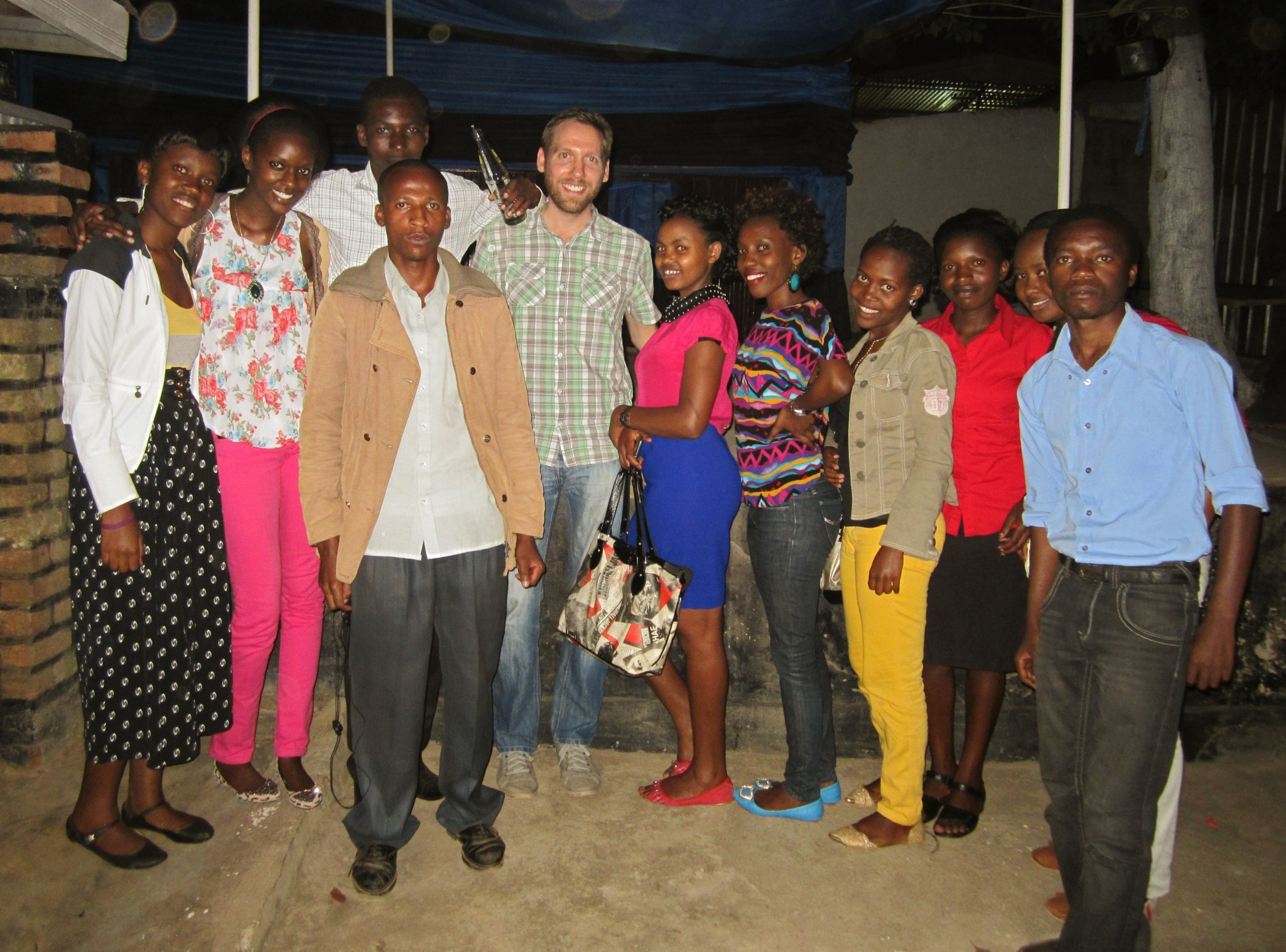
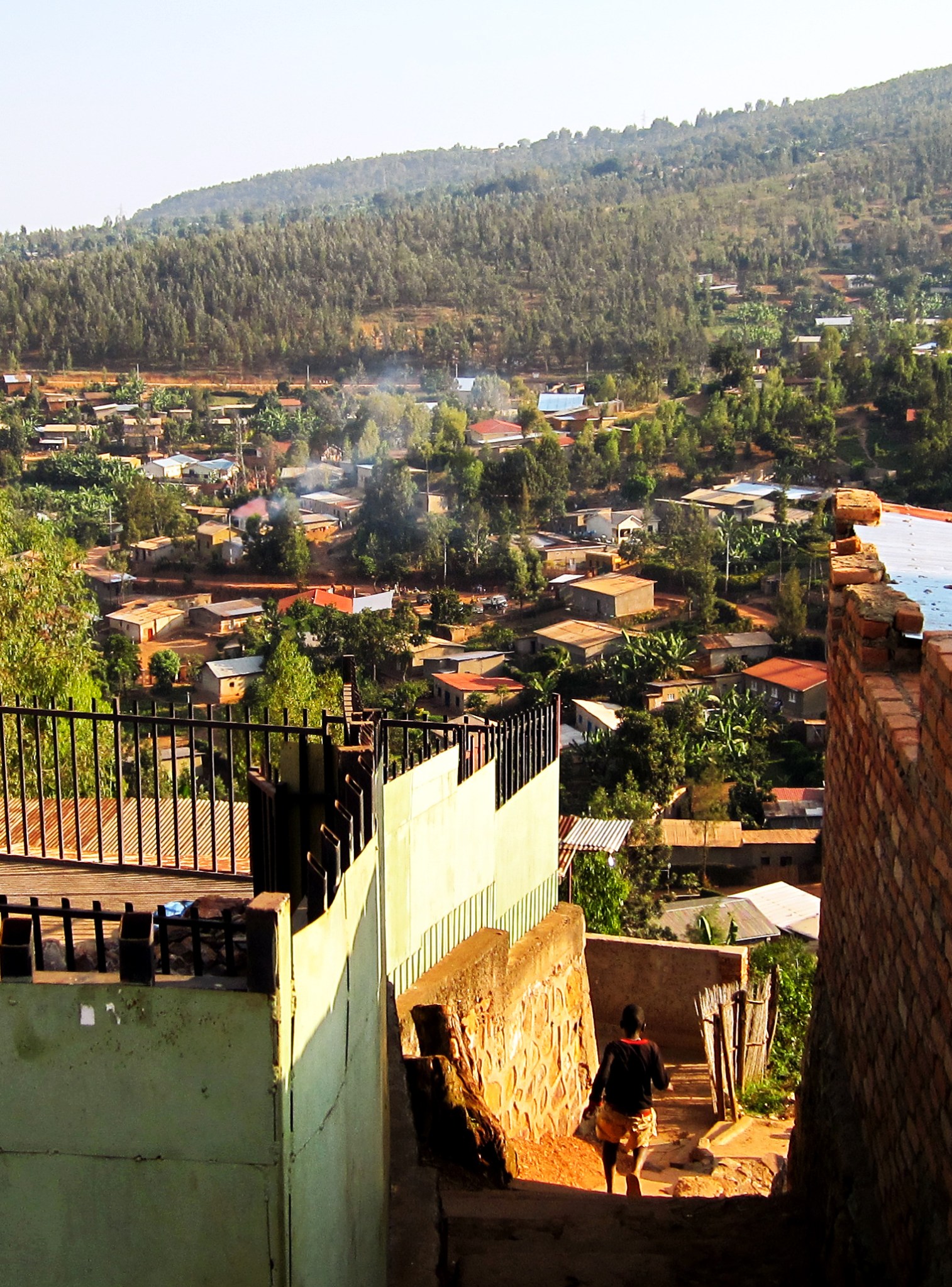
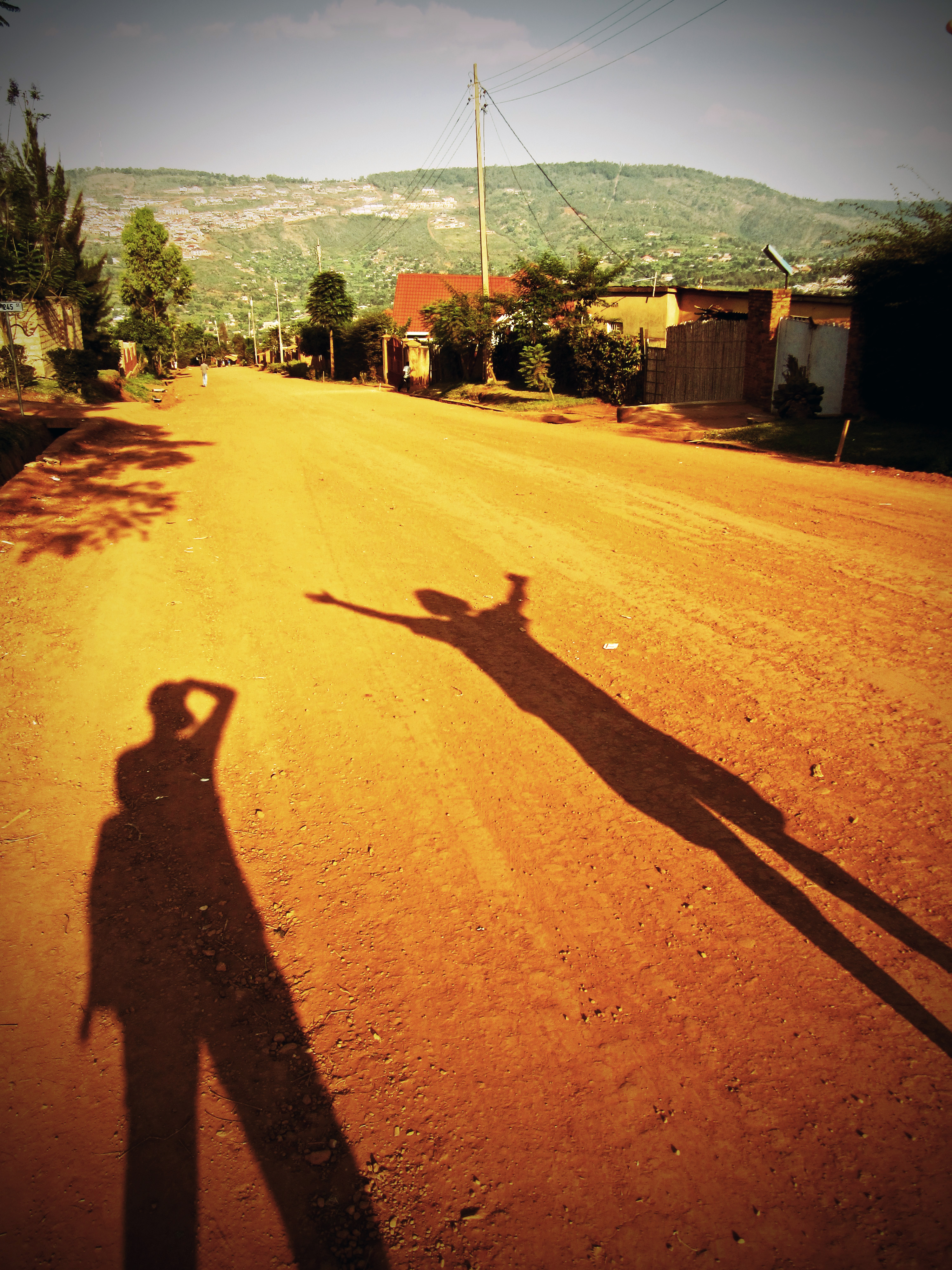
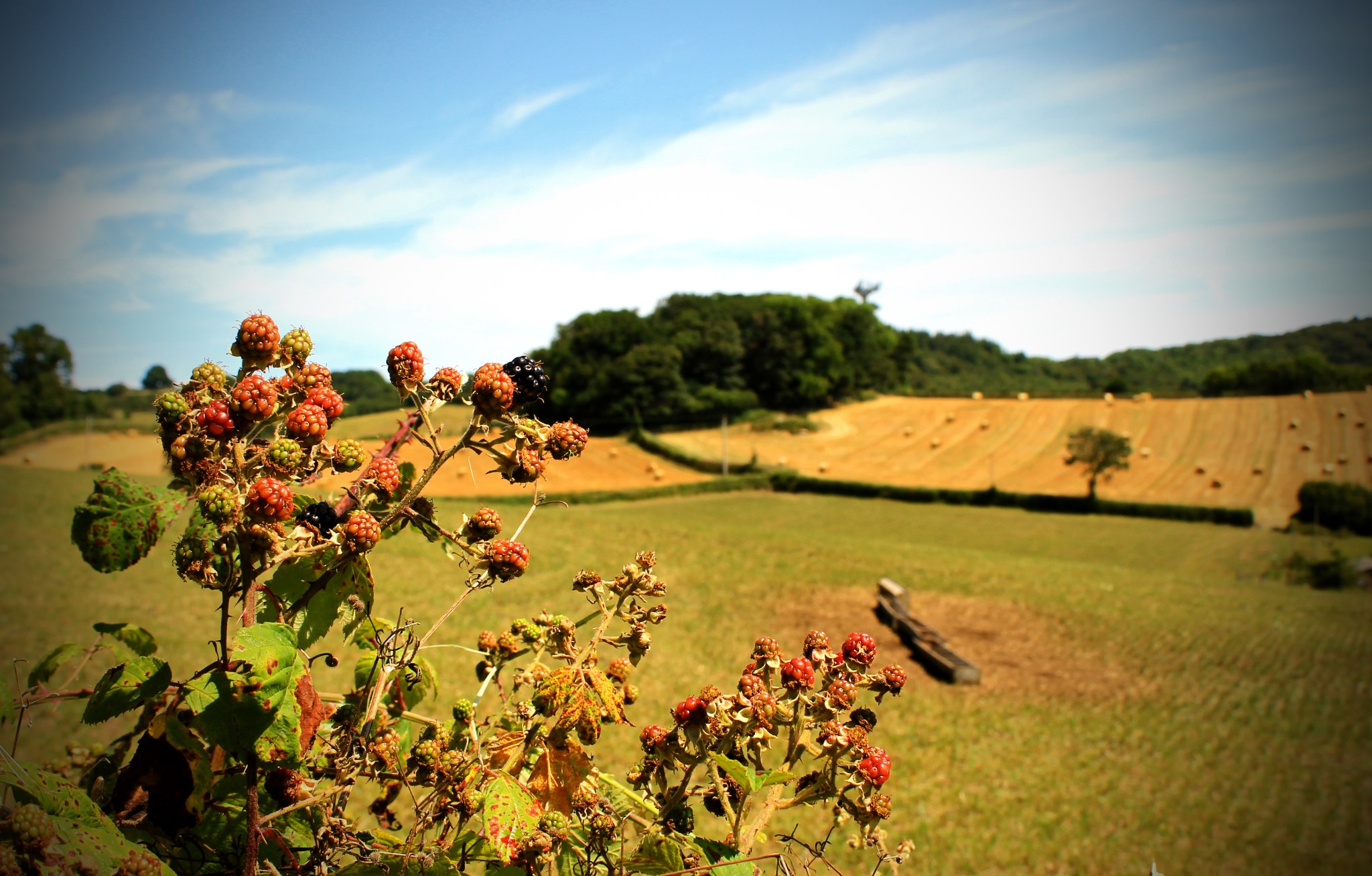
So, as in previous instances of being stuck for the right words, I will resort to images. Below is a selection of photos which sum up a summer of green hills, friendly faces, and of course…familiar homes both in Rwanda and the UK.


Rwanda


National Art Gallery, Nyanza


Huye, Rwanda

South Rwanda countryside


Sunset over Nyanza hills


Sunset over Nyanza hills


With former students


Kigali city outskirts


With former students


Devon

Dartmoor


Devon hills


Dartmoor


Dartmoor


Dartmoor road


Boats at Shaldon


Sunset over Torbay


The best walking partner


Woodland walk in Lustleigh


IMG_0668

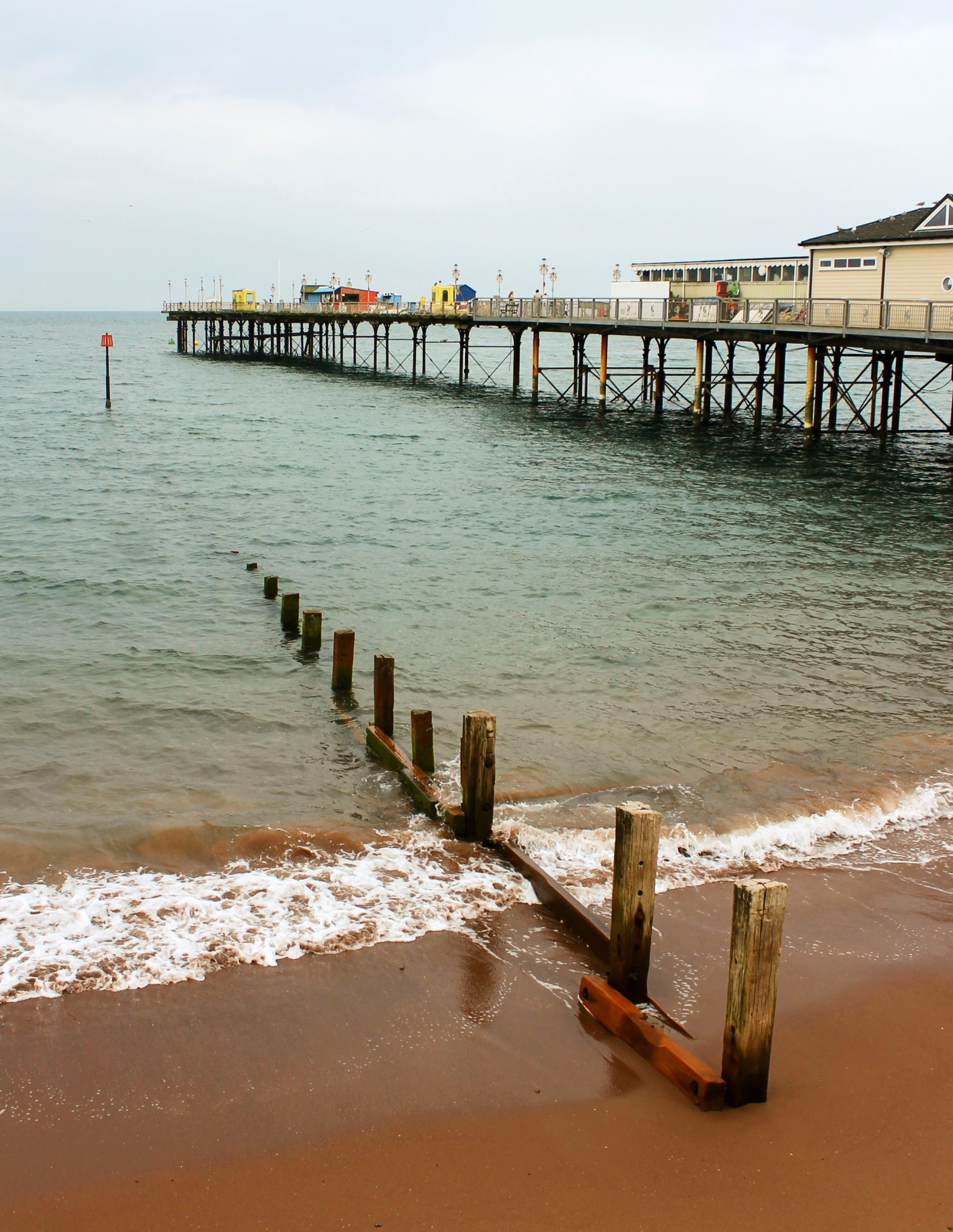
Teignmouth Pier


All photos © John Stanlake

One People, One Nation, One Destiny.


Sunday, May 5th 2013 was a notable date here in Guyana. It marked the anniversary of an event which played a huge part in shaping the face of the Guyana you find today. Exactly 175 years ago to the day, on May 5th 1838, the very first indentured Indian labourers arrived to work in the sugar plantations of the then British colony of Guyana. They weren’t ‘slaves’ as such, however their workers’ rights were neglected and conditions were often poor. They did however have the right to repatriation in India after five years. Some took up this offer, others decided to make Guyana their permanent home.

Over 200,000 workers in total made the journey from Asia to South America in the 19th century, and possibly the most telling statistic of all is descendants of those immigrant workers now account for 44% of the total population in 2013. The Indo-Guyanese are therefore officially the largest ethnic group in Guyana.

One aspect of this country that has intrigued me most during my time here has been the incredible diversity. For a nation modest in geographical area and with a total population comparable to the city of Leeds (UK), or Austin (Texas), Guyana is a melting pot for such a diverse range of cultures, peoples, languages, and traditions. In addition to the Indo-Guyanese; Afro-Guyanese account for 30% of the population, whilst mixed heritage Guyanese make up 16%.  The Amerindian (indigenous) community accounts for the remaining 10%, aside from small Brazilian/Portuguese and Chinese communities.

This diversity manifests itself in so many aspects of Guyanese society. As I touched upon in a previous blog post, language is certainly a strong reflection, with the presence of English, Creole, Portuguese, Spanish, Chinese, and nine Amerindian dialects. Cuisine is another. The popular ‘cookup’ is a Caribbean style dish made of rice, beans, meat, coconut and various vegetables all cooked together in one pot. Curry and roti dishes are readily available and popular, as are Chinese options, including the Guyanese style chow mein. Meat eaters get their fix at various Brazilian barbeques, and Amerindian cuisine is known for the spicy beef or pork stew, Pepperpot – customarily eaten during the Christmas period.

Music and dance is another diverse characteristic of Guyana. Traditional south Asian beats, tablas and sitars, and popular Bollywood songs frequently fill the air. Calypso, Soca, and Reggae are equally prevalent, and a reminder that despite being part of mainland South America, Guyana is very much influenced by its Caribbean connection. Brazilian and traditional South American music is also a common sound.

However, I feel I’ve been struck most by the religious diversity of this country, which is quite evident in Georgetown. Perhaps it’s because my eighteen months prior to Guyana were spent in the predominantly Islamic state of Bangladesh, where 90% of the population identify themselves as Muslim. My religious experiences were therefore defined by the distinct daily call to prayer, the abundance of traditional Islamic dress, and the Mosques of varying shapes and sizes. There is of course a sizeable Hindu community in Bangladesh as well as a modest number of Buddhists. Yet, overall society is defined by the teachings and values of the Qu’ran.


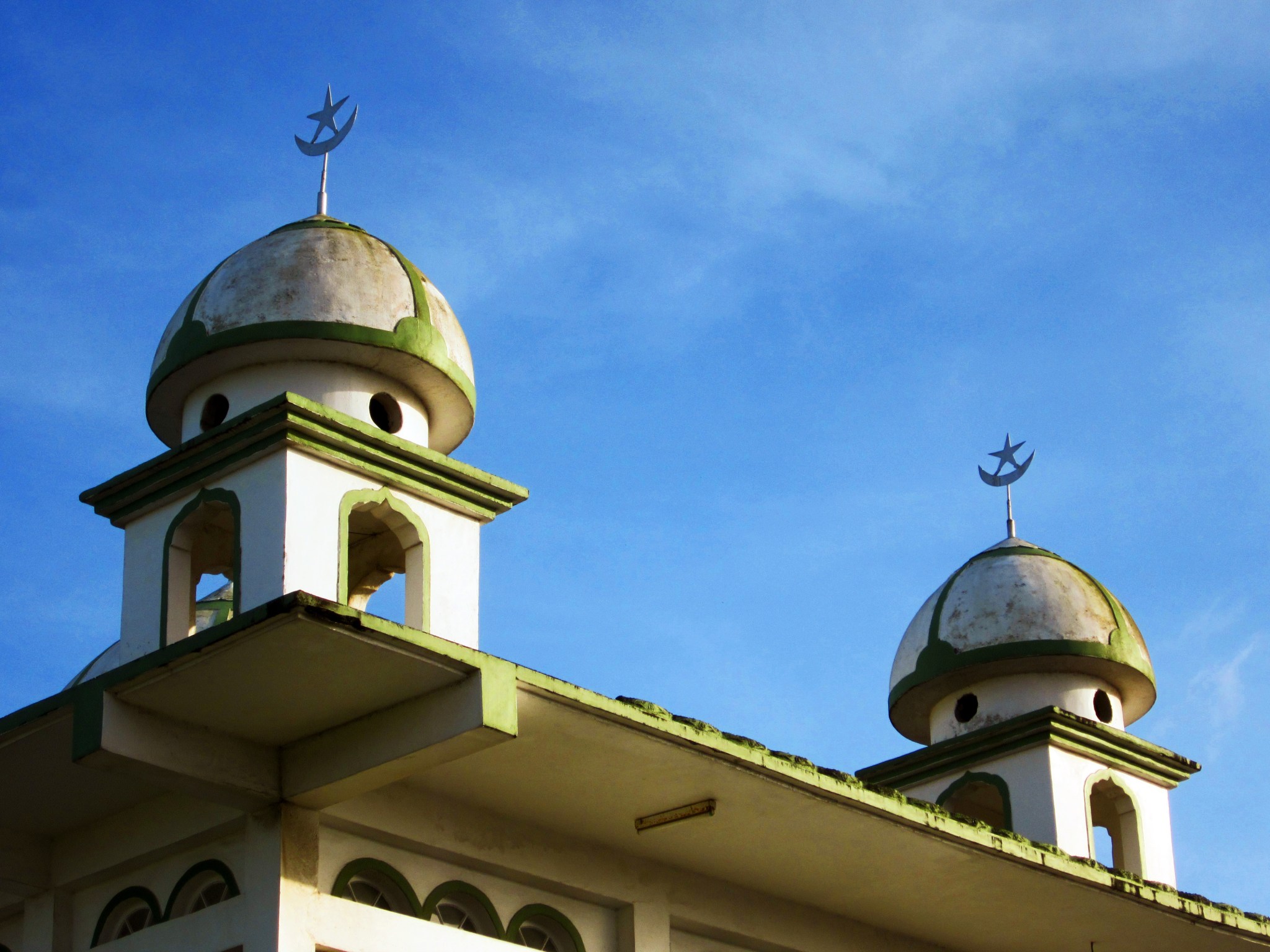
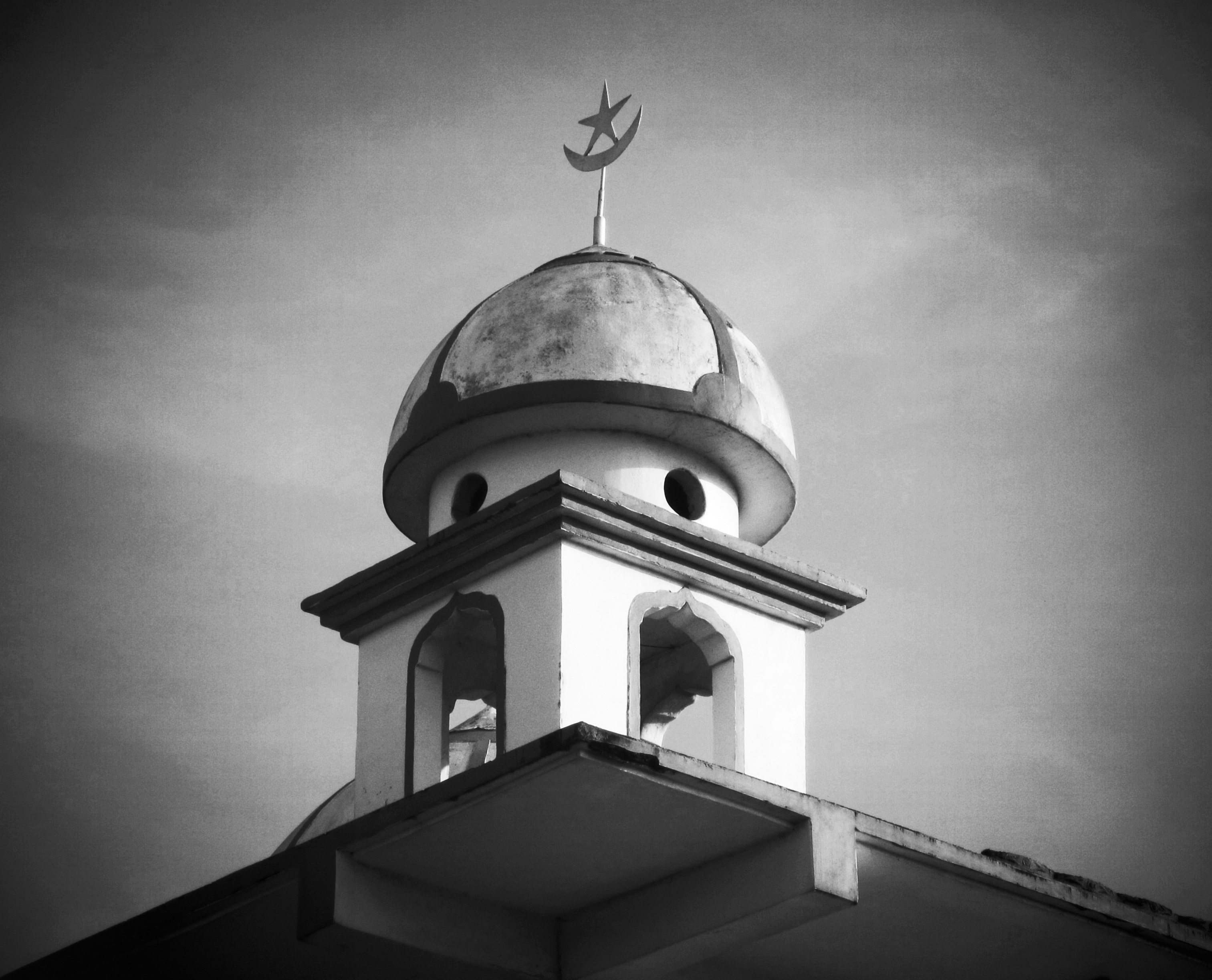
Prashad Nagar Masjid, Georgetown

Prashad Nagar Masjid, Georgetown


Christianity is the most widespread faith in Guyana, but given the history I touched upon earlier in this post, Hinduism is also very visible. Islam has a noticeable presence, despite being less represented in terms of actual followers.

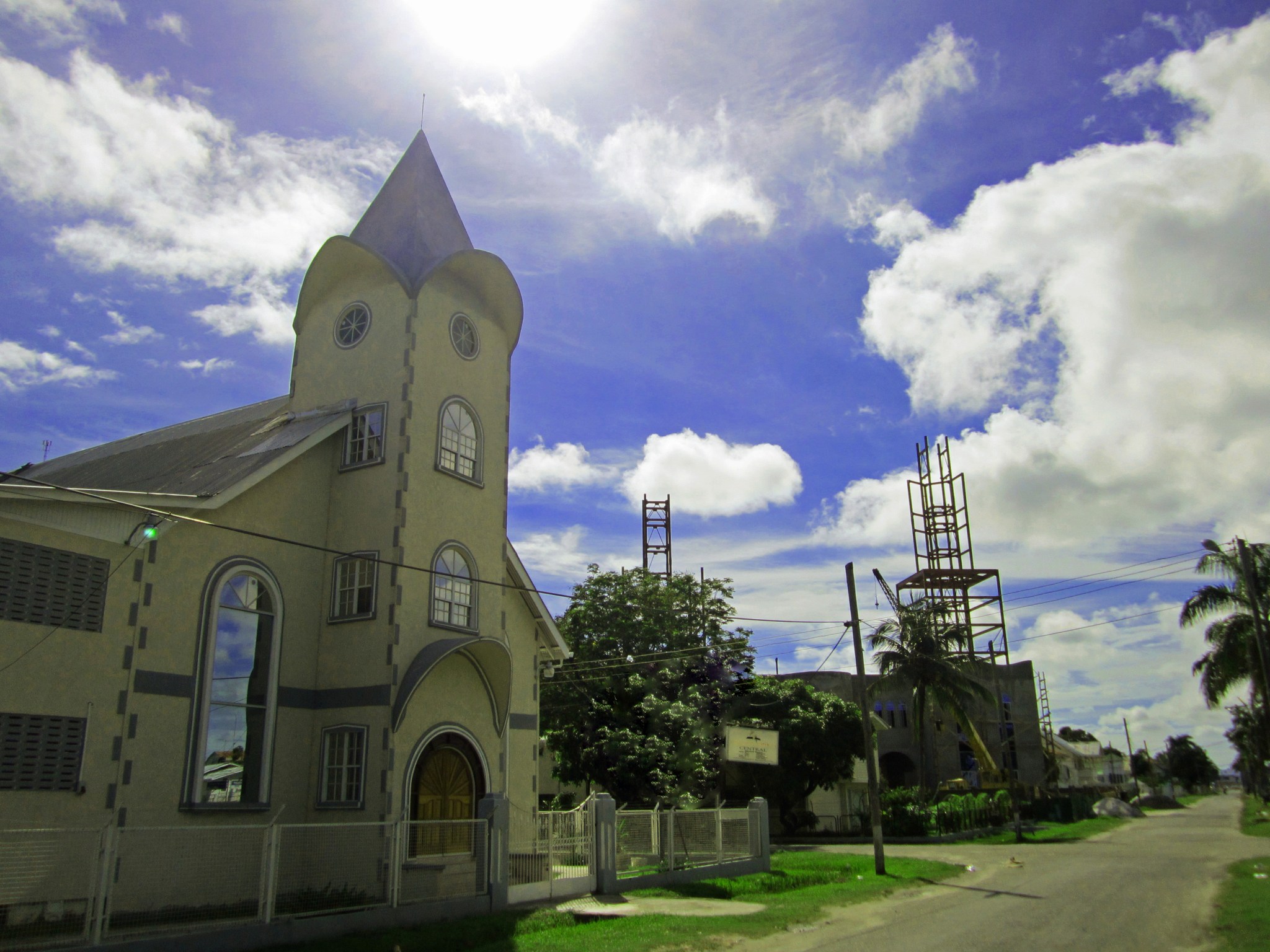
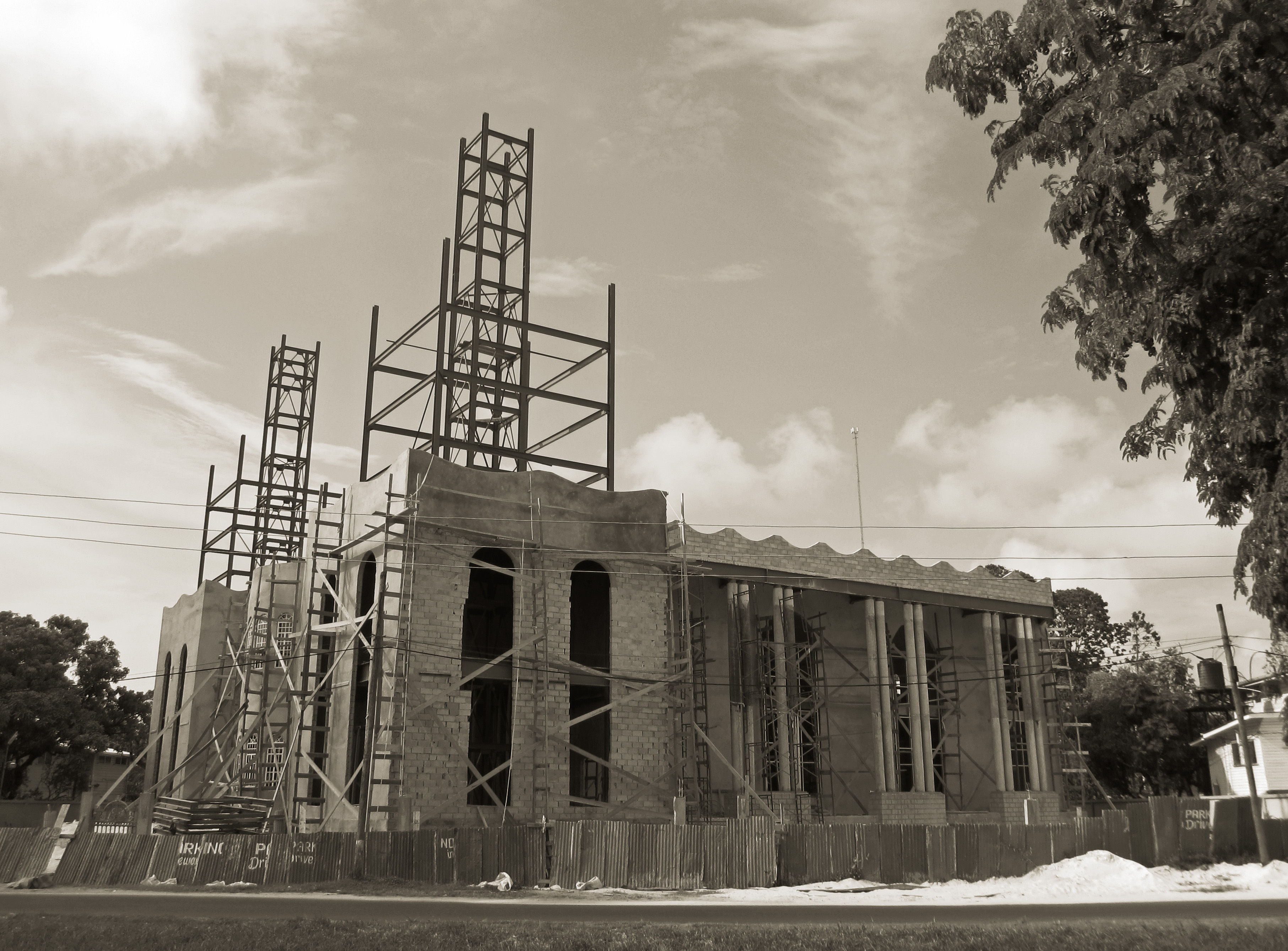
From my front porch if you look to your left you will see a large Seventh Day Adventist Church, and if you look to your right you will see the towering structure of Guyana’s newest and biggest Mosque (currently under construction).


IMG_4357a

In the foreground a church and behind this Guyana’s newest mosque.


I decided a few weeks back to take a series of photos that would demonstrate Georgetown’s religious diversity, and I’d like to present these in this blog post.

(The images are best viewed in full screen mode!)

Christianity

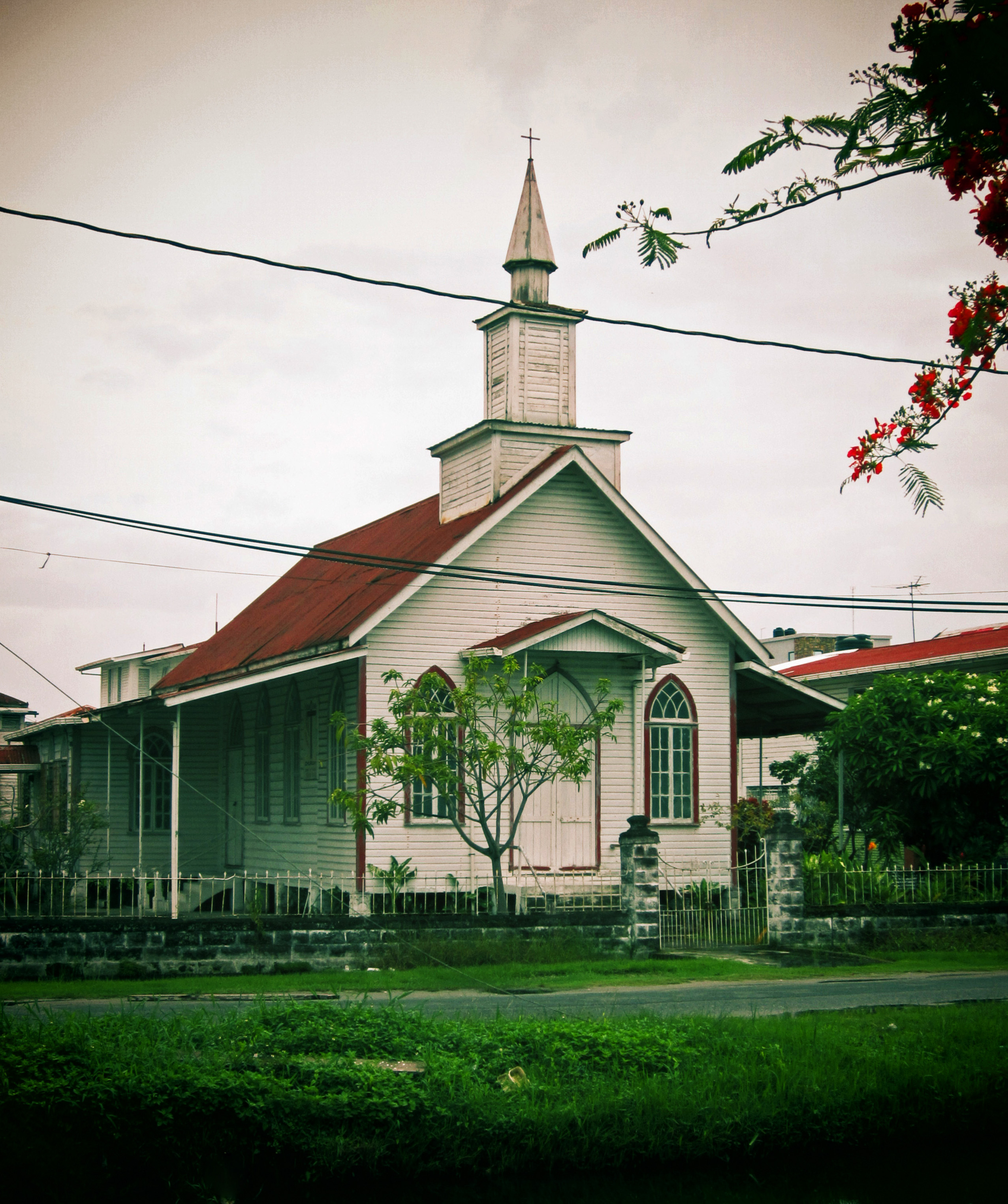
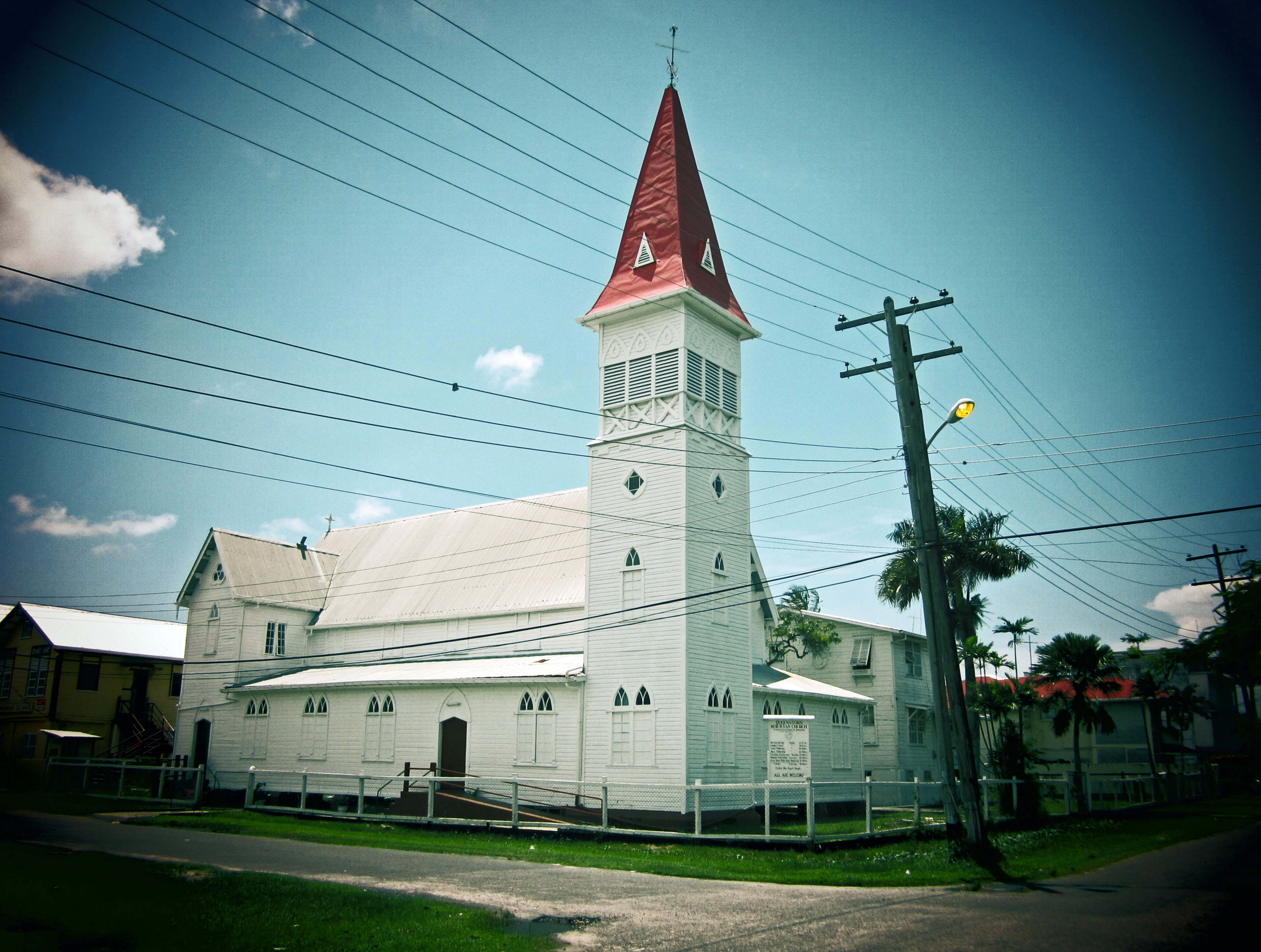
I’ll begin with the most followed faith in Guyana. It is estimated that 57% of the population are Christian, of which various denominations are present.  Below is a selection of images showing the churches of varying shapes and sizes across Georgetown, most of which were built during colonial administration and therefore possess a significant degree of historical and architectural charm.


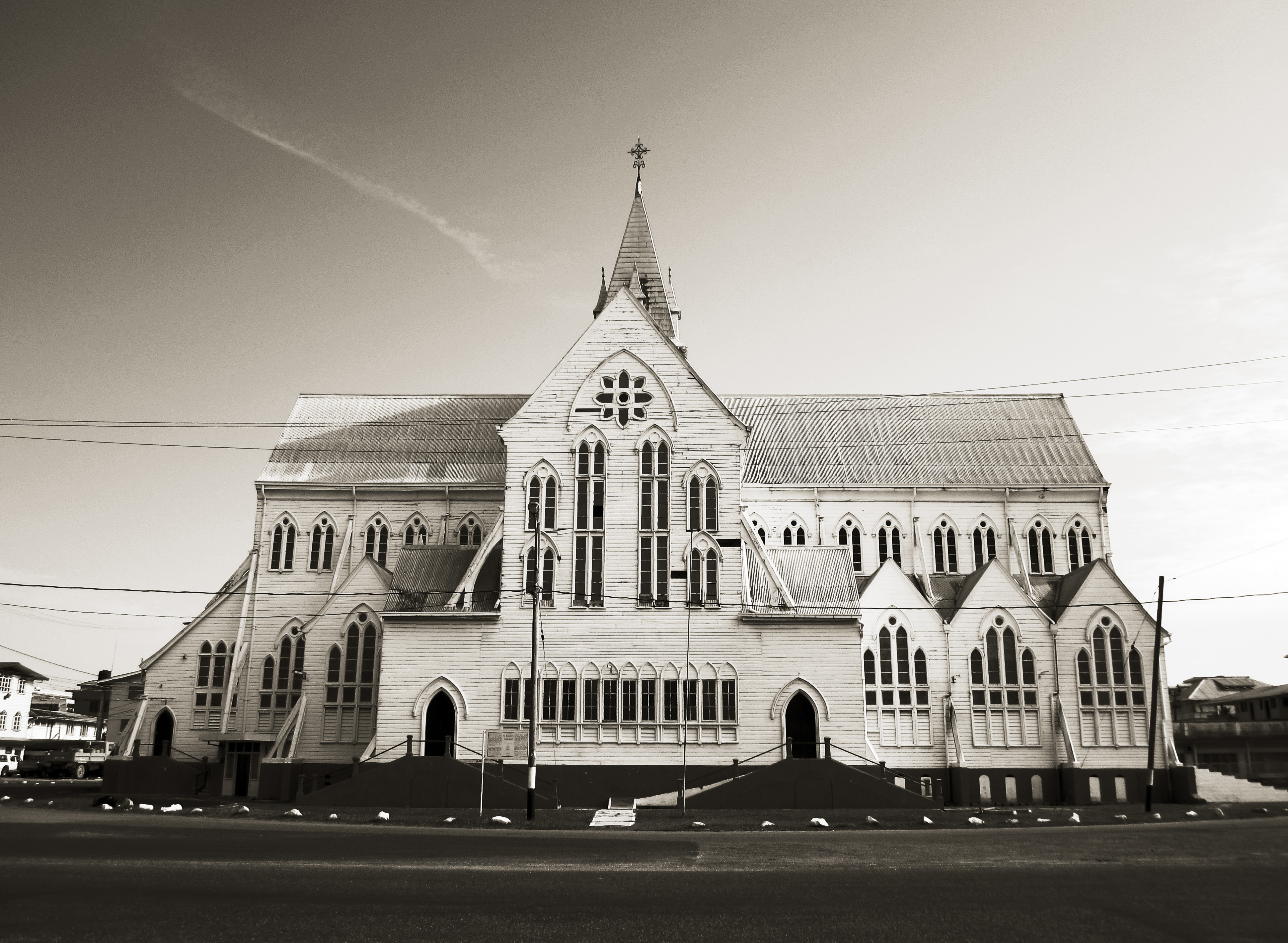
St George's Cathdral, Georgetown


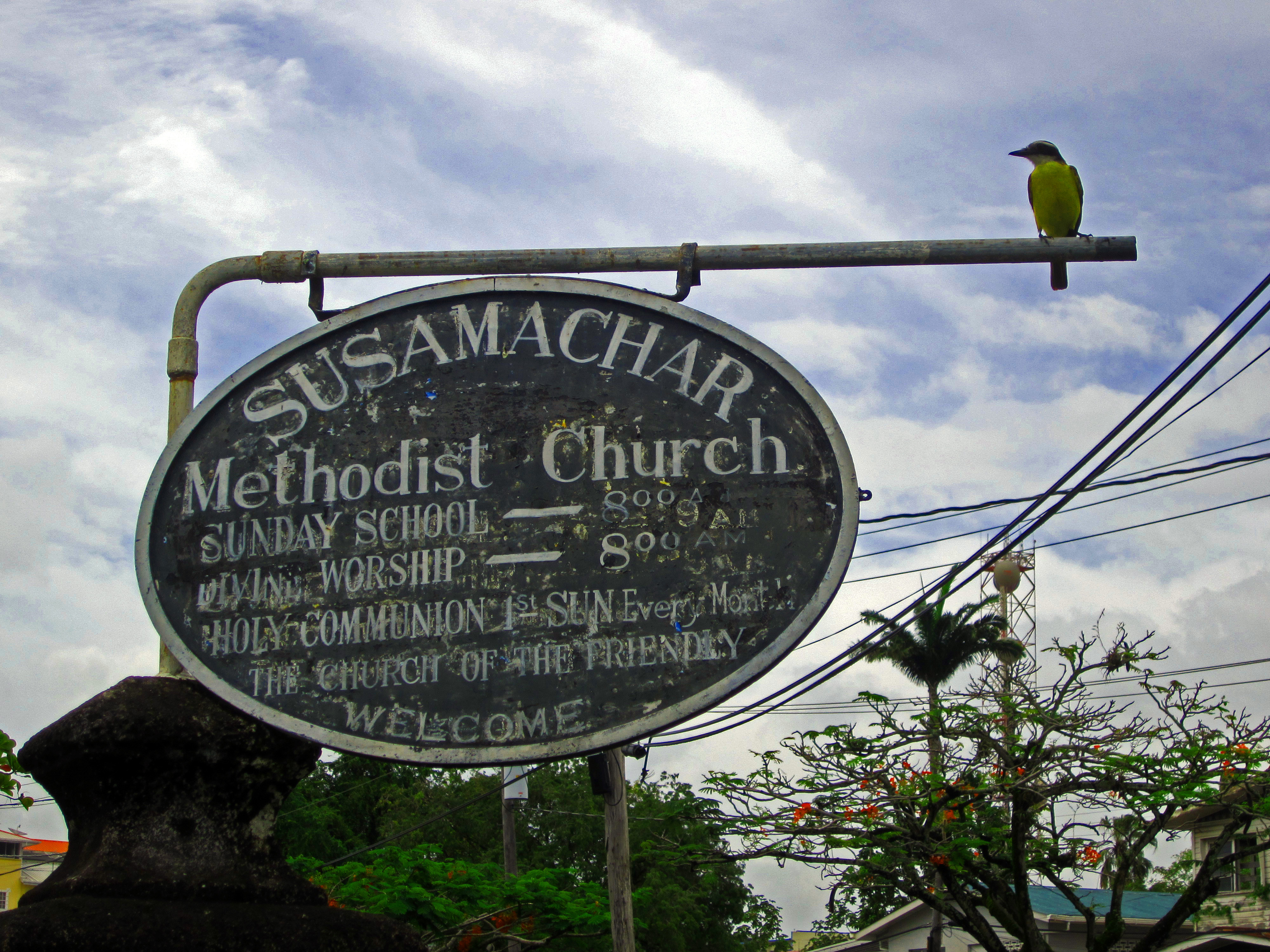
Susamachar Methodist Church, Georgetown

Susamachar Methodist Church, Georgetown


Susamachar Methodist Church


St George's Cathedral, Georgetown

St George’s Anglican Cathedral, Georgetown


Christ Church


Smith Memorial Church, Georgetown

Smith Memorial Church – built in 1844


St Andrew's Kirk

St Andrew’s Kirk, Presbyterian Church – The oldest building in Guyana, built in 1818.


Brickdam Cathedral

Brickdam Cathedral (Cathedral of the Immaculate Conception) – built 1920s


Queenstown Moravian Church


Burn's Memorial Presbyterian Church, Georgetown

Burn’s Memorial Presbyterian Church, Georgetown


Hinduism

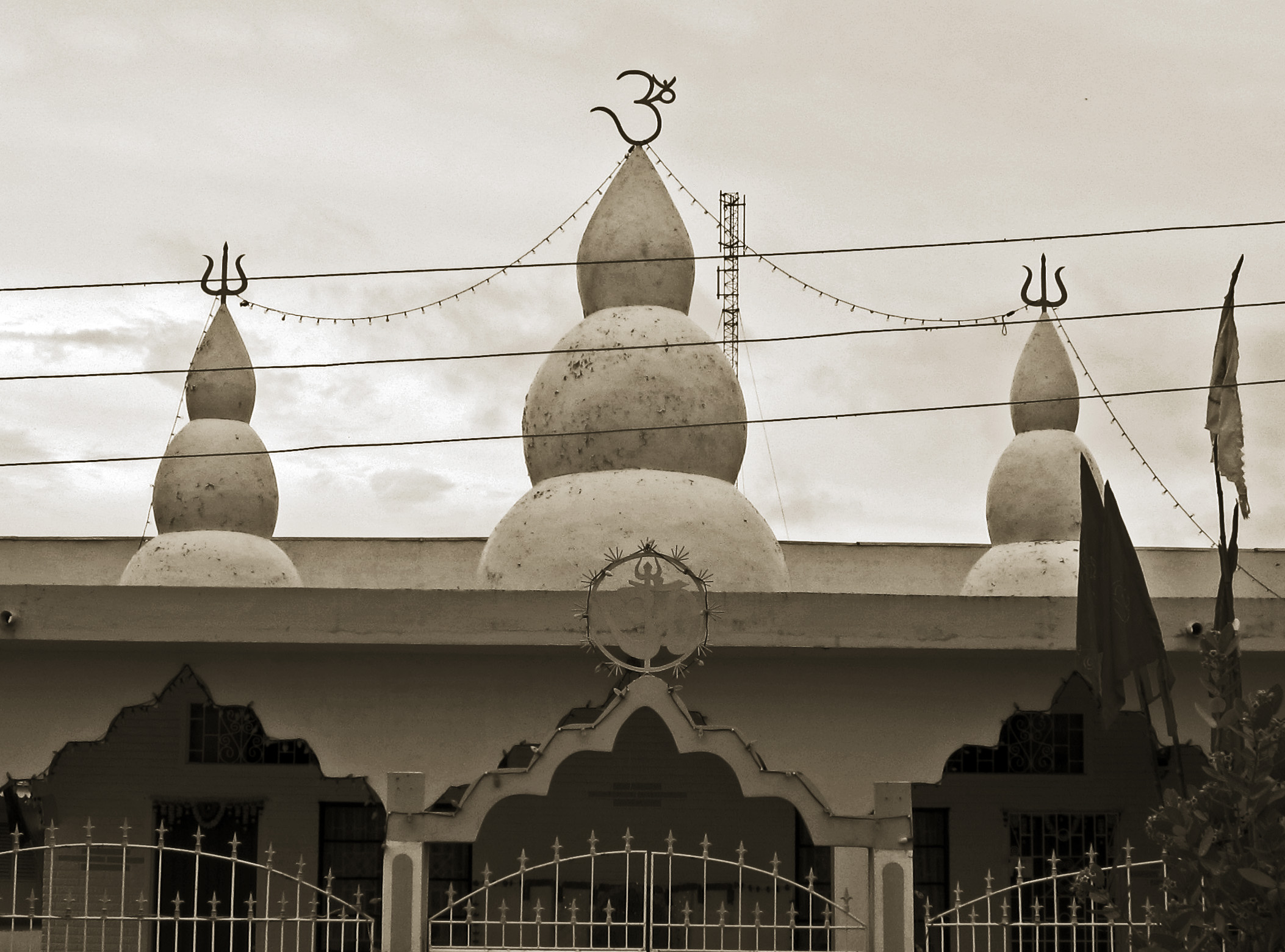
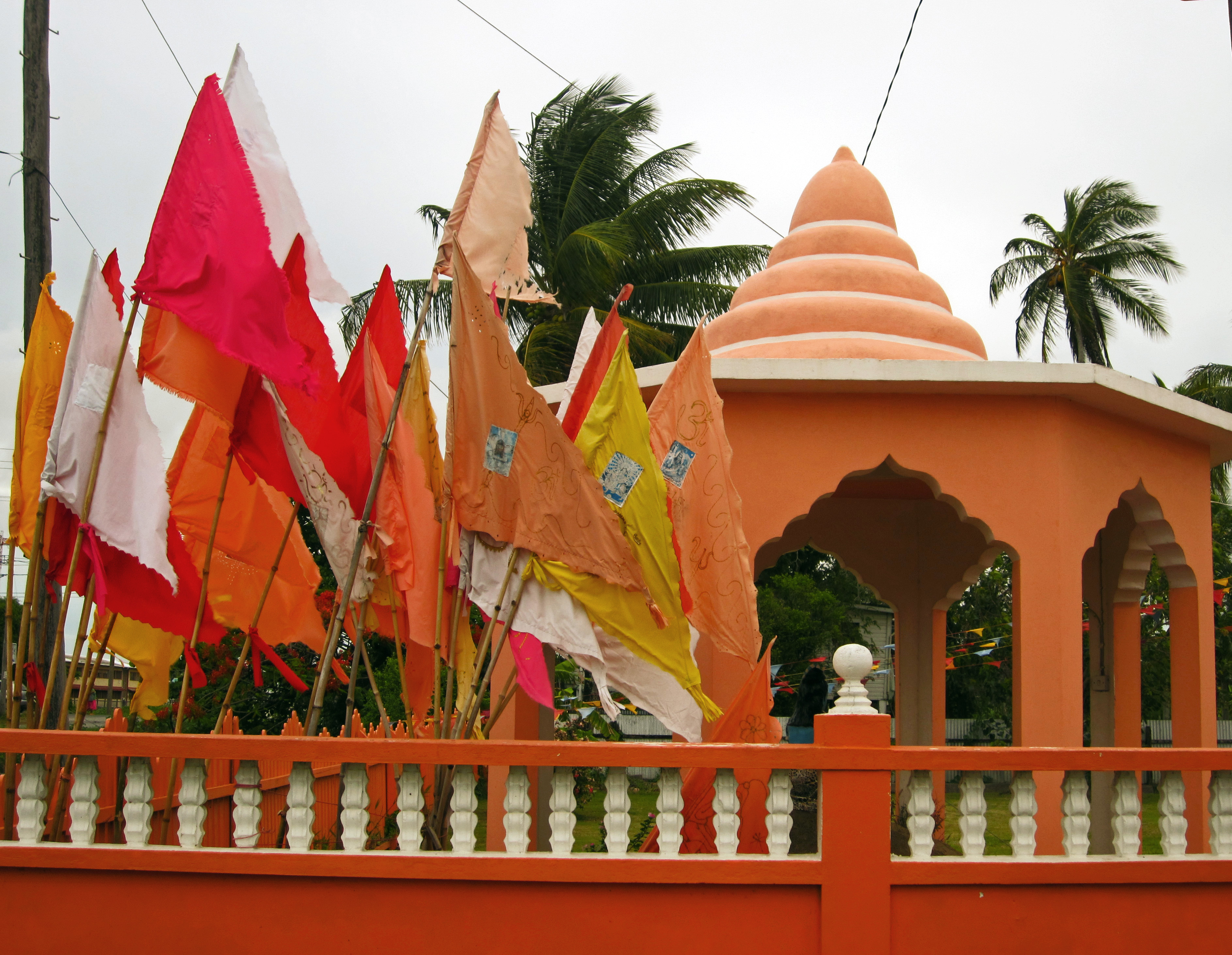
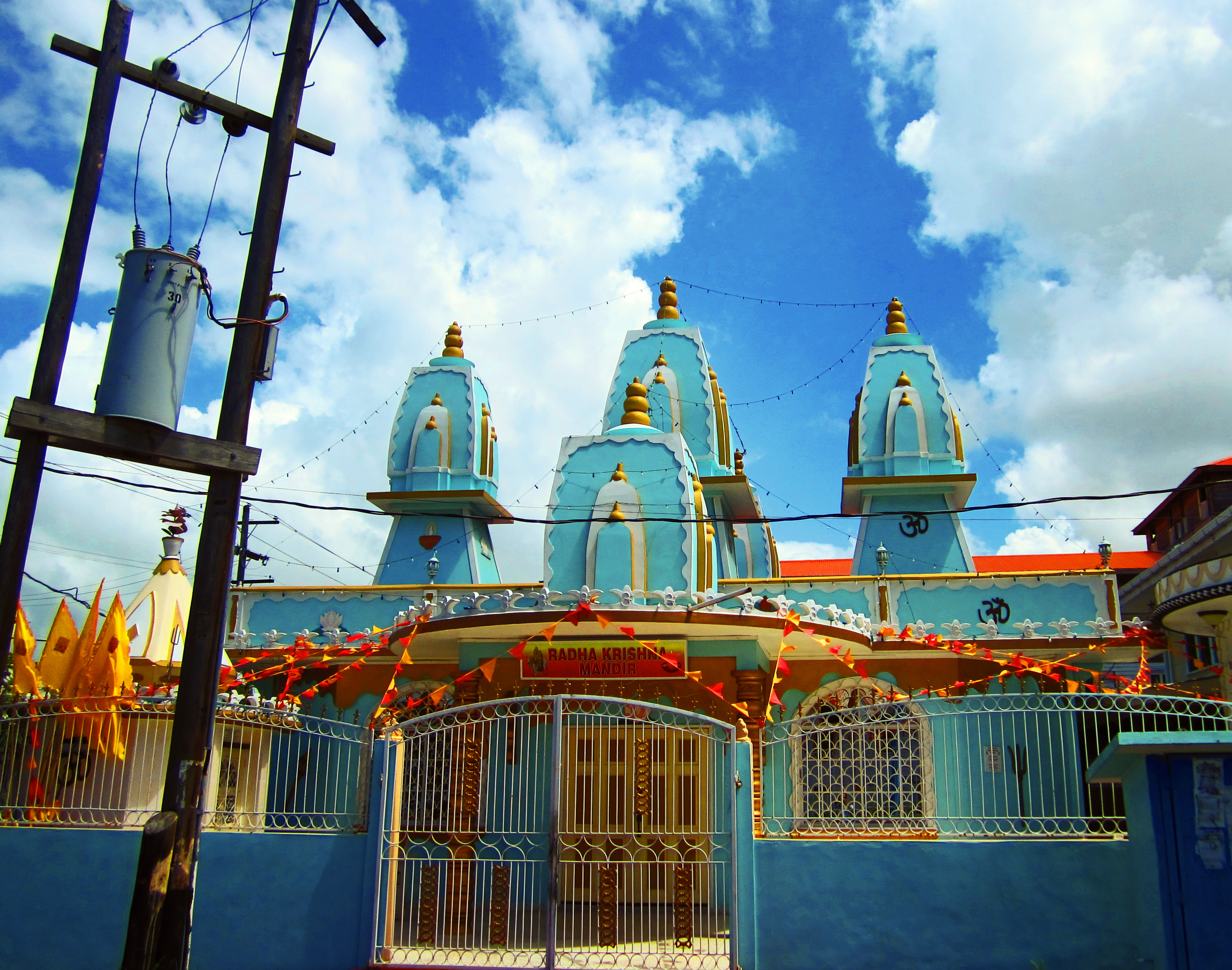
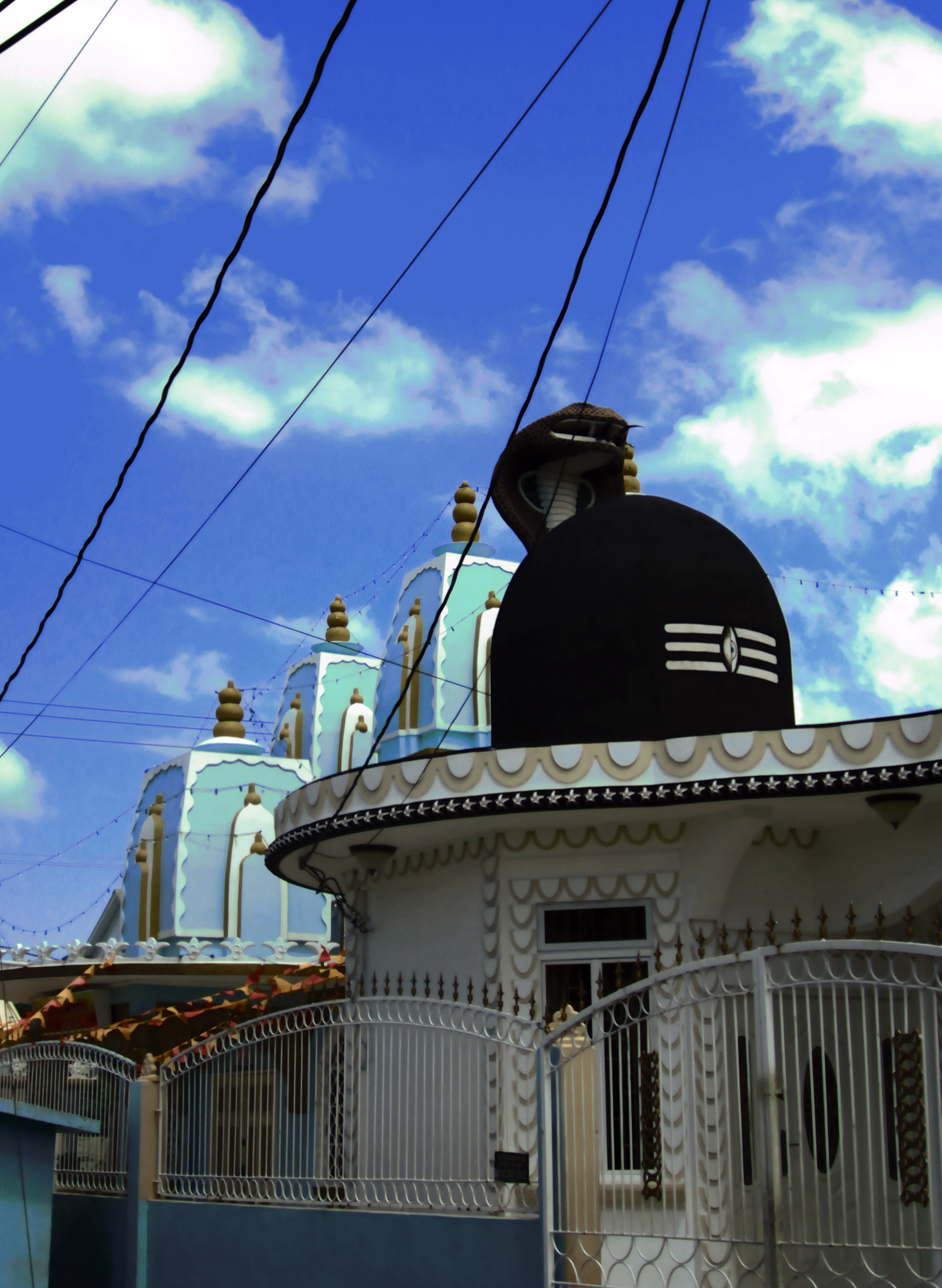
Hindus account for 28% of the population, with the presence of Hinduism a result of the vast numbers of Indian immigrants brought to Guyana in the colonial era. Below are photos taken at temples across Georgetown.


Cummings Lodge/Industry Mandir

Cummings Lodge/Industry Mandir, Georgetown


Central Vaidik Mandir

Central Vaidik Mandir, Georgetown


IMG_4291


Radha Krishna Mandir

Radha Krishna Mandir, Georgetown


IMG_4216


IMG_4283


Guyana Sanatan Dharma Mahasabha Ashram

Guyana Sanatan Dharma Mahasabha Ashram, founded 1934.


Islam

The exact root of Islam in Guyana is debated. It’s quite possible that it first arrived with a number of the West African slaves. It’s also widely accepted of course that like Hinduism, the presence of Islam is a direct result of 19th century immigration from India.

The first three images below show the new Queenstown Jama Masjid. The original was built in 1895, but succumbed to old age in 2007 and was dismantled. Upon completion it will once again sit proudly as the biggest mosque in Guyana and will be a place of prayer for much of the city’s Muslim population. It sits literally right behind my house, and I have watched its growth with great interest. When I first arrived it was merely a shell, but 10 months on it’s nearing completion and will certainly be a grand structure when finished.

Below this are images taken at other mosques across Georgetown. I’m always more intrigued by the role of Islam in society here, and I think this stems from my time in Bangladesh.


Prashad Nagar Masjid, Georgetown

Prashad Nagar Masjid, Georgetown


Prashad Nagar Masjid, Georgetown

Prashad Nagar Masjid, Georgetown


Queenstown Jama Masjid

Queenstown Jama Masjid


Prashad Nagar Masjid, Georgetown

Prashad Nagar Masjid, Georgetown


Queenstown Jama Masjid

Queenstown Jama Masjid


Queenstown Jama Masjid

Queenstown Jama Masjid


Prashad Nagar Masjid, Georgetown

Prashad Nagar Masjid, Georgetown


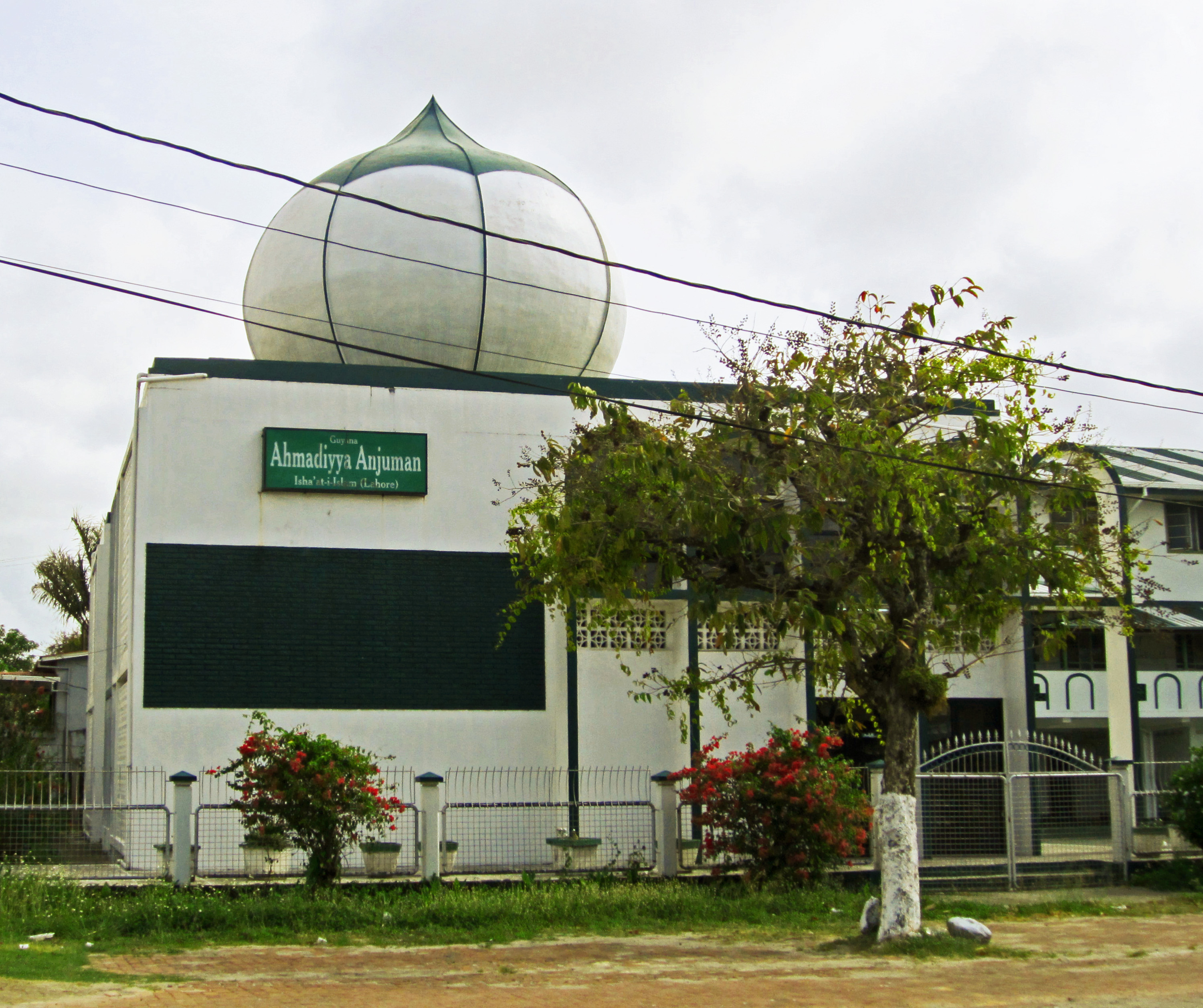
LBI Masjid

LBI (La Bonne Intention) Masjid


So there you have it, a selection of places of worship, which are dotted across Georgetown, some of which bear a connection to a bygone era when the foundations of religious faith were being laid in Guyana. My impression has been that generally speaking this is a spiritual society, signified by the vast array of ‘houses of god’, which vary in shape and size.  Within one square mile of my house I believe there are at least ten different places I could visit to connect with god, if I were so inclined. I would therefore hazard a guess that there are at least fifty across the whole of Georgetown.

I could of course have delved much deeper into this subject area, but I was more interested in capturing and presenting the distinctive religious architecture that is displayed right across Georgetown. I am also pretty impressed by the manner in which religious respect seems to maintain a sound level here. Considering you have three significant world religions coexisting very openly side by side in such a concentrated area, maybe other places across the world could learn a few lessons on religious tolerance from Guyana.