Travelling – it’s all about the journey. All about the spectacular places you see, the food you eat, the fear and excitement of the unknown and the cultures and customs you experience and are often invited into. You click frantically in a desperate attempt to capture as many memories as possible, and if you’re like me, you try to keep notes and write about the unique, random and sometimes bizarre moments that will no doubt occur at regular points throughout the journey.
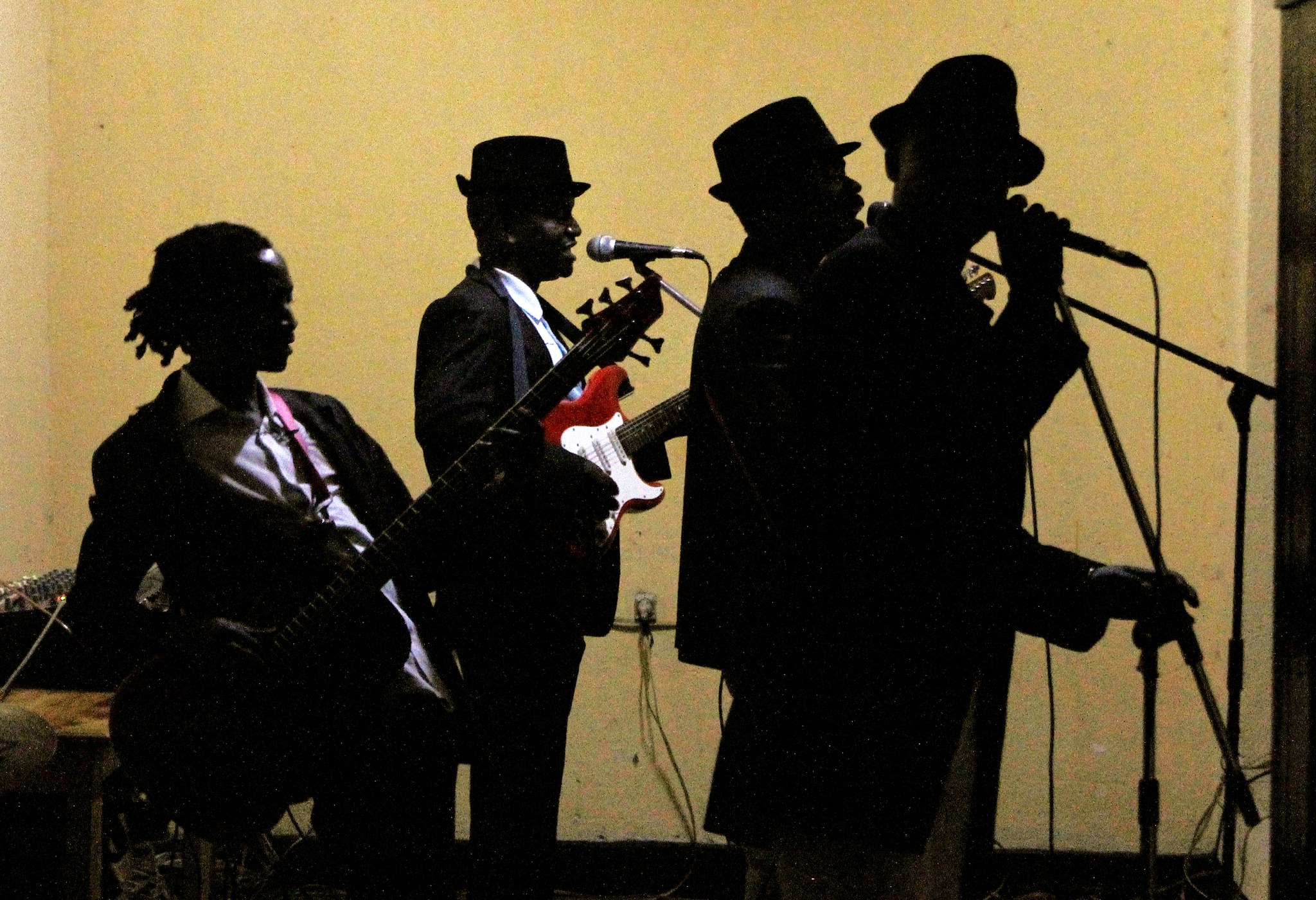
Local Rwandan band, Nyanza, Rwanda
However, during my most recent trip to Rwanda and the DRC (Democratic Republic of Congo) it dawned on me that one of the most important aspects of my travels and time abroad has been the people I’ve met, and crucially, the things I’ve learned from each and every one of these people. I have come to realize this cannot be underestimated or overlooked in regards to its value, relevance and impact.
Kim and I (halfway up a volcano)
International travelers inspire. Their sense of adventure and courage in the face of the unknown is at times baffling, but more often than not, totally energizing. They are often brave, curious, open, and unafraid to try new things, unburdened by logistics, and often equipped with a sharp and equally patient sense of humor. Those who travel live for the moment and instead of asking “Why?” the question is usually “Why not?”
Some may remark it is an irresponsible and risky existence, but I would say the outcomes of these risks are moments that will stay etched in the memory for a lifetime. From my personal experiences during my explorations I have encountered all manner of personalities, and this has undoubtedly been paramount to my own personal growth. It has inspired me to do things I had probably never before considered.
I have become more open and confident in meeting new people and more eager to strike up a conversation. My willingness to try new things has known far fewer bounds in recent years, and whilst I try my very best to be as careful and respectful as possible, I think the dive into the unknown is a truly formative experience.
At various points on my recent trip, I interacted and spent time with a group of people who truly emphasized the diversity and collective adventurous spirit of the international worker and traveler.
Firstly I reunited with three good friends who have all carved out their own individually international paths in recent years. Inga (from Norway) volunteered with me in Rwanda in 2010 and since then has gone on to spend an extended period teaching at an international school in Kigali. She has also spent time teaching in refugee camps in Lebanon (predominantly home to Syrian refugees) and is now about to begin a PhD at Oxford University researching education in refugee camps, which will once again take her to camps in East Africa and the Middle East.
Kirsty (from Canada) is a web designer and online entrepreneur currently based in Rwanda and responsible for this great website www.livinginkigali.com. She also travels extensively and a major part of this is dedicated to her work with disaster relief projects. In the past few years she has been to Haiti, Bangladesh, Malawi and most recently, Nepal as a volunteer for an organisation which sends volunteers to assist with work after major disasters (www.hands.org).
Finally Kim (from the US) is also a former fellow volunteer in Rwanda. Since our work together in 2010 she has lived in Bogota, Colombia and Dar es Salam, Tanzania and traveled a great deal during this time. It is safe to say that Kim has experienced some of the very real challenges of life in major international capital cities and has been a constant and reliable source of knowledge and advice during the past few years.
So, as you can imagine, the stories and experiences shared when we all came together were humorous, intriguing, eye-opening, but most importantly they provided a very real insight into a wide variety of life experiences and challenges.
(L-R) Johnny, me, Inga, Kirsty and Kim
We all signed up to hike Mount Nyiragongo in DRC and personally I was a little reluctant when the volcano hike was in the planning stages due to cost and risk. Eastern DRC is an area rife with extremely dangerous rebel groups that reside in the dense forests and often unleash brutal and devastating attacks on surrounding towns and villages. It is the reason why there are large numbers of UN peacekeepers based in nearby Goma.
In addition to that Nyiragongo is an active volcano, which last erupted in 2002 leaving the town of Goma covered and destroyed by lava. The people are still rebuilding their homes and lives today. However, with a bit of peer pressure and that adventurous spirit, I was persuaded to sign up for the hike. Why not?!
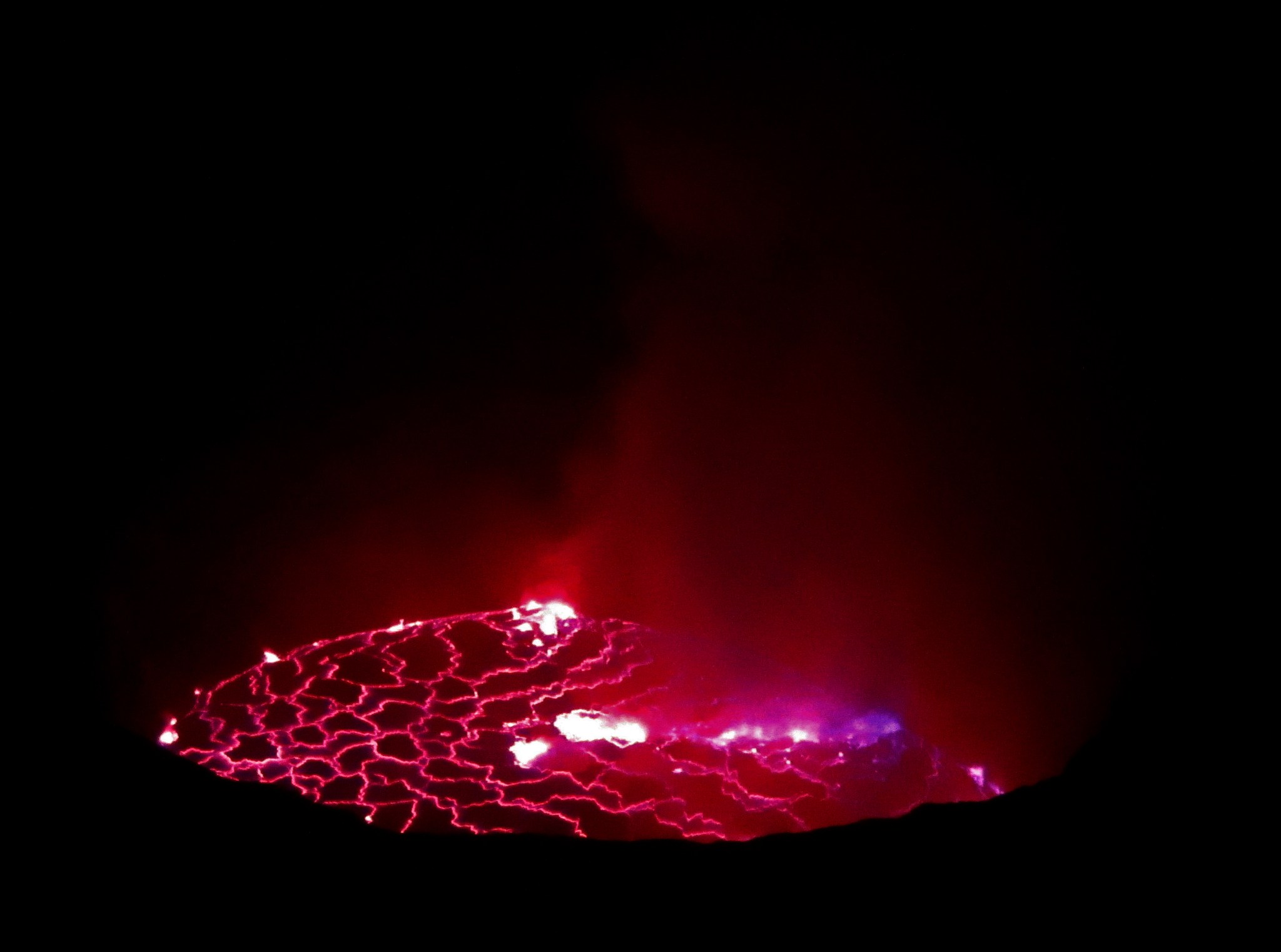
Mount Nyiragongo
Looking into the belly of the volcanoat midnight
Freezing, but happy at the ridge of the volcano
Also in our group for the volcano climb was Johnny from Ireland. Now if you want to hear stories about international adventures, Johnny is your man. He is currently on an 8 year mission to visit every country in the world. At the time of meeting him he was up to about 145 countries.
How does he fund this you may ask? Well, a few years ago he was in a 9-5 office job which he disliked. So, he set up a travel blog/website and once this gained interest and popularity, it quickly attracted advertisers and he realized this was a liberating and exciting way to earn money.
He recently celebrated breaking the $1 million mark for income generated by his online work. This is one of his websites; http://onestep4ward.com/.
Kim, Johnny and I
The hike was tough, but chatting with Johnny and hearing his many stories from almost any country you can think of helped pass the time and keep our minds off the sometimes grueling ascent and knee-jerking descent.
At our hotel in Goma before beginning the hike we met Finbarr O’Reilly, an international correspondent and photographer, who was based in Africa when Mount Nyiragongo erupted in January 2002 and arrived on the scene the very next day. He has been visiting and working in the DRC ever since.
He has also spent time working in Afghanistan, Darfur, Niger, Somalia, Libya and many other challenging locations, which have exposed to him to some of the most emotionally challenging scenes you can imagine. This is his photography website http://www.finbarr-oreilly.com/.
We also shared a ride with Finbarr back from Goma to Kigali and in the car with us that day was Paul. Paul’s job is to work in conjunction with the US State Department organizing hip hop workshops around the world. The overarching mission of the project is to promote diplomacy, reconciliation and trauma relief among young people who have been affected by various challenges often due to war and conflict.
It was fascinating hearing about such a program and how it has achieved such positive results in a diverse set of countries to date. Paul has facilitated these all over the world and it was really very cool to hear about such novel and unique methods of providing assistance and support to young people across the world.
So, in the space of just a few short days I was able to speak with, and more importantly, draw inspiration from a fascinating collection of people. Our volcano hike group was truly international and this is what I love.
Of course, this is not solely reflected in this one specific trip. It has been the case everywhere I’ve traveled/lived, and it is one of the reasons the travel bug gets you. You never know for sure who you are going to meet, where they will be from or what their background is.
The one thing you can almost guarantee though is that whoever you cross paths with at that particular time will have a new story to tell, a new place to recommend and an ability to open your eyes to a new perspective that you may not have considered previously. And that I have found is priceless.
A statistical and image-based reflection on a week in west Bangladesh
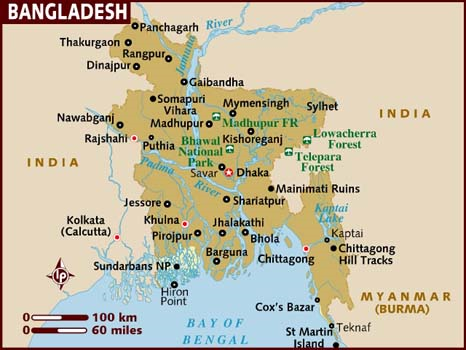
After nine straight weeks of teaching, the question was how to fill nine days of vacation. On this occasion I decided to remain in Bangladesh and take the opportunity to explore this country a little further, and having never ventured due west before, that is where I went. The division of Khulna to be precise, which borders India and comprises a number of districts, including Jessore and Khulna.
Travelling individually has always felt a little daunting to me, so the prospect of spending the duration of the break navigating an unfamiliar area of Bangladesh alone provoked mixed emotions. Nevertheless, I survived, and I’m here to report in.
I’ll spare the mundane play by play account of what happened and instead present an array of telling statistics. Prior to leaving Chittagong I decided I’d take a pad and pen with me on the trip and keep a tally of the inevitable and the unexpected in equal measure.
So, here it is, the story of my week in Jessore and Khulna in numbers, beginning with the most important and reflective of all…
Cups of tea consumed – 46
Cups of tea I paid for – 20
Cups of tea bought for me by ever hospitable locals – 26
Times my unmarried status evoked confused frowns – 37
Times it was suggested I marry in Bangladesh – 21
Business cards received – 4
Business cards distributed – 27
Occasions in which I was asked if I came from Japan – 3
Jibes received regarding England’s woeful Cricket World Cup campaign – 24
Times I was asked to reveal my salary – 12
15th century mosques visited – 6
Singar Mosque, Bagerhat
Hindu temples visited – 7
Here is a list of events which occurred just once, but I deemed worthy enough to scribble down in my notepad…
Requested to convert to Islam for marriage purposes
Military border parades witnessed
Daily flag lowering ceremony, Benapole border
Squeezed into a body-hugging Bangladesh cricket shirt and told, “It fits perfectly boss!”
Asked if Iranian
Told to cancel my hotel booking and sleep in the home of a man I had met just 30 minutes previously
After briefly chatting with a man I met earlier in the day, he then text to inform me he was knocking on my hotel room door and requested I open said door…
‘Adventure Parks’ visited that made me want to scream “WHY??!!” at the person who recommended it and assured me it was “very beautiful…”
Yes….this is a plastic T-Rex….
Told I was lying about my age as I couldn’t possibly be as young as I was claiming
Told a man he was the least friendliest person I had ever met in Bangladesh after he spent a good five minutes ridiculing my intelligence for not carrying my passport and stating that as the British were “Kings” I am practically a disgrace to the great nation of Britain
And finally, a list of occurrences that initially I had firm intentions of meticulously tracking. Yet, as the hours and days passed, I soon realized it would be impossible to keep an accurate record due to the sheer volume. So, in the end they became uncountable, but no less significant…
Asked the question, “Your country?”
Confused questions with suspicious facial expressions regarding my reason for being in Jessore/Khulna/Bangladesh
Enthusiastically praised for my comprehensive Bangla language proficiency
Robustly chastised for my low level of Bangla language proficiency
Pondered the meaning of life
Wondered if rural Bangladesh is the most beautiful place on earth
Wondered why my bus driver was trying to overtake three other buses up ahead
Wondered how that 93rd passenger was going to find a space to squeeze into on the already cramped bus, but soon realizing there was space for passengers 94, 95 and 96.
So that concludes a brief look at my week in the west. It was fascinating, eye-opening, and at times a little testing. However, it was completely worth it, and evidence once again of why I often question why more tourists don’t come and explore this golden land.
Selfishly I’m glad they don’t though, because there were times on the trip as I sat on the back of a wagon and we meandered our way down a silent, tree-lined country road in the early evening, just as the sun began to set, that I thought to myself, “I’m totally at peace right now.”
Tucked inconspicuously away from the noise and chaos of one of Chittagong’s longest and busiest main roads you’ll find a small tea shop. Not particularly unique in appearance, it is sandwiched on either side by two further tea shops, and all three function identically, serving very similar items to a wide variety of people who happen to sit down that day.
It’s easy to miss the turning into the road these shops are situated on, and most people will pass straight by. My chance encounter came about in a characteristically haphazard manner. I was stranded at the back of a huge line of people all waiting to gain entry into the Indian High Commission.
As I stood there exchanging frustrated head nods and tuts with fellow embassy hopefuls, I pondered if it were more logical to continue standing in this line, or whether I should try my luck at camouflaging up and attempt a covert border crossing through the mangrove forests of the Sundarbans.
All was not lost though and help was at hand in the form of a cup of tea and a citizen from the very country I was trying hard to get a visa for. Sharmistha, my friend, colleague, and fellow tea enthusiast had learned of my queue predicament and very kindly arrived to offer moral support/language translation skills.
She also went off in search of tea and came back telling the tale of the shop this blog centres around. However, it is much less to do with the actual shop, but rather the person who serves the tea and runs the establishment. Her name is Asma, and she is just twelve years old (“baro” in Bangla).
After eventually entering the High Commission, both Sharmistha and I returned to Asma’s shop for another cup of tea, but also because we wanted to learn more about this tenacious 12 year old. She informed us the shop is her father’s, but as he works as a security guard in a neighboring hospital, Asma has been assigned the crucial duty of ensuring the tea business runs smoothly.
Thus, she sits from morning until evening each day serving tea, paan, bread, and cigarettes to customers, 99% of whom are most probably men. She is twelve remember.
Sharmistha and I have returned to chat with Asma several times now and also with her father and some of the regular patrons of the shop. It is clear they think very highly of Asma, and why wouldn’t they?! She is outgoing, friendly, efficient, and has one of the warmest and most engaging smiles I’ve ever seen.
Asma has inspired me to use this blog in future to highlight some of the characters I regularly meet here in Chittagong. Special thanks must go to Sharmistha, who is responsible for the majority of the translation that was required!
When we first met Asma two months ago, she was not attending school. Her father had promised to send her once he found a suitable arrangement for the tea shop around his work schedule. He had tried employing others to run it in his absence, but claimed he was unable to trust them. It therefore fell upon Asma to keep everything in order.
This was a wise choice. From observing Asma she is highly efficient and able to confidently deal with the pressures of a bustling tea stand. She is also very astute with money. On one occasion we came to pay for our tea and Asma’s father wouldn’t take our money. Typical Bangladesh hospitality once again. We protested and exclaimed that if Asma were here, she would certainly accept our money. He laughed and replied, “Yes, you’re right!”
We returned once again to see Asma yesterday and the great news is she is now attending school. Her classes begin at 6.00am and finish for the day at 11.00am. She returns home, eats lunch, completes her homework, and by 2.00pm she is at the tea stand where she’ll remain until around 8.00pm.
We enquired about school and she told us she enjoys it. Currently in class 4, she finds the lessons interesting, and also playing games, something she has previously had little time to do when whole days were spent at work.
Asma attends school with her friend from next door, and this works well as, “She is a good girl, who doesn’t fight with me and she helps her mother.” The school they attend is divided with classes for girls held in the mornings and the classes for boys held in the afternoon. Asma didn’t seem too concerned by this arrangement and wisely concluded that;
“If boys and girls are put together, there will be trouble!”
Originally from a village in Noakhali district to the north west of Chittagong, Asma’s father decided to move to the city in search of work. She admitted to missing village life and particularly her grandparents and the other children she used to play with. The green, the rice fields and the ponds are also aspects of village life she misses. However, her mother is here with her in Chittagong and this is incredibly important for Asma. She told us;
“I love talking with my mother. If I’m not sleeping when I’m at home, I’m talking to my mother. I love her very much.”
As I mentioned earlier, Asma receives respect and affection from the people who regularly visit the tea stand. Whilst we were there yesterday a local policeman stopped for tea and is clearly fond of her. He referred to Asma as “mamoni” an affectionate term used for younger people. Another younger man was asking Asma about school and encouraged her to go there and “make good friends.”
Some regulars seem to look at me and Sharmistha with puzzled eyes, perhaps wondering why we keep returning to the small tea stand and drinking up to three cups of tea at a time just so that we can learn more about the girl with the infectious smile. Asma asked Sharmistha yesterday, “Does it bother you that I talk so much?!”
No Asma, it really does not.
So that is Asma, a twelve year old girl balancing a life of school and work at such a young age. She does so with a smile and positivity that is truly inspiring. She is also extremely wise. As I left yesterday her advice for me was;
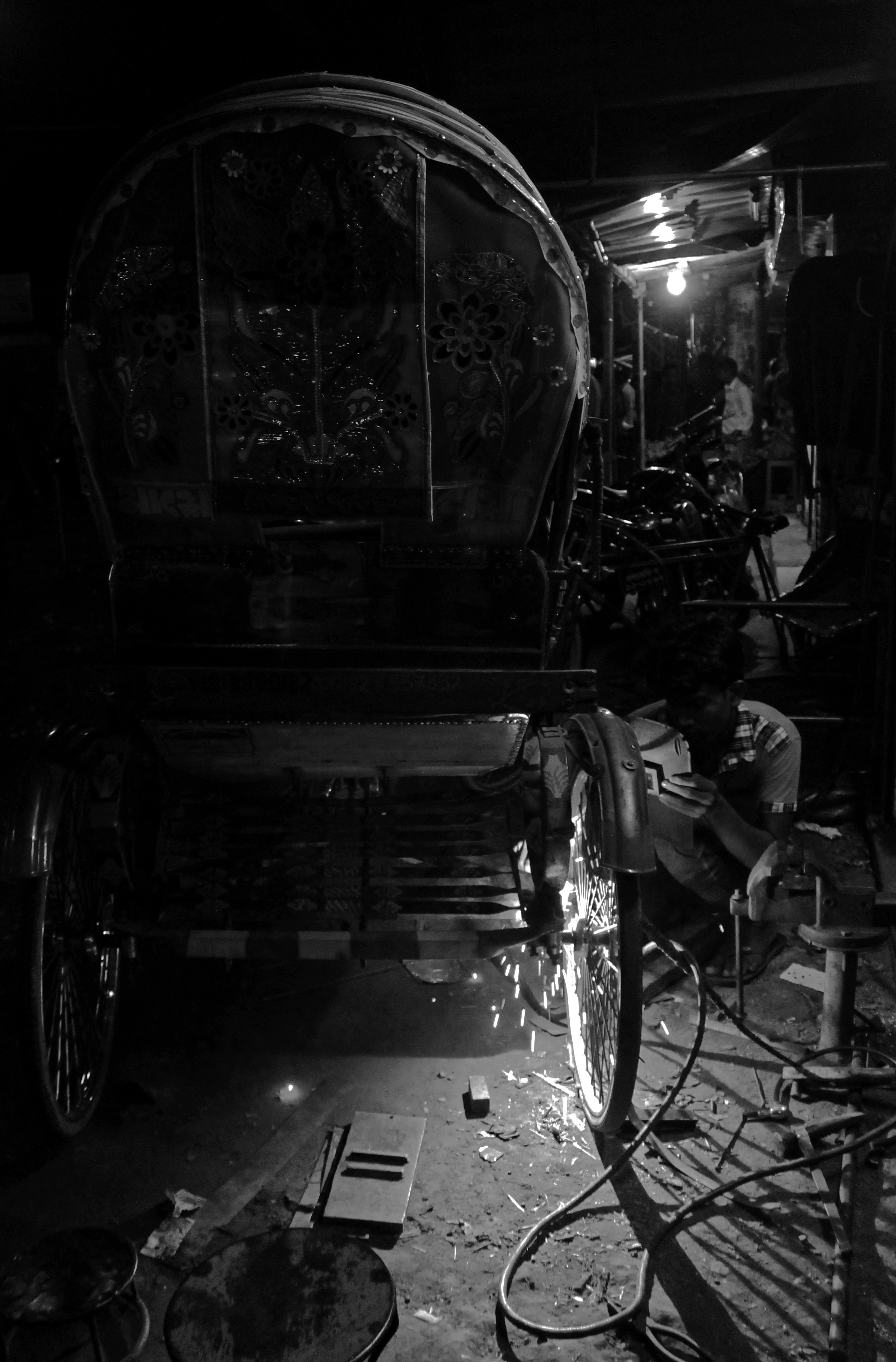
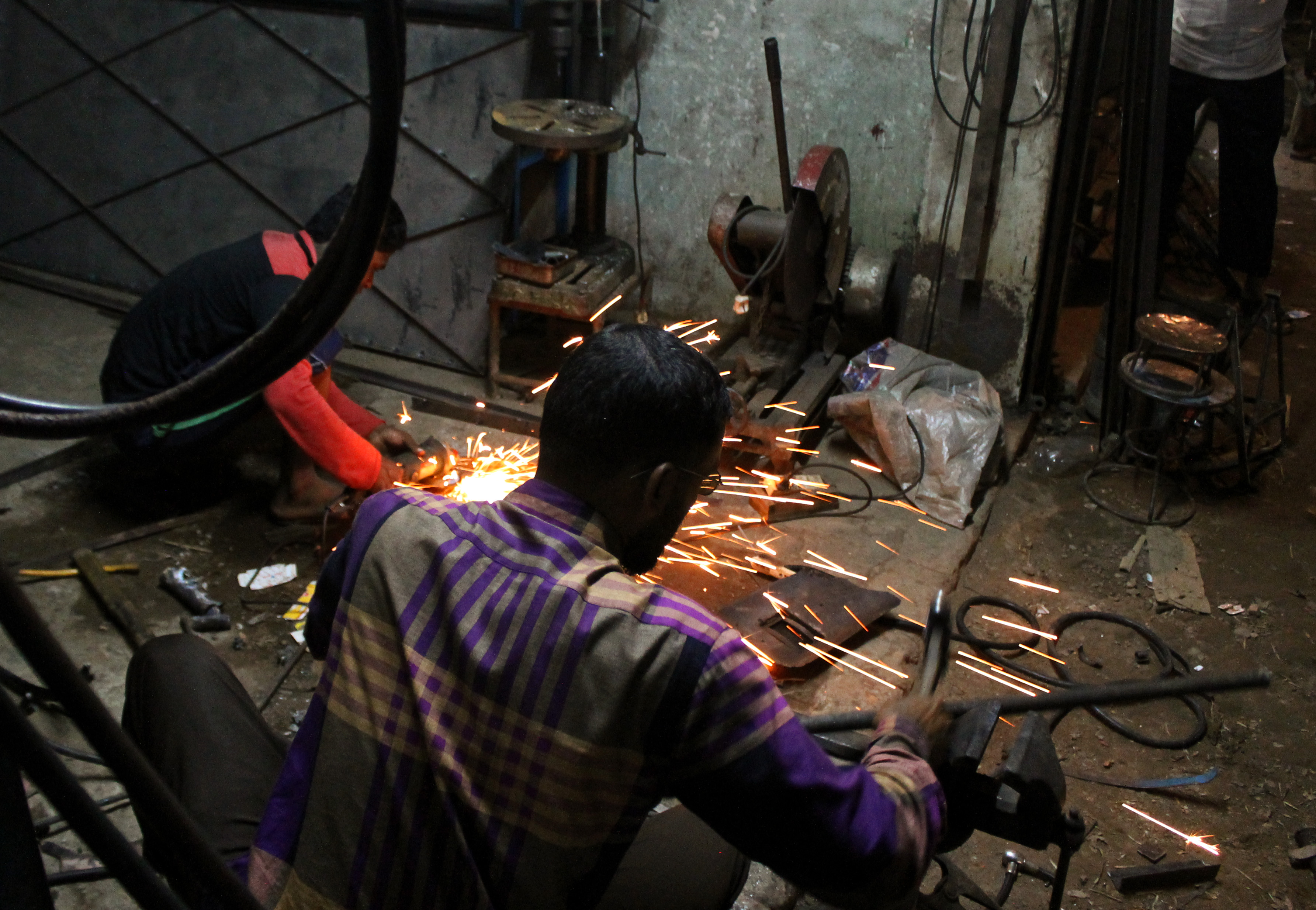
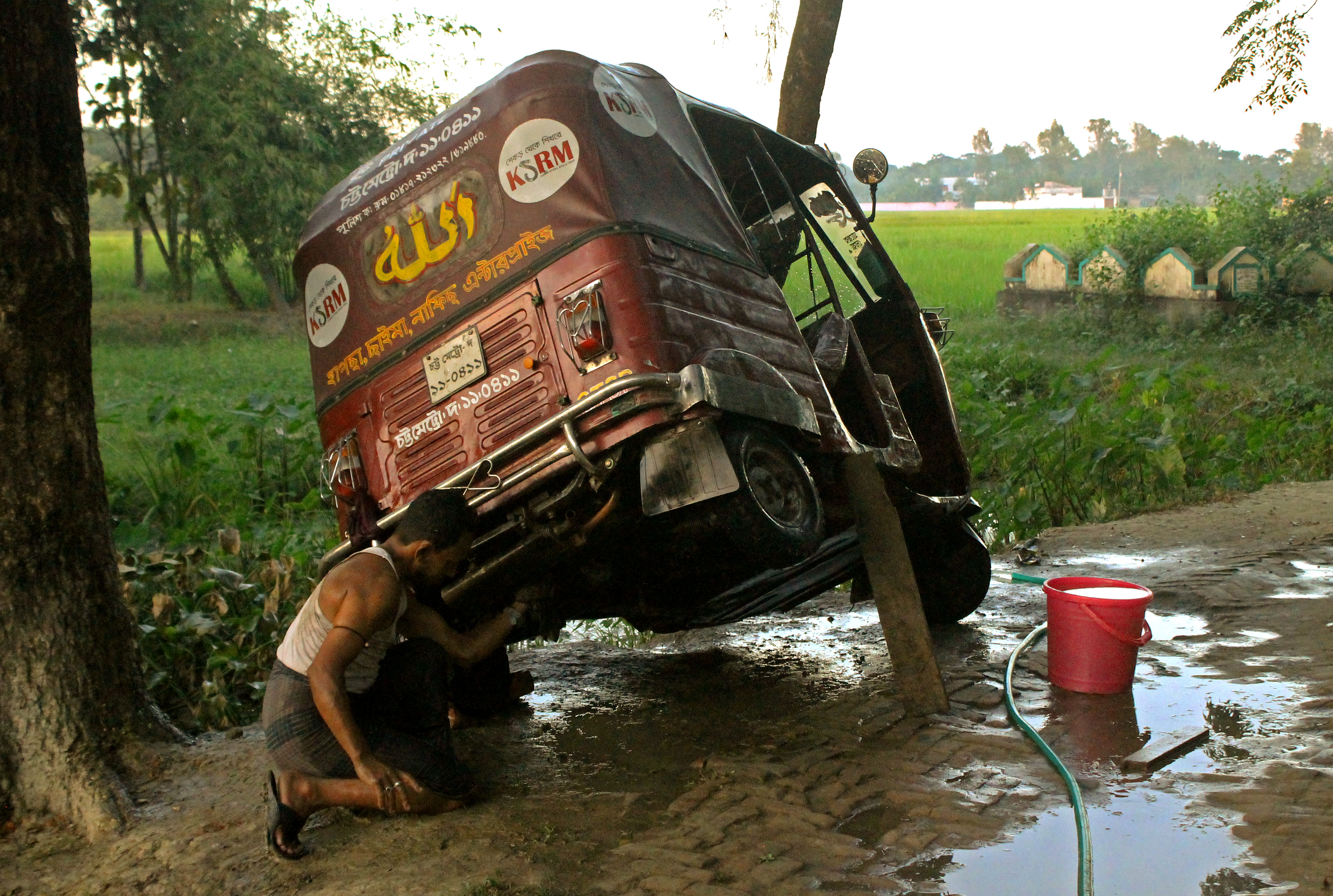
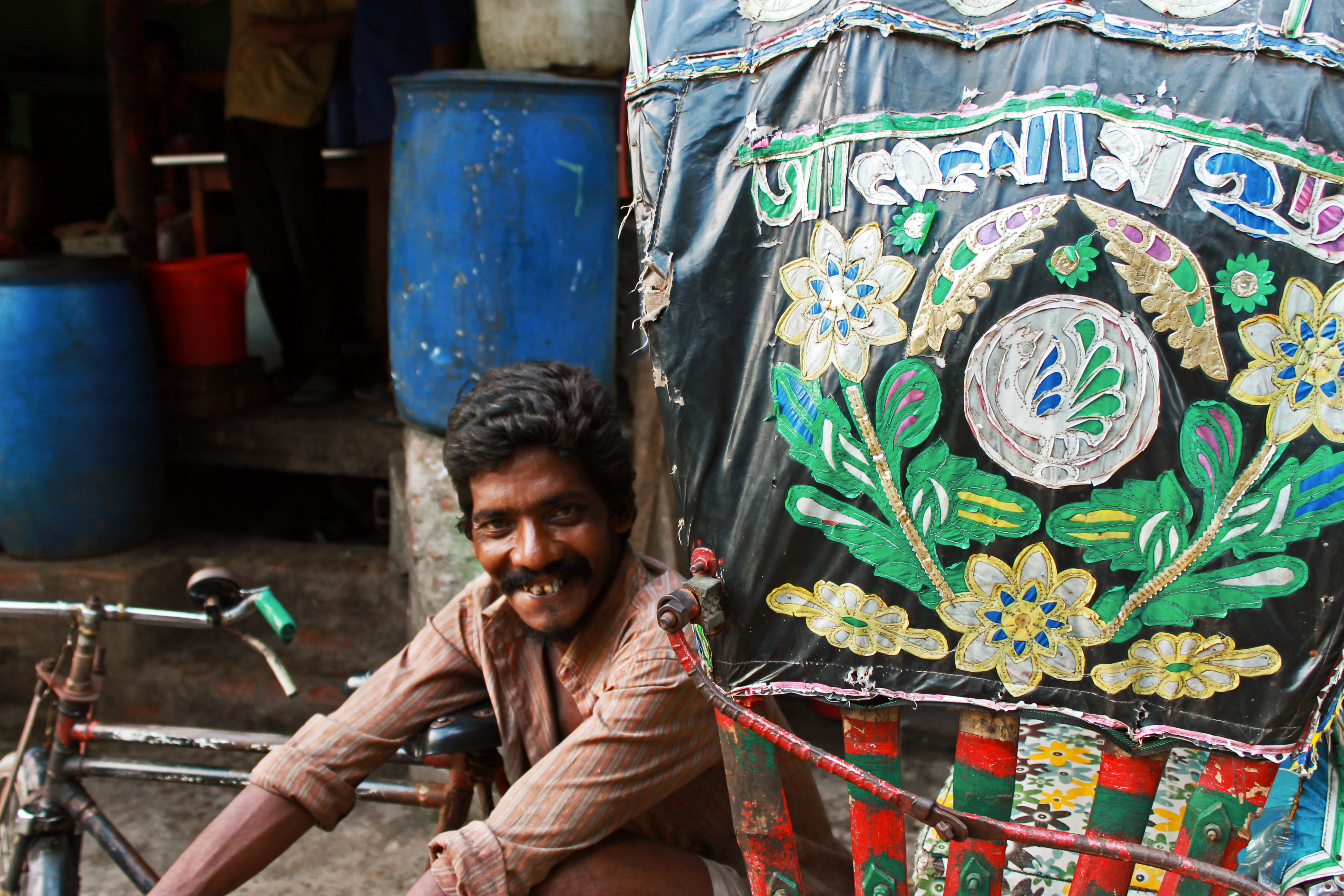
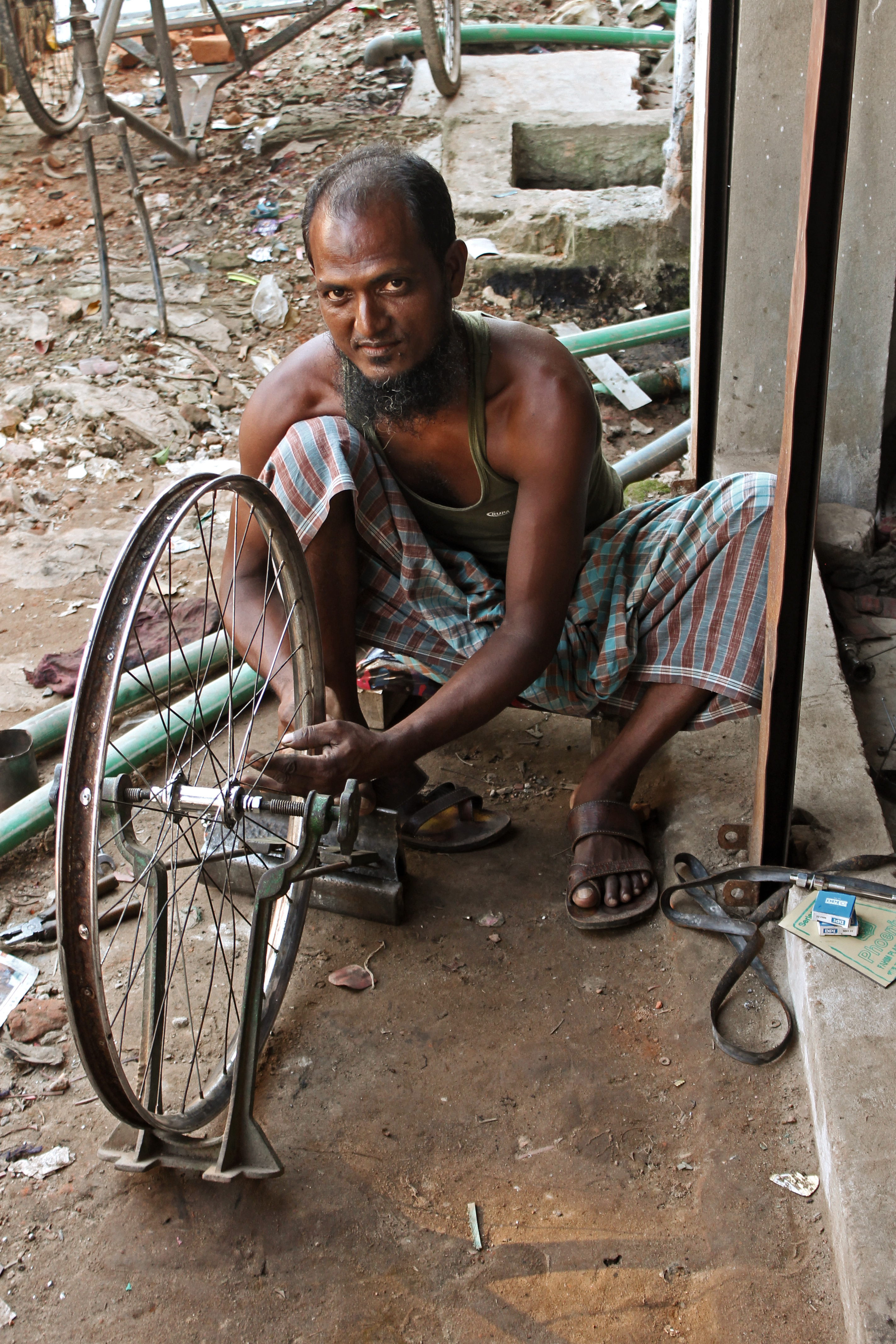
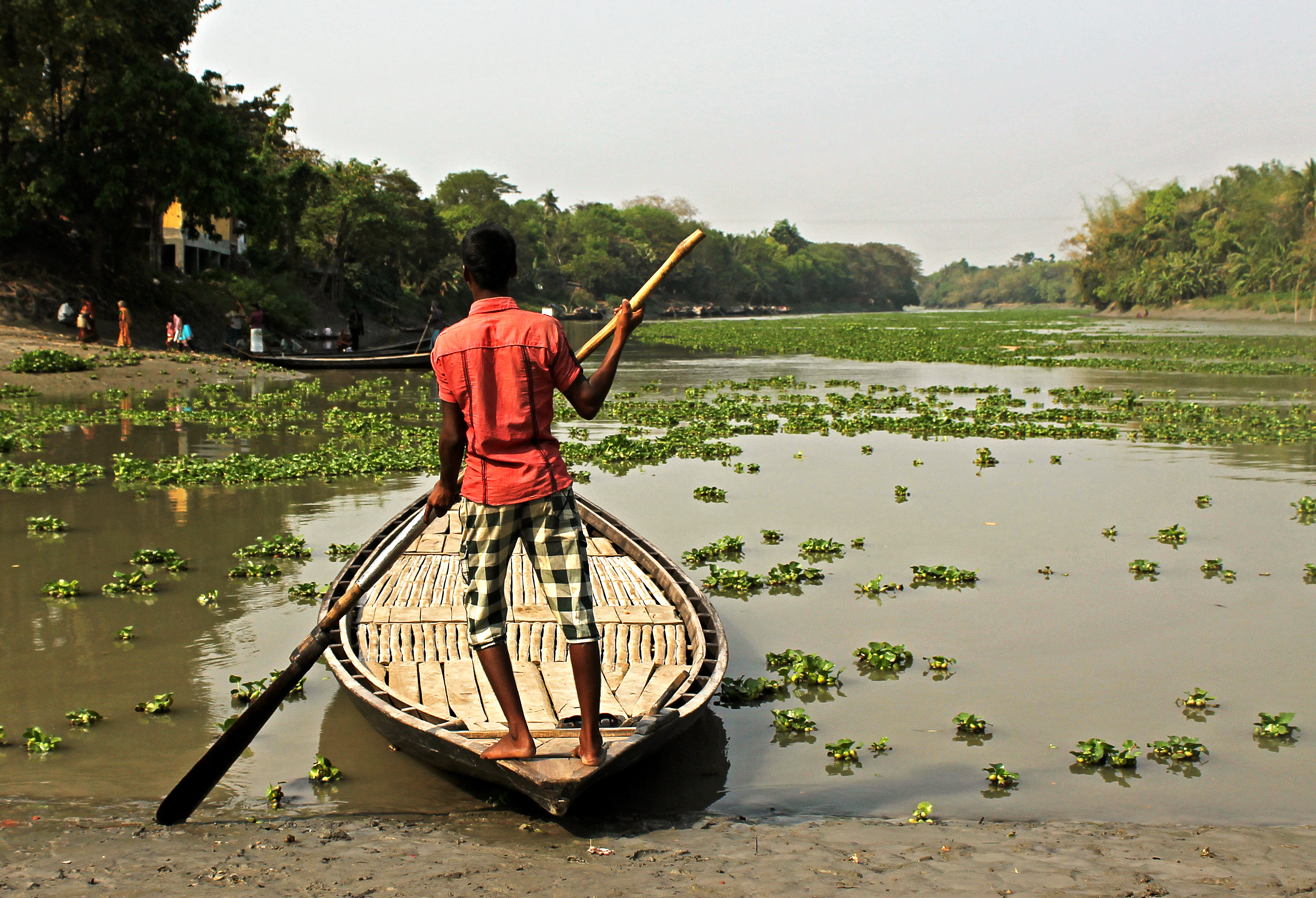
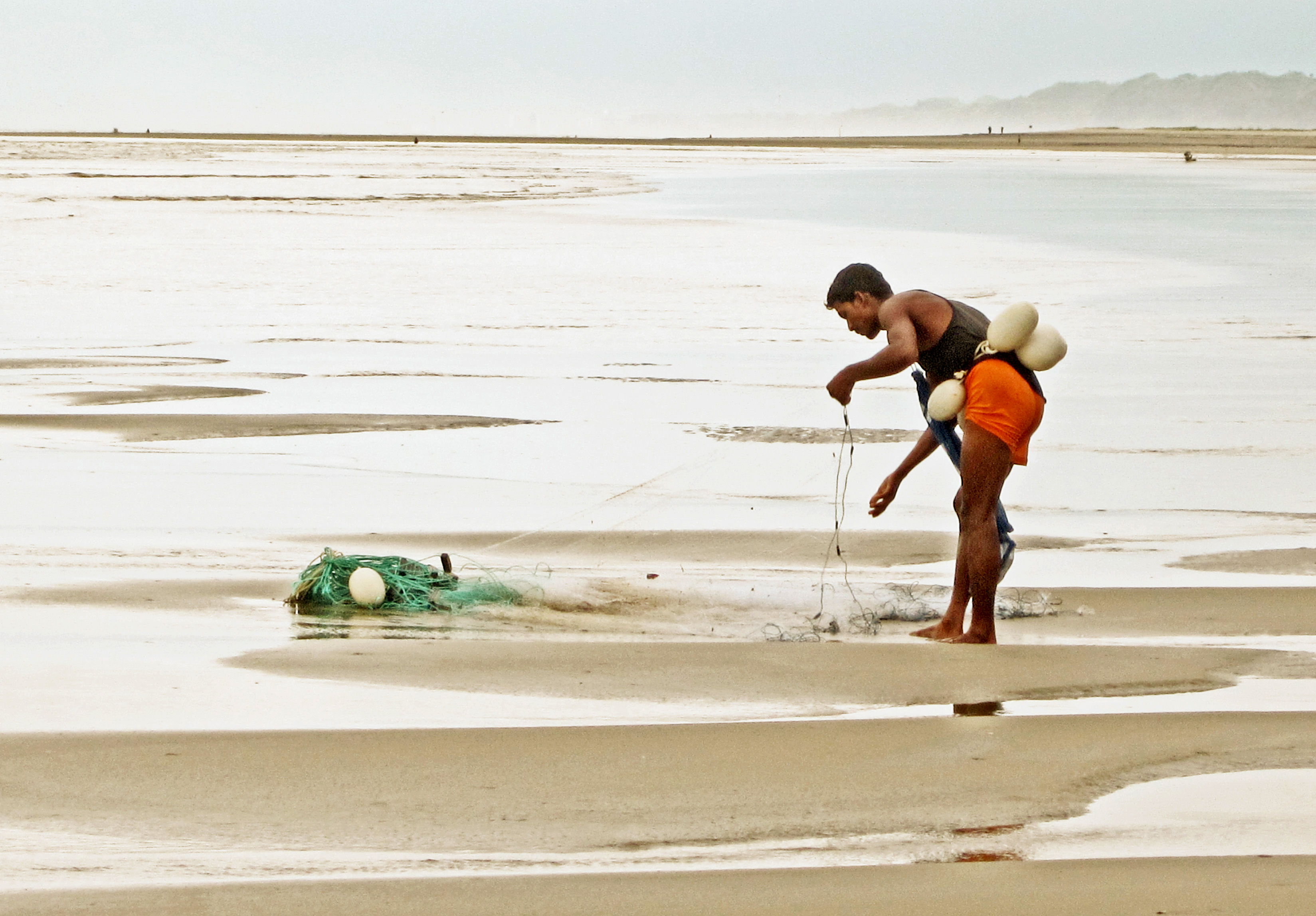
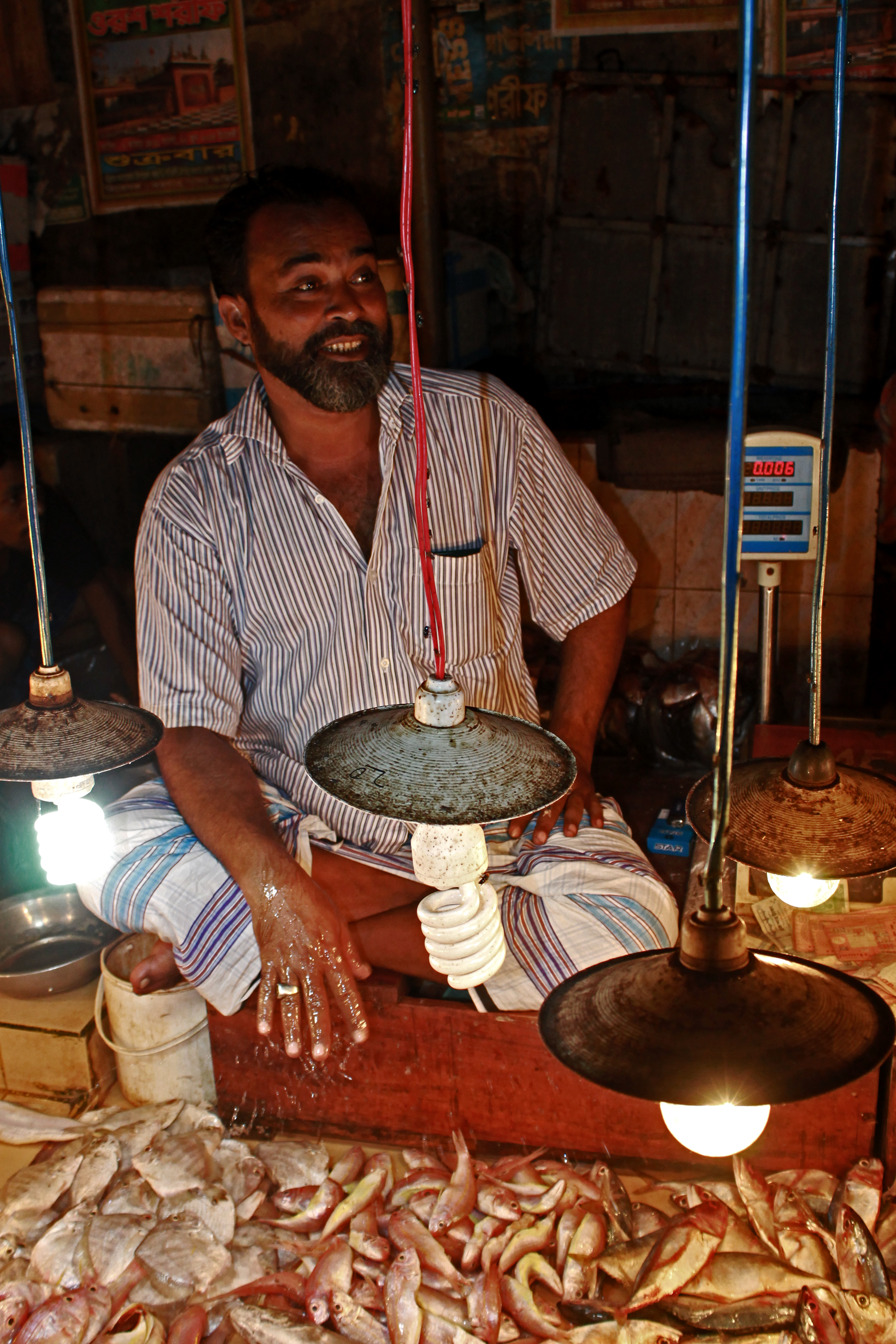
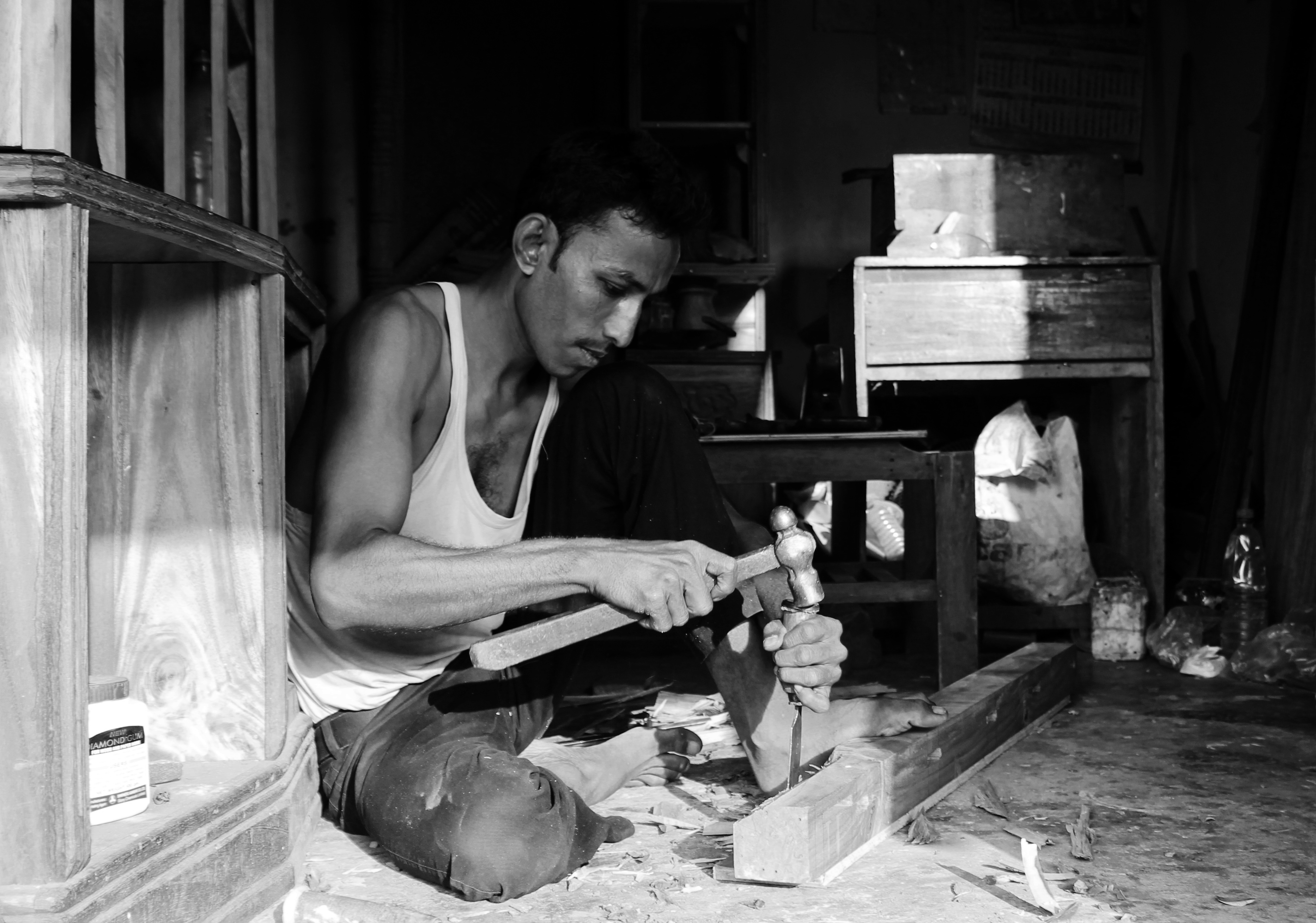
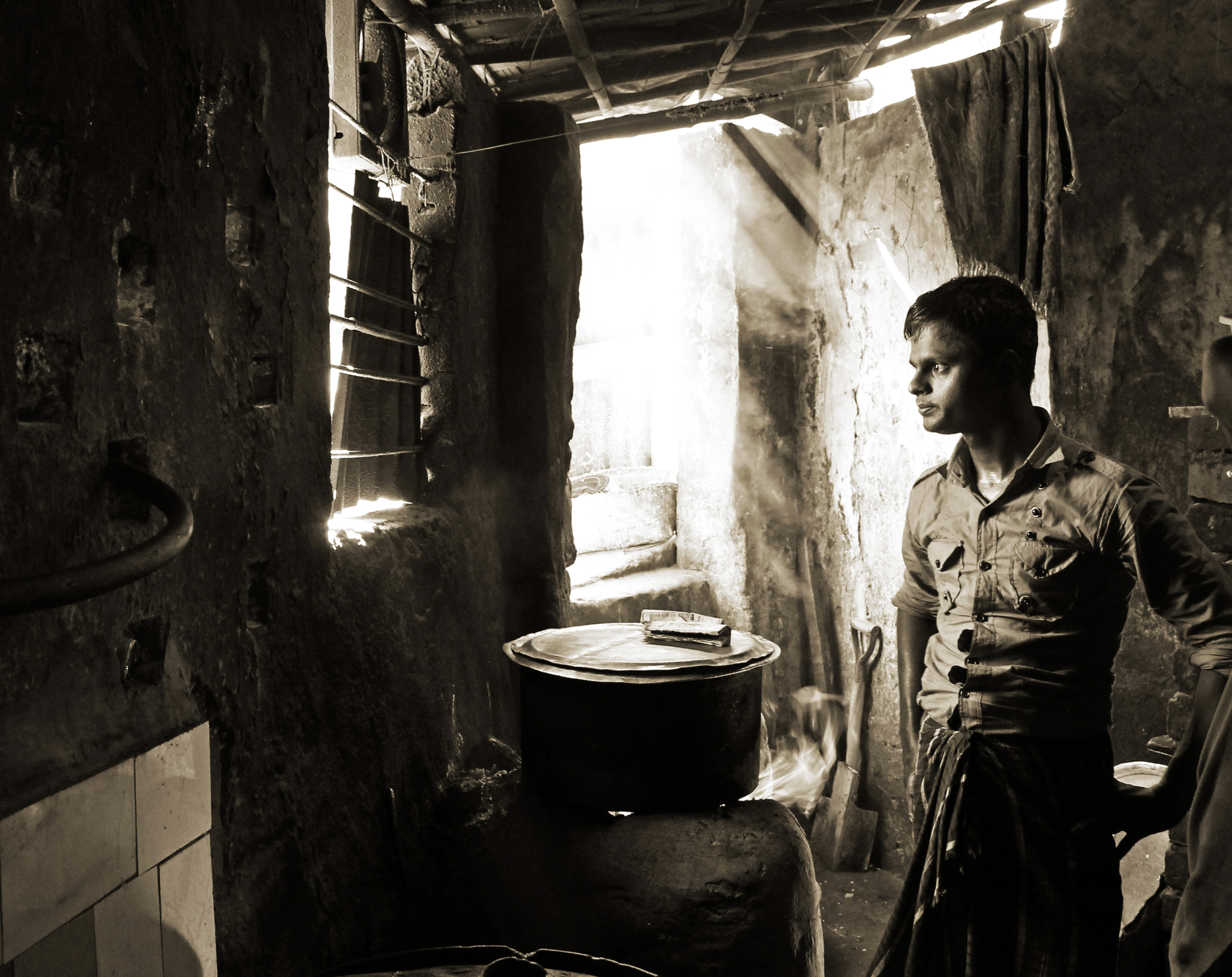
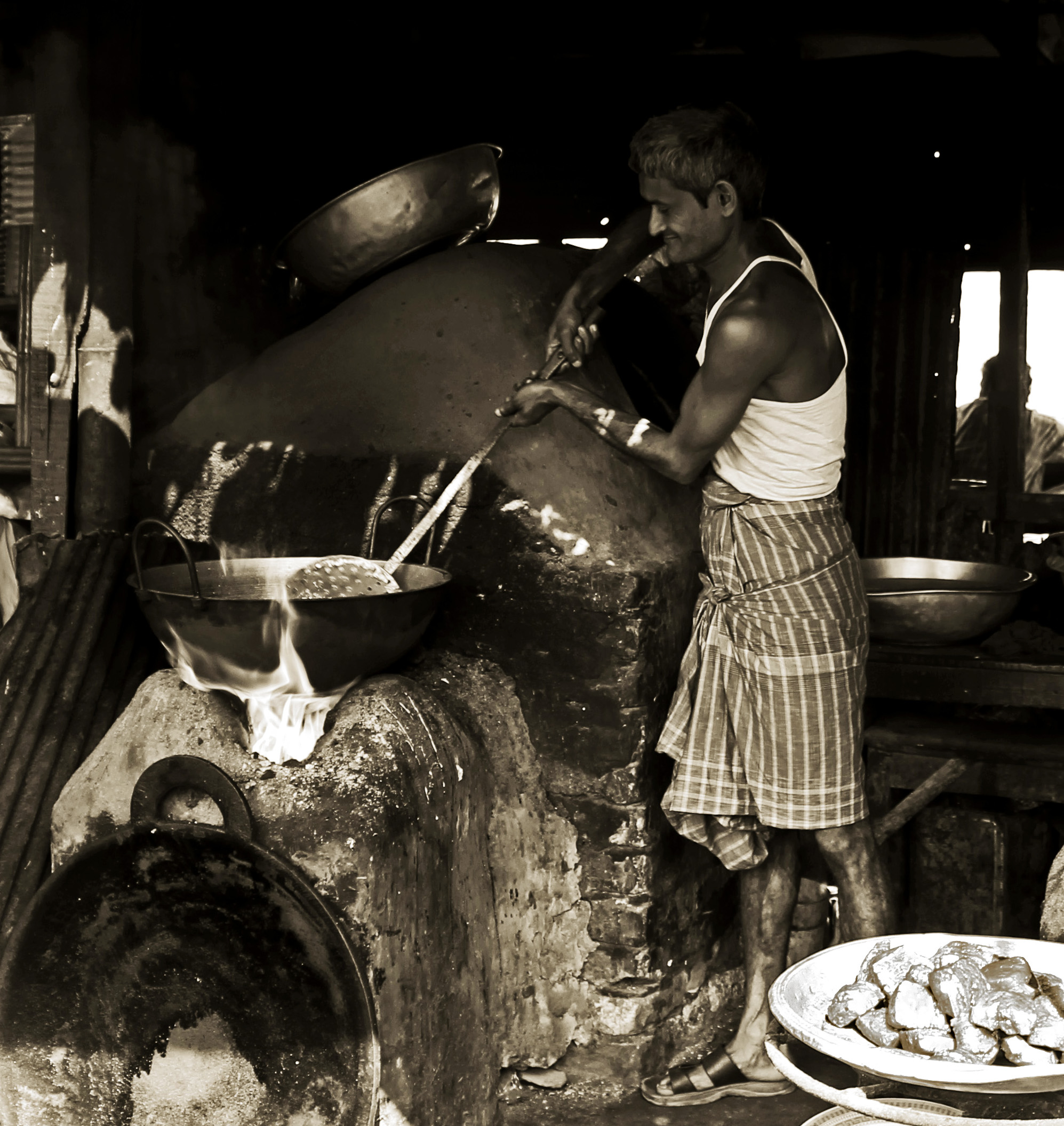
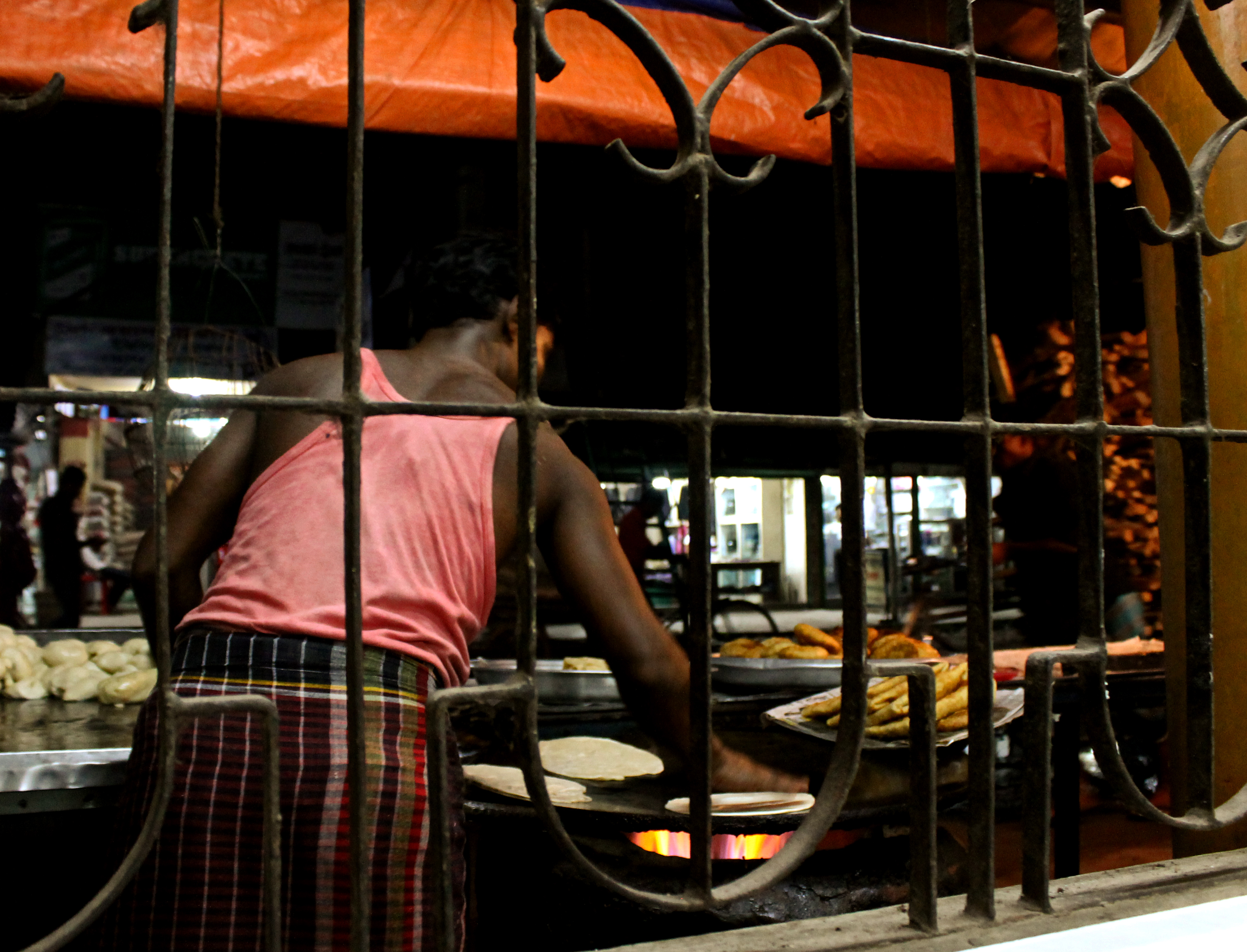
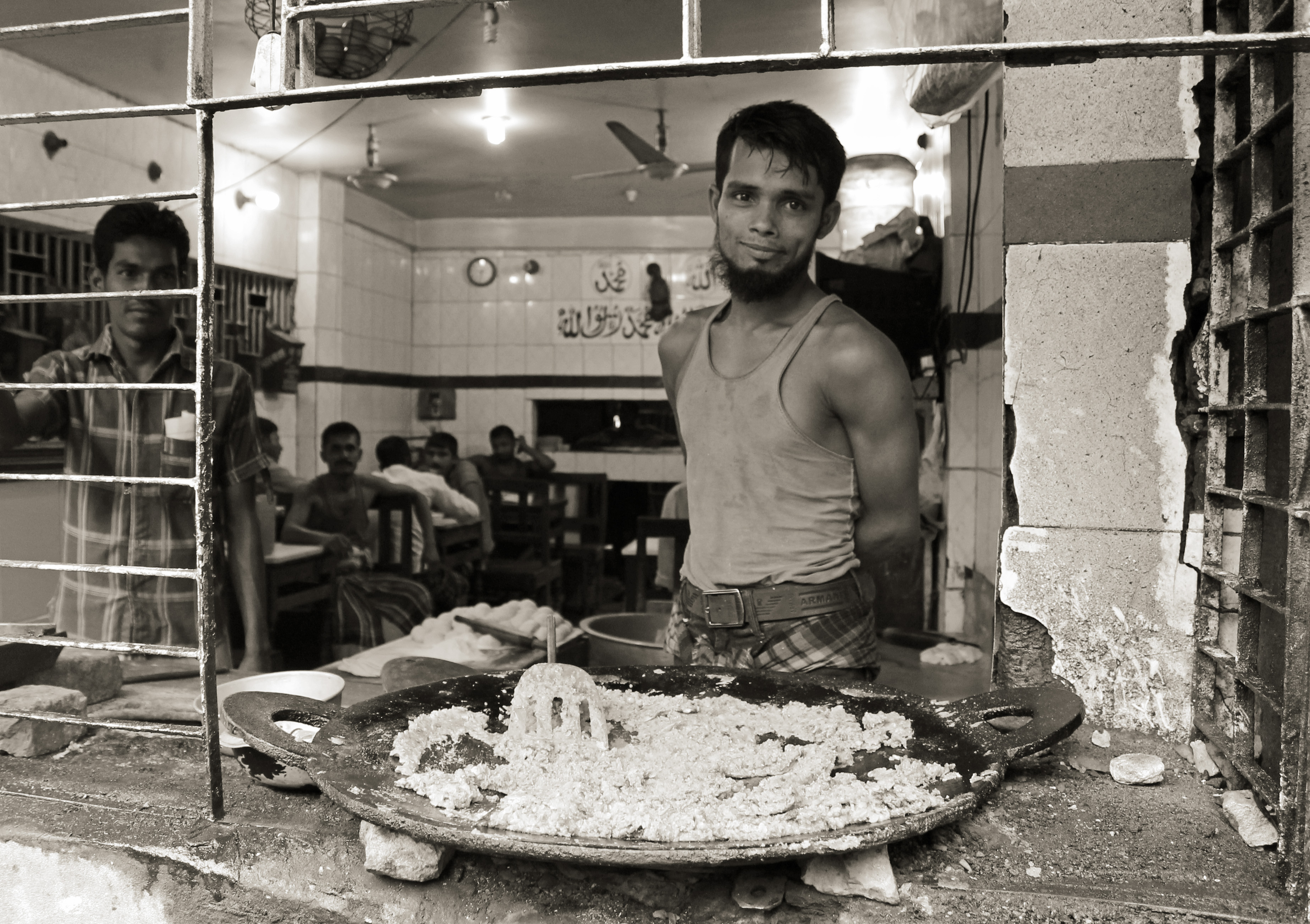
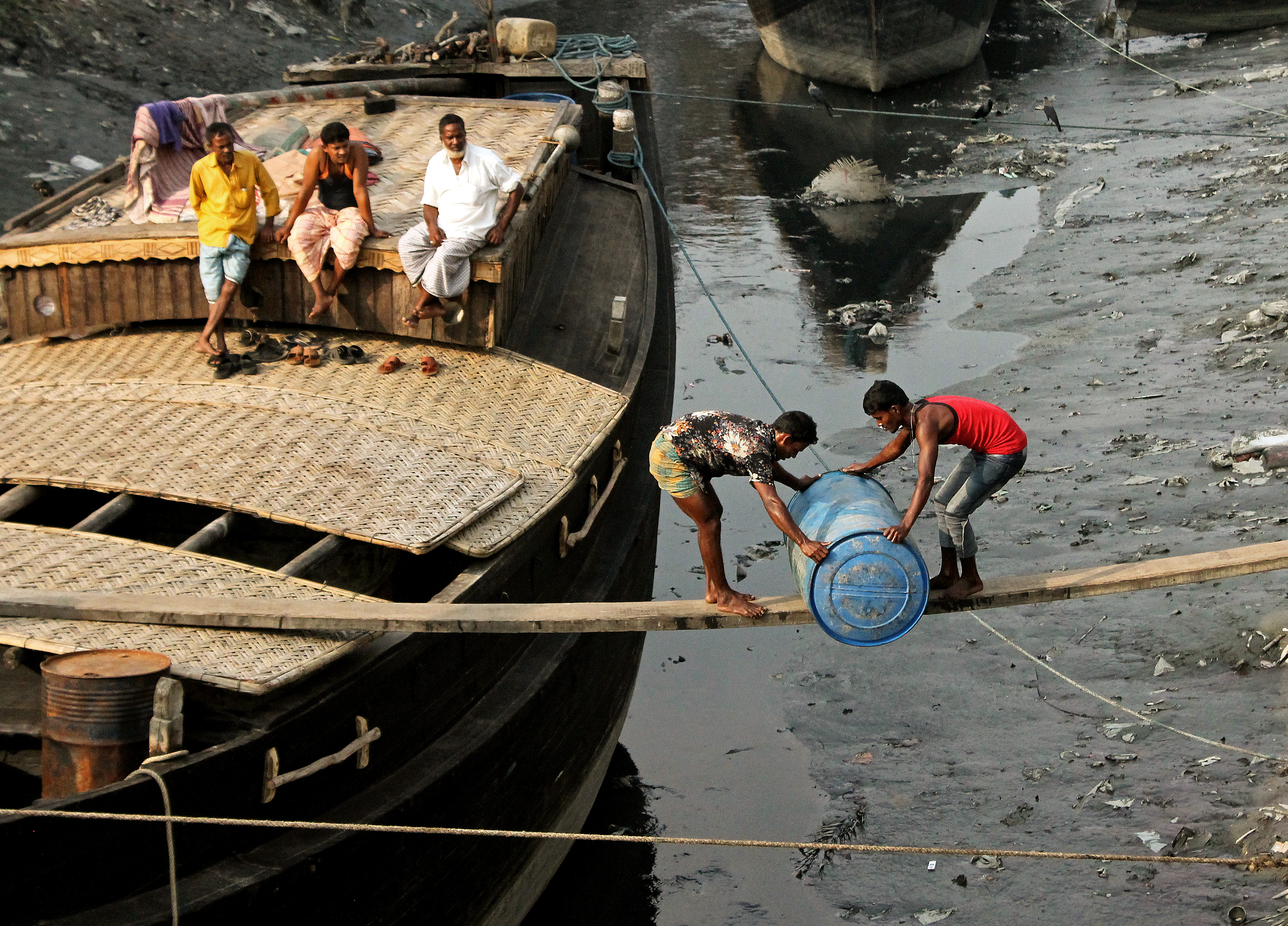
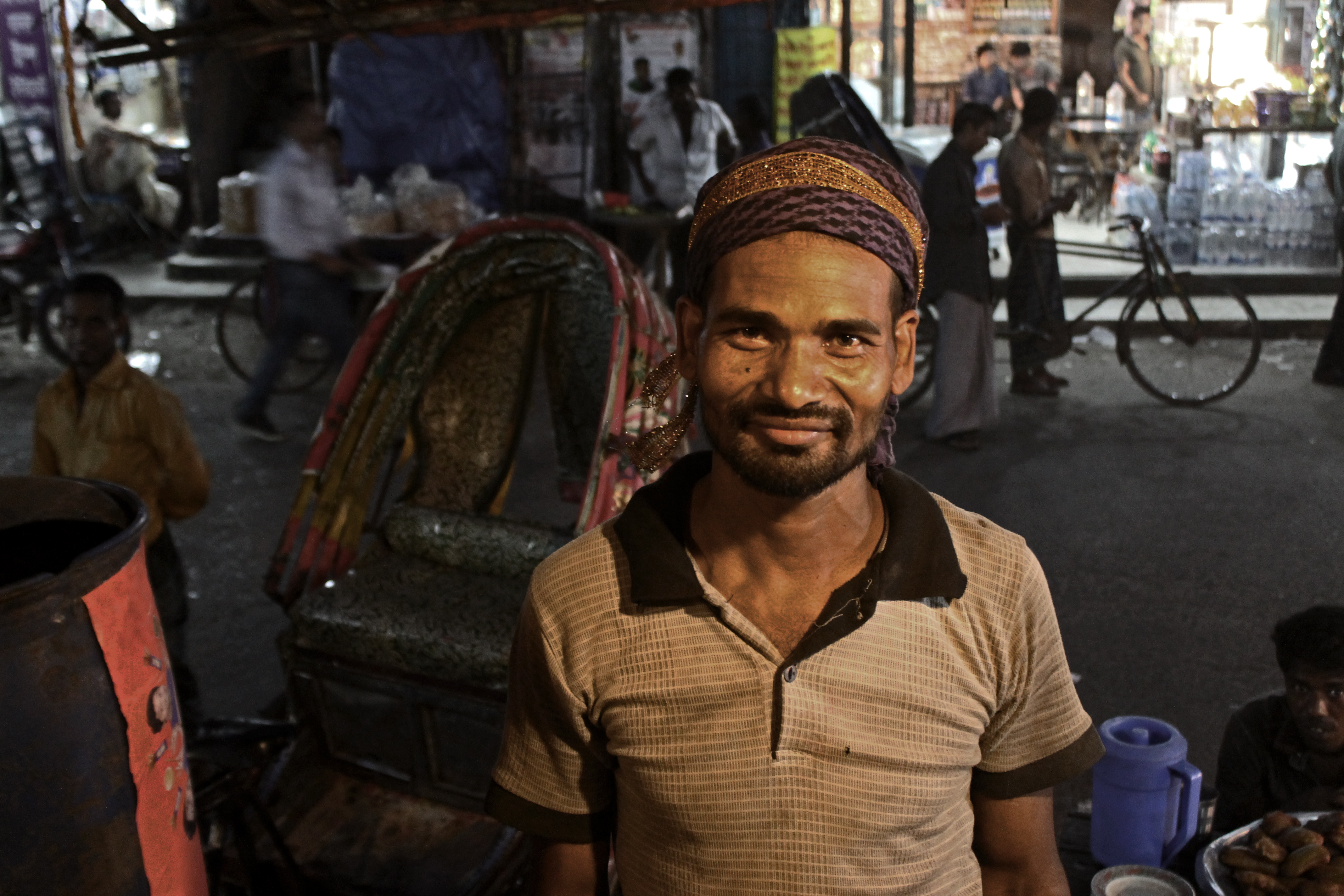
In my previous blog I presented the photographic evidence of copious tea shop visits and interactions with the owners and clientele. During those photo walks I also captured a few images of people at work.
I found that it was quite fascinating to sit and photograph people going about their daily work and trades. I wanted to post this blog simply to present the images that reflect daily life here as I see it through my lens.
This is what I enjoy most about engaging in one of my favourite hobbies here in Chittagong. Through photography I extract so much joy from being able to view and explore this fascinating city and country and to view sights that perhaps seem ordinary or even mundane to one set of eyes, yet to others tell a story.
So, here are the results. Some of the photos were taken some months/years ago, but all are from Bangladesh. Also you may notice that there are few women featured. This was obviously not a conscious decision of mine, but rather reflective of the trades I photographed, and crucially, my location.
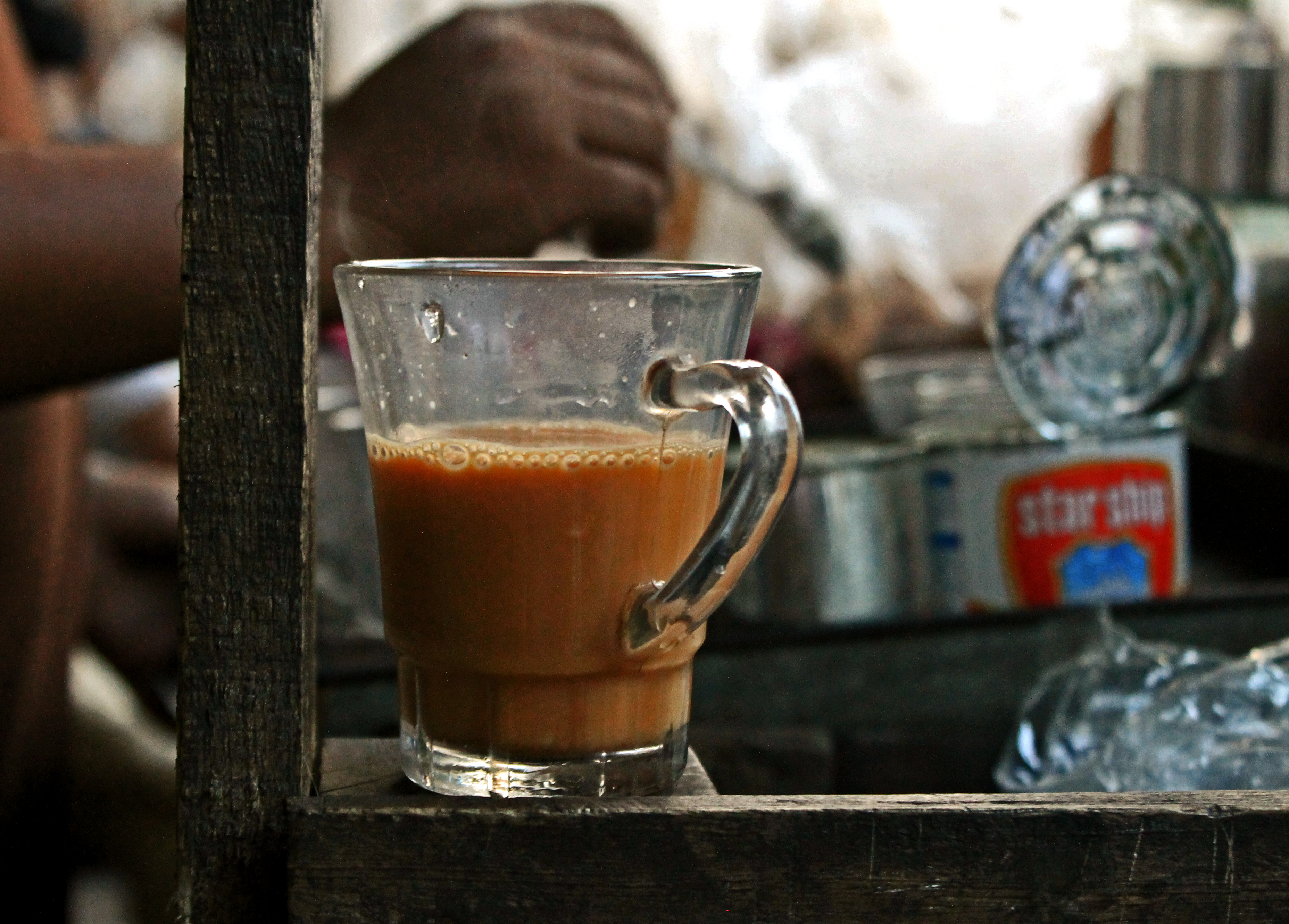
It’s probably no secret that one of my favourite activities in Chittagong is drinking tea. You may be thinking well, he’s British, so it kind of figures. Along with queuing and in depth discussions about the weather, we Brits love nothing more than a hot brew. Drinking tea; It’s what we do. When we’re upset, confused, nervous, celebrating, commiserating, pontificating, procrastinating, gossiping, etc, etc….we put the kettle on, and we go straight for the teabags.
Well, here in Chittagong there seems to be a similar culture. One of the main differences being however, that tea drinking is a far more public event. Groups of men and women (but usually men) can be found far and wide across the city (and the country of course) sipping on hot, sweet tea, and I often end up becoming a member of one of these groups. In all honesty it’s not so much the tea that draws me in, but rather the experience that surrounds it.
I love the scene and the way life is played out over cups of tea. The comings and goings, the cross section of diverse characters, the energy, the humour, the mystery, and the undulating pace of each individual experience. The tea stalls/shops come in all sorts of shapes and sizes, and it’s incredible just how many exist here. I could go on and on trying to describe it in words, but recently I decided it would be far easier, and probably a much greater sensory experience to present Chittagong’s tea drinking through a series of images.
Thus, in the past two weeks I have wandered around the city visiting a vast array of Cha-er dokan (tea shops) and here are the photos I captured. It’s safe to say that in excess of twenty cups of tea were consumed in the process. I should also state that whilst in some photos the people do not look overly happy about the image being taken, I always make a point of checking with people (often 2-3 times) that they are ok for me to take the photo. From my experience it is very common for the people I’ve met to switch to their most serious expression when the photo is taken.
A common scene found across the city and country
‘Adda’ – informal conversations on a quiet day
A variety of snacks to accompany your tea
This shop is as wide and as deep as the photo suggests
The roadside tea shop
Bananas, bread and tea
Beside the rail tracks, the tea shack – a community centre
Learning the trade early
One of the noisier tea shops – located by the side of a frequently congested main road
TMT – a larger establishment with a reputation for fine tea
One of the many tea sellers who populate this city
A bustling tea/food shop
The rickshawallah’s break
Discussing the day over early evening cha
The hub of a road or area
A common snack here in Chittagong
Evening entertainment at the tea shop
No finer way to spend 10 minutes
The essentials
Watching the world go by
A small cup of tea and condensed milk greatness
Tea shop faces
The mobile teawallah
And finally in an ode to tea drinking here is a song from one of my favourite bands, Kula Shaker, who have captured the magic of a nice cup of tea magically. Enjoy!
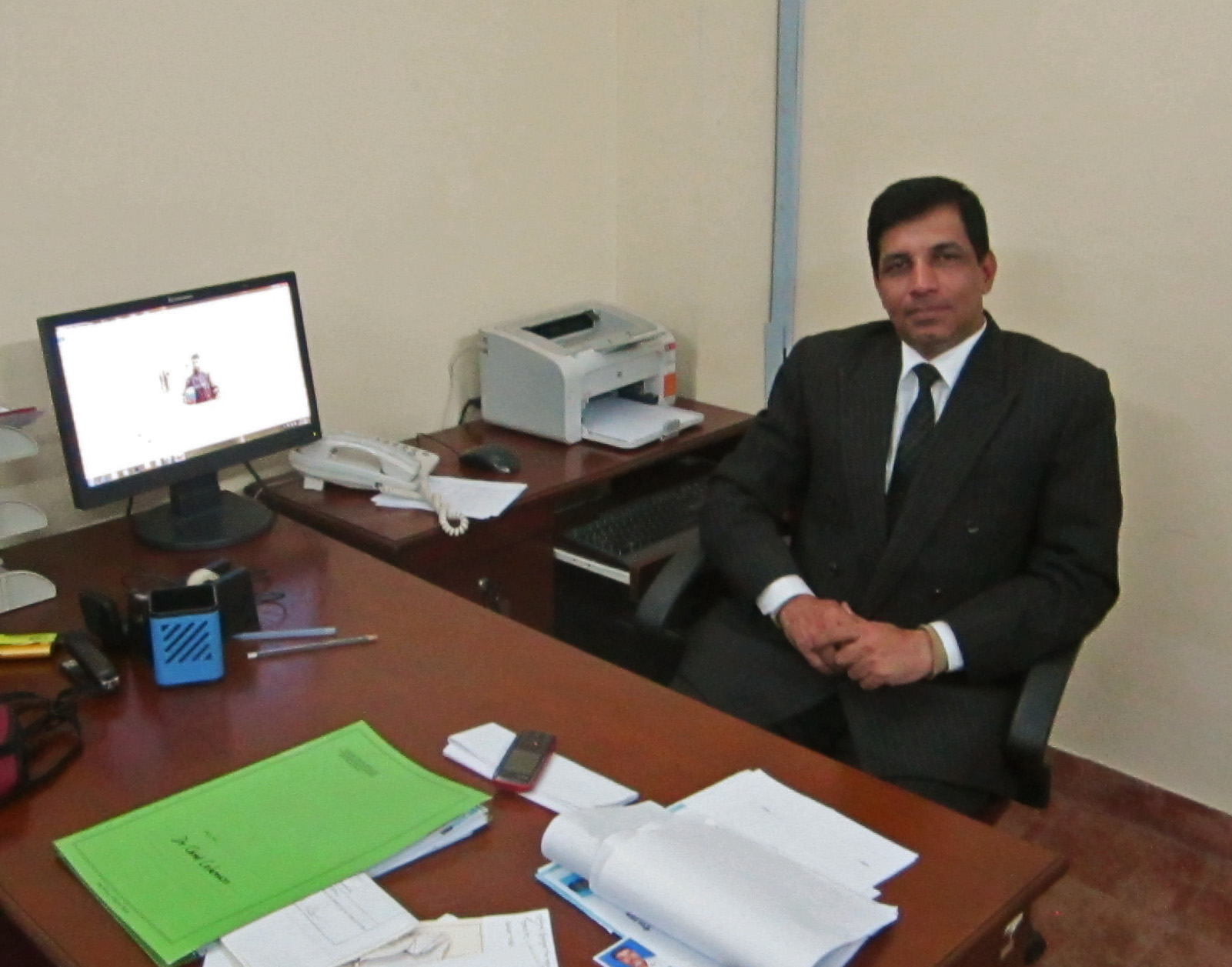
The subject of this post is Retired Major Ezaz Afzal from the Bangladeshi Army (pictured below). Major Ezaz is currently the Director of Security at my university; his task being to keep all staff and students safe and secure both on and off campus as far as possible.
However, prior to this he also led a fascinating life in the military. In the early to mid 1990s, Major Ezaz witnessed two conflicts, both of which became infamous for incomprehensible crimes against humanity, and genocide. Before moving to Bangladesh, I spent a year teaching in Rwanda, and prior to that I wrote my Master’s thesis on the devastating genocide that ripped Rwanda apart.
Major Ezaz in his office today
With over 10,000 soldiers, Bangladesh is actually one of the top providers of troops to the UN. Bangladeshi soldiers have served, and continue to serve, as peacekeepers in a whole host of different countries and missions. I first came to hear of Major Ezaz’s experiences in the UN during a presentation he gave at the university about his time as a peacekeeper in Bosnia. He gave an intriguing and frank insight into his experiences there, but my ears pricked when he revealed to his audience that directly prior to the Balkans he’d seen active service in Rwanda.
I met many different people during my year in that same country, but I rarely, if ever, got the chance to speak to anyone directly about what it was like to be there in ’94. It just never seemed like an appropriate question to ask, unless it was brought up in conversation. So, I saw this as an opportunity.
UNAMIR (United Nations Assistance Mission for Rwanda) was extremely controversial. Slammed for its ineffectiveness to save the lives of hundreds of thousands of Rwandans, and infamous for its eventual withdrawal and abandonment at the height of the killing, I was anxious to hear the Major’s take on things and to get an idea of just what it was like to be there, witness to such unimaginable horror.
Major Ezaz in Rwanda, 1994
Major Ezaz is a very warm and affable guy. He welcomed me into his office and we exchanged some of the Kinyarwandan words we both remember. Perhaps as strange as this may seem, he clearly has a lot of fond memories of his time in Rwanda and reminisces with great passion and exuberance. His unit arrived in January 1994, and for the Major it was his first UN mission.
At this point genocide was certainly not a widely acknowledged possibility, and the UN’s assignment was generally expected to be both straightforward in execution and short in duration. There was however undoubtedly great tension and instances of sporadic violence, and as the country prepared for the upcoming presidential election in May of that year, the role of the peacekeepers was to help facilitate this, and to aid the continuing peace process.
Major Ezaz and his troops’ place of duty was at the parliament building in Kigali, where their task was to provide protection to the opposition party representatives from the RPF (Rwandan Patriotic Front). Their leader at the time was one Paul Kagame, Rwanda’s current President. The Major told me that during this period he and his fellow soldiers led a fairly ‘normal’ life (for a UN Peacekeeper). When on duty they would carry out routine security tasks, and once their work was done for the day they’d enjoy the local beers and nightlife, and this is how it went on for the first three months of his time in East Africa.
Major Ezaz in happier times with locals. This photo conjures a whole host of different questions in my mind as I look into the eyes of each person – young and old – wondering just how the genocide may have affected each and every one of them?
At this point he admitted to feeling very little danger and enjoying a good relationship with the Rwandan people he was working with. However, in the early evening of April 6th 1994 this all changed dramatically. Major Ezaz told me it had been a normal day like any other, and he’d just finished dinner when the news came through that President Habyarimana’s plane had been downed near the airport as it came into land, killing everyone on board, including the Rwandan president and the president of neighbouring Burundi.
Rwanda transitioned almost instantly from relative calm to frenzied chaos (albeit organised chaos), and it would remain this way for months to follow. The Major said it all came as a big surprise to him and many of his fellow UN soldiers. They had no idea that the subsequent events had been planned for several years. Within one hour they heard reports of the killings that had started all across the city, and the night sky was filled with the sound of gunfire and explosions. The Major’s location changed from the parliament building to the national stadium where many of the UN troops were based. His experience in Rwanda was about to change completely.
On the morning of April 7th he made his way to the parliament building, much like any other day in Rwanda. However, there was something different about the route taken on this day. It hadn’t changed at all, it was just the road was more congested than usual, not with vehicles, but with dead bodies. For the first time in our conversation Major Ezaz’s tone dropped, and he was now talking about an entirely different Rwanda to the one he’d spent the previous ten minutes referring to with such affection.
On reaching the Parliament he was told to turn straight back and return to his permanent base at the stadium. Even in this short time the piles of bodies had mounted. At this point I attempted to press my ‘interviewee’ into describing just how he felt upon being confronted with these sights. His response was not a surprise, yet I’m not sure what else you can say but, “I couldn’t believe what I was seeing.” Who would? I imagine even as a UN soldier you never really expect to witness such wanton destruction, violence, and inhumanity.
From this point, just hours after the death of the President, Rwanda became a country of violence and death. I was told about the drunken soldiers and militia looting and raping at will. Routine journeys that had once taken an hour now took five as you negotiated your way through the relentless roadblocks. Roadblocks manned by crazed characters working on a cocktail of alcohol, drugs and sheer adrenaline, all fueled by the hate radio that pumped out warnings of ‘cockroaches’ (Tutsis and Tutsi sympathizers) in your midst and the rewards you’d receive if you helped in the mission to exterminate them once and for all. It’s all incredibly chilling.
I asked the Major if he had been scared when approaching these roadblocks. A fairly stupid question I admit, but his response was telling nonetheless. A resounding “YES,” as he described the fact they were controlled by young boys, almost always armed, and always drunk or high with absolutely no discipline. There was little telling what they might do, like a grenade with no pin, the blue helmet of the UN was little deterrent, and there was a reason for this.
Major Ezaz pictured in the National Stadium (Amahoro Stadium), Kigali, 1994
It was fascinating, if not a little unreal to hear Major Ezaz talk about these situations personally. Situations I’d read about in books, but never recalled to me by someone witness to such mayhem. I asked him to describe the most intimidating encounter he faced during his service in Rwanda. He mentioned several, but the one which stood out most personally was a standoff involving himself, some of his men, a small group of Belgian soldiers, and a deep crowd of Interahamwe (Hutu militia).
The activities which preceded the encounter were symbolic. Earlier in the day ten Belgian peacekeepers had been ambushed, shot, and hacked into pieces by the militia. Their blue UN helmets tossed around like prize trophies. The UN mission didn’t have a mandate to stop the killing of Rwandans. They could only fire if fired upon, and the genocide perpetrators knew this.
However, the brutal murder of the ten Belgian soldiers was a clear message from the Hutu power movement directly to the UN and the outside world – leave, you can’t stop this, we’re in control now. With ten of their own soldiers now dead, killed in such a brutal fashion, the UN was faced with the dilemma of respond with increased force, or leave. Tragically for hundreds of thousands of Rwandans, the UN chose option two. It wasn’t long after that the world peacekeeping force gave in to the militias and decided the risk was too great and the Rwandan people not worth saving.
Major Ezaz told me that some hours after the ten Belgians were killed, another group of twenty-five soldiers of the same nationality found themselves in a precarious and life-threatening situation as they became stranded between their base and a frenzied mob. Vastly outnumbered and most certainly in great danger, the soldiers needed instant and decisive assistance.
I was told by the Major that this was both his proudest yet most heart stopping moment in Rwanda. His men somehow managed to hold off the mob and direct the Belgians to the safety of their base, using very little force, but a significant amount of courage and composure, and only after considerable tension and provocation by the crazed young militiamen. The unpredictability of the Hutu militias and their increasing ambition and fearless confidence played a very definite role in the UN’s reluctance to stay and commit soldiers who would potentially end up meeting the same fate as the ten Belgians.
During our conversation Major Ezaz reminisced about another tragic situation which left him with two distinct emotions; one of sheer horror, and the other enormous pride. It occurred at his base in the national stadium. Shortly after the start of the killing he described how Tutsis began to arrive in great numbers in search of shelter and protection from the barbaric killing mobs that had overrun the city. Many Tutsis were now essentially refugees in their own birthplace. The UN was at least able to provide a very basic safe haven to those ‘lucky’ enough to make it there.
However, it was unable to prevent shells fired from outside the stadium walls causing devastation wherever they fell. Unfortunately the Major saw this with his own eyes one day as a shell exploded amongst a group of people in the refugee area of the stadium. Fourteen people were killed in this one strike alone, and according to Major Ezaz these types of attacks were not uncommon. He described how he and his troops rushed to the scene to find complete devastation.
Nevertheless, amidst the horror eight lives were saved by the work of the Bangladeshi army medics. Speaking in obvious earnest, he expressed the pride he felt for his men in this situation. He spoke of the genuine fear of contracting HIV as there was often little time to think before diving into catastrophes and responding decisively and proactively to scenarios similar to that above.
Below is another photo which fills me with intense sadness and intrigue. It shows Major Ezaz and a UN colleague distributing food to Tutsi refugees sheltering in the stadium. I can’t help wondering what happened to these people after the UN withdrew. This image is stuck in time with an answer I’ll never discover.
I won’t lie. I was hoping to hear deep, personal stories from my interviewee. I wanted to hear him describe how he felt and what he saw when he closed his eyes on those rare occasions he was able to catch some sleep between the shells and the mass influx of desperate refugees. In reality however, this was purely a selfish desire on my part. As I mentioned before, I’m intrigued to get a sense of just what it was like to be in Rwanda in ’94. A Rwanda in absolute stark contrast to the one I fell in love with sixteen years after the Major’s experience.
However, it’s none of my business, and as such I didn’t press too hard, even though I desperately wanted him to describe the emotions he felt each day as more and more people arrived at the stadium, their eyes filled with fear, their final, despairing hopes resting in the hands of the UN – the international ‘peace keeping force’ whose very role is to protect innocent people from the irrational brutality of genocide.
The problem was the UN didn’t want to admit to it being genocide. Admitting the action of genocide would’ve meant acknowledging a very real duty of responsibility to end it. Thus, on the 25th April, 1994, 18 days after the killing began (and 82 days before it was eventually stopped by the RPF) Major Ezaz and his battalion left on a plane to Nairobi, Kenya. As shells fell around the airport, and machetes continued to be wielded in hate down below, Major Ezaz said goodbye to a UN mission that had begun with a quiet confidence and ended in tatters, and a country that had provided glimpses of joy and warmth, but overwhelming images of abject suffering and cruelty. He has never been back.
When I asked the Major the obvious question of how he felt at this point, as he watched the green hills drift into the distance below, he provided a suitably obvious, but simple answer….sad. However, he told me very honestly that remaining in Rwanda would’ve evoked an even greater torment in his heart as it would’ve meant standing by and bearing witness to yet more murder, rape and mindless cruelty, with no mandate to stop it.
This confession and acknowledgement of both the futility and ineffectiveness of the UN mission to prevent the genocide, even at this stage, was both telling and soul-destroying. I asked where he feels the blame lies, and he pointed to the UN as a whole and also, a little surprisingly for me, General Romeo Dallaire.
Dallaire was the Canadian Force Commander of UNAMIR and therefore in charge of the entire UN mission in Rwanda. Major Ezaz met Dallaire on a number of occasions and told me how he just couldn’t understand, even to this day why his Force Commander, as the highest ranked UN military representative in Rwanda at that time, didn’t take the risk by disobeying his superiors back in the US and engage in a more forceful approach to ending the killing.
It’s an agonizing question that has haunted Romeo Dallaire ever since 1994, and if you feel inclined to read more about this I would point you to Dallaire’s personal account of his experiences during the genocide, entitled ‘Shake Hands with the Devil.’ It’s a fascinating read, which provides thorough explanation and analysis into just why his hands were so frustratingly tied by UN hierarchy, based thousands of miles away from Rwanda, who appeared to have had little knowledge or interest in the suffering of the Rwandan people.
After reading this book I came away feeling nothing but deep, sympathetic admiration for Dallaire, and therefore a little disappointed to hear my interviewee’s critical personal judgement of the same man. However, Major Ezaz has the experience of being there in ‘94, witness to it all, whereas I was merely a ten year old boy, obsessed with football and unable to point to Africa on a map, let alone Rwanda.
In May 1994, two months after his arrival back in Bangladesh, Major Ezaz was deployed to Bosnia, forced to witness yet another war, and yet another example of man’s inhumanity towards man. Genocide was once again on the agenda, and in a depressing parallel to Rwanda, the UN’s mandate fell well short of actually protecting civilians. Following this, in 1999, he found himself back on the continent of Africa, again with the UN, on a mission to aid Liberia’s recovery from their own brutal civil war. I braced myself for another candid testimony from the frontline.
However, our time was up, and so I’ll have to make a future visit to the Major’s office and enjoy a cup of tea with him as he regales me once again with further tales of a very different life to that of an AUW Deputy Director of Security.
Major Ezaz pictured in Bosnia, 1995
I’d like to express my sincere thanks to Major Ezaz for taking the time to speak to me about his experiences, and for also allowing me to include some of his own personal photographs.







































 UNDER ONE SUN
