And your strange bewildering time will hold me down…


Nepal shocked me. I’m not entirely sure why as its reputation is undeniable, and it is no coincidence of course that it’s a magnet for a wide cross-section of the world’s travelers and tourists. In Nepal you’ll find your groundbreaking explorers and intrepid adventurers, many of whom have dedicated their lives to the mountainous land, some of whom never left. Their souls left above the clouds, high up on the dense snow-capped peaks, succumbing to the extreme and merciless conditions found up there.

The Himalayas does not fool around. It takes no prisoners. In 1996, on one fateful day alone (May 11th), eight climbers perished on Everest and a further seven climbers met an identical fate that same year.  No prisoners. For many Hindus the Himalaya region is an extremely sacred place as it’s considered to be the abode of the gods. This also goes for the sherpas, a sect of the Tibetan Buddhists, who similarly believe the mountains to be inhabited by the gods. The region has eight of the ten highest peaks in the world and thus in religious terms it’s clearly, for many, the closest you can get to a higher spiritual force.

Speaking of spiritual forces, Nepal is also a magnet for another exclusive cluster of travelers. Set foot in Kathmandu and you’ll find yourself surrounded by an army of misplaced souls, seemingly on a mission to ‘find themselves,’ deep amongst the narrow streets of the Thamel area of the city. Wrists and necks are overwhelmed with hemp bracelets and beaded necklaces bearing the ancient symbol of Om and Yin Yang.

It’s also fair to say that I’ve never seen so much impressive facial hair or quite as many tattoos and piercings concentrated in one small area. Well, aside from Totnes of course.  You can’t blame them though. Kathmandu is that kind of place. It draws you in and places a reassuring hand on your shoulder. You begin to wonder why you’d ever want to leave and I guess for some travelers this wonder is too overpowering.

The title for this blog update is actually a lyric from the Cat Stevens’ song, ‘Kathmandu’, from 1970 (see link below). I feel it sums up perfectly the mood and presence created by the ancient city. It houses a fascinating mixture of cultures and there’s a truly international vibe, helped of course by its role as a gateway to the mountain region. The smell of incense permeates the air, and as you stroll whimsically through the narrow streets your ears are filled with the unmistakeable sound of the tabla, the sitar and the flute.

With no disrespect to Chittagong, there was just a stark difference in mood between the two cities. The drivers in Kathmandu don’t use their horns nearly as much, and the level of patience and general calmness was in complete contrast to life back here in my current home. You get the strange impression that time somehow just doesn’t quite move as fast in the Nepali capital. As if father time is waiting for you to catch up or slowing things down to allow you to meander along at your own desired pace.

This is why the Cat Stevens lyric stood out for me. Kathmandu is strange, and it is bewildering. The myriad of streets and the almost claustrophobic nature of the intense sights and sounds which fill them can leave you lost and disorientated. Yet, somehow there’s nothing at all negative about this feeling. It’s easy therefore to feel held down by the spell of Kathmandu.


In many ways I never imagined I’d set foot in hills that even match those which cover the Rwandan landscape, let alone hills which threaten to etch an even more memorable image in my mind. Anyone who’s been following my blogs for a while now will understand just how deep set my appreciation is for the countryside of Rwanda and the impression it left on me. I suppose if anywhere was going to challenge this, the Himalayas of Nepal was a good place to start.

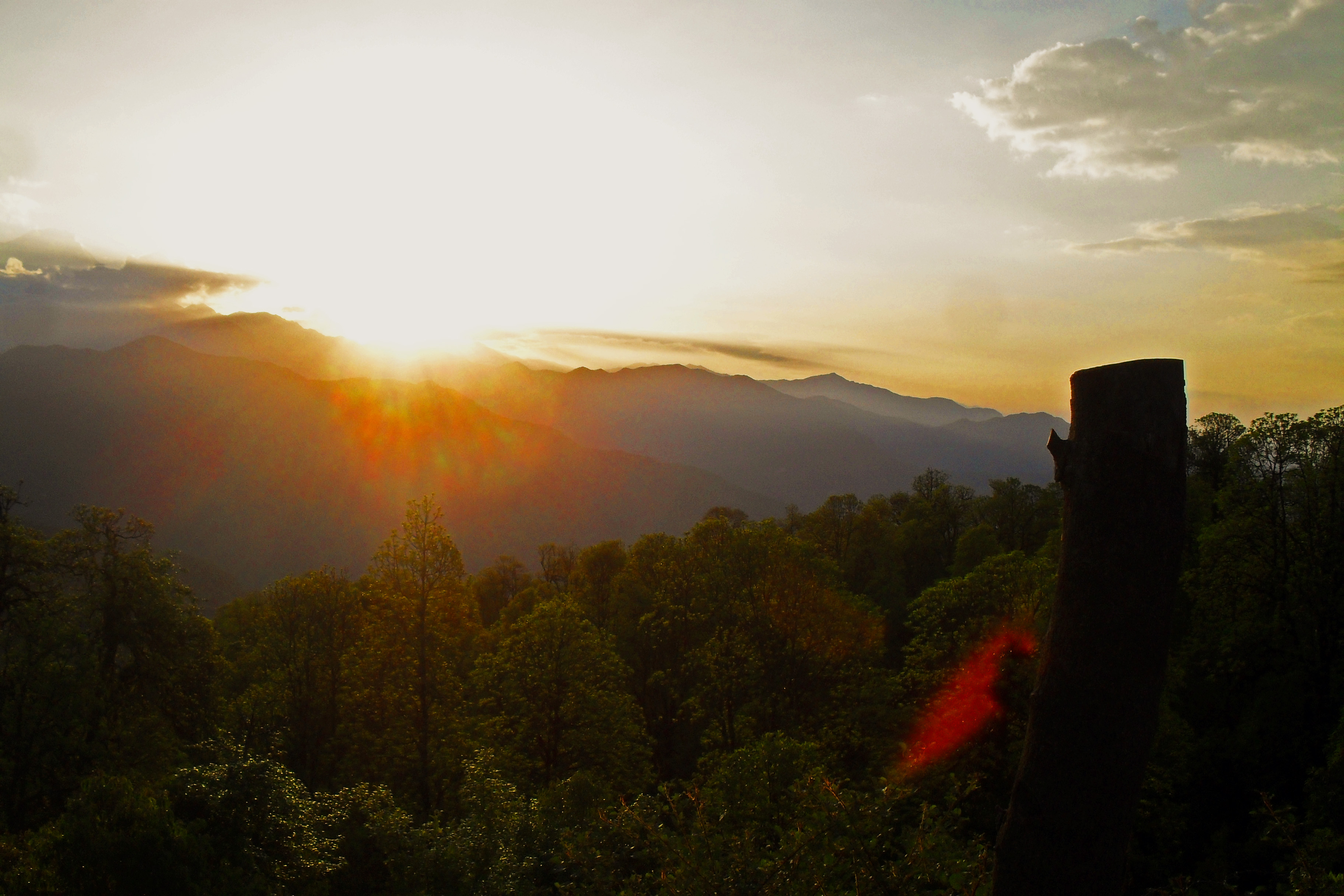
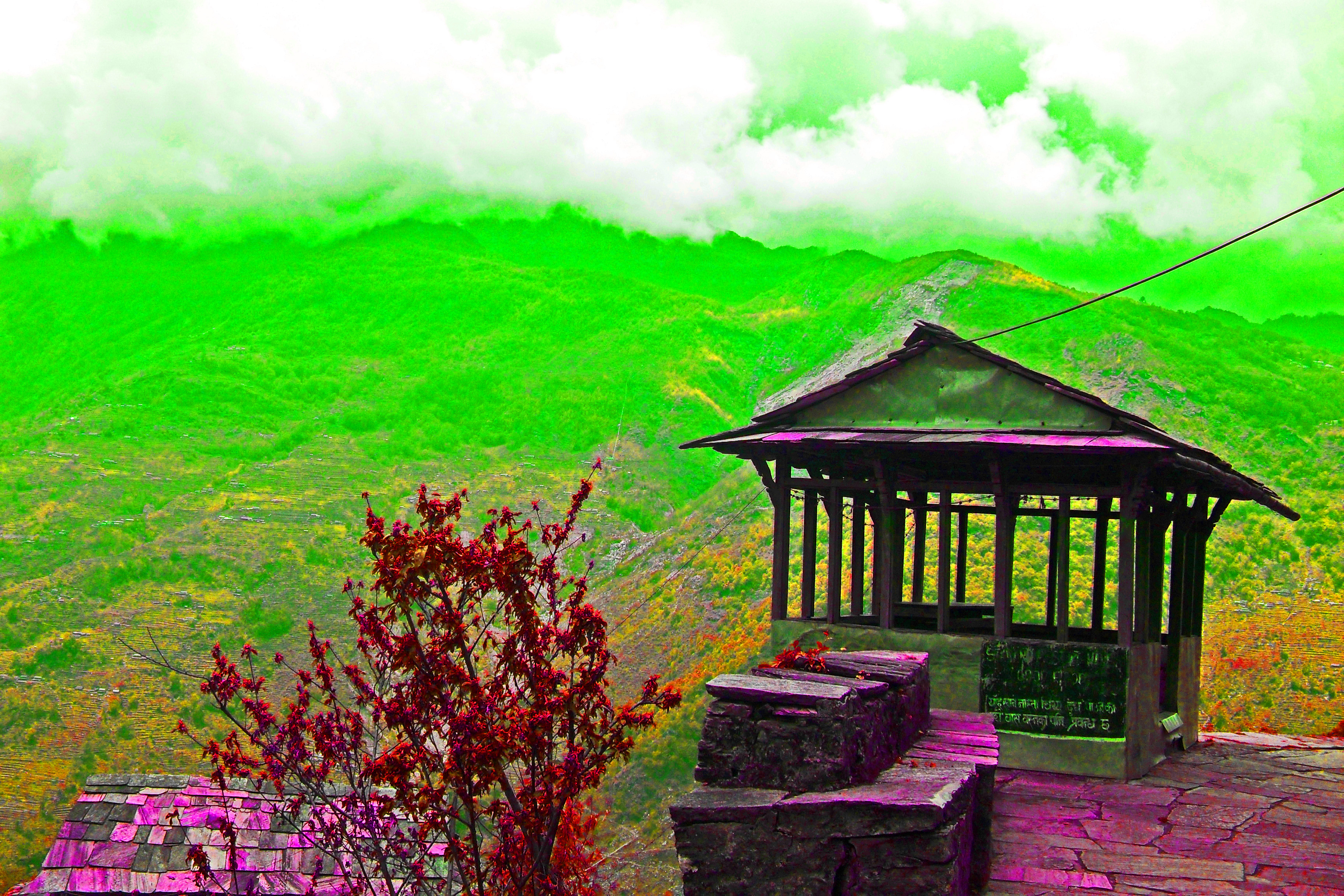
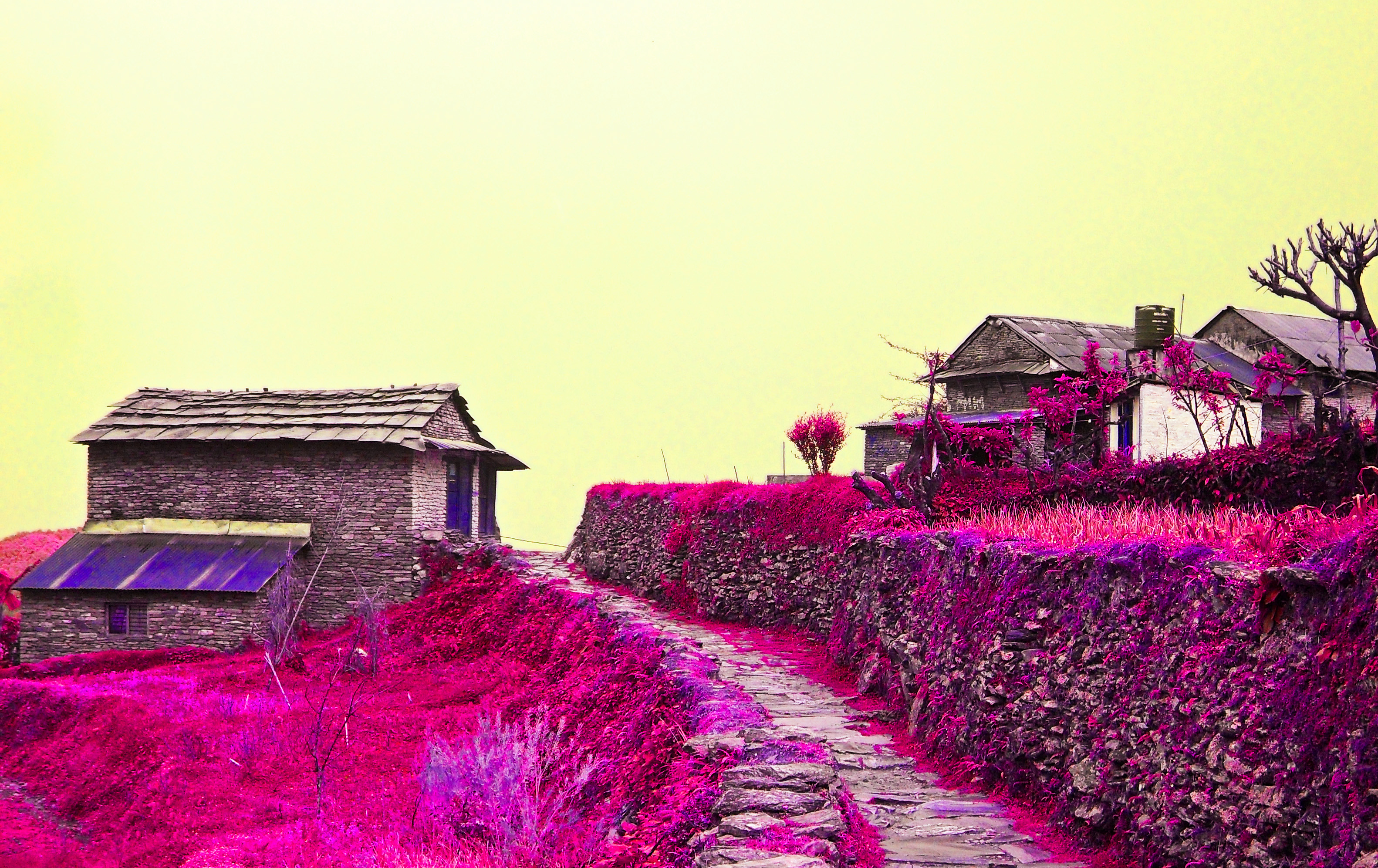
Like Rwanda, Nepal is a ‘hilly’ nation, to put it mildly. The landlocked state is home to eight of the world’s fourteen peaks which sit 8,000m above sea level, and approximately 75% of Nepal is covered by the Himalayas. Due to visa issues I could only dedicate three full days to trekking in the hills but as I hope my photos can testify, this was by far enough time to get a real glimpse into why so many people visit the area each year and, as I said before, why they’re drawn back again and again. When you wake up at 5.00am and step outside to catch a glimpse of the early morning sun rising from behind a snow-capped mountain range, you realise that there are some things you just have to see in the flesh.

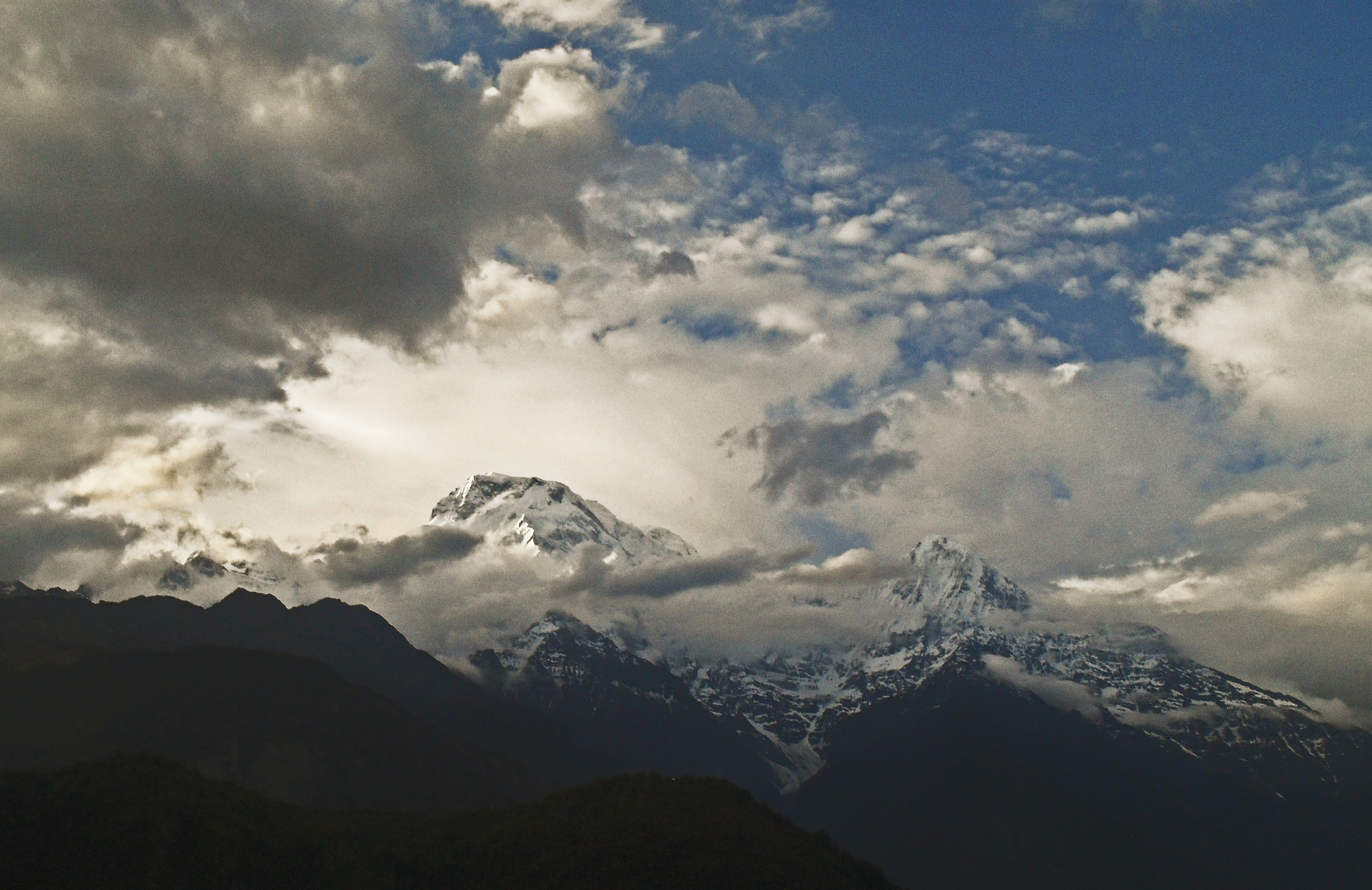
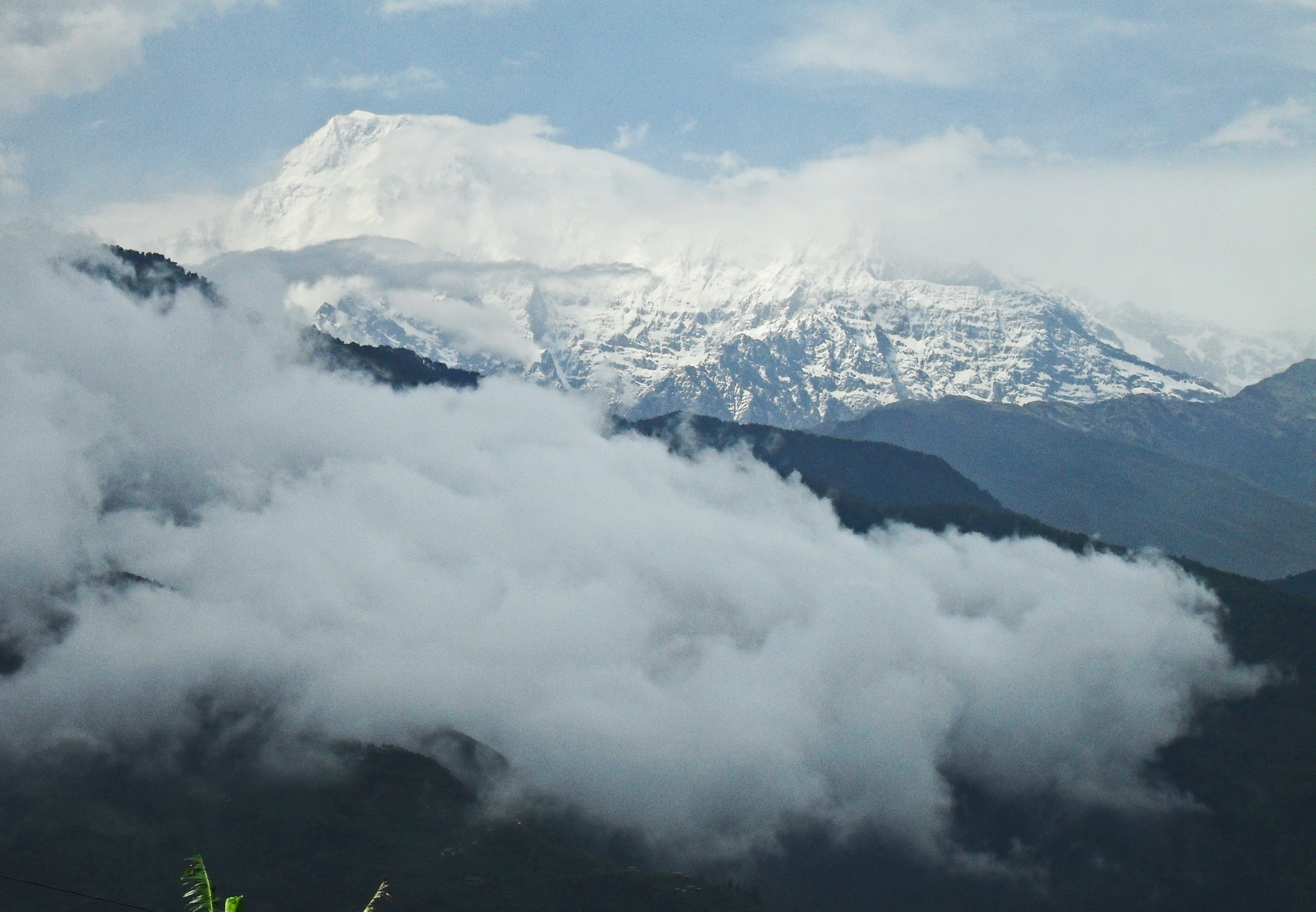
The trekking is tough. In addition to possessing a good level of physical fitness, you have to also demonstrate a certain level of mental strength when approaching it. It gave me increased cause to appreciate those feats of absolute endurance achieved by the people who spend their lives doing this. A select few who summit mountains and cover extreme terrains on a daily basis. When standing before an 8000m mountain range (Annapurna in our case), it takes on a whole new dimension. I found it difficult to imagine tackling something as colossal as this and thus photographing it from afar (see photo gallery below) was as extreme as it got for me. It doesn’t stop you dreaming though. I’m sure Fogle wouldn’t shirk the challenge.

So to conclude, as I sit here, back at my desk in Chittagong, I do so wearing a small wooden bracelet made by a Tibetan woman which displays various symbols, one of which is Om. I’m sporting a light stubble on my face which I’m reluctant to shave, and I’m currently listening to an album entitled ‘A Musical Pilgrimage’ by Upendra and Friends which contains song titles such as, ‘Shiva Dance’, Rhythm of Nepal’, ‘Wind of Naeba’, and ‘Himalaya’.

I guess I’m a traveller. I didn’t however ‘find myself’ in Nepal as I’d secretly hoped and thus the search continues, and for now it must continue here in Chittagong, where this week I’ll teach my students about the use of stative passive verbs, commas, and modal verbs. The journey continues.
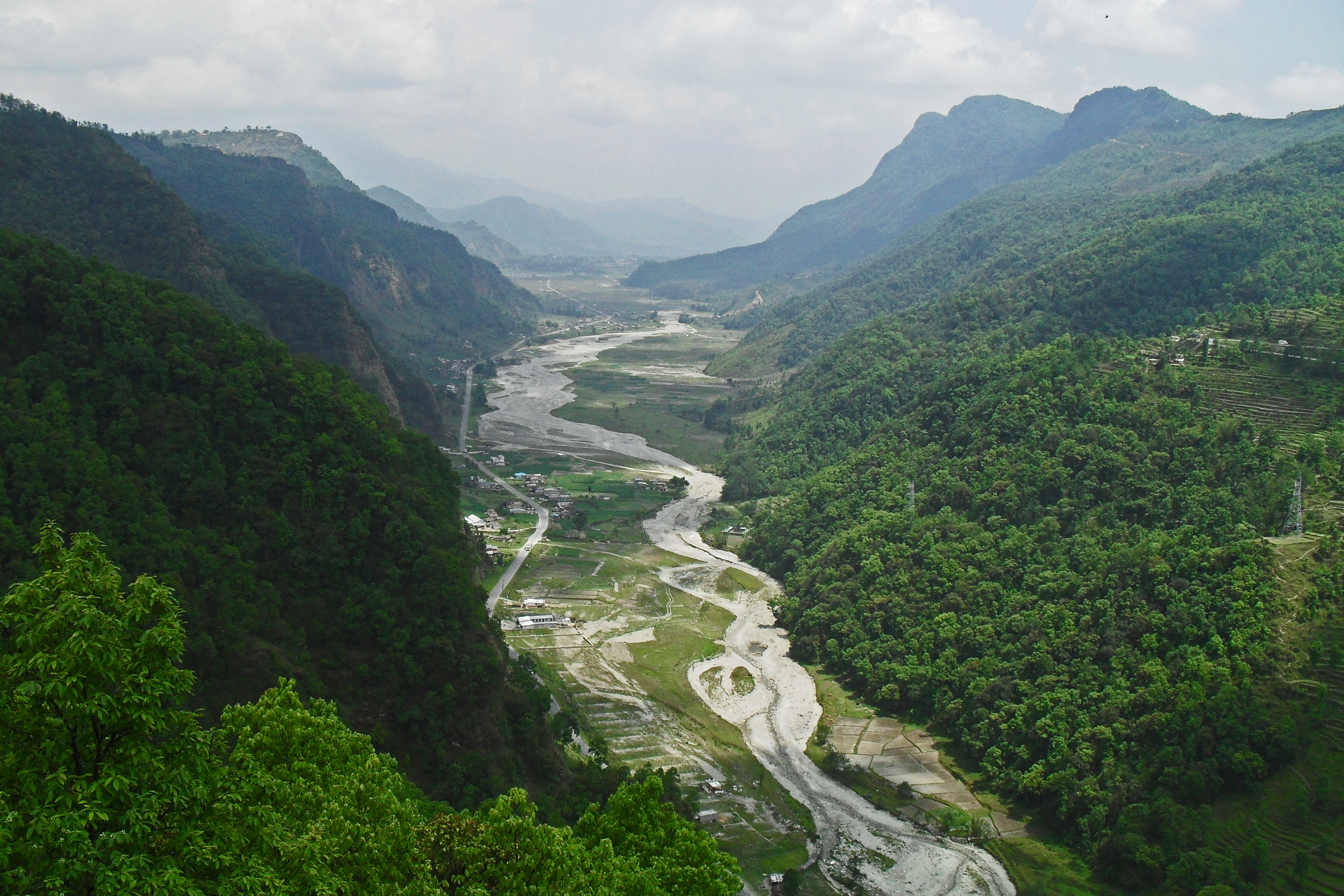
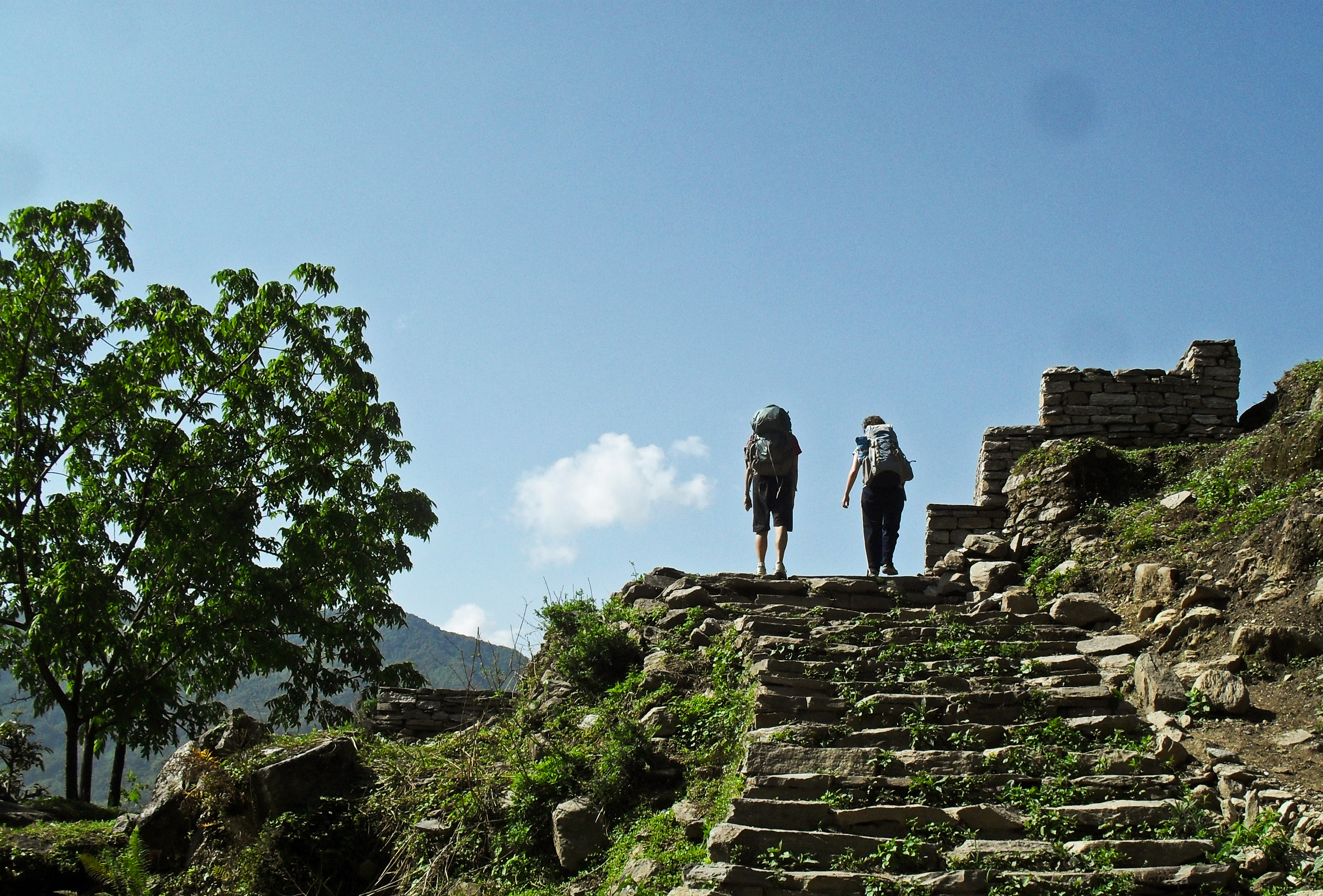
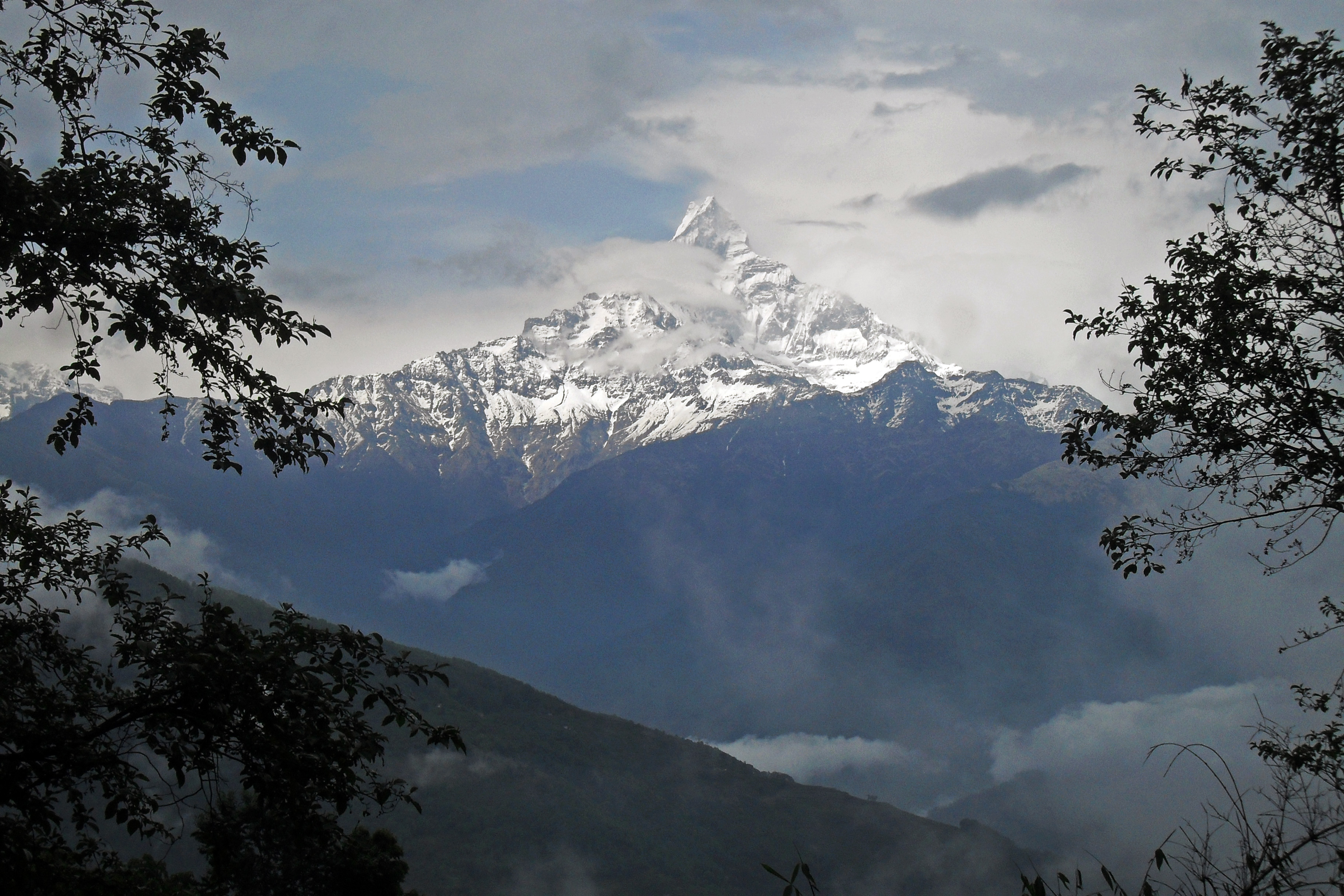
Reptile hurling, a useless bandana and the tale of a cup of tea that ended in chaos.


Ever had a snake flung at your head? No? Me neither. Well, that was until I strolled into Landruk, a tiny village which sits high on a ridge on one of the many hillsides in the Himalaya region of Nepal. We were a day and a half into a three day trek and as we entered the village a large crowd had gathered. I wondered if it was to welcome the approaching foreign visitors (us!) but seeing as Nepal is a tourist hotbed I soon realised this wasn’t the case.

There was some nervous shuffling and a couple of shrieks from the crowd. As we approached it became clear that a snake was the centre of the locals’ attention and not a small snake at that. I was intrigued so joined the crowd but not wanting to impose I held a position just to the left of them. A couple of village elders who’d most probably seen and dealt with dozens of the timid serpents many times previously were walking through the village at the time. They stopped. One went over to the grass bank the snake’s head was emerging from.

I was fascinated to see how a man of his life experience would deal with this. Surely a life in the mountains of the Himalayas would’ve taught him a whole host of intricate methods in removing a snake from the vicinity of a village whilst causing as little stress to the reptile as possible? Well, clearly not! He poked the snake causing obvious panic from everyone present and not least from the snake, which incidentally slithered from the bank onto the open path.

There was a moment of contemplation from one and all and a couple of further, milder cries of dismay from the smaller children in the group. The man then positioned his stick next to the snake and for one moment I feared he’d give the poor thing a quick whack and that would be it. Instead he placed the stick just underneath the creature and quick as a flash, without a word or sound of warning, a lightning quick flick of his arm sent the snake hurtling through the air and crucially, it seemed, straight towards me! In truth I had little time to react so by the time I’d made a token ducking motion the snake had flown around fifty metres off the side of the hill towards the undergrowth below. The crowd had scattered frantically and all I could do was laugh and admire the man for his flicking accuracy. It was one of those moments though that in hindsight you realise just how close you’d come to having a snake wrapped around your neck!

Now, in other news of near death experiences on the hills of the Himalayas, on the same day I was almost trampled by a cow, bull or possibly a yak! It was the afternoon on day two of the trek and we were in the middle of a horribly grueling 600 meter ascent which was essentially three hours of vertical trekking. The views were stunning of course but I discovered that Nepal is absolutely not for the mentally fragile, weak-willed, absent-minded or those with a nervous disposition!

Anyway, whilst taking a rest on a bend in the stone steps which were guiding us up the mountain, there came a sound, a kind of galloping sound and it seemed to be getting closer. At first it sounded like a person but as it became more audible it was clear this was bigger than a human. I didn’t have a lot of time to compose myself as before I knew it a huge beast came bounding around the corner with a crazed look in its eyes and an uncoordinated mess of legs and hooves flailing all over the place!

As you can imagine, a situation of this nature would cause much concern on any flat terrain but when you’re exhausted and perched precariously on a ridge on the side of a 1000 metre peak, it takes on an entirely new dimension!  I’d been wearing a khaki bandana for much of the trek due to the heat and the fact I’ve seen Fogle sporting one before, but also because it made me feel more rugged, more intrepid and more Rambo-esque if you will! Fortunately the absence of a mirror hadn’t shattered my own internal image of myself just yet but when staring into the eyes of this four-legged juggernaut I soon realised that a cheap khaki bandana wasn’t going to save me. I made a mildly high-pitched shriek and dived for cover before watching the animal continue around the bend, followed soon after by his helpless master who watched in horror as the creature proceeded to trample a large vegetable patch and make its way resolutely downhill.  I was starting to wonder if I was cut out for life in the Himalayas…bandana or no bandana.

Here’s another question for you. Has there ever been an occasion when you’ve been compelled to rub tobacco all over your shoes and socks? No? Again, me neither. Well, that was until I ordered a cup of tea at a small wooden house on day one of the trek. It was late afternoon and we’d caught our first glimpse of the Annapurna mountain range and were naturally feeling quite smug. That was until the mountains decided to remind us of just who runs the show up there and unleashed an almighty downpour.

We found shelter at this hut and were offered an affectionate welcome by the proprietors, a friendly Nepalese couple who got the fire burning and the tea brewing.  A group of Nepalese girls had also stopped and all of a sudden there came a burst of high-pitched shrieks (this became a common theme of the trip it would seem). We couldn’t really fathom why there was so much panic emanating from the group but were soon informed by our tea hosts that it was because of another mountain creature, one much smaller than the others we’d encounter, but of no less stature or influence. Leeches, yes, leeches had attached themselves to the girls’ feet and had done what leeches do.

I remember thinking at the time I’m glad that’s not me as it looked both painful and less than appealing (understatement….it looked disgusting). Anyway we sat back down and sipped on the milky, hot tea. Our hosts however were quick to suggest we inspect our lower legs and feet, just to make sure we hadn’t succumbed to the blood suckers ourselves. I thought this was impossible as I had thick trousers on and walking trainers but just to reassure them I had a quick look. Sure enough, I was quite rightly wrong in my naive assumptions and the people who had spent their lives on this hillside were absolutely correct.

As I removed my shoes I could instantly see about four or five leeches embedded in my socks and a couple more lining the edge of my shoes! Fortunately none had actually made it through so my flesh was intact but others weren’t so lucky. We jumped and hopped around this poor couple’s hut for a good five minutes trying to remove the pesky and surprisingly tough little worms and although we laughed I think each of us were using laughter to mask the genuine horror and dismay at the ghastly situation!

Once we’d calmed down our tea providers told us the best way to deter the blood suckers is to cover the area of attack with tobacco and water. So for the next ten minutes we sat and we rubbed tobacco all over our shoes and socks. It seemed ridiculous but when you’re in the Himalayas you accept these kinds of scenarios as both necessary and imperative and as such, perfectly justifiable. We paid for our tea and newly acquired tobacco and bid farewell to the warm couple who had welcomed us into their humble abode. We’d arrived looking like drowned rats, behaved like hysterical banshees as we frantically flicked leeches across the room and left soon after looking like characters from Mary Poppins with a dirty black goo covering our footwear. Yet we left both warm and refreshed by the tea and even more significantly by the hospitality of the friendly couple on the hill.

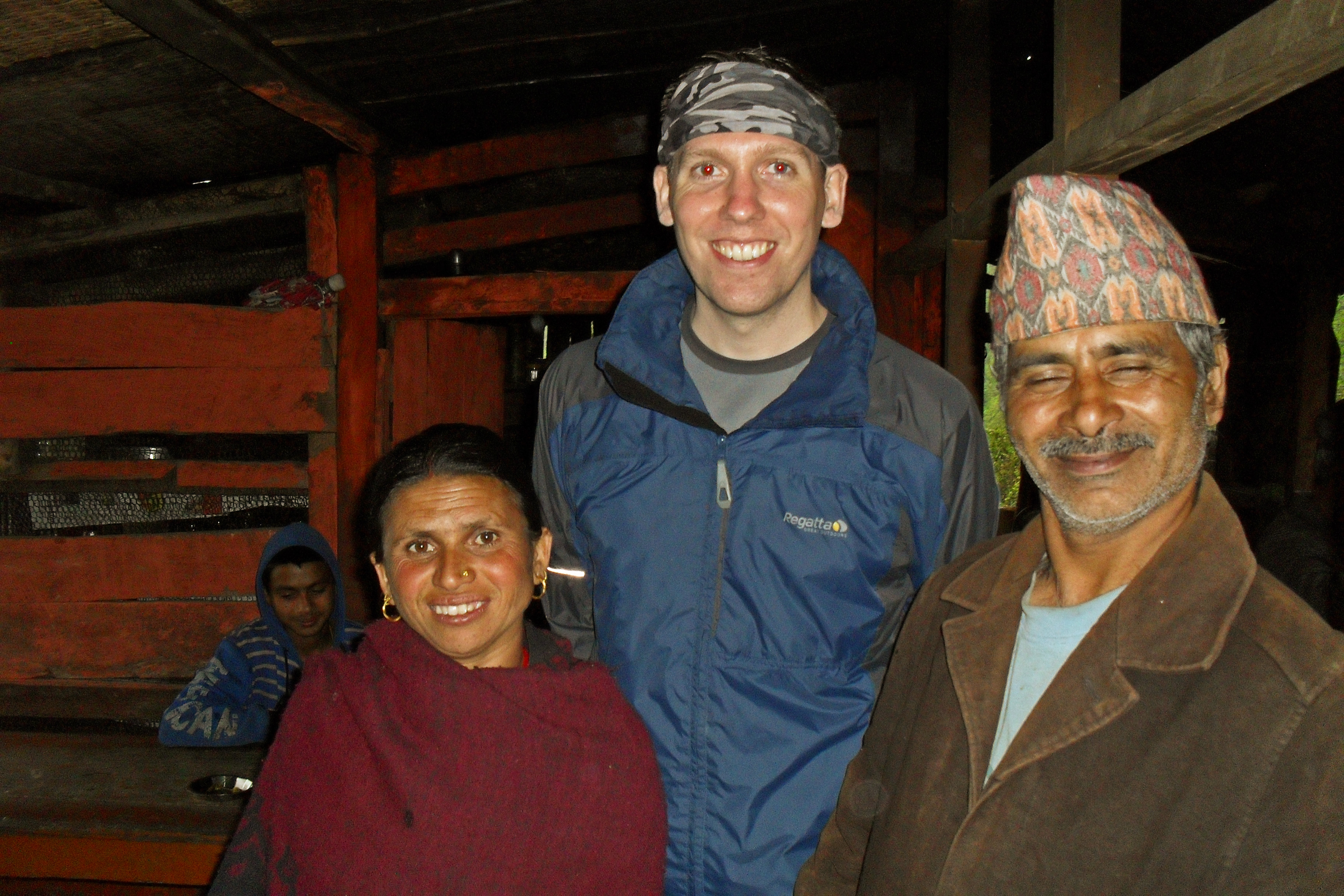
Fortunately aside from these animal-related mishaps Nepal was a veritable wonderland of stunning views, friendly people and a level of peace and serenity that’s arguably impossible to find in many other places across the world. I’ll talk more about this next time but for now I’ll leave you with this photo of me, my useless bandana and our friendly leech deterring, tea making, mountain dweller friends.

To educate is to empower…

Three women from three very different backgrounds with three powerful voices who delivered three equally inspirational speeches and all of whom provided their audience with a vociferous testimony of one common cause. The Asian University for Women.

It dawned on me recently that I’m in Bangladesh teaching English at the aforementioned Asian University for Women but I haven’t yet provided any explanation of why or any real insight about exactly what this institution is all about. It’s a fairly vague title in some respects and from it we can ascertain that Bangladesh is the host country of a university exclusively for women from Asia. However, this barely touches the surface, as I found out this week, as the university hosted a special ceremony which brought together a number of influential domestic and international figures. The ‘Foundation Stone Laying Ceremony’ was a significant point in the university’s development as it marked the laying of the first stone and thus the commencing of construction of the new campus on the outskirts of the city. Currently the university functions in a temporary home in downtown Chittagong.

A significant crowd had gathered and were seated under a large temporary tent. There was a section for government representatives, the media, business leaders, dignitaries, faculty members and of course, the students. On the stage sat a table with six seats filled by the Bangladeshi  government ministers for Education and Foreign Affairs, the Provost of the University, Ngozi Ikonjo-Iweala (Managing Director of the World Bank), Bangladeshi Prime Minister Sheikh Hasina and last but not least our very own Cherie Blair in her capacity as Chancellor of the University. Significantly and somewhat appropriately, five of these powerful figures are women.

The question is how does a university both new in formation and modest in size attract such an array of influential figures to a ceremony conducted in a tent in the middle of a building site?! Well, something’s happening here….something special. Three years ago the university opened its doors to its inaugural set of students who no doubt arrived with varying degrees of trepidation as they stepped into a unique new learning environment, the likes of which, it could be argued, had never been seen before. In a single classroom you’ll find young women from Bangladesh, from India, from Sri Lanka and from Nepal. Some will have travelled from Vietnam, others from Cambodia. From the east you’ll encounter Pakistani and Afghani girls and further west, from China. To complete this rather eclectic set of nationalities the university also admits students from neighbouring Burma, from Bhutan in the north and from Palestine in the Middle East. It’s an intriguing collection of young, female minds.

So why are they all here, in the dusty, port city of Chittagong, Bangladesh? Well, its central location in the region makes it accessible for all and its history as one of the region’s most active ports has seen the city become a prime location for social, commercial and cultural exchange. A principle the university aims to achieve amongst its students. Bangladesh has also demonstrated a real commitment to education and in more recent years an emphasis on gender equality in society. All of which make it an ideal location for this university. As World Bank Managing Director Ngozi Iweala explained in her speech at the ceremony, at a time when many countries have become far more insular in their activities due to the stagnating world economy, Bangladesh has taken a unique and brave stance in opening its doors to the whole region. The actions of the Bangladeshi government are more than just words though and are certainly not to be scoffed at as they’ve backed up their support for this new university with a substantial financial and symbolic commitment to its mission. Sheikh Hasina’s government donated 130 acres of land on the outskirts of Chittagong as a permanent site for the new campus. The land was valued at $80million and given the severe overpopulation and chronic lack of available land to develop on in Bangladesh, this was a highly significant gesture by the governing elite.

Essentially the remit of the university is to provide quality higher education to young women from across Asia, regardless of religion, race, culture or, crucially, economic backgrounds. There are many students from poor, rural or refugee backgrounds who receive scholarships to study here. In fact, ten students are currently Cherie Blair ‘Fellows’ and receive direct financial support from the Cherie Blair Foundation.  As Minister for Education, Nurul Islam Nahid, expressed in his speech, ‘Students at this university are accepted not because of what they pay, but because of what they think’.  The university also stands out for its forward-thinking and progressive rhetoric. As the mission statement affirms,

The Asian University for Women offers an educational paradigm that combines a competitive liberal arts education with applicable graduate and professional training.

At the heart of the University is the civic and academic goal to cultivate successive generations of women leaders who possess the skills and resources to address the challenges of social and economic advancement of their communities.

It’s for these reasons that I feel privileged to be playing a very small role in this highly promising and potentially life-changing institution. If the current levels of commitment and drive are maintained and the ambitious new campus becomes a reality it will undoubtedly have a significant impact on the lives of many young women from a variety of backgrounds across Asia for many years to come.

Now, back to the women and the speeches I mentioned in the opening paragraph of this update. There were six speeches in total but these were the three which made the biggest impression on me. The first was delivered by a second year Bangladeshi student of the university. She addressed the large audience with a real confidence and conviction providing her listeners with a glowing endorsement of the role the university is playing in the lives of the four hundred students currently studying here. Incidentally it’s hoped that once the new campus is completed the university will be able to host a community of 3,000 students.

The second speech that stood out for me was given by Ngozi Ikonjo-Iweala. She had flown in from Washington that morning and arrived in colourful African dress. Born in Nigeria in 1954, the Managing Director of the World Bank is a fine example to the students of just how gender and background should not impede your desire and ability to succeed. Raised in a male-dominated society, at the age of ten she had to walk with her malaria-stricken younger sister on her back for 10km to the nearest health centre. Upon arrival she found hundreds of other people waiting for help. However, with her sister fading quickly she climbed through a window and found the necessary lifesaving drugs. Ngozi later became a Harvard graduate and the first woman to serve as both the Finance Minister and then Foreign Minister in Nigeria. As Managing Director she now holds the second highest role in the World Bank, an organisation whose goal is to reduce world poverty. Her speech was warm and humorous but striking and empowering in equal measure. She spoke of her journey through life and crucially of how the World Bank is a fervent supporter of the university’s mission.

Finally, up stood Cherie, a familiar face with a familiar accent. I know very little about Cherie Blair if truth be told apart from the fact she’s a successful barrister, wife of Tony and a less than keen supporter of Gordon. I now know however that she’s a vital figure in the development of this institution and has worked tirelessly to garner influential support for its continued progression. This wasn’t the first time she’d visited the university and in her recently appointed role as Chancellor it was clear to see that it’s a commitment she’s taking very seriously. Her speech was also warm and there was an air of familiarity about her tone. She clearly cares and as an ardent campaigner for global women’s rights she recognises that this university has a significant role to play.

All in all for me personally it was an enlightening day as a new member of staff. It certainly provided me with much greater clarity regarding the role of this institution and also for understanding exactly why the students I teach are here in Bangladesh. I came away with a satisfied feeling.

Out of the frying pan, into the fire…


Ever since arriving in Bangladesh I’ve been feeling an uneasy sense of expectance. This is a hot country. I don’t need Michael Fish to tell me this. According to reports on the internet, temperatures have fluctuated between highs of 35°c (95°f) and ‘lows’ of 30°c (86°f) for the past few weeks now.

Before I left the UK this had been one of my primary concerns, wondering how my body would cope with the extreme levels of heat and humidity that would likely suck the life right out of my pale, weak, frame. I’m not used to extremes. I’m equipped to deal only with conditions that we mortals classify as ‘moderate’ or ‘average’ or at a push, ‘satisfactory’.

I’m English and therefore thrive on reports which forecast overcast conditions, perhaps with some light drizzle and a spot of early morning mist that lingers for a while before eventually clearing to leave a vast grey carpet in the sky and temperatures that instigate the question, ‘Do I need a cagoule or will a lightweight sweater suffice?!’

So I prepared both mentally and physically for months of heat-related torment. I imagined that I’d cut a forlorn figure standing in front of my students wilting in the burning furnace of the classroom, bombarded with questions about the present perfect tense and why we say trousers, lorries and bum bags when across the Atlantic our American friends say pants, trucks and fanny packs! It led to one or two sleepless nights let me tell you.

Yet, as is often** the case in life, our worst fears are merely enacted in our minds and never actually break free into the ‘real’ world and so as I sit and write this update, I do so in absolute comfort with a cup of coffee, some George Harrison tunes and the cool, gentle, reassuring breeze of the air conditioning.

I did however experience my first taste of the Bangladeshi oven a few days ago. A three day weekend marked the nation’s New Year and so myself and a few other teachers set off for Cox’s Bazar, a coastal town in the south east of the country that boasts the world’s longest natural sandy beach.

Locals are so proud of this fact they’ve campaigned for it to be recognized as the eighth wonder of the world. Their wish has not yet been granted, and if the building projects that are taking place in the town center continue, I doubt they ever will.  Fortunately we stayed thirty minutes outside of town in a small, remote eco-resort.


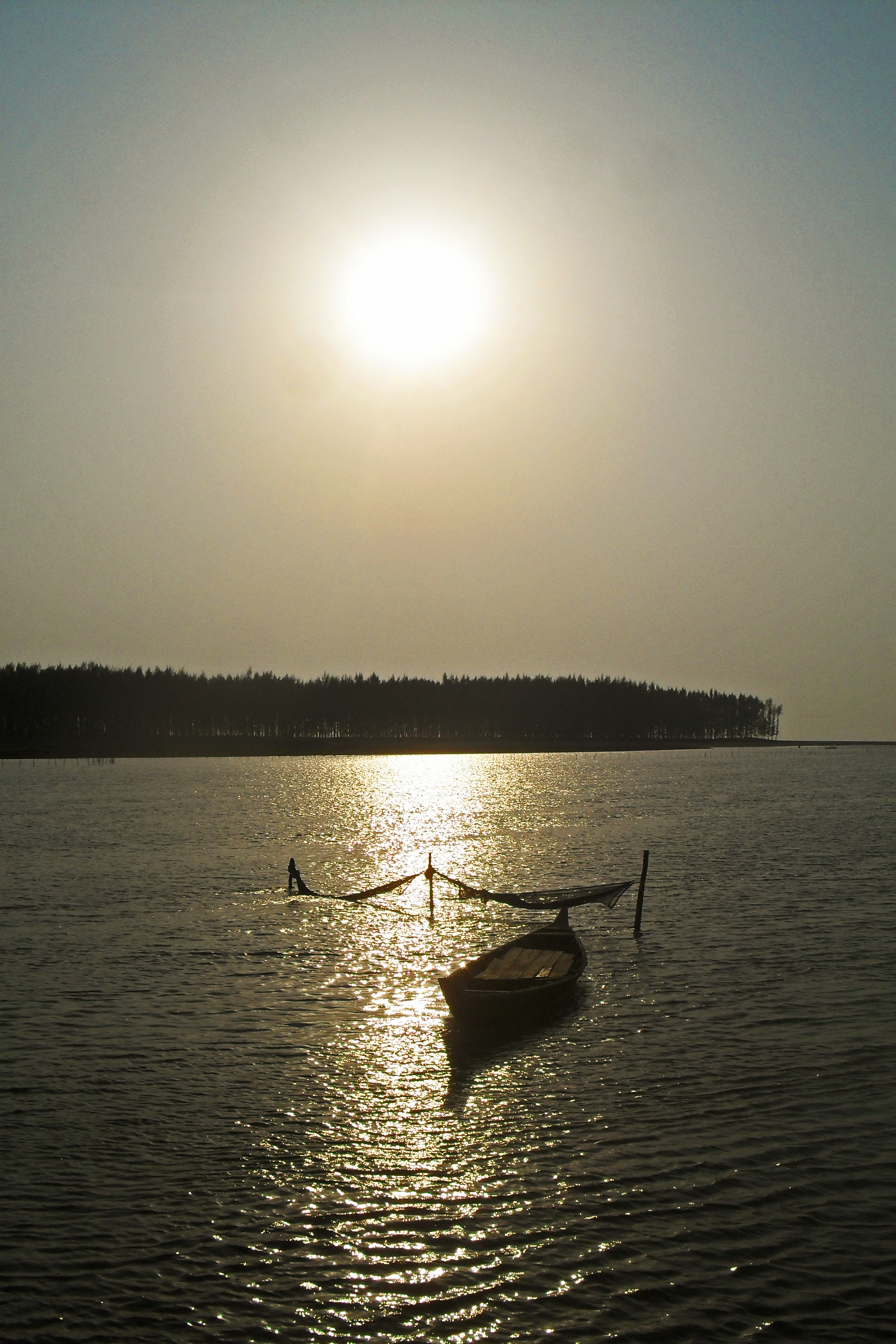
It was a pleasant trip south from Chittagong and the journey marked my first expedition to an area outside of the urban sprawl of the city. As our bus jerked and spluttered its way out of the metropolis we passed over the Karnaphuli River which originates in the hills of India and zigzags its way through Bangladesh and after reaching its mouth in Chittagong it flows out into the Bay of Bengal.

One of the simple and quite obvious pleasures of travelling is actually catching a glimpse of something you may have previously only stared at on a map. The Bay of Bengal is a familiar yet intriguing name and here I was sat on a bus observing the vital role it plays in the lives of local people.

A rickety old vessel had docked on the banks of the river and a flimsy yet surprisingly robust plank provided a gangway as a mass of locals hurriedly collected sacks of rice from the boat. Nearby a group of kids took an early morning dip in the river whilst further on a herd of cows re-hydrated themselves.

The weekend was peaceful, relaxing and therefore a contrast to life in Chittagong. We caused intrigue on the beach as local kids came out to address their curiosity as the area is tucked well away from the Western tourist trap, like much of Bangladesh I gather. It was the journey home though when I really first encountered the energy-sapping force of the sun.

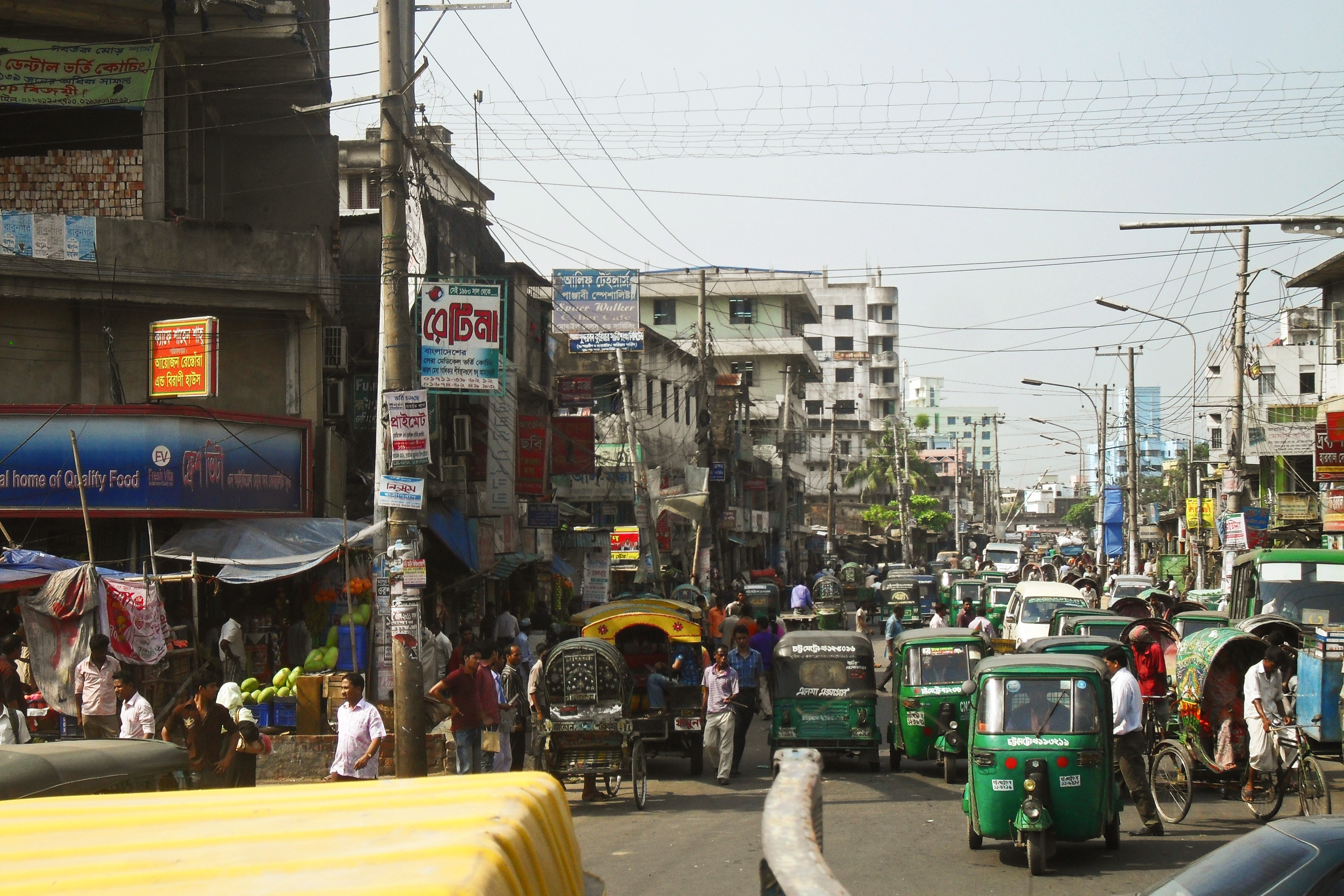
We took a non-air conditioned bus and this was relatively okay on the more open roads, but any brief halt in motion and the open windows seemed to suck in a suffocating, relentless molten air. This was manageable to a certain extent but once we reached the outskirts of Chittagong it became a little hard to bear. As the photos below testify, the city’s congestion causes near gridlock and when you’re in transit there’s no escape. You’re effectively baking in a large, bus-shaped oven.

It took almost an hour to reach our flats and by this time I felt about ready to surrender to the power of the big orange thing in the sky. I climbed the six storeys to my flat, stumbled through the door and crawled to my room, and there waiting for me was that heavenly switch. One flick and the small green light illuminates. The vents open and the box makes a clunking sound before a mild humming resonates around the room.

I fell into my chair, grabbed my water and waited for the cool air to fill the space around me. I’d survived my first real experience of the Bangladeshi heat and I had mixed feelings. On the one hand I’d survived, but on the other hand I realized just how completely unaccustomed my body is to these extremities.


**But not always – there are situations where our worst fears do invade our real lives. For example, Plymouth Argyle going into financial meltdown and falling two divisions in two years. Finding out that Ben Fogle is not a member of the aristocracy or that he will no longer present Crufts.  The day neighbours moved to Channel Five. The day PJ and Duncan officially became Ant and Dec and finally, that fateful day in Rwanda when the already large and plentiful ants decided to grow wings and attack me from the air making me a prisoner in my own mosquito net!

Well, here we go again…


As the soothing tones of Matt Monroe crept into my ears and I took another sip of my gin and tonic (complimentary of course) I thought to myself, ‘I never once imagined I’d be watching Born Free on a flight to Dhaka, Bangladesh!’ But here I was and so I embraced it and when confronted with the drinks trolley once again I ordered a further tonic water to weaken my overpowering gin. It was a random scenario yet for this reason it seemed to fit well into the randomness that has been my life for the past couple of years.

Hello Sir, which country is yours, where do you go, where do you live, why are you here, do you need taxi, change, etc, etc. I’m once again a stranger in a foreign land and as I sat and waited patiently at Dhaka airport these were just some of the questions posed to me by a whole host of characters who from what I could tell seemed to be working at the airport yet their roles were somewhat dubious. I must have cut a fairly lost and bewildered figure as I sat on the metal chairs in the rather soulless airport waiting for my connecting flight.

As you may or may not know I recently accepted a teaching position at the Asian University for Women in Chittagong, Bangladesh. After much bureaucracy and red tape which saw my start date change frustratingly from February 1st to March 26th, I finally received the vital employment visa in my passport and within a few days of this here I was sat in the foyer of Dhaka airport en route to my new home, Chittagong. I’m quite proud of my passport now as it boasts a fine array of stamps from Zimbabwe to Rwanda, Botswana to Tanzania and Lesotho to Bangladesh. If all goes to plan in early May I’ll be able to add Nepal to that list.

As I write this I’m sat in my new abode for the foreseeable future. The table I’m sat at has a rather grand wooden frame with a glass top, quite a contrast to the rickety old school desk that served me well in Rwanda.  The whirring sound above me is that of a ceiling fan which is vital as the temperature outside hits 35°c. I fill my empty glass with water from the dispenser that sits next to the fridge and browse the internet courtesy of the Wi-Fi that serves our block of flats.

Forget about the scenery, the language, the temperature and the food, the differences between my new life in Bangladesh and my old life in Rwanda are to some extent stark. As far as I can tell there’ll be no bucket showers for me here and as long as I remember to flick a switch I can enjoy hot showers on a daily basis. It’s boring really, but for now it’ll do for me.

In the coming months I’ll be once again detailing my experiences as a teacher in foreign fields and all the joys, surprises, problems and random scenarios this brings with it. I’m sure the region of South Asia will throw up a host of new challenges for me to ponder and face (or skirt around) but I know there will be times my mind will be transported back to that little hilly green land I called home for a year and I’ll find myself muttering ‘it wasn’t like this in Rwanda’ or ‘this is just like that time in Rwanda when…’ This is a brand new adventure though and thus I’m certain Bangladesh will make an impression just as Rwanda did. The journey from my flat to the university alone never fails to have its share of heart-stopping moments!

Due to my 24 hour internet access here I’m hoping to be able to make my blog entries both more regular and succinct than they were in Rwanda, but don’t hold me to this.

So for now I shall sign off, but keep an eye out for some further updates in the very near future.


A view from the rooftop of my new flat in Chittagong