Wild and Precious Life

I’d like to take this opportunity to share a wonderful project initiated by two great friends of my family. ‘Wild and Precious’ was created by Liz Scott and her husband Stuart. Combining a wide ranging set of skills developed through their respective jobs, they have dedicated this corner of the internet to documenting and presenting the stories of ordinary people who have very different tales to tell. The collection of short films is a growing mission and they are all wonderfully produced.

Last summer I was very honoured to be asked by Liz and Stuart if I would be interested in discussing my experience in Rwanda. I jumped at the chance as I had never done anything like this before, and I was really thrilled to see the fruits of their labour a few days ago. You can view the short film here;

John’s Journey to Rwanda

I was especially humbled that they asked me, given the nature of the other stories they have documented previously. I hope you enjoy viewing their films, and I’m excited to hear the stories recounted on their website in the future.

Their project is inspired and named in recognition of a poem by Mary Oliver, entitled ‘The Summer Day’.

Who made the world?
Who made the swan, and the black bear?
Who made the grasshopper?
This grasshopper, I mean-
the one who has flung herself out of the grass,
the one who is eating sugar out of my hand,
who is moving her jaws back and forth instead of up and down-
who is gazing around with her enormous and complicated eyes.
Now she lifts her pale forearms and thoroughly washes her face.
Now she snaps her wings open, and floats away.
I don’t know exactly what a prayer is.
I do know how to pay attention, how to fall down
into the grass, how to kneel down in the grass,
how to be idle and blessed, how to stroll through the fields,
which is what I have been doing all day.
Tell me, what else should I have done?
Doesn’t everything die at last, and too soon?
Tell me, what is it you plan to do
with your one wild and precious life?

In many ways the final two lines reflect perfectly why I continue to write on this blog. I’ve been incredibly fortunate to have been on this journey, and my way of acknowledging this is by documenting it through words and images.

A Bad Day for Scorpions


Water shortages, cockroaches, malfunctioning plumbing, blackouts, limited medical facilities, occasional unwanted attention from the local community, toilets that don’t always flush, the relief of having a toilet with a seat (and the despair of not!), school meetings which last hours and often result in stalemate or nothing of any note, sporadic bouts of overwhelming homesickness, little outside communication, facebook withdrawal, and infrequent and overcrowded public transport. These are exactly the kind of issues WorldTeach volunteers commonly face in their daily lives. I experienced it, and the visits I made to my volunteers last term proved these are challenges posed to many volunteers worldwide. Of course, most of these challenges are actually quite trivial in the context of the countries WorldTeach places volunteers. Yet every challenge can be considered a terrific learning experience, and for each one there is an equally rewarding encounter.

Not quite as easy as turning on a tap...

Not quite as easy as turning on a tap…


In my role as Field Director I have been able to view the experience of volunteering with WorldTeach from a different angle. For a start I’m no longer a volunteer, which instantly reduces the pressure in some ways, but certainly increases it in others. However, far more importantly I am able to get a sense of the volunteers’ experiences with the additional value of prior insight. I do, to some extent, have an idea of how they may be feeling and how certain challenges may cause more stress than others.

Anyone who followed my updates from Rwanda (seems a while ago now right?) will recall the epic battles fought with the ever present and constantly multiplying and growing ants I cohabited with. I duelled valiantly with them, but there was only ever going to be one winner, hence why I’m now in Guyana and they remain warm and cosy in their underground lair in Rwanda! My point being that if one of my volunteers raises any insect-related fears or concerns, I like to think I’d be able to offer some constructive and reassuring advice, rather than simply screaming (in a high-pitched and panic stricken voice) “RUN FOR THE HILLS….THEY’LL ONLY GET BIGGER!!” Hopefully this applies to additional scenarios besides solely mutant ants.

This was in fact tested a few days ago when two volunteers informed me they had just encountered a scorpion in their house. It scurried across the floor and past their bare feet during the evening. Now, in this scenario I don’t think I offered any actual advice, aside from stressing (like a concerned and slightly irksome, stating the obvious, parent) “In future wear something on your feet and don’t leave piles of clothes around,” (as this is where it emerged from). They sent me a photo and my response was, “That looks flipping scary!” I did actually say flipping too, no need for profanities, even if it was a large, black, poisonous (unconfirmed) tail-wielding beast from the abyss. I’m pleased to say though that these volunteers didn’t need any advice from me as they’d already handled the situation with great aplomb by this point. Their solution being, and I quote directly from one of the guys….

“I ran and got my real camera and took some pics….then I squished it with a shoe.”

Classic maneuver, and justification for the session I facilitated during our training at the start of the year entitled, ‘Insect Armageddon: The Art of the Squish.’ Anyway, I’m pretty sure Bear Grylls used this exact technique during one of his escapades in the desert. I also have no doubt that Ben Fogle has dabbled in the old shoe squishing method during his many travels.

Now, arguably the most enjoyable role in my job as Field Director is visiting the volunteers at their sites. I’d be lying if I said I don’t miss the experience of living in a more remote location within a tiny community. Village life in Rwanda was such a journey of random discovery. Georgetown does offer some exposure to this, but as my previous blog may have revealed, living in a capital city is certainly not the same as living in a village (newsflash). Still, perhaps I get the best of both worlds. I am able to experience firsthand the placements in Guyana, but enjoy access to some home comforts in Georgetown. I do reminisce about Rwandan village life a great deal, but maybe with the benefit of time and absence, I’m romanticising it in my head, selectively recalling the aspects that were so compelling, and discounting those that tested my comforted western resolve.
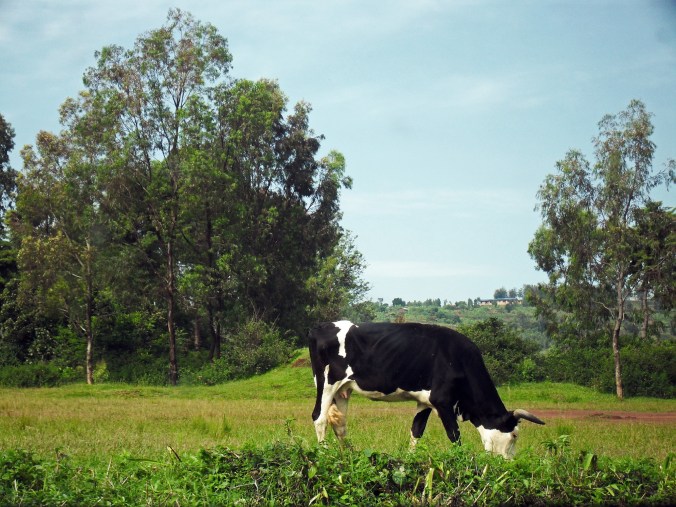

One of my neighbours

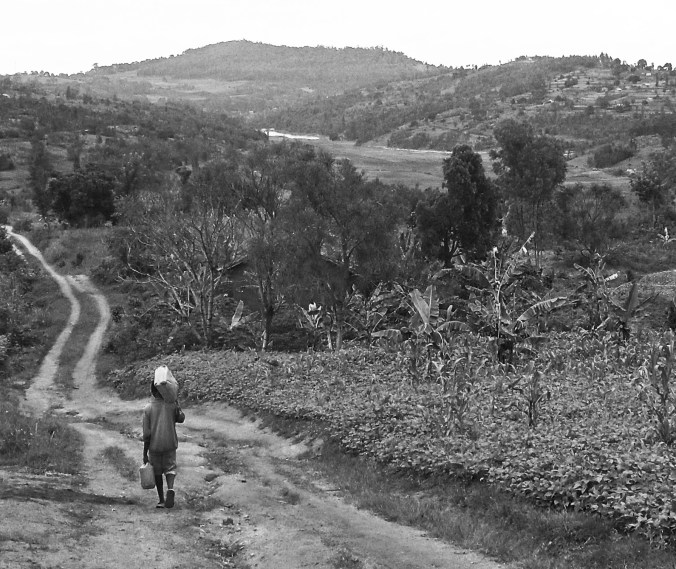
The view from my front door in Rwanda


Let me tell you a little about the sites we have placed volunteers in Guyana this year. There are a total of nine people in the group placed at four different locations across the country. Two are placed just outside Georgetown. One person in New Amsterdam, three in Bartica and the remaining three situated in Port Kaituma (map provided below). Each site presents unique challenges and charms.
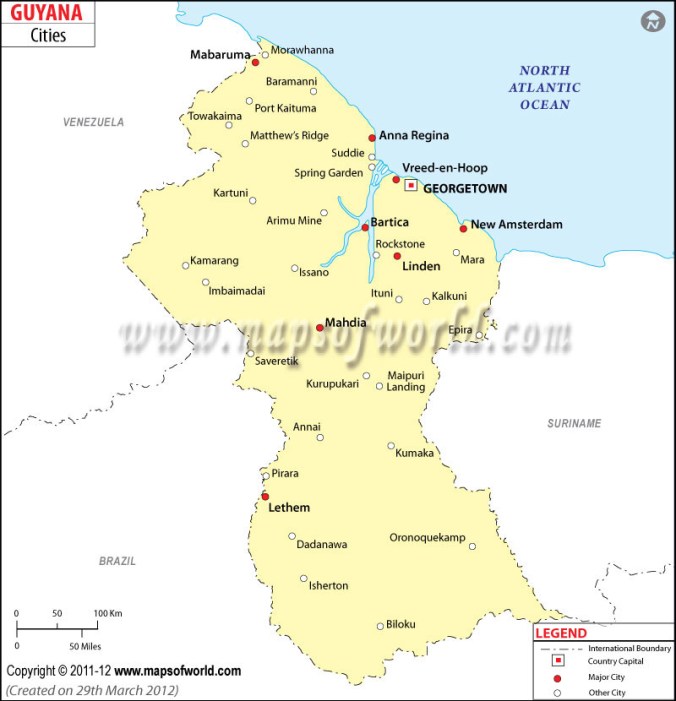

Guyana


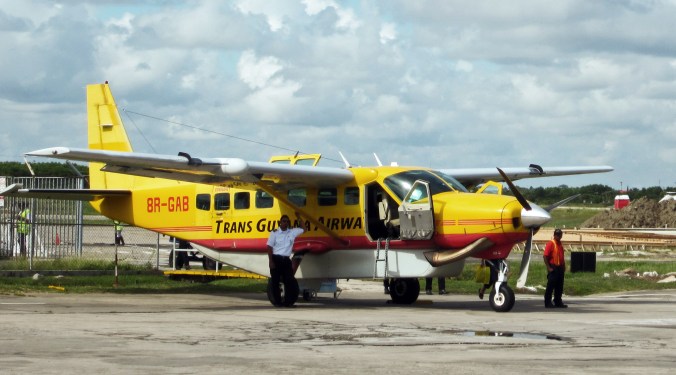
Port Kaituma is probably the most remote. Accessible by plane or a two day boat journey (so I’ve heard) from Georgetown, it certainly seems to provide volunteers with the classic rural placement. Set deep in the dense ‘jungle’ of northern Guyana, from the sky it appears to be quite an insignificant little place. However, once you’ve landed and make your way into town you soon find out this community is pulsating with energy. Some positive energy…some not so positive. The mining industry is arguably at the heart of this, with the accompanying mining population acting as the arteries pumping life into the community. It‘s clear there is money available here, and I’ve heard stories of people going into a shop and paying for toilet paper with gold! It almost has a Wild West feel to it. Centred around just a couple of main streets you get the sense that everyone knows each other and consequently I imagine it takes on the sensation of living inside a bubble. The people I met were very friendly, especially the guys who shouted “Hey white boy!!” every time I passed. Banter.

Plane

The plane to Port Kaituma


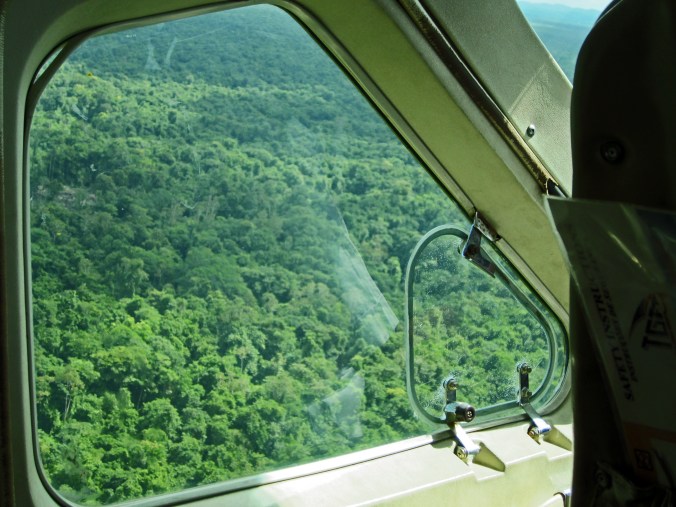
Plane over northern Guyana

Coming in to land in Port Kaituma


Port Kaituma is extremely muddy. Immediately prior to my visit, there had been some rain and thus the whole town resembled a mud-bath, or the perfect location for a wellington boot-wearing convention. I of course wasn’t prepared despite prior warnings and spent the whole visit resembling a Labrador on ice as I attempted to navigate the ‘roads’. On a more serious note, I made a comment earlier alluding to some of the energy in Port Kaituma being less than positive. It is noticeable in a community that serves as a thoroughfare or a temporary home for miners working in the surrounding area that certain services and trades feature quite apparently once the sun goes down. You find an edginess at this point and it reinforces the Wild West persona. It’s not a particularly dangerous place at all, and I felt far safer than in Georgetown, but it reminds you that particular issues, which are perhaps conveniently hidden from us back home, can manifest themselves so publicly in other places.
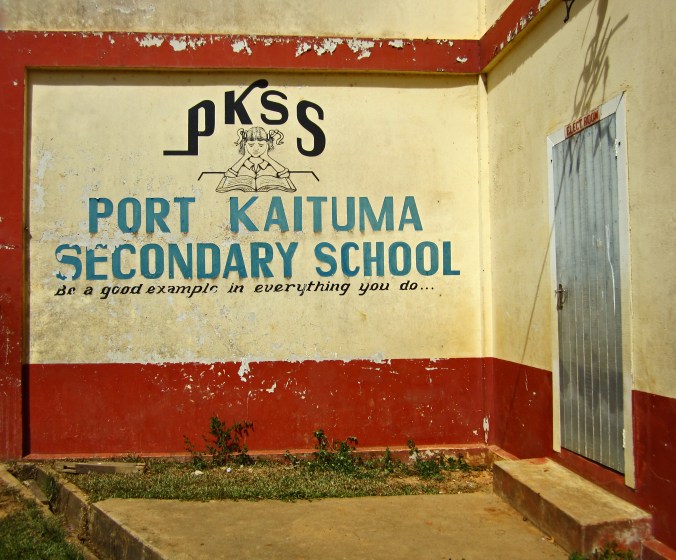

Port Kaituma Secondary School


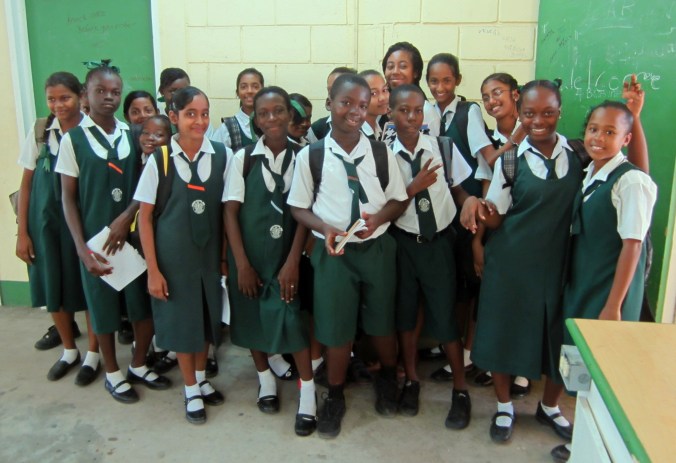
Volunteer and class

One of the volunteers with her class in Port Kaituma


Oh, and one more interesting little fact for you. Port Kaituma is actually very close to ‘Jonestown’ – the famous site of Jim Jones’ cult, which led to the deaths of 918 people (predominantly American citizens) on 18 November 1978. 909 of these were due to mass suicide/murder. In fact Leo Ryan, a US Congressman at the time was actually murdered by one of the members of the cult at the very airstrip I landed on and took off from in Port Kaituma. You can visit the site today, however nothing much remains and it is surrounded by thick undergrowth.

Bartica has certain similarities to Port Kaituma. It sits right at the door to many of the mining areas in Guyana and is known as the “Gateway to the Interior.” My visit was generally spent on the outskirts of the town as the volunteers are placed at a school there. One of the highlights of the visit was actually the journey. To reach Bartica you have to complete part of the leg by boat, and of course depending on the weather you can either sit back and relax, or cling on for dear life as your body is thrown around like a ragdoll. Fortunately both legs I timed it perfectly (complete fluke of course) and was able to sit back and enjoy a very pleasant river cruise! I like Bartica as a placement for our volunteers. The location has a pleasant balance of being rural, yet volunteers have convenient access to amenities in the town. They also have some great characters on their school campus, including the friendliest security guards I’ve ever met and a caretaker who was perhaps even friendlier. Well, I think he was being friendly…he had a thick accent so it was hard for my unaccustomed ears to decipher everything, especially as he was using a lot of Creole also.


Boat to Bartica

On the boat to Bartica


Dock

The dock at Bartica


Teaching in Bartica

Volunteer teaching in Bartica


We have one volunteer in New Amsterdam, which is the second biggest settlement in Guyana. It’s down the coast from Georgetown and having visited just for the day, and spending most of it at the school, I didn’t get much of a sense as to what kind of a place it is. It does seem to represent a slightly scaled down version of Georgetown, and I plan to visit again in the coming weeks.

Finally, our remaining two volunteers are placed together at a school just on the outskirts of Georgetown. It’s a big school with around 1,000 students, and my visit was memorable for one main reason. I saw the biggest butterfly/moth creature I have ever seen. I was sat in the classroom and this thing flew in through the window.

My initial thought was how this bird is bound to distract the already excitable students. Then I realised it wasn’t a bird and was in fact a large flying insect that was bird-sized, and at that point I started to shuffle uncomfortably in my chair as I’m not a huge fan of bird-sized flying insects. I willed it to pass back through the window, but of course within seconds it had flown straight for me and landed on the upper corner of my chair, just by my shoulder.

I should add that I was at the time observing one of my volunteers teach a class and thus as soon as the winged insect of doom had landed by me all eyes had centred on my location. How would this strange foreign man react? This was the question etched across all the young faces.

Well, I’ll tell you how I reacted. I laughed nervously, remained where I was, whilst edging to the corner of the chair so at one point only one ‘cheek’ was perched on it, and soon succumbed to my irrational fear by shuffling across the room. Cue giggles and pointing. Eventually one of the students got up and shooed it away back out the window, and the giant flying insect incident was over.

Fortunately the students were very sympathetic and didn’t mock my ridiculous behaviour. Well, they probably did, but in their politeness they must have saved it for once I had departed. I was however reassured by my volunteer that she too had been struck by a similar fear, but was grateful that mine had stolen the embarrassment.


Teaching


I have to say that I thoroughly enjoyed all of my visits to the volunteers’ schools and sites. The opportunity to observe them teaching brought back a lot of great memories from my time as a volunteer teacher. It was also a reassuring and affirming experience, as I discovered that I could actually pass on some constructive advice to many of them. They’re a good bunch, and it was heartening to see how well they have settled and the hard work they are doing at their schools. As a volunteer you can never change the world, but as long as you give it your all and care about your work you can certainly make a positive impact.


Students - Bartica

Students in Bartica


Bartica

The school campus, Bartica


Georgetown

Georgetown from the air


Teacher with students

One of the volunteers with her students in Georgetown


Teaching

Volunteer teaching in Bartica


In class

Students working hard!


Georgetown, Guyana


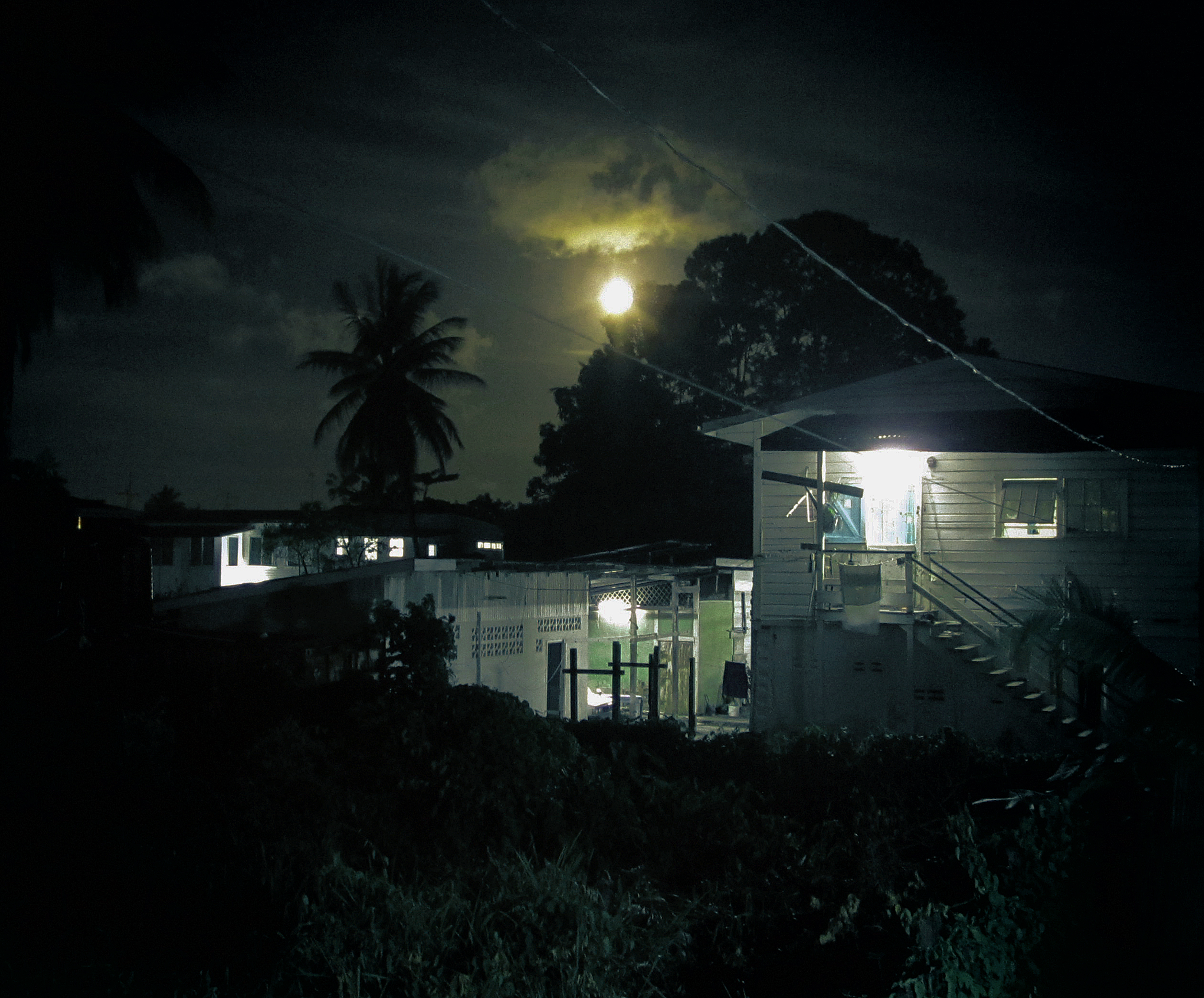
Amid the confusion and excitement of another new country and adventure, the first thought to enter my mind as I made my way by taxi from the airport to my new home was, ‘boy, this place is relaxed.’ We passed house after house and each one appeared to share the same three prominent features; a front porch, a hammock strung up in said porch, and reclined in each hammock, a person.

For miles and miles this seemed to be the norm. The main road was lined with homes, similar in appearance; all charming wooden structures raised high off the ground to avoid potential flooding I presume. To the rear of the houses on one side of the road sat a wide body of water and behind the homes parallel to this there lay a vast blanket of green which stretched inland as far as the eye could see. In many ways this sums up Guyana.

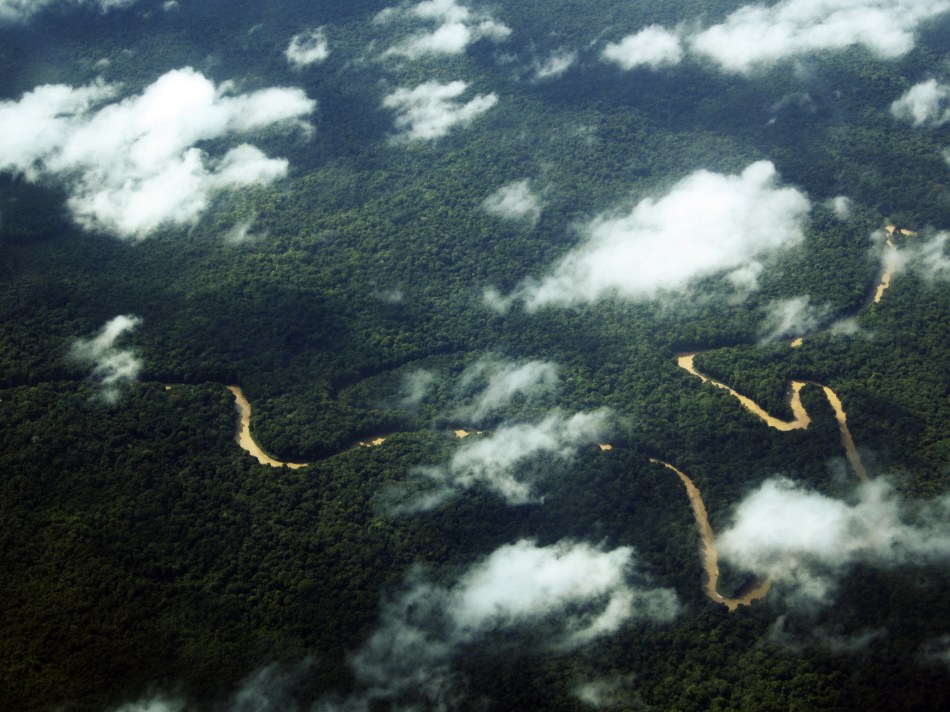
A small splattering of settlements (the majority of which are very small) nestled deep among two significant natural features; forest and water (see photo below, taken from the plane on a recent trip to visit some of my volunteers).


On this particular July day it was misty, humid, and damp, and the behavior of the people I passed seemed to perfectly reflect the mood. Families and friends gathered on porches engaging in an activity I would soon learn to be known as ‘liming’.

To lime, as I understand it, is to generally get together and hang out. To gather, to watch the day go by, to take time out, to escape, ignore or share overarching stress or struggles, or to crucially devote a moment of the day or the week to enjoying life. I may well be over-thinking or dramatizing this pastime, but this is purely my own personal perception of something I have witnessed people partake in during my time here so far.

I’ve been based in Georgetown, Guyana for a period of almost five months now, but shamefully this is the first opportunity I’ve taken to sit down and attempt to describe this new location in words (ironically I’m doing this whilst sat at home in the UK having just arrived for Christmas).

Five months is a decent amount of time, but I have no doubt I’m approaching this update weighed down by the heavy burden of ignorance around my neck.  When it comes to the exact dynamics and understandings of this place, I’m still very much a fresh bystander, so please don’t judge Guyana on my observations alone. However, the impression I’ve gained so far is that Guyana in general is a captivating blend of cultures and people, and Georgetown is a perfect microcosm.


Prior to my arrival I clung to the belief that with Guyana’s status as the sole English speaking enclave in the whole continent my successful transition would not be hindered by language barriers. I was wrong to an extent. At any point your ears can be exposed to Portuguese, Spanish, Creole, and even Chinese.

If you travel deeper into the interior regions you are also liable to hear any one of nine regional Amerindian dialects. Portuguese stems from the sizeable Brazilian population that has emerged in Guyana. This comes in the form of migrants who have settled here, or from workers travelling through on business, which in the majority of cases is due to a lucrative gold mining industry.

In Georgetown you see the Brazilian flag all over, and Brazilian bars swell the already congested nightlife. Neighbouring Venezuela is most likely responsible for the presence of Spanish, and Chinese seems to represent the new business investment transpiring at a noticeable pace, especially in Georgetown.

Officially I live in South America. There is no disputing the geographical fact. To the west you’ll find Venezuela, and to the south lays the giant of Brazil. Yet in Georgetown you can quite effortlessly forget this fact, despite the language variety I just touched upon. The music, the dialect, the food, and the approach to life; in so many instances it screams of the Caribbean. Again I’ve found this to be more the case in Georgetown, which is the hub of activity due to its position as both the main port and capital city.


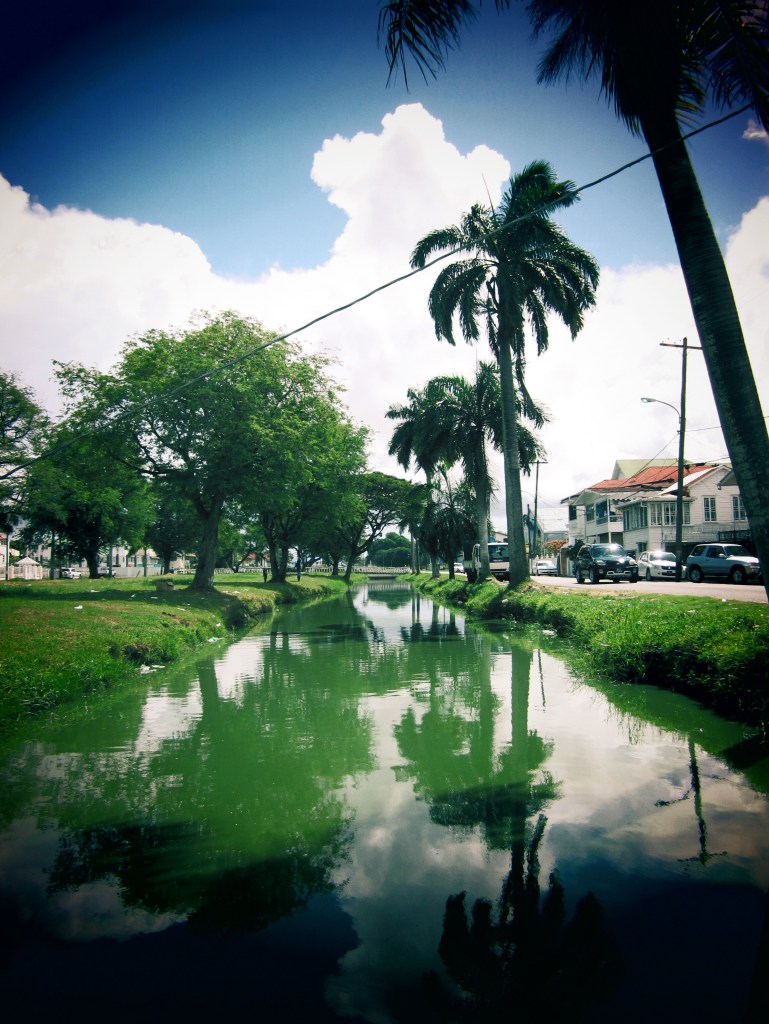
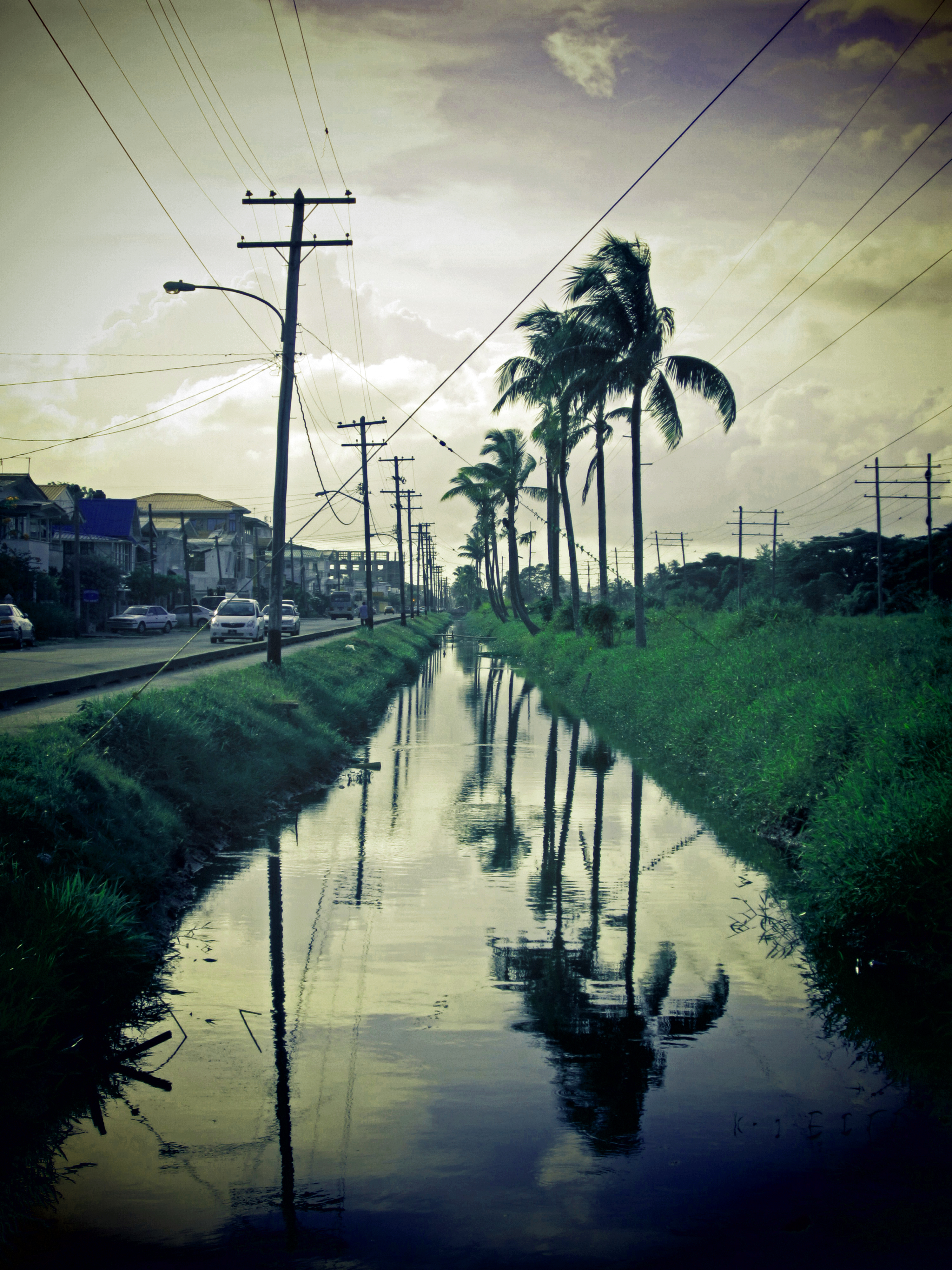
In many ways Georgetown is an attractive city. Comprised predominantly of wooden structures, the old colonial buildings (built in large part by the Dutch) possess significant charm and character. A network of canals assists in the drainage of excess water. I often pause in appreciation of their splendor.

On occasions they send glistening channels of light through the heart of the city, as the setting sun dips and the overhanging trees create an intricate pattern on their surface. Some possess more charm than others however, and the aroma that drifts from one or two of them is questionable!


Georgetown used to be known as the ‘Garden City of the Caribbean’ and it’s easy to see why. There are a number of lush, green areas, attractive gardens, and the tree-lined canals pictured above. However, in recent years it’s apparent they’ve been neglected somewhat.

Just recently a taxi driver spent the entire journey bemoaning the state of the city he had known, but now seemed unable to recognize. He reminisced about the pride he once held, which has gradually eroded from bearing witness to a blatant disregard for what made Georgetown great in his eyes. He nodded his head to the left as we passed another area of litter collected in a ditch by the side of the road. Unfortunately this is not uncommon in many towns and cities across the globe. Nevertheless, my reassurances did little to appease his frustrations.

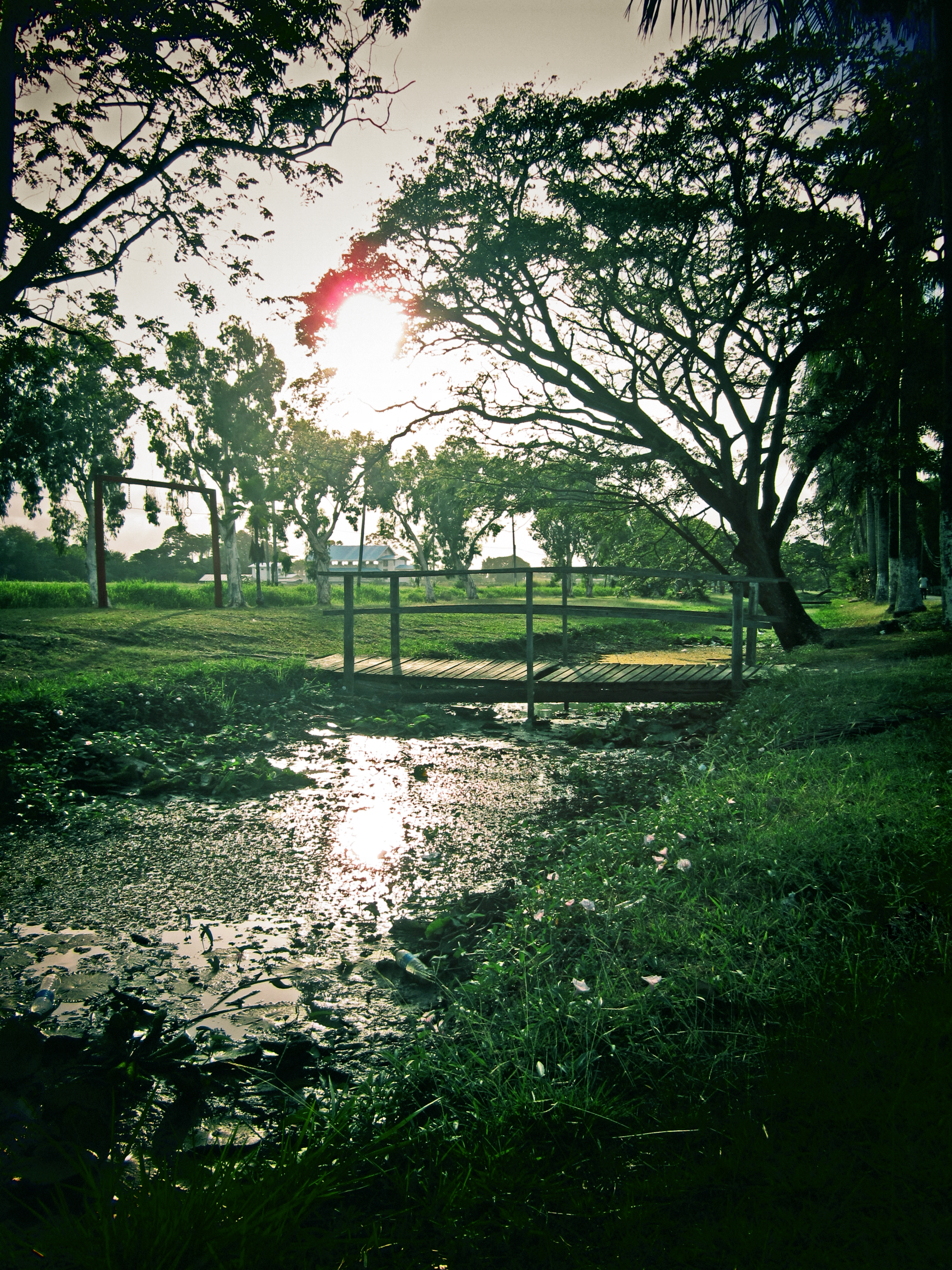
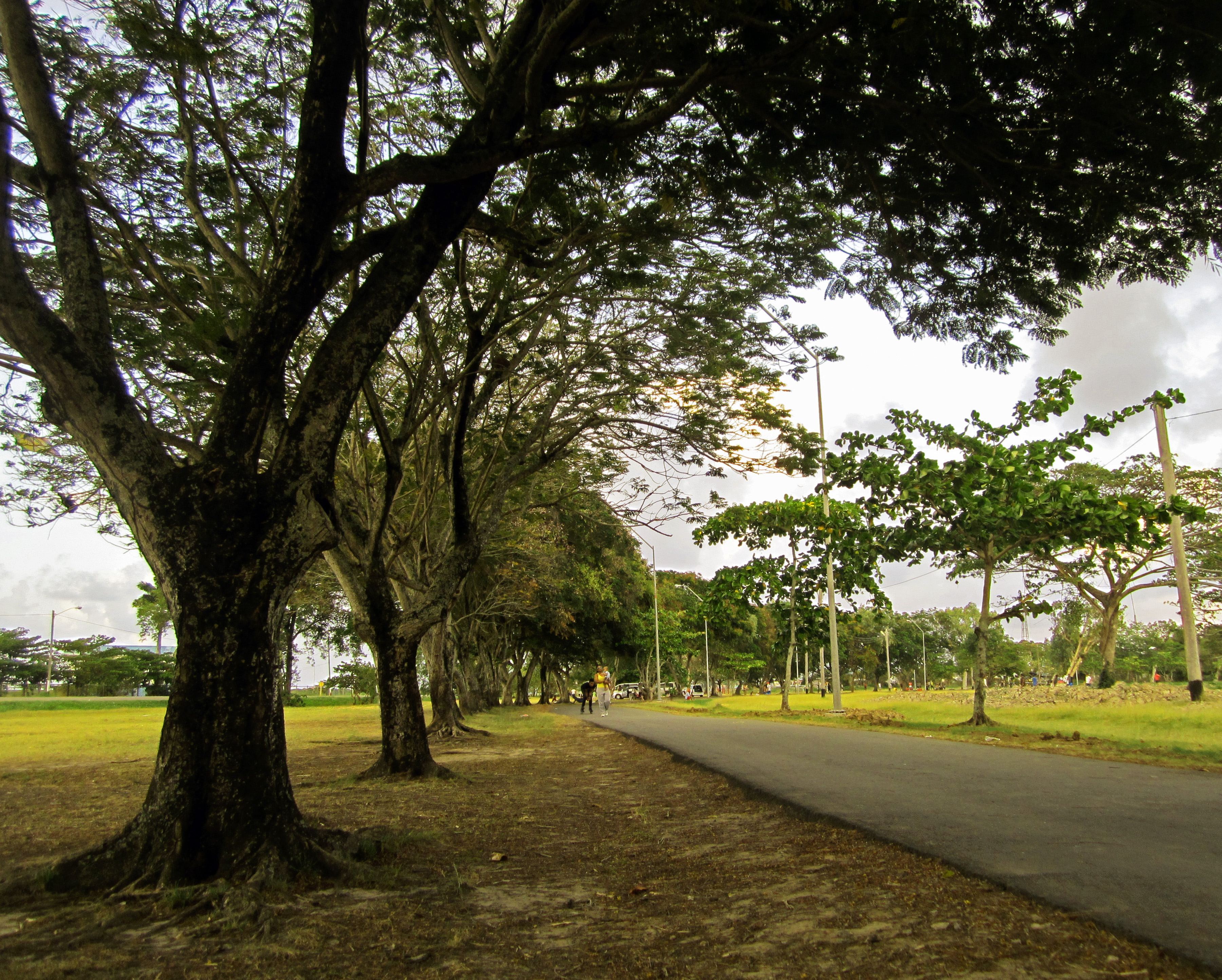
One green space though seems to be almost immune from the littering disease that has ravaged some parts of the city. The National Park is a beautiful open space that residents should be extremely proud of. During the day it comes alive as people fill the park and it becomes a real hive of activity, predominantly with runners, soccer players, and a women’s rugby team who I often see training there.


The same taxi driver also touched on another malady, which casts a cloud over his place of birth, and causes a different, but chronic pollutant in Georgetown. Crime and criminal activity have soared in recent times according to his observations.

I glance at the newspaper each day and unfortunately it often enforces what this man was telling me. Like any major city the world over, your safety is never guaranteed. Yet I genuinely think this may be the most dangerous place I’ve lived. This may surprise you, as it certainly surprises me. Maybe I’ve become paranoid from reading the newspaper too much, or perhaps the lack of familiarity has caused some personal self doubt.

However, the stories I’ve heard certainly don’t leave me short of evidence. People often assume that Rwanda was a treacherous place to live. History suggests this. Yet, it couldn’t be farther from the truth (in my experience). I would say that village life in Rwanda is the safest environment I’ve ever lived in. University life in Nottingham (once the gun capital of England) may run Georgetown close though.

There’s a burgeoning drug trade like many countries in this region, and as a result the associated crime drags close behind.  There are the ‘haves’ and the ‘have nots’, and the economic divide is glaring in some cases. You don’t walk the streets at night, and you don’t walk the streets on a Sunday as they’re practically deserted. If you do it’s at your own risk, especially if you’re a foreigner.

Yet, as is the case almost everywhere, we carry a brain in our heads, and if we engage this to its full capacity we can certainly avoid most unsavory situations. That doesn’t of course guarantee you full immunity from peril, as we also need to be in possession of a healthy dose of luck at most points in our lives. I try to be streetsmart and to respect the ways of this city, and keep my fingers crossed that my luck holds up. There’s common sense too, which is vastly underrated and often underused.

However, it seems to me that despite generally high crime rates, the majority of violent crime occurs between sources already known to each other. That is the victim and perpetrator are often previously connected, and for the most part you can exist harm-free on the periphery simply reading about the crimes as opposed to being involved.

Through my job I’ve been able to travel to some other places in Guyana, but I’ll touch on these another time. Despite the litter issues and the need for extra vigilance, I’m growing to appreciate my new home. It has been a gradual process as I enjoyed my time in Rwanda and Bangladesh so much.

Yet, Guyana and Georgetown are broadening my horizons even further and I try never to underestimate this fact. If you don’t learn and grow from new experiences there’s no point in embarking upon them, and I have no doubt this fresh location and new job is pushing me out of my comfort zone, which is scary yet very rewarding.


A Quiet Place

I’d like to dedicate this blog entry to my Grandad, Jim O’Connor. He is a proud member of the Burma Star and was a member of the British Navy during the Burma and South East Asia campaign during WWII.


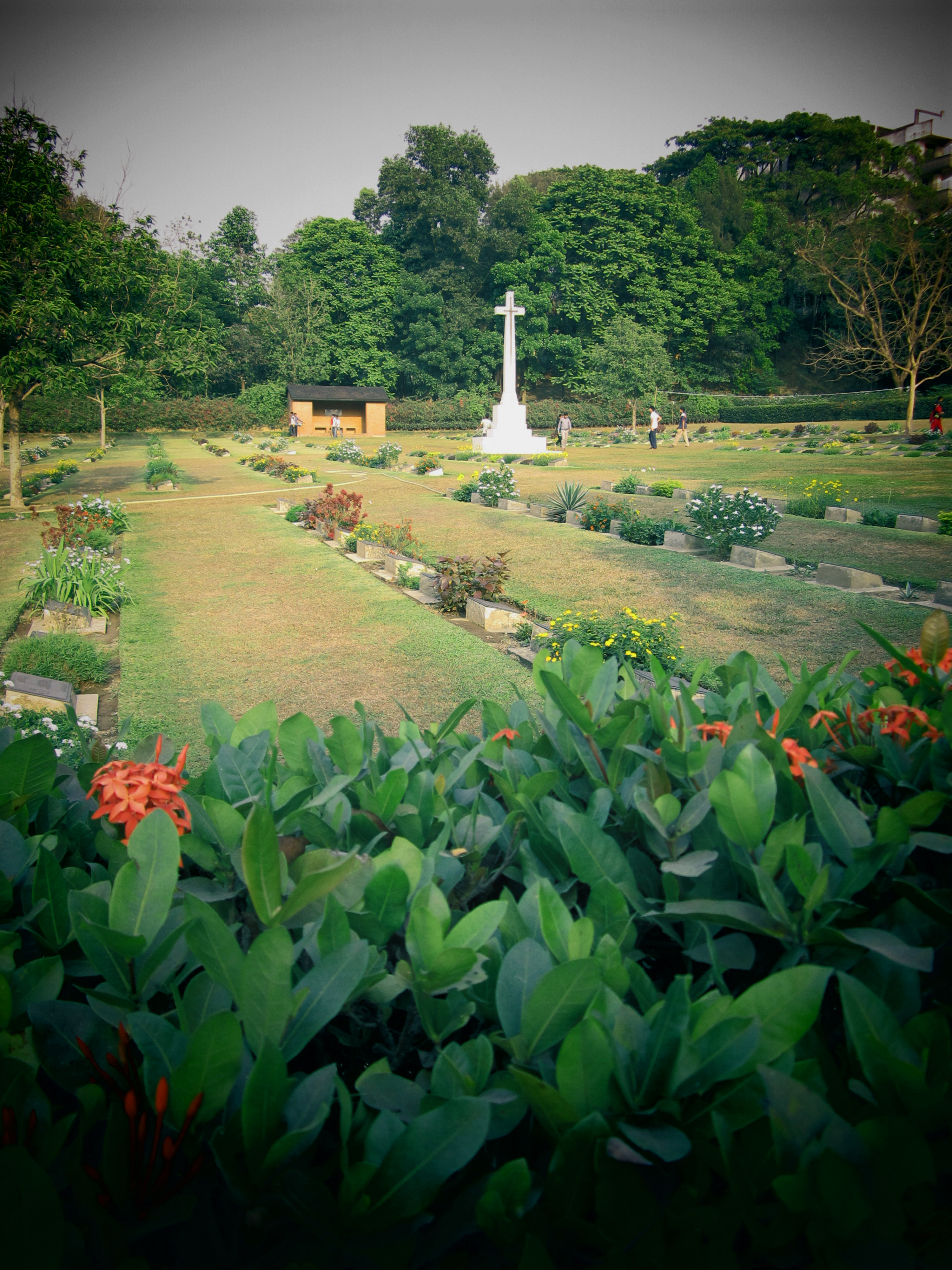
Deep inside the maze of bustling streets and towering apartment blocks there lies a place. A quiet place, tucked almost invisibly away from the deafening sounds of the trucks and the honking traffic which engulf it. You could live in this city for months, years even, and never stumble upon this hidden haven of peace and tranquility. The area of which I write is a notably rare find in Chittagong. This is a city of millions of people and rapid development, and as such any open land is quickly consumed by hungry construction companies.

However, there is one unique plot that’s off the menu. Modest, yet highly significant, this site is bordered by neat hedgerows, and sheltered from the surrounding chaos by trees on all sides. Upon entering the imposing iron gate, visitors’ ears are treated to two incredibly rare sounds, seldom audible in this city. Silence, broken only by occasional birdsong.

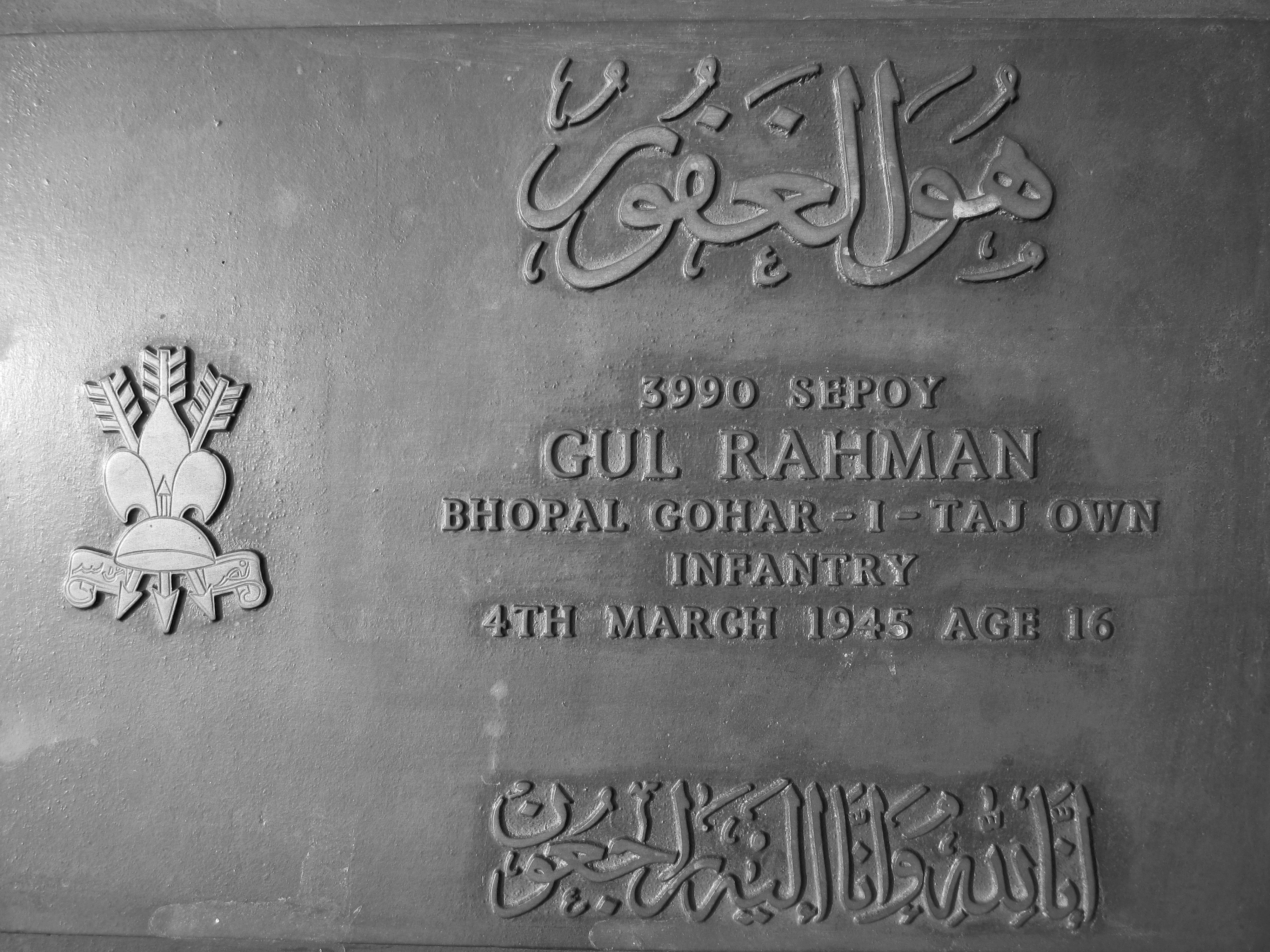
The silence is fitting, as this place is reserved for quiet contemplation and thoughtful appreciation of a time of absolute sacrifice long since passed. Underneath the lush, green lawn, lie the bodies of 755 fallen military personnel.  All victims of the Second World War. The headstones bear a range of religious symbols, and the names engraved in them represent a number of diverse nationalities from Canadians to Nigerians, Indians to Australians, and Brits to Nepalese Ghurkhas. One headstone reads;


GUL RAHMAN – BHOPAL GOHAR-I-TAJ OWN – INFANTRY – 4TH MARCH 1945 – AGE 16.


Chittagong War Cemetery

The youngest soldier in the cemetery

The men buried here were all victims of a fierce campaign to counter the Japanese invasion of South East Asia, which lasted from 1941–1945. At a time when Allied forces were severely preoccupied by Hitler’s expanding campaign in Europe, Japan recognized the opportunity to gain control in the region of South and South East Asia. Having already taken Hong Kong, Singapore, Malaysia, and the Philippines, by 1941 the Japanese army moved into Burma and were advancing on North East India, which now refers to parts of Bangladesh.


Dorcas Lawani - West Africa

A prolonged and arduous campaign ensued. Gradually though the Allied Forces imposed themselves in the region, and a Japanese retreat eventually led to full surrender in August 1945. However, not before thousands of lives had been lost on both sides. Many troops were killed directly in combat, but the ravages of disease brought about by the incredibly harsh conditions of the jungles of Burma also claimed a significant number of combatants.

Shortly before I left for Bangladesh in March 2011, I remember my Grandad vividly recalling the intense, suffocating heat he and his comrades faced on the ships docked in the Bay of Bengal. Spared not a moment’s peace from the ravenous mosquitoes, their skin was forever blighted by the discomfort of bites and prickly heat. He never actually set foot in Chittagong itself, but spent a lot of time staring in its direction from afar. It was a poignant moment as I wandered around the graveyard reading the names of men who, unlike my Grandad, never made it home again from this region.


A final resting place

img_1821

The graves are tended to by a team of local gardeners who keep the grass trimmed and watered, and the plants strong and healthy. Not a particularly straightforward task as the unrelenting heat of the Bangladesh sun beats down, and the rains disappear during the dry season.  However, they make the best of it and succeed in keeping the site in pristine condition and a genuinely peaceful and reflective place to be. Quite an achievement. One that would likely impress most residents of this vibrant, yet often claustrophobic maze of concrete we call Chittagong.


The greenest place in Chittagong?

Graves are meticulously cared for

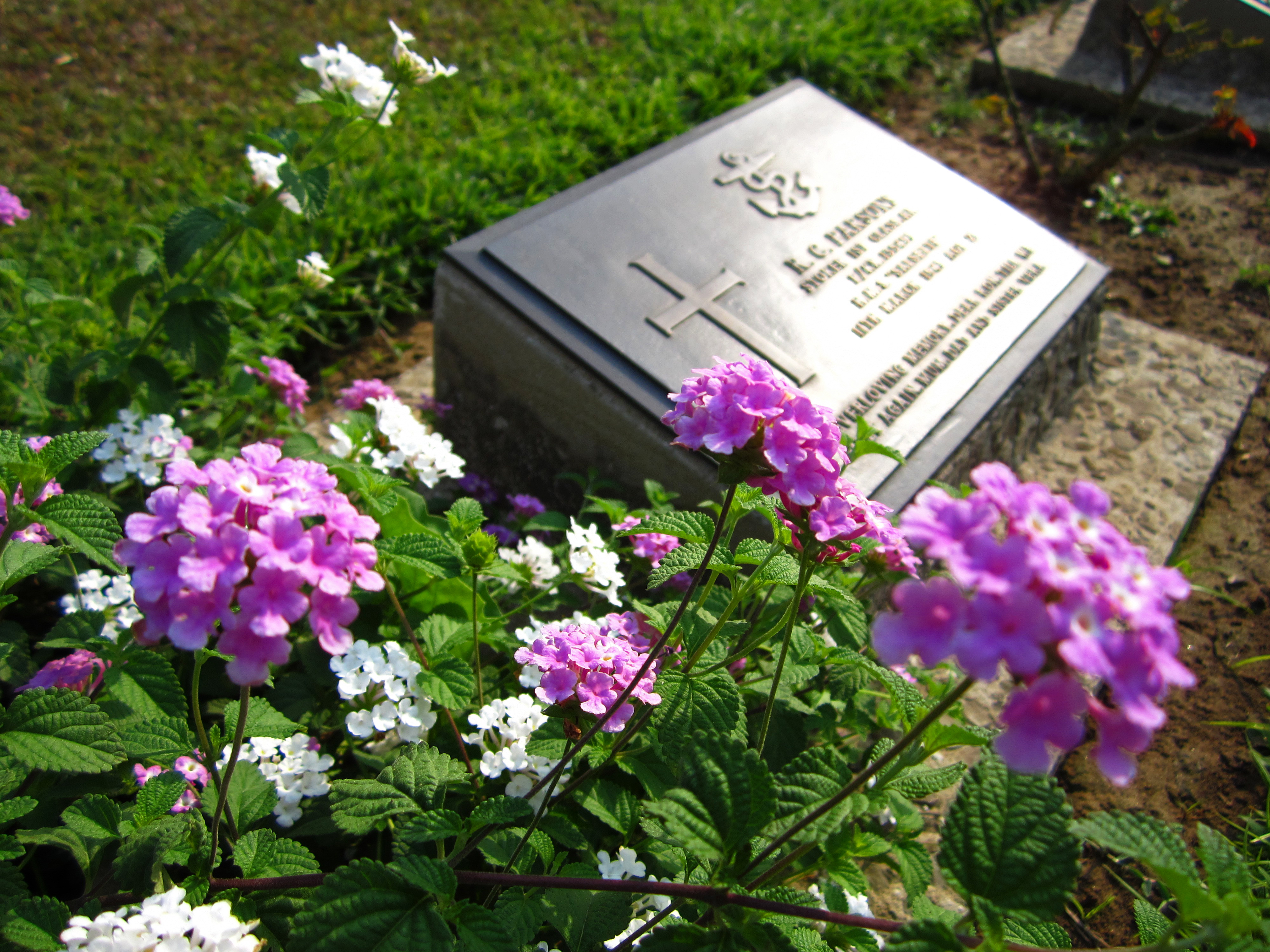
A brief biography of each fallen soldier is available to view. I decided to read about some of the men buried in the British section of the cemetery.  I don’t know if it was pure coincidence, or perfect fate, but the very first name I decided to inspect closely was one W.C Smith. Flight Sergeant William Charles Smith, a pilot in the Royal Air Force 99th Squadron, was killed on the 8th October 1943, aged just 21. Son of Tom and Dorothy Smith, his headstone reads,


“Memories will always keep him near, the one we loved and still hold dear.”


I really couldn’t believe my eyes though when I went on to discover that this fallen pilot was from my home town of Torquay, Devon. It was an almost eerie feeling as I stood there gazing at his headstone. It seemed incredibly fitting that this chance discovery had allowed me to pay my respects to someone from my hometown. A person who had made the ultimate sacrifice all those years ago and allowed me the freedom to come to this region all these years later.

We’d both made the journey from Torquay to South Asia, but for very different reasons, and in deeply contrasting circumstances. It compelled me to wonder if any of W.C Smith’s family had ever had the chance to pay their own respects at the final resting place of their loved one.


W.C Smith - Torquay

img_1811

As I left the cemetery that day, my mind was full of thoughts for those men whose names are inscribed in the headstones so neatly arranged, and presented in this small corner of Chittagong. They no doubt had little idea of just how or what they would find upon leaving their homes and setting out on a journey to fight in a war that would eventually claim their lives. Some may have originated from Toronto or Lagos, from Kathmandu or Calcutta, from Sydney or Sunderland.

Yet now, here they all are. Buried in a tiny, concealed plot of land in the depths of a city that has no doubt changed dramatically since the day it became their permanent resting place.  It was a sobering thought, and as I departed through the iron gates, and as the honking of the traffic hit me once again, I knew I’d have to return.


img_1843

All images © John Stanlake

Beautiful Bangladesh – Swinging Devotees and Sunsets


As I haven’t written a new blog for a while I thought I’d add a more succinct photo blog instead. I’m working on a written one at the moment, but it’s not quite ready yet. So, here are some notable images from Bangladesh taken during the past three weeks. I’ve been lucky enough to experience some of Bangladesh’s finest natural beauty during that time.

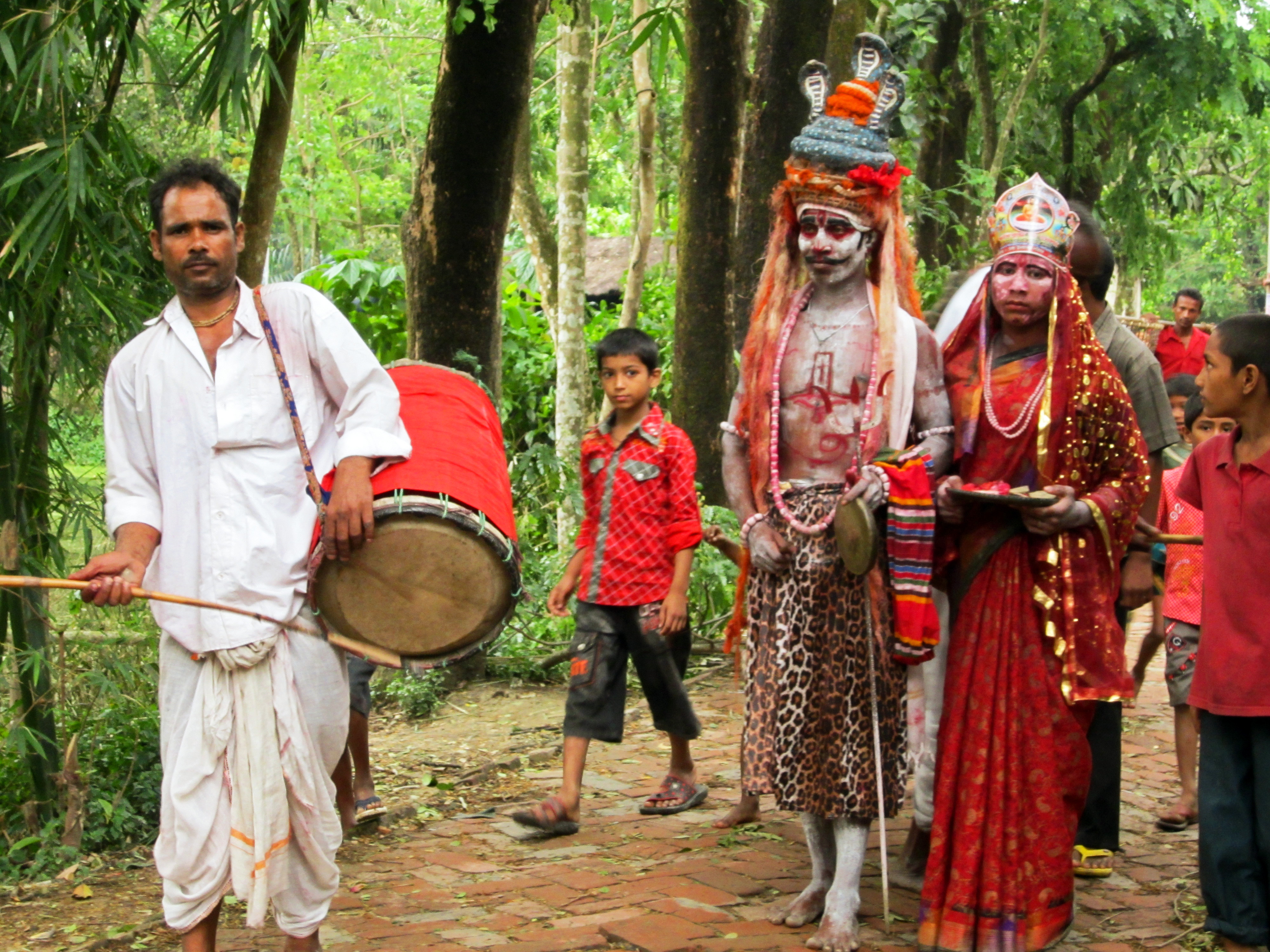
The first few were taken in the village of Koknandi, in Banshkhali district. I attended the Hindu ceremony of Charak Puja. I have no idea how to provide a clear explanation of what happened or why exactly it happened, so I’ll just describe what I saw and noted through my own eyes.

The reason I ended up in this village to experience the festival was due to the fact our Fulbright Fellow and artist in residence, Claudio Cambon,  needed volunteers to accompany some of his photography students. In his recruitment email he provided this blurb:


“Charak Puja, Banshkali, south of Anowara. This is a village fair which culminates in a Hindu devotee getting hooks pierced into his back, hoisted by rope up into the air, and swung around a tall pole 7 times. They may also throw pigeons up at him, which he will try to catch and eat live. Yup, you heard me right the first time.”


So, just to repeat, the general purpose of the trip was to watch a man have hooks placed in his back in order to be swung around a large pole, whilst attempting to catch pigeons and eat them alive. Naturally I was instantly intrigued by the prospects of this day out.

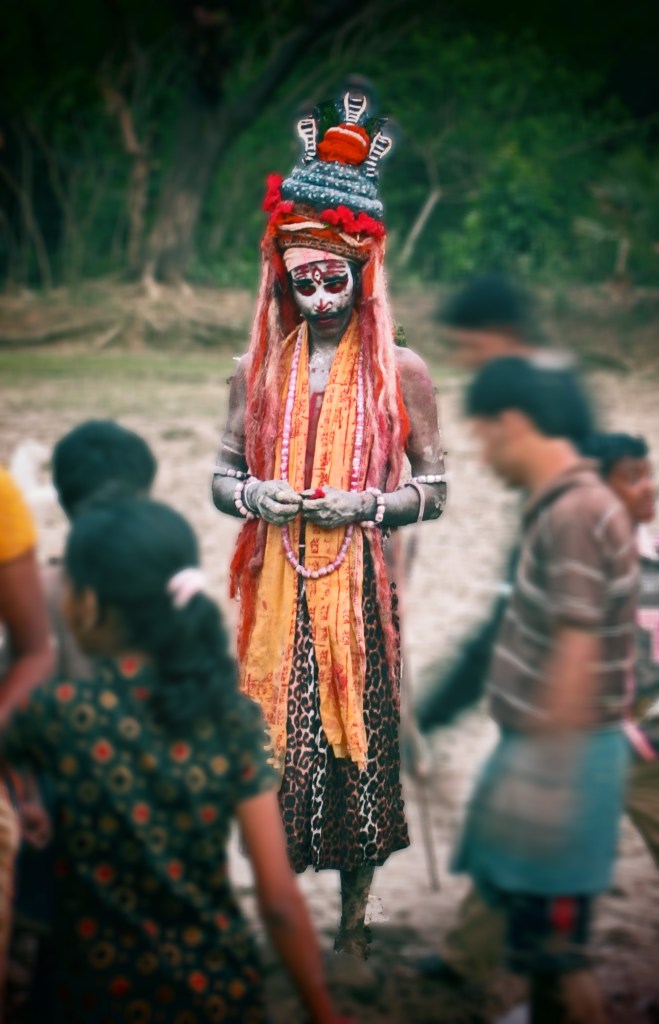
I was also slightly alarmed, but not wanting to pass up this unique cultural experience I replied to his email within about 23 seconds. A few days later we arrived in Kokdandi, and after a timid, but warm welcome from the local people we were passed by these characters…


The excitement grew, yet anxiety levels also rose. The festival would take place in a few hours, and I was looking forward to events with a certain degree of trepidation. In the meantime though we were treated to some fine hospitality by our hosts and were free to wander about capturing images of the stunning natural beauty of rural Bangladesh and its people.


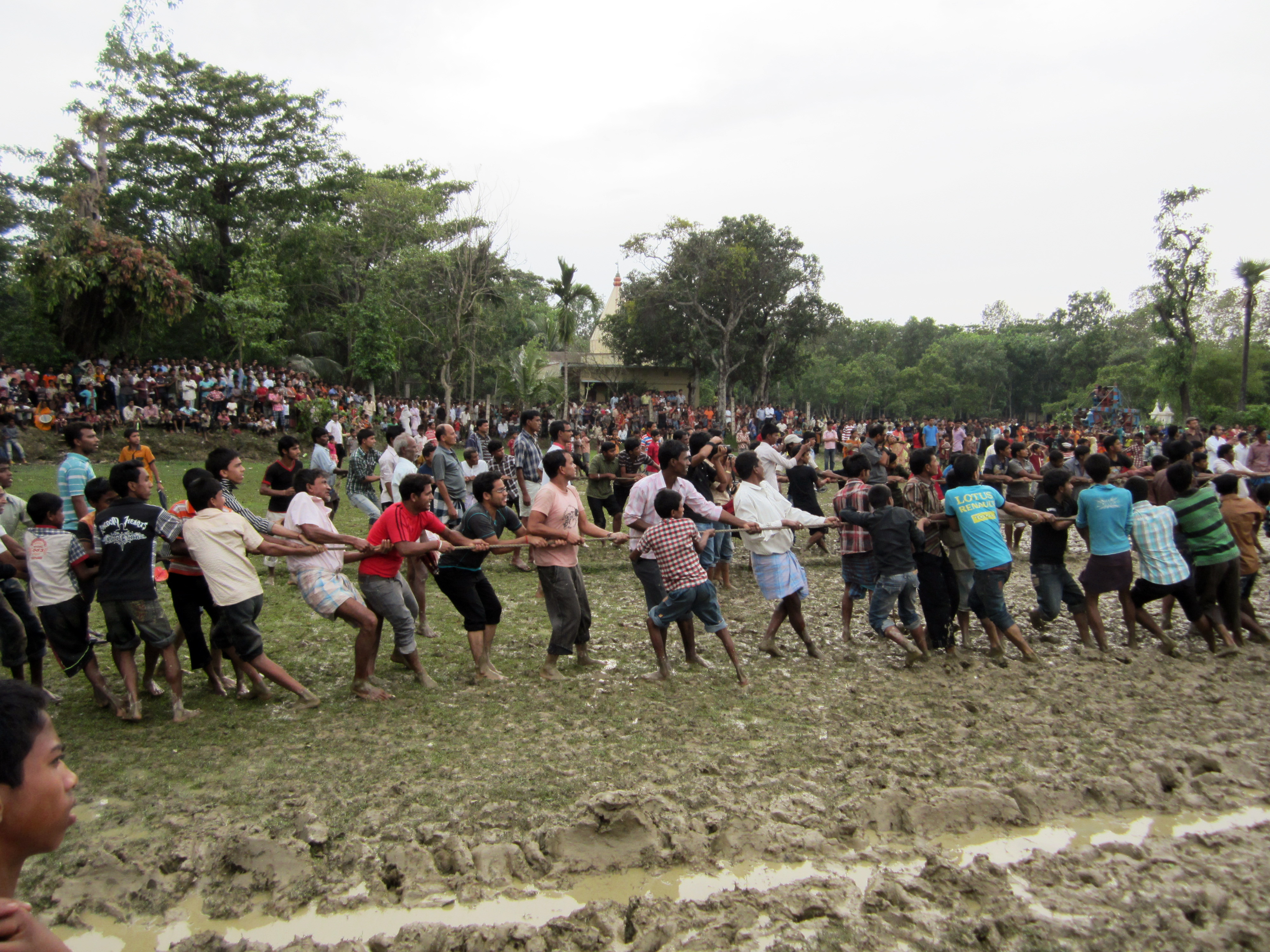
Eventually the moment came to swing the devotee around the pole. Raising the pole was not a straightforward task however, and it took the strength of around fifty men. Their job was made no easier by the thick mud that had engulfed the whole area after the recent reappearance of the trademark monsoon rains that hit Bangladesh each year. Once the pole was erected and secured in the sludge, the devotee reappeared to a rapturous reception. By this stage the crowd had swelled, and it seemed the whole village had come to witness the annual event.


The actual climax of the whole day happened very quickly. All of a sudden the devotee was airborne and there was quite a commotion as the crowd whooped, chanted, let out mild screams, and clapped sporadically. Carefully placed men launched pigeons high into the air, which added to the mystical spectacle before us. Fortunately our devotee was spinning too rapidly to have any chance of grasping any of the birds, so none were harmed.


It also became apparent afterwards that the man had not in fact been hooked during the process. We later found out that it’s an old tradition, and in recent years has been replaced by more conventional methods…in this village at least.

As I said before, I don’t possess the knowledge to explain why exactly any of this happened. However, it was a sight to behold and an authentically fascinating experience characterized by genuine warmth from our gracious hosts, who demonstrated a strong desire to ensure we were made to feel part of the experience.  I took these final two photos in the aftermath of the spectacle, once some of the crowd had dispersed, and in my opinion this second image alone made the whole day worth it.


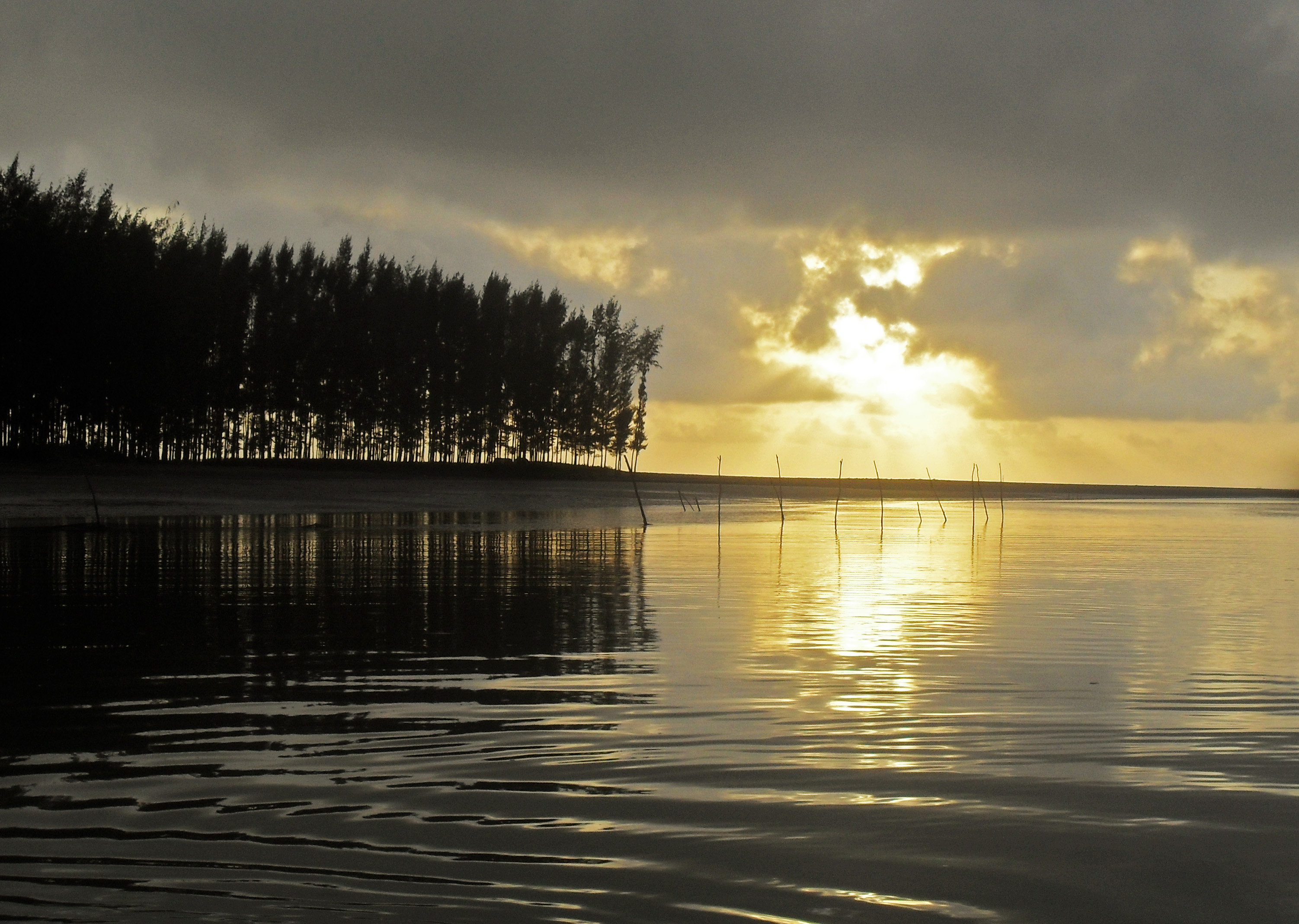
The next weekend was spent in Cox’s Bazar, a coastal town in the south of Bangladesh. It boasts the longest natural sea beach in the world and hopefully as the following photos will demonstrate, it’s a perfect location to catch a stunning South Asian sunset.


Finally, after a host of images away from the urban bustle of Chittagong, here’s a view over the city by night.


All photos © John Stanlake