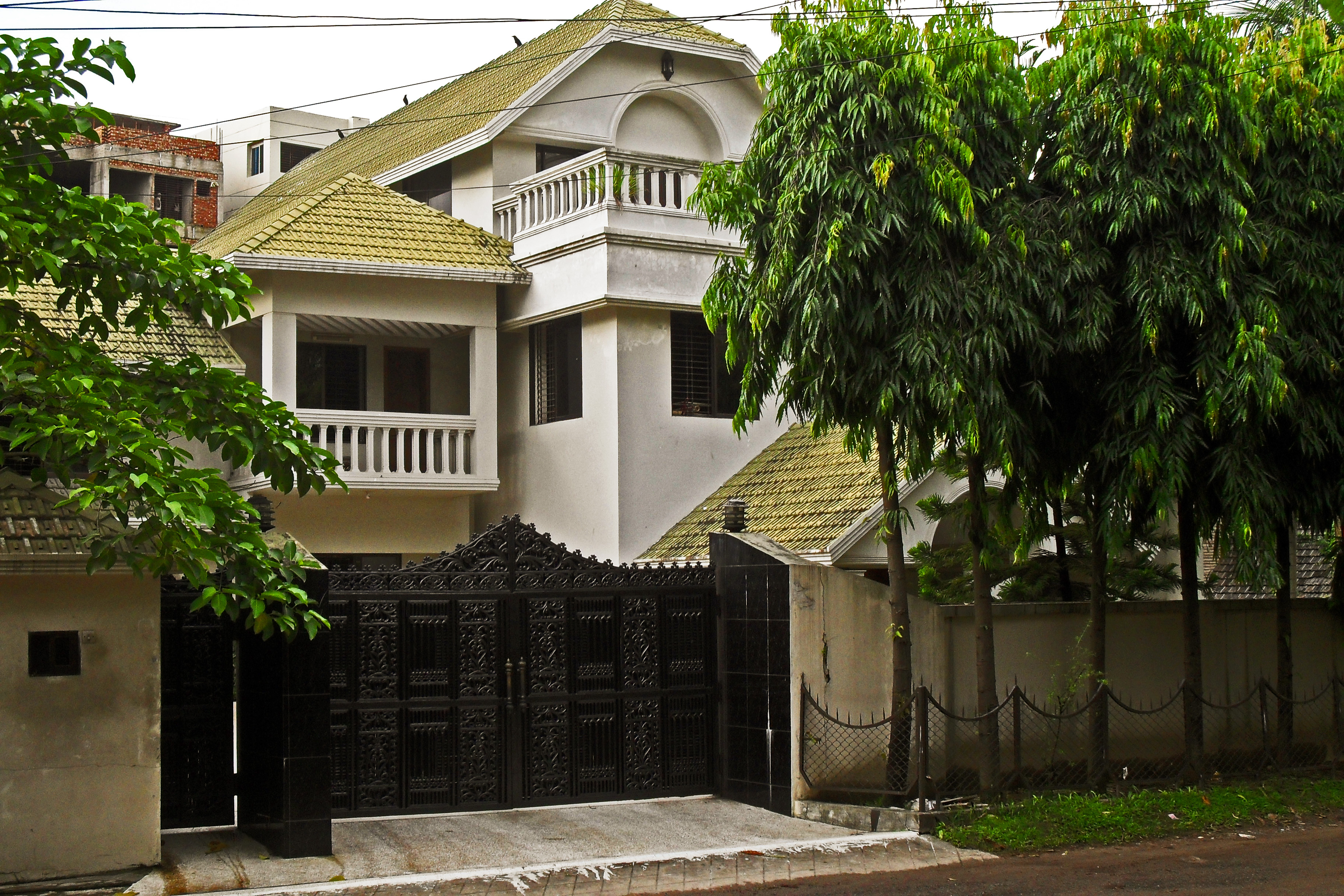
Kulshi. This is where I live. Split in two by a noisy and manic main road, the neighbourhood can certainly be described as affluent in comparison to other parts of Chittagong. A disconcerting mix of the haves and have nots mingle in Kulshi. The haves are the property owners and the property dwellers. The have nots are the workers and laborers who serve them. They’re also the folk who live in the ramshackle homes that lie in the shadow of the apartment blocks which dominate the city’s skyline.
The divide is apparent, but just in case you weren’t aware of it there are various signs to reinforce it. In the photo gallery at the bottom of this update are two quite perfect examples from Praasad, my apartment block. The first is a sign displayed at the entrance, and the second is a notice which adorns the wall of our lift. Not exactly subtle as you will see, and both make me uncomfortable.

However, I live here, and I live in a comfortable flat provided by the university, and you know, I like Kulshi. Thus, I’m in no position to preach and can probably be awarded the title of King Hypocrite. It’s a far cry from my living conditions last year as I’ve mentioned previously. When the power cuts out a generator ensures we only face a minute or two in darkness. I have a small balcony which looks out over the quiet backstreets of Kulshi. If you stare out at the horizon it’s difficult to see past the multi-storey structures which dominate your view. Understandably in such a densely populated nation sometimes the only option is to build upwards.
Occasionally I open the sliding doors in the morning to find a cockroach stranded on its back. Sometimes I enter my bathroom in the morning to find a cockroach has come up through the drain. There are cockroaches in Kulshi. We have guards on the gate who decide who enters and who doesn’t. They can at times be a little too overzealous in their screening of visitors, as our Bangladeshi co-worker found out one day. He was left outside the gate for forty minutes until one of us vouched for him. Their only real reason for not letting him in, as far as I can tell, was that he’s Bangladeshi, and the assumption being he neither lives in the flats nor has any other reason to be there. Haven’t you read the sign? Foreigners only.
Across the road is Kulshi Mart, a relatively sizeable supermarket. As you approach the steps to the entrance you hear cries of ‘Boss!’ and this indicates you’ve alerted the attention of one of the young boys who beg outside. A security guard opens the door for you, and you enter the world of the ‘haves’ in Kulshi as the cool breeze of the air conditioning hits you.
The store attracts a range of people from upper middle class Bangladeshis to Korean expats who’ve adopted Chittagong as their business home. Occasionally we see a group of Russians who live somewhere in the neighborhood, and it’s often easy to spot the Sri Lankans as they’re more liberal in dress, frequently shopping in shorts. That’s one way in fact of identifying the social status of Kulshi Mart. You can tell it has a more international feel as some patrons are comfortable to shop in shorts. Bangladeshis would rarely do this as far as I can tell from my time here so far. It’s also possible to pay by card at Kulshi Mart.
Each morning a van arrives to collect the small troop of teachers who work at the university. The same van drops us back home at the end of the day. Technically you could live your whole life in a virtual cocoon, moving only between the air-conditioned flats of Praasad and the air-conditioned offices and classrooms at the university. So far I’ve managed to resist this temptation.
One way has been to join two of my fellow teachers, Alyssa (also my flatmate) and Christa, on their daily runs. Commencing at 5.45am, on a good day it entails three, possibly four laps of the Kulshi back roads. On a not so good day only two laps are successfully completed. Even at this time of day the air is muggy and heavy, and the sweat pours from your body. The recent monsoon rains have made it a little more comfortable in the past few days though.
The morning runs have provided ample opportunity to explore the neighborhood further and to get a little feel for life here. We take the same route and as such we see the same people each day. The security guards are the first we greet as they open the gate for us. On some occasions we’re forced to wake them from their slumber. They never seem to go home, catching forty winks whenever they can, usually slumped over a wooden table. Once through the gate we’re out onto the main road and a quick turn right past a local Police headquarters takes us onto the much quieter backstreets.
We pass a regular stream of early morning walkers who range in age, sex and size. There’s a large group of men who engage in stretching exercises in a modest children’s ‘playground’ before starting their morning stroll. I believe they’re Bangladeshi. One member of the group has taken to saluting me each time I pass them. There’s a lone man who we may just have inspired to run also. He was previously a walker, but more often than not these days he can be seen jogging. There are Sri Lankan (again in shorts) and Korean walkers, and smaller groups of Bangladeshi men who always seem to be engaged in fairly boisterous discussions. I guess these morning walks give them a chance to put the world to rights.
However, it’s not exclusively men who tread the pot-holed back roads of Kulshi. There are small groups of women, quite often clad in hijabs and burkas, who walk together in troops of two or three. They tend to look upon us with varying degrees of bewilderment, intrigue, joy, confusion, suspicion, and slight disapproval (because of the shorts). However, I feel their overall emotion towards us is one of general acceptance and perhaps admiration for our running persistence. They often smile at Alyssa and Christa. Like the men, they too appear to use their morning strolls around the neighborhood as a chance to let off some steam, and perhaps it’s a perfect opportunity to engage in some healthy husband-bashing.
Most mornings feel like groundhog day as we pass the same faces and complete the same route three or four times over. Yet there are occasions when Kulshi throws up a little unexpected moment of randomness, and you wonder what’s coming next. I’ll briefly tell you about two such incidents encountered in recent weeks, which both involve animals.
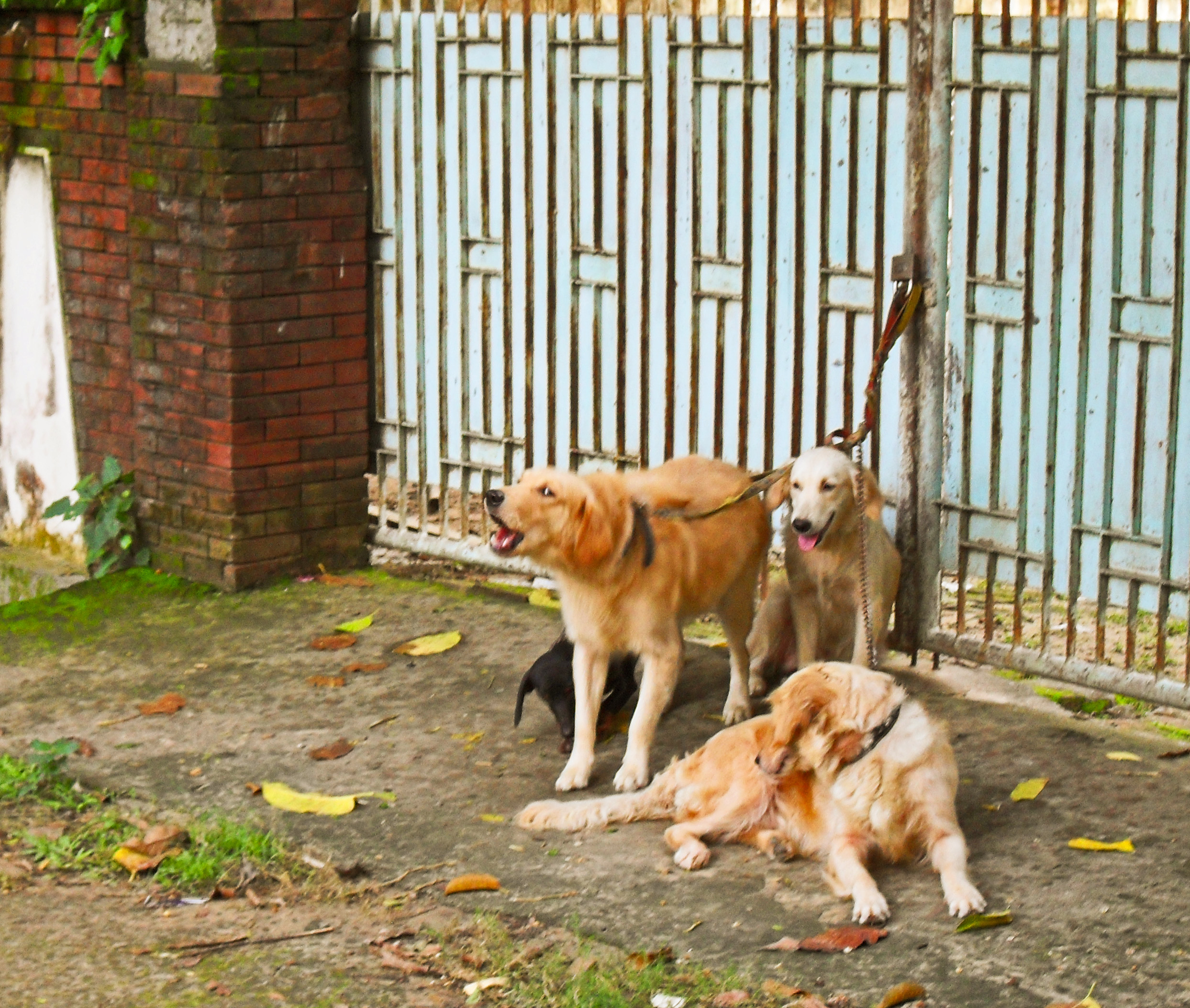
The first isn’t particularly spectacular, but on the evidence of my first few months here it appears that Bangladesh has just one generic breed of dog, fondly referred to (possibly only by expats) as a ‘Deshi’ dog. That’s not to say there aren’t a lot of them, it’s just they all look the same. So imagine our surprise one day as a figure emerged from one of the large gates clutching around eight dog leads, and attached to each was a beautiful looking ‘Bideshi’ dog. In other words a dog which doesn’t resemble your standard Bangladeshi breed. There were a couple of golden retrievers, a small dachshund, a collie and a further unidentified breed. It was a welcome change. The guy in charge of them (I guess a hired dog walker) didn’t seem as thrilled by the dogs as we were, and when we came round for our second lap he’d tied them to a gate and was nowhere in sight. They were all sat up like bookends with their tongues out and inquisitive looks on their faces. I love dogs.
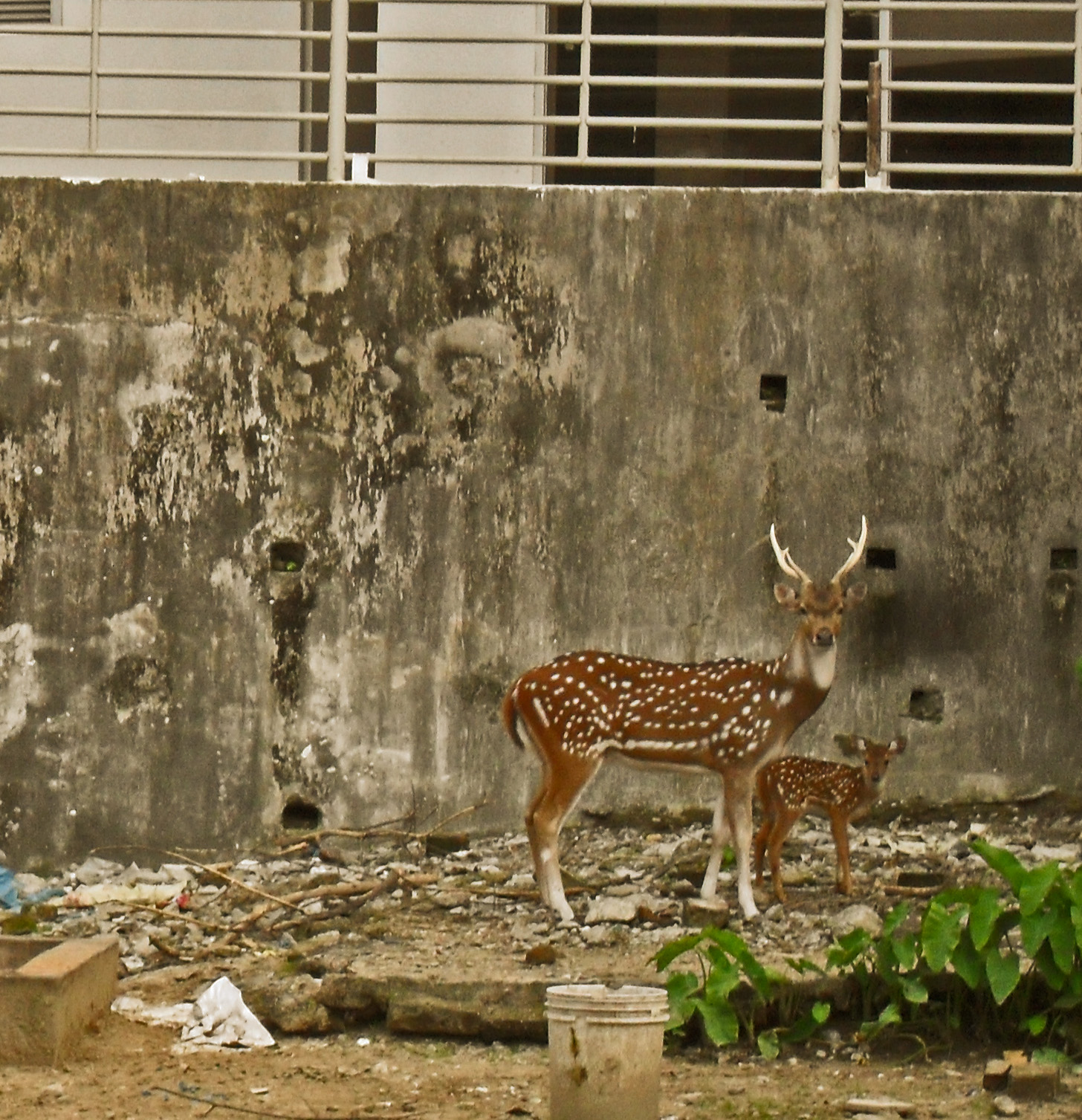
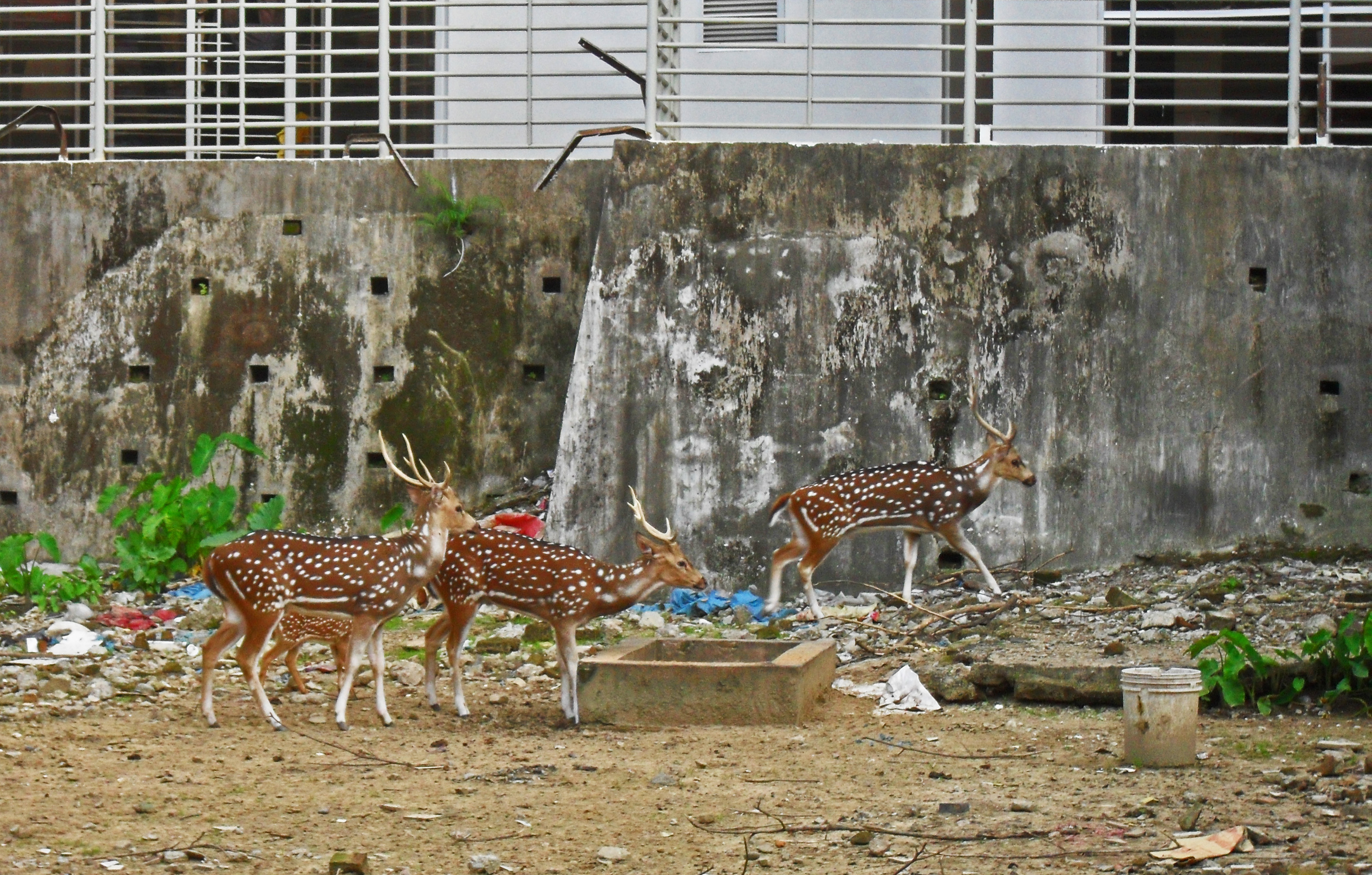
In an even more bizarre animal encounter, we recently stumbled across an incredibly unexpected sight. Whilst running past another gate I glanced quickly into the yard behind and caught a glimpse of something that made me stop in my tracks. My initial thought was that I’d pushed myself a little too hard with the running that day and was experiencing some kind of dehydration hallucination. I wasn’t.
Stood there, in the middle of the yard, was a rather grand looking stag. This was in itself enough to shock and puzzle me, but upon closer inspection in the far left of the yard there stood two further stags, two does and a pair of fawns. As I said, quite bizarre. How do deer end up living in a yard in Kulshi, Chittagong Bangladesh?! The yard is attached to a large block of flats but it’s difficult to know who these rather grand animals belong to. Anyway, as proof, below is photo evidence.
So there you have it. This is my general overview of Kulshi, a contrasting neighborhood of nationalities and outlooks on life and a place where revealing your knees is frowned upon and crossing the road is treacherous. In the back streets you’ll find deer and dogs, and in Kulshi Mart you’ll be treated to classic music from the 90s and staff who follow you everywhere, persuading you to buy a new brand of biscuits.. The area is awash with apartment blocks and at times you could be mistaken for thinking you’re engulfed in one huge construction site. However, there’s a noticeable warmth that pervades Kulshi, and when all’s said and done for now it’s my home, and this is fine by me.





 UNDER ONE SUN